An editorial assessment of documented capabilities and ownership trade-offs. This is not a hands-on test result or a measurement of reliability.
Task capability 30%8.1
The cleaning architecture is broad enough for common submerged tasks.
Navigation & control 20%7.7
Multiple paths and waterline control are useful, though accessory dependencies need clarity.
Ownership & upkeep 20%7.3
Basket capacity helps while fine media and rollers require care.
Setup & usability 15%7.6
Dock storage is practical, with manual lift and rinsing still required.
Documentation & support clarity 15%7.4
Family comparison is detailed but can blur accessory-dependent functions.
Compare scores within the same product category. Small decimal differences should not override your needs or the evidence limits.
How the Standpoint Score works
We score five aspects of the documented product on a 0–10 scale, then calculate a weighted total:
- Task capability30% of the total
- Navigation & control20% of the total
- Ownership & upkeep20% of the total
- Setup & usability15% of the total
- Documentation & support clarity15% of the total
This product’s 7.7/10 is a provisional research assessment. It does not claim measured performance, tested reliability or a verified customer satisfaction rate. Compare it with products in the same category, and read each criterion’s reasoning above.
Read the full rubric and score bands ↗The ownership case.
The Scuba X1 is worth shortlisting for an in-ground-pool owner who wants cordless floor, wall and waterline care and is comfortable with manual retrieval and filter maintenance.
Reasons to consider it
- Five-litre basket
- Front and rear active rollers
- Dedicated waterline-cleaning proposition
Go in knowing
- Do not inherit Pro Max features
- Advanced underwater functions may need accessories
- Dock does not empty or retrieve robot
The specification sheet.
Published specifications from the linked sources. Configurations and availability can differ by country.
- Coverage
- Floor, walls and waterline
- Basket
- 5 L
- Working duration
- Up to 180 minutes, manufacturer claim
- Charging
- Dock included on referenced page
The attraction is a larger cleaning platform
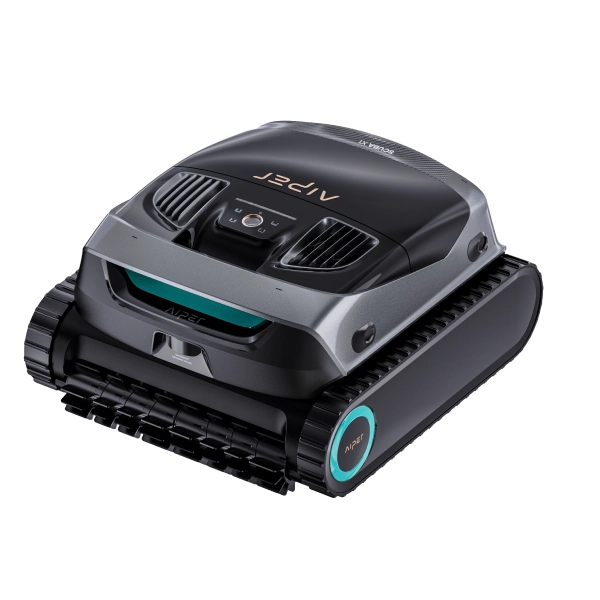
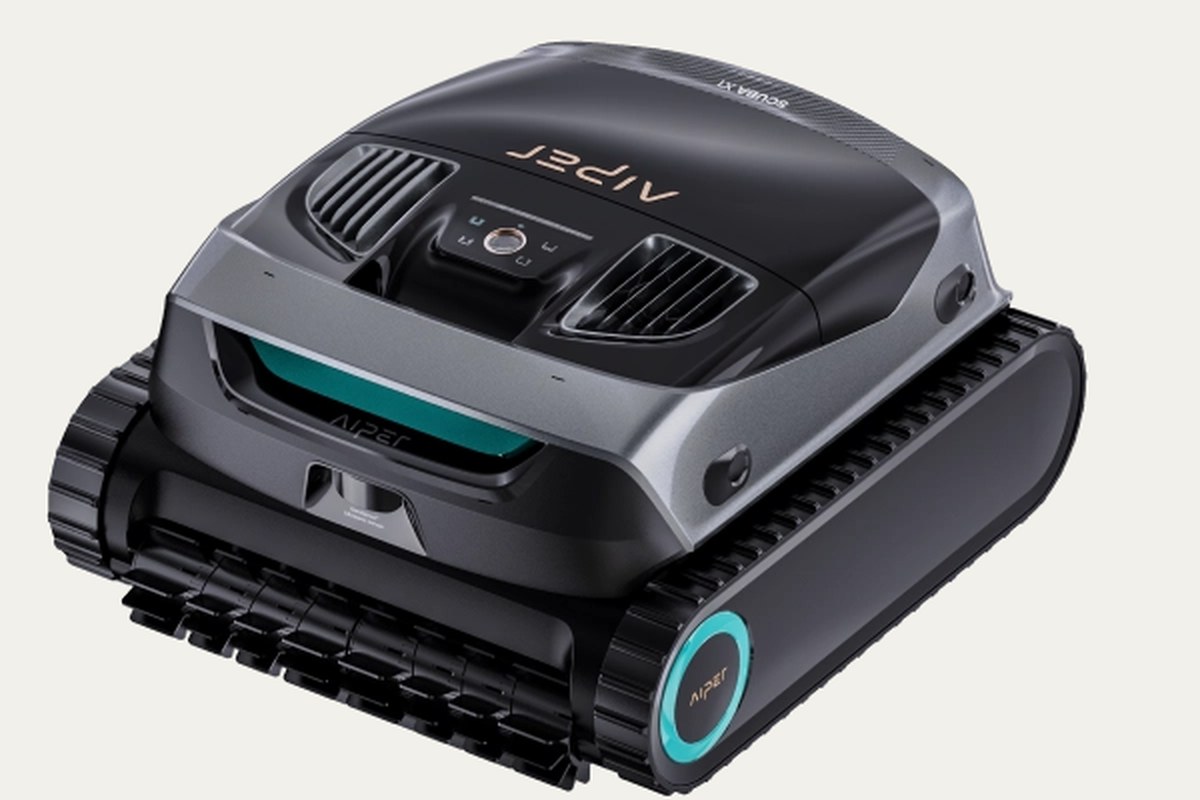
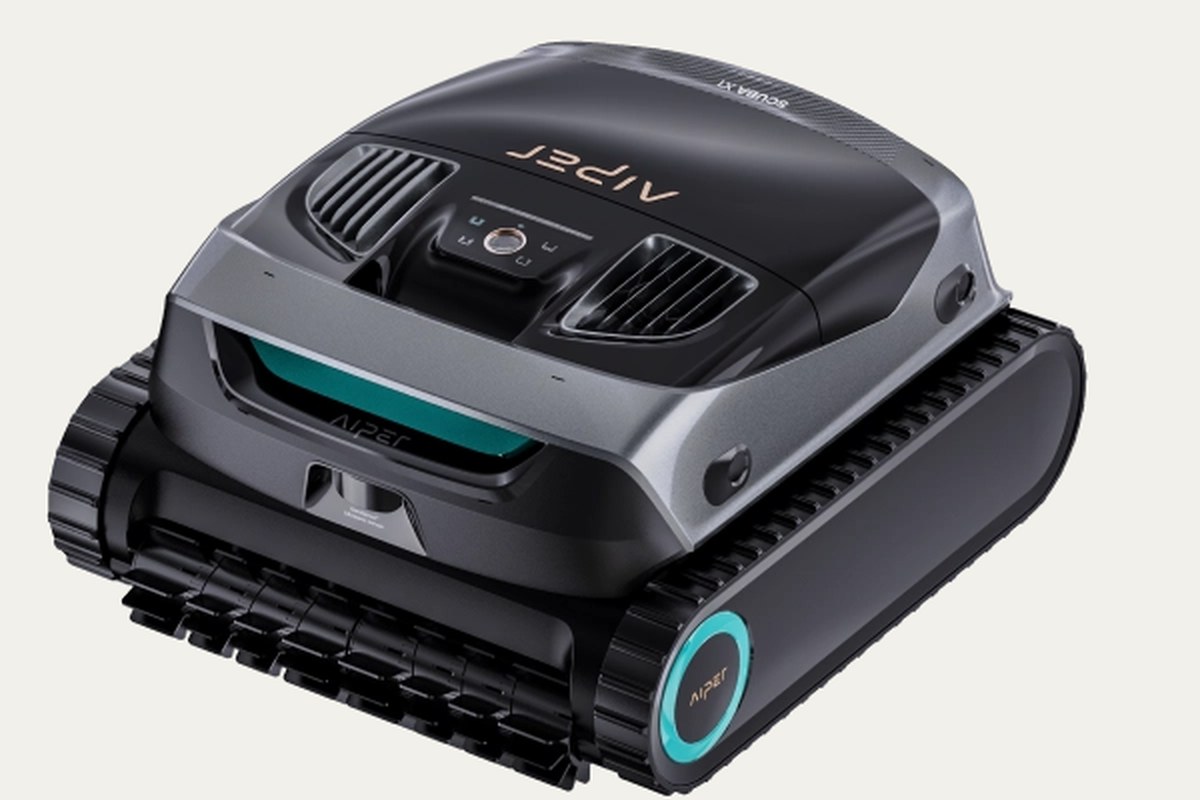
The Scuba X1 sits in an interesting position between relatively simple cordless pool robots and more elaborate all-in-one machines. Aiper's referenced page lists floor, wall and waterline cleaning, a five-litre basket, dual active front and rear rollers and a charging dock. It also distinguishes the X1 from the X1 Pro and Pro Max, which is essential when comparing advertisements. The base X1 does not inherit every function shown elsewhere in the family. The appeal is an accessible cordless routine with a substantial debris compartment and a deliberate waterline-cleaning mechanism. It is best considered by an owner whose main burden is submerged dirt and the band around the pool's edge, rather than by someone specifically seeking continuous surface skimming.
Water flow is only part of the story
Aiper publishes a high pump-flow figure and a dual-jet cleaning story for this model. A flow specification can describe how much water moves under particular conditions, but it is not a direct measure of the amount of sand removed from a floor. Intake placement, brush contact, travel speed and filter restriction all affect the result. A useful comparison would use the same pool, debris load and filter condition across machines. Without that, numerical rankings can create false precision. The X1's front and rear roller arrangement is more interesting as a mechanical design decision: there are two places to agitate material as the chassis travels. Whether that produces cleaner corners and fewer repeat passes remains a question for controlled observation.
Horizontal waterline cleaning needs the right wall
The X1's Waveline proposition is aimed at a task that many basic robots only touch during a climb: sustained attention to the waterline. That could be valuable where a visible band of residue is the owner's most persistent complaint. The result will depend on the surface, water level, shape of the coping and how consistently the robot maintains contact. Sharp curves, protruding fittings and slippery tiles can change the conditions dramatically. Watch the full perimeter rather than the one attractive stretch used in a demonstration. A machine that performs an excellent horizontal pass on half the pool may still leave a significant manual job. It also will not remove every type of stain merely by passing a brush over it.
Navigation and accessory ambiguity
The manufacturer's comparison table separates navigation, mapping and debris-detection capabilities among X1-family models. Buyers should preserve that separation. Likewise, underwater communication and smart retrieval may involve HydroComm equipment rather than functioning identically from the standard box. Ask the seller to explain the exact operation available without accessories and to demonstrate it. The core purchase should be judged on what arrives, not the most complete ecosystem pictured lower on the page. A cordless robot that can be configured on the deck is already useful; remotely commanding it underwater is a separate feature with different hardware requirements. Confusing the two can produce disappointment even when the cleaner works exactly as its basic specification intended.
The five-litre basket tradeoff
A larger basket can reduce interruption during a leaf-heavy clean, but the total capacity does not tell you how quickly the fine medium restricts flow. A small quantity of very fine material can matter more than a large volume of loose leaves. The supplied MicroMesh arrangement should therefore be evaluated as a complete filter system. Check how the inner medium is removed, rinsed, dried and replaced. Ask whether a visibly clean filter can still require deeper cleaning under the manual's procedure. Do not force a brush or high-pressure jet into delicate media merely to save a minute. The best real-world capacity is the amount the robot can carry while still moving and cleaning properly, not the volume of its empty compartment.
Docking is not automatic emptying
The X1's charging dock gives the robot a defined place between sessions. That can make storage tidier and reduce the nuisance of managing a charging lead directly at the machine, but it should not be mistaken for a poolside station that retrieves or empties the cleaner. Plan for lifting, drainage and filter rinsing before the robot returns to the dock. Put the station where the machine can dry and where the intended electrical connection is suitable. The advertised charging time also changes how quickly a second clean can begin after a dirty first run. Owners who regularly need back-to-back cleaning after storms should compare that pause with the simpler availability of a corded cleaner, while also acknowledging the cable that the corded option requires.
Pool size is a ceiling, not a quality score
Aiper lists a maximum pool area and length, but a machine approaching those limits has less margin for difficult geometry, heavy debris and repeated wall climbs than one working in a smaller basin. Consider both dimensions and the actual task. A long narrow pool may stress route planning differently from a broad shallow one with the same area. Deep ends, sloping floors and shelves add surfaces that the flat area calculation does not fully express. We would favour comfortable capacity margin over buying precisely at a claimed maximum. A successful trial should inspect the farthest corners and the last part of the cycle, when the battery and filter are no longer in their most favourable state.
Ownership beyond the first season
The X1 combines a battery, multiple motors, rollers, filtration and dock hardware. Each contributes to convenience and each creates a future service question. Identify approved replacement filters and rollers now, and find out how a failed battery or charging connection would be repaired in your region. Store the serial number, purchase record and firmware information together. Keep the robot's environmental and winter-storage limits separate from assumptions about the pool itself; surviving submerged operation is not the same as tolerating freezing storage or a hot closed container. We have no measured multi-season reliability evidence for this article. A verifiable repair route is therefore a material part of the buying decision rather than an afterthought to an impressive specification sheet.
Who should shortlist it
The Scuba X1 is worth shortlisting for an in-ground-pool owner who wants cordless floor, wall and waterline care and is comfortable with manual retrieval and filter maintenance. It is not an automatic substitute for an X1 Pro Max or a separate surface skimmer. Its most consequential unanswered questions are waterline continuity, loaded-filter performance, route recovery and the exact accessory requirements for advanced control. We have not performed those pool tests. An owner trial should keep records of missed areas and physical interventions across several ordinary runs, including one genuinely dirty session. The X1's design gives it a coherent role; the purchasing decision should turn on whether that role is the one your pool actually needs.
Sources & further reading.
These are the sources behind this research review. Manufacturer claims are not independent performance measurements. Community accounts, when cited, describe individual experiences.
- Aiper Scuba X1 — official product information ↗manufacturer
Documentation reviewed: 9 October 2026. Product software and regional bundles can change. Corrections and editorial disclosures.