Not tested. This is a research score for the documented features, compatibility and ownership trade-offs discussed in this review, not a performance measurement.
Task capability 30%8.4
The documented range covers several physical chores in one chassis.
Navigation & control 20%8.0
Surface control is useful and explicitly limited underwater.
Ownership & upkeep 20%6.9
Mixed filtration and clarification consumables increase ownership work.
Setup & usability 15%7.5
Integrated operation reduces device count but not manual cleaning.
Documentation & support clarity 15%7.8
The surface-only control caveat is unusually clear and useful.
Compare scores within the same product category. Small decimal differences should not override your needs or the evidence limits.
How the Standpoint Score works
We score five aspects of the documented product on a 0–10 scale, then calculate a weighted total:
- Task capability30% of the total
- Navigation & control20% of the total
- Ownership & upkeep20% of the total
- Setup & usability15% of the total
- Documentation & support clarity15% of the total
This product’s 7.8/10 is an editorial research assessment. It does not claim measured performance, tested reliability or a verified customer satisfaction rate. Compare it with products in the same category, and read each criterion’s reasoning above.
Read the full rubric and score bands ↗From a tech standpoint.
Buy the AquaSense 2 Pro if your pool collects both floating and sunken debris, you'd like a single machine to handle floor, walls, waterline and surface, and you're happy budgeting for ClearWater consumables. Stick with the standard AquaSense 2 if your skimmer already deals with the surface, and consider two separate robots if leaves fall all day. Don't buy it as a water-treatment service. Its balance between cleaning modes and its retrieval haven't been tested by Tech Standpoint.
Reasons to consider it
- One robot covering floor, walls, waterline and the surface
- Surface parking at the end of a run, with water release for an easier lift
- App steering on the surface, handy for sending it toward a cluster of floating leaves
Go in knowing
- Beatbot's page says app remote control doesn't work underwater
- ClearWater clarification isn't complete water management and adds consumable costs
- A single machine has to divide its time between surface and submerged work
Affiliate link. As an Amazon Associate, Tech Standpoint earns from qualifying purchases. It never changes our verdict or score. Disclosure
The specification sheet.
Published specifications from the linked sources. Configurations and availability can differ by country.
- Coverage
- Floor, walls, waterline and surface
- Extra function
- ClearWater clarification
- App steering
- Surface only
- Navigation
- 22-sensor system, manufacturer description
Five jobs, one battery
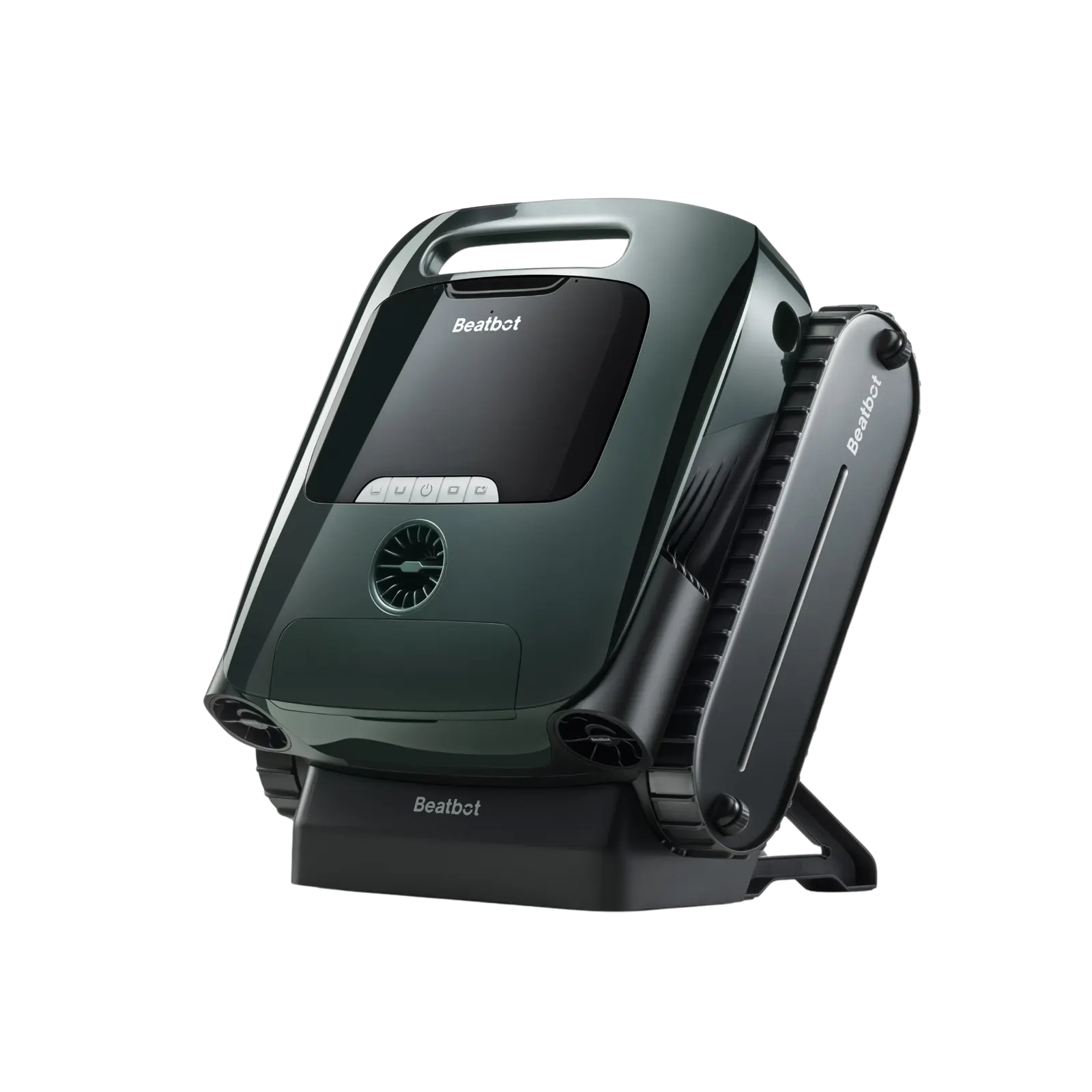
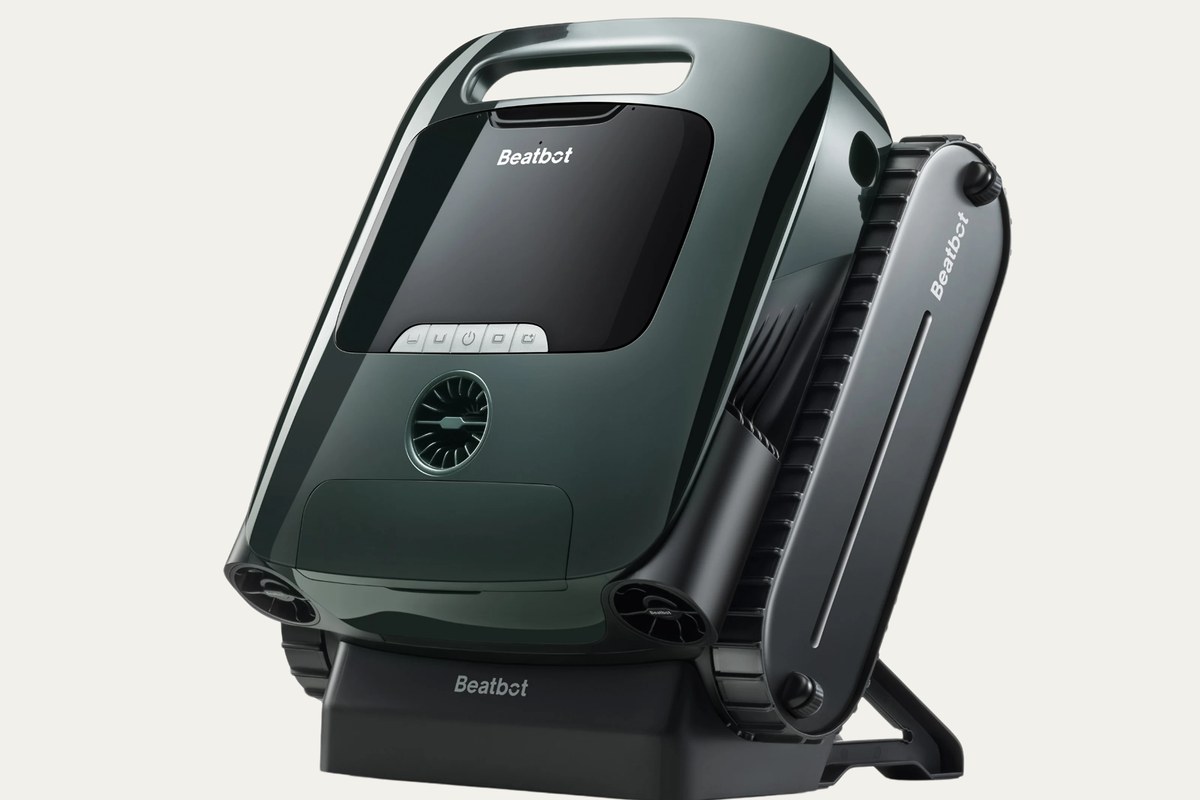
The AquaSense 2 Pro combines underwater cleaning with surface collection and automatic dispensing of a clarifying consumable. Beatbot calls it a five-in-one brief: floor, walls, waterline, surface and water quality. Read that last one carefully, because a clarification system is not a self-running replacement for managing your pool water. The real appeal is folding several physical cleaning jobs into one robot, with surface parking and a charging dock rounding off the routine. That can mean one fewer machine to store, but it also means one battery, one basket and one chassis sharing out effort across very different tasks. The Pro is most compelling when your pool honestly needs attention both on top and below, not when the length of the feature list is the main attraction.
Skimming time is vacuuming time lost
A surface cleaner catches debris before it sinks; a floor cleaner picks it up after it settles. Combining the two is appealing, but one machine can't do both in the same place at the same time. Think about when debris actually lands in your pool. If leaves drop steadily all day, a dedicated skimmer can stay on that job while an underwater robot works the floor. If the pool gets occasional mixed debris, a combined programme may be perfectly adequate. Don't read the Pro's long advertised surface runtime as the length of a full mixed session. Ask how each mode divides its time, how the basket copes with a mixed load and whether the result actually cuts the manual work left over.
The joystick only works up top
Beatbot's page states that app remote control applies to surface cleaning, not underwater cleaning. That's one of the most useful specs to absorb before buying. Steering a visible robot toward a clump of floating leaves is a believable convenience; sending it to a missed patch on the deep-end floor is a different capability entirely, and a remote-control graphic on the product page doesn't mean the app offers it. Check which settings you can change before a run, what status updates come through during it and how you call it back once it's reachable at the surface. Test wireless coverage around the pool itself. Connected features should solve a real problem, not create a recurring pairing headache.
ClearWater is a running cost
ClearWater dispenses an agent meant to make fine particles easier for your filtration to catch. It runs on a consumable, so its cost, storage needs and compatibility all belong in the buying decision. It doesn't mean your sanitizer level, balance or circulation are being measured and corrected. Follow the instructions for your pool and its equipment, and keep testing even when the water looks clearer. You should be able to say why clarification helps in your particular pool rather than buying it as a vaguely good extra. If big leaves are the main issue, it may add little. If stubborn fine material is the problem, its benefit still needs judging alongside your existing filtration.
Walls that fight back
The Pro's wall climbing and dual-pass waterline design are meant to carry its attention beyond the floor. Curved walls, slick finishes and abrupt transitions can still make that harder. A robot that reaches the waterline isn't necessarily spreading its effort evenly around it. Watch for a habit of favouring the easiest wall, and for surface mode leaving debris bunched in one corner. Your normal water level matters too, because it changes how the robot, wall and coping meet. In any trial, photograph fixed reference spots instead of relying on a general impression of sparkling water. That gives you evidence about the specific surfaces and deposits you actually need cleaned.
Lifting it full of wet leaves
The Pro returns to the surface and is designed to let water drain out so it's easier to lift. For anyone who struggles to retrieve a robot from the bottom, that could be a real improvement, but the final lift still depends on your reach, the coping height and the robot's own weight. Try the process with a realistically soggy load in the basket, because a handle that seems convenient on a display unit can be quite another matter when you're leaning over a pool. Think about the carry to the rinse area and the charging dock as well. Every physical step after the automated cycle counts, since those steps often decide whether a pool robot gets used regularly. Lifting effort and parking consistency haven't been measured for this article.
More mechanisms, more places for hair
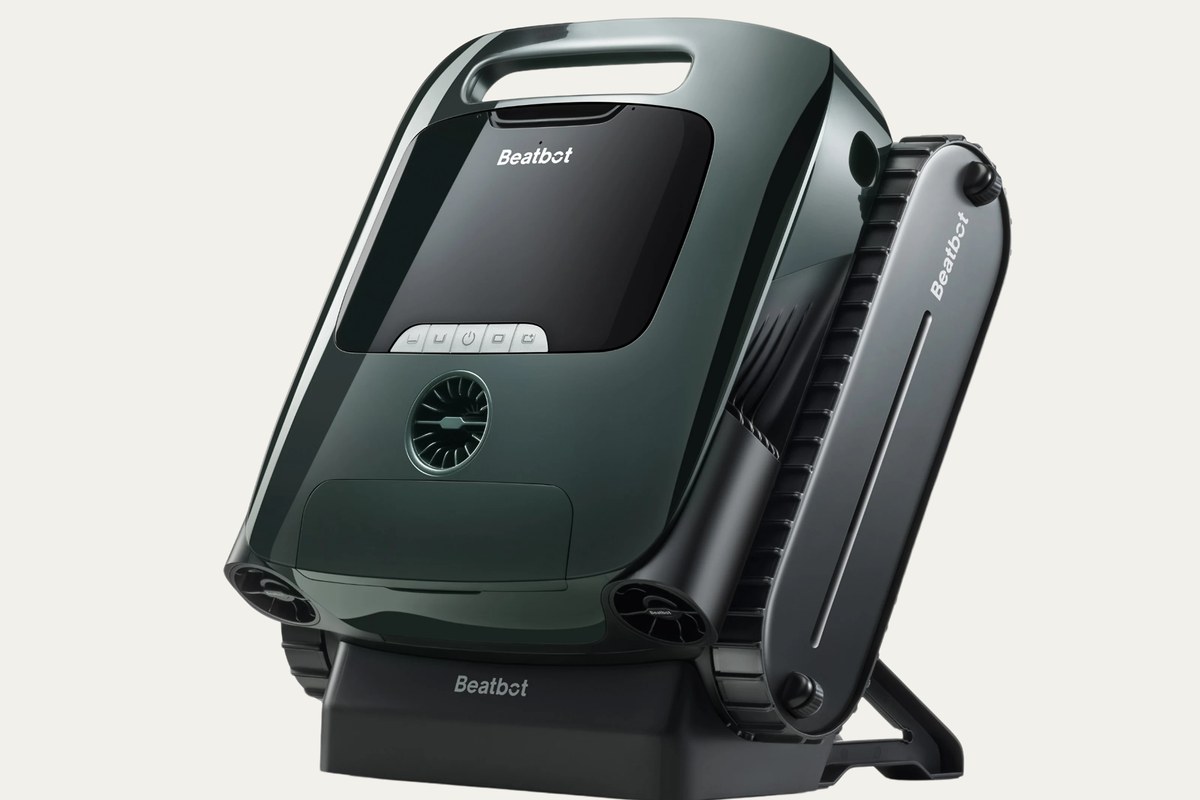
Combining intake, propulsion, brushes and filtration creates more spots where hair, stems and residue can collect. Check the reachable collection parts regularly and clean each filter component the approved way. A big basket isn't permission to put off maintenance indefinitely, since a mix of leaves and fine debris can choke flow long before the compartment fills. Ask which consumables and wear parts are sold locally and how a battery or motor fault would be dealt with. Warranty length is only part of the picture; shipping a bulky cleaner away during peak swimming season can matter just as much. No representative reliability rate or long-term service record was established in this research.
One chassis or two robots
Running two machines lets a skimmer patrol the surface while another robot cleans the floor, and if one breaks you don't lose both functions. It also doubles the storage planning, charging and maintenance. The Pro offers one chassis and one integrated routine, which suits a small equipment area or an owner who values simplicity. The Ultra adds more elaborate perception and navigation, which may matter more in a complex multilevel pool than in a plain rectangle. The standard AquaSense 2 is the sensible comparison if your surface debris is already handled well. Choose based on where your real chores fall, not on the idea that combining or separating jobs is automatically better.
Worth it when both halves are real chores
The Pro is a credible pick for a pool with debris both on the surface and below it, provided its consumable system and the manual upkeep suit you. It shouldn't be bought as an automatic water-treatment service. The unanswered questions are how it balances its cleaning modes, how well it skims corners, how continuous its waterline cleaning is, whether the basket holds on to debris, and how retrieval works in practice. A useful evaluation would score each task separately, because a good overall impression can hide one weak function, and it would compare total owner time with your current routine. Until that's done, the evidence supports a carefully qualified shortlist spot: broad capability with real potential, and enough complexity that a practical trial is especially worthwhile.
The closest alternatives.
| Product | Standpoint Score | Best for | Price |
|---|---|---|---|
| Beatbot AquaSense 2 ProThis review | 7.8Research | Pools with a mix of floating and sunken debris, owned by someone comfortable with an ongoing consumable. | Amazon.ca ↗ |
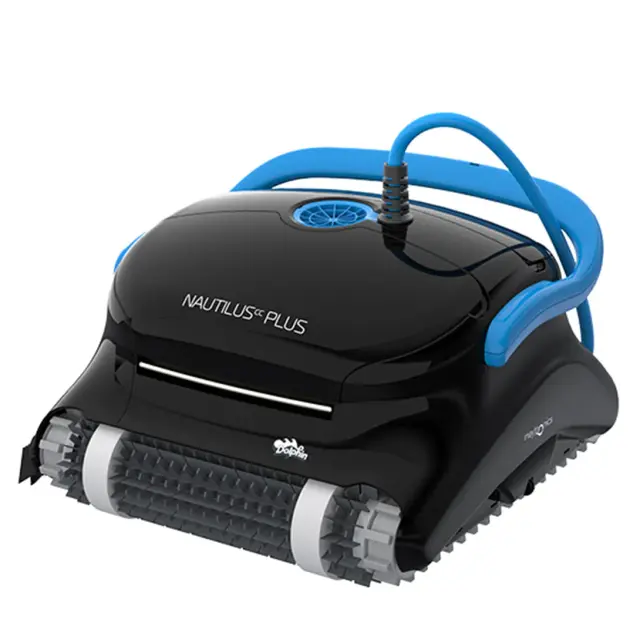
| Dolphin Nautilus CC Plus | 7.4Research | In-ground pools up to 50 feet where reliable power at the poolside matters more than app features or waterline… | Amazon.ca ↗ |
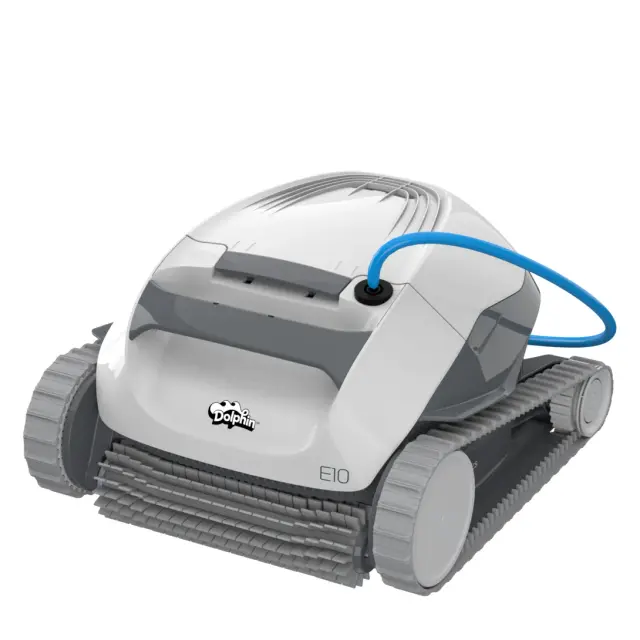
| Dolphin E10 | 7.5Research | Compatible above-ground pools whose main maintenance job is the floor and cove. | Amazon.ca ↗ |
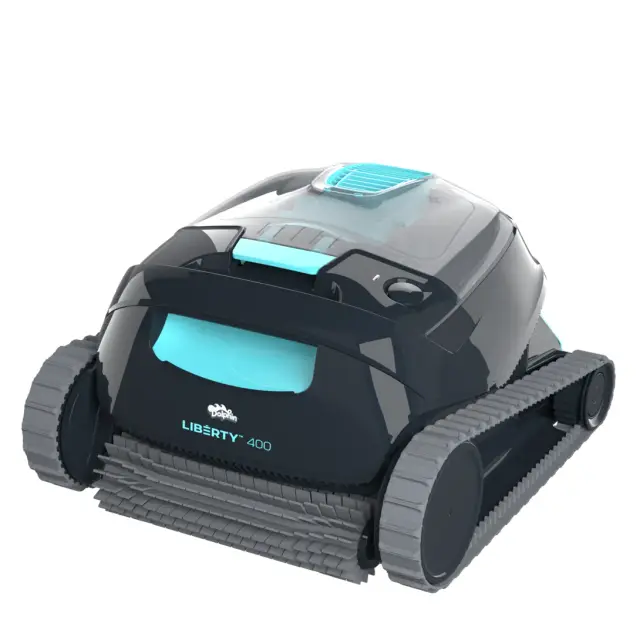
| Dolphin Liberty 400 | 7.7Research | Owners who want cordless submerged cleaning and a less awkward way of getting the robot out of the water. | Amazon.ca ↗ |
Compare scores within a category: Tested means our own use, Research means documentation and attributed outside testing. Price links are affiliate links. As an Amazon Associate, Tech Standpoint earns from qualifying purchases. Disclosure
Sources & further reading.
These are the sources behind this research review. Manufacturer claims are not independent performance measurements. Community accounts, when cited, describe individual experiences.
Product software and regional bundles can change. Corrections and editorial disclosures.
Affiliate link. As an Amazon Associate, Tech Standpoint earns from qualifying purchases. It never changes our verdict or score. Disclosure