An editorial assessment of documented capabilities and ownership trade-offs. This is not a hands-on test result or a measurement of reliability.
Task capability 30%6.9
Vacuum-first cleaning with basic wet care serves a narrower but useful brief.
Navigation & control 20%7.4
Scheduled and voice-controlled routines support everyday room cleaning without flagship assumptions.
Ownership & upkeep 20%7.8
Automatic dust collection reduces bin handling, while wet care stays manual.
Setup & usability 15%8.5
A simpler dust station is easier to accommodate than a full wet-care base.
Documentation & support clarity 15%8.0
Official suction, battery and bag-interval claims are identifiable and can be qualified.
Compare scores within the same product category. Small decimal differences should not override your needs or the evidence limits.
How the Standpoint Score works
We score five aspects of the documented product on a 0–10 scale, then calculate a weighted total:
- Task capability30% of the total
- Navigation & control20% of the total
- Ownership & upkeep20% of the total
- Setup & usability15% of the total
- Documentation & support clarity15% of the total
This product’s 7.6/10 is a provisional research assessment. It does not claim measured performance, tested reliability or a verified customer satisfaction rate. Compare it with products in the same category, and read each criterion’s reasoning above.
Read the full rubric and score bands ↗The ownership case.
Its practical advantage is a simpler dry-cleaning workflow; the advertised bag interval and battery capacity should be treated as context rather than guaranteed household results.
Reasons to consider it
- Automatic dust transfer reduces routine bin handling
- Floating brush and scheduled vacuuming brief
- Less wet-station hardware to accommodate
Go in knowing
- Basic mopping still needs owner preparation and washing
- Bag interval varies with debris and frequency
- Not equivalent to an Ultra washing dock
The specification sheet.
Published specifications from the linked sources. Configurations and availability can differ by country.
- Advertised suction
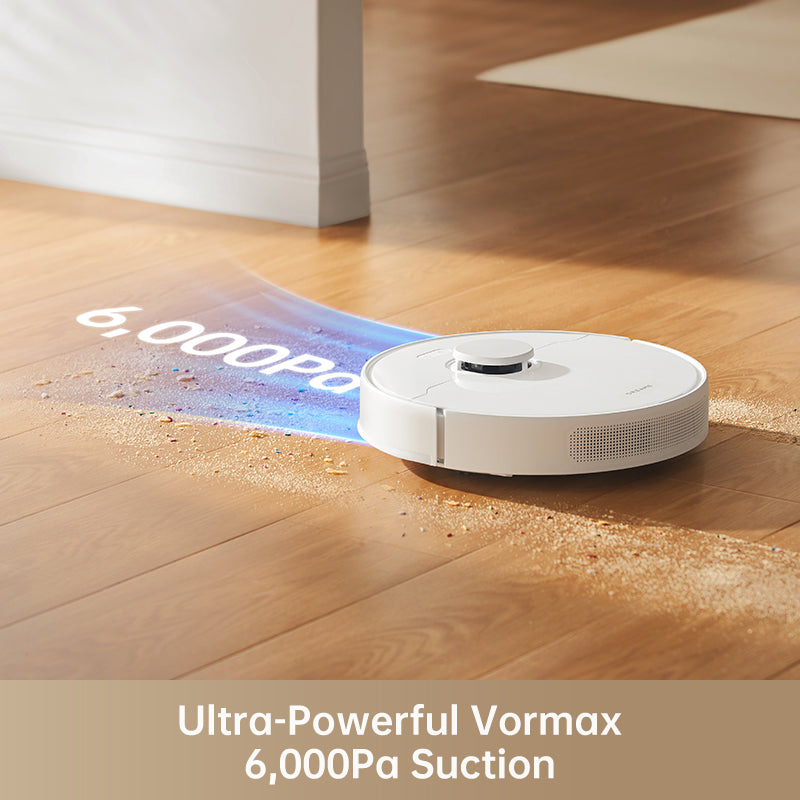
- 6,000 Pa Vormax
- Battery
- 5,200 mAh
- Dock
- Automatic dust collection
- Advertised bag interval
- Up to 90 days under manufacturer conditions
- Brush
- Floating main brush
A clearer job than the Ultra machines
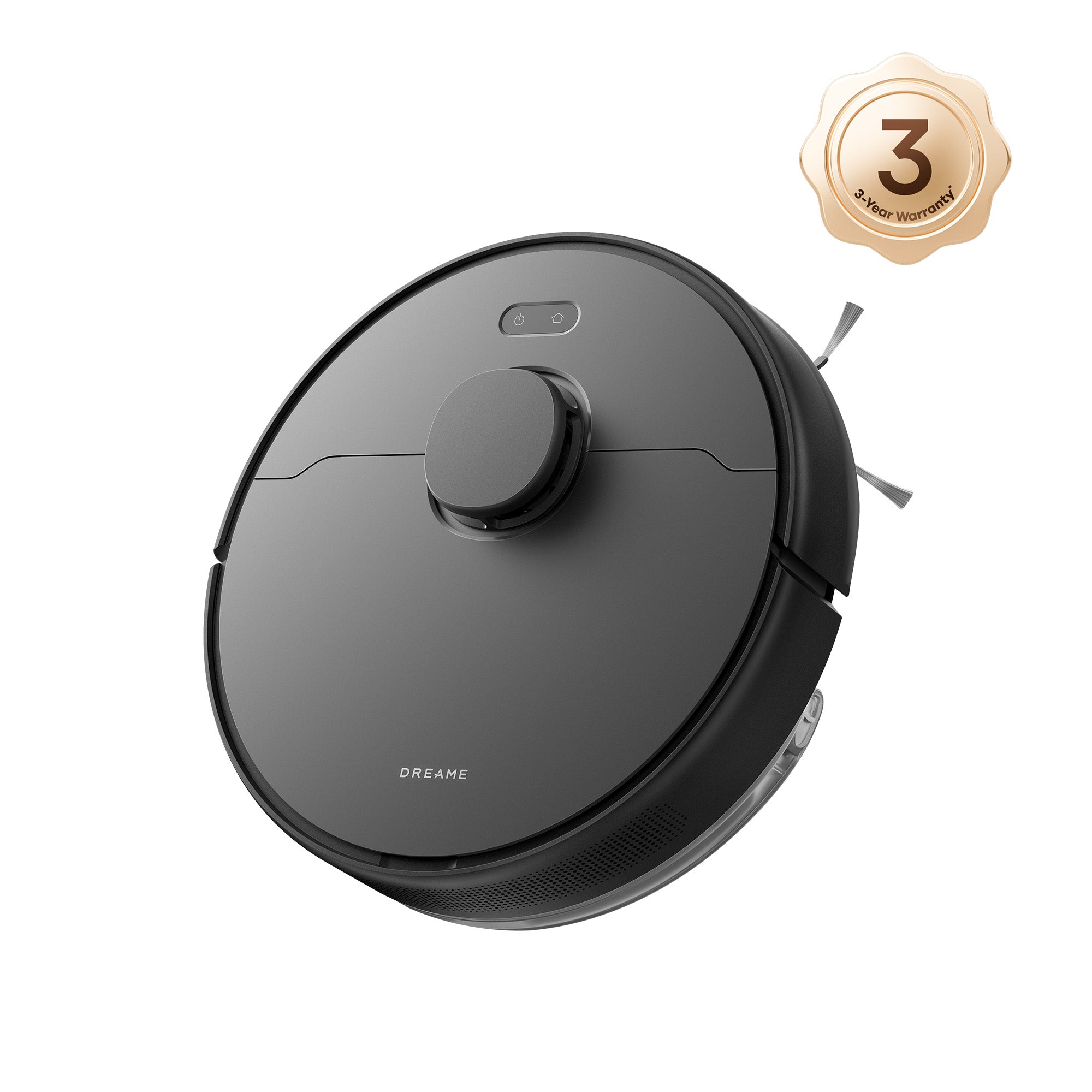
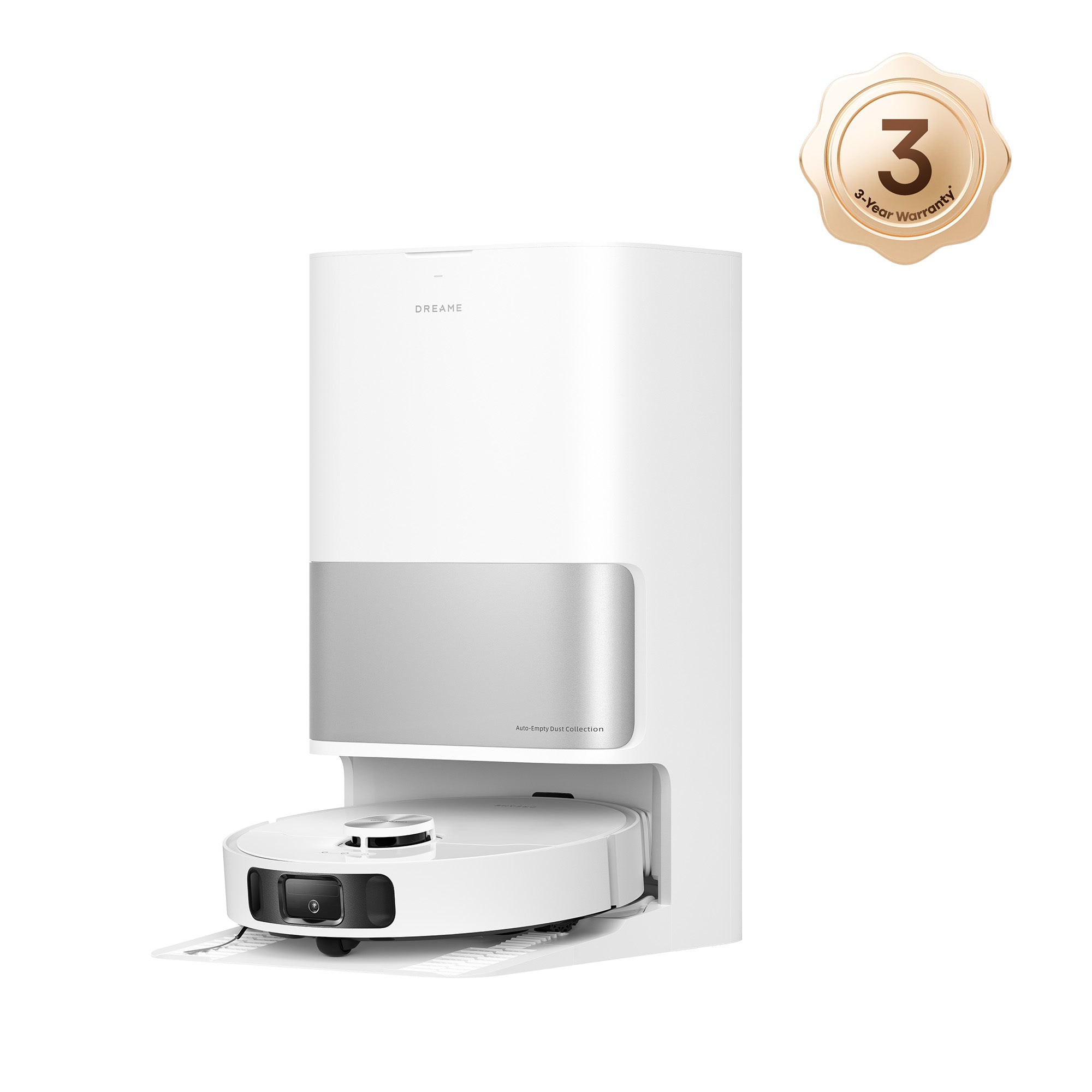
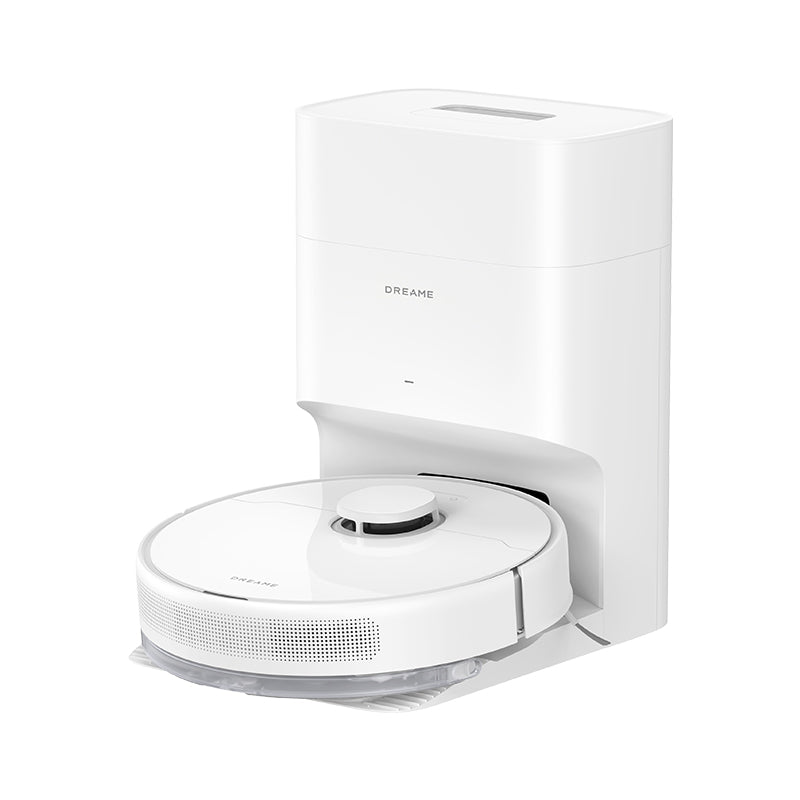
D10 Plus Gen 2 is most naturally assessed as a daily vacuum with a dust-collection station. That is a useful brief for a household that wants crumbs, dust and hair collected frequently without emptying the robot after every run. It also avoids the larger water-handling station associated with Dreame's Ultra products. The remaining wet-cleaning work is more manual, which may be perfectly acceptable if mopping is occasional. Before buying, decide which chore matters most. If carrying a small dustbin is the recurring annoyance, D10's package targets it. If washing mop pads is the chore you want automated, the model sits in the wrong part of the range.
Ninety days is a conditional claim
The manufacturer advertises up to 90 days of automatic dust collection. That should not become a fixed reminder that overrides inspection. A quiet single-person home and a busy household with shedding pets can fill a bag at very different rates. Bulky hair can also affect transfer before the nominal capacity is reached. Watch early emptying cycles and inspect the robot's bin to see whether it is actually clear. The station's value is reliable reduction in routine handling, not a particular calendar interval. A bag should be replaced according to condition and the instructions, rather than kept in use merely to match a promotional number.
The floating brush needs contact with the real surface
Dreame highlights a floating brush alongside the 6,000 Pa suction system. The brush's ability to follow a surface is relevant because airflow alone does not describe how debris is disturbed and collected. Test the machine on the rug or carpet it will see most often, including edges and transitions. A thick pile, a light mat and a hard-floor joint are different tasks. We have not measured extraction, so a suction number cannot be converted into a comparison score. Inspect remaining fine debris and hair, then inspect the brush and filter. That sequence helps distinguish insufficient pickup from a simple maintenance issue.
Battery capacity does not equal useful floor coverage
The specified 5,200 mAh battery identifies the hardware, but route length, power setting, carpet work and time spent manoeuvring affect a real cleaning session. A buyer should look at completion of the intended rooms rather than a best-case runtime. Test the farthest room and the return journey to the station. If the robot recharges partway through a task, assess whether the interruption matters to the household schedule. A kitchen-and-hall routine may be entirely satisfactory even if an all-house maximum-power run is not. The useful unit of automation is the completed chore, not the most ambitious area estimate in a brochure.
Basic wet care changes the owner’s role
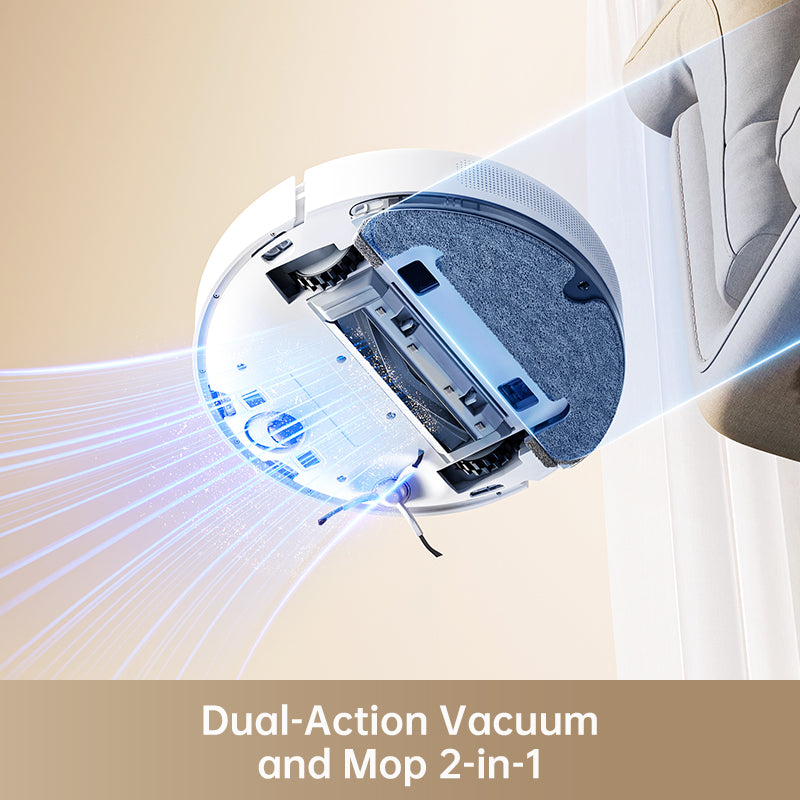
The vacuum-and-mop description should not imply an Ultra-style wash-and-dry cycle. For a wet task, the owner needs to prepare the appropriate components, use a clean pad and service it afterwards according to the supplied instructions. That makes targeted hard-floor wiping a more realistic expectation than effortless repeated washing of a heavily soiled level. Do not leave a dirty damp pad in place simply because the robot has returned to charge. Floor-safe water settings and cleaning chemistry still apply. A basic wet attachment can be useful, but only when the buyer includes its manual care in the calculation of time saved.
A good fit is more important than a long feature list
Compare D10 Plus Gen 2 with D9 Max Gen 2 if you can accept manual bin handling, and with L10s Ultra Gen 2 if automatic wet care is the real objective. These are different allocations of work, not just ascending suction figures. Our outstanding tests would measure pickup, bag transfer after hair loads, intervention frequency and how often the basic mop is actually used. On documented features, D10 is a sensible vacuum-first configuration. It should be bought because automatic dry collection fits the routine, not because the words Plus and Gen 2 create an impression of a complete floor-washing system.
A routine built around automatic dry collection
The D10's first maintenance check should happen well before the advertised maximum bag interval. After a few normal runs, open the robot's collecting area as instructed and verify that the station has removed the debris. A tightly packed hair load can behave differently from dry crumbs or fine dust. If material remains, inspect the permitted transfer and filter areas rather than simply triggering repeated emptying. This creates a useful baseline for the household's actual load. Keep a record of when the first bag really needs changing, then use that experience to estimate supply needs. Ninety days is a manufacturer scenario, while the owner's pet count, floor area and schedule determine the practical interval. The goal is reliable bin relief without ignoring a developing restriction.
For wet cleaning, plan a limited assignment and make the manual end-of-task care explicit. Fit a clean pad, prepare water as directed and select suitable hard-floor rooms. Afterwards, remove and clean the wet materials and let them dry according to the instructions. The dry station does not convert this into an Ultra-style mop-washing system. A carpet-heavy household may reasonably use the wet feature only occasionally, which keeps the daily routine focused on vacuuming. Observe any rug crossing with the actual wet configuration, and use appropriate boundaries where moisture is unwanted. If manual pad care is repeatedly skipped, the right response is to reconsider the workflow rather than expect the basic mop to maintain itself merely because dust emptying is automated.
The battery specification should be tested against the intended task, not an abstract maximum area. Start a route through the busiest rooms at the chosen suction setting and note whether it completes and returns reliably. A recharge interruption may be irrelevant to daytime maintenance but inconvenient in a short cleaning window before guests arrive. Configure the map before voice integrations so commands correspond to useful room boundaries. Review account sharing and retain reset instructions for future resale. Canadian buyers should check regional warranty coverage and genuine bag supply for D10 Plus Gen 2 specifically. Compare the total package with D9 Max Gen 2 only after deciding how much automatic collection is worth. Saving money on a simpler charger is sensible for an owner who empties bins consistently; it is less useful if that chore causes daily vacuuming to be abandoned.
For a household that vacuums several short sessions each day, count station emptying events as well as bag changes. Frequent transfers may be convenient for a small onboard bin but acoustically intrusive near a desk. The useful schedule balances timely collection with the periods when that station noise is least disruptive.
Sources & further reading.
These are the sources behind this research review. Manufacturer claims are not independent performance measurements. Community accounts, when cited, describe individual experiences.
Documentation reviewed: 9 October 2026. Product software and regional bundles can change. Corrections and editorial disclosures.