An editorial assessment of documented capabilities and ownership trade-offs. This is not a hands-on test result or a measurement of reliability.
Task capability 30%6.7
Routine vacuuming and basic wet care provide a limited but useful compact-dock brief.
Navigation & control 20%7.8
LiDAR and tri-laser sensing add planned coverage and object response.
Ownership & upkeep 20%7.0
Onboard compression can reduce handling frequency but does not provide full station maintenance.
Setup & usability 15%8.1
Small charging base eases placement, though dust handling needs explicit understanding.
Documentation & support clarity 15%8.0
Official dimensions and onboard-storage description clarify the design when read carefully.
Compare scores within the same product category. Small decimal differences should not override your needs or the evidence limits.
How the Standpoint Score works
We score five aspects of the documented product on a 0–10 scale, then calculate a weighted total:
- Task capability30% of the total
- Navigation & control20% of the total
- Ownership & upkeep20% of the total
- Setup & usability15% of the total
- Documentation & support clarity15% of the total
This product’s 7.4/10 is a provisional research assessment. It does not claim measured performance, tested reliability or a verified customer satisfaction rate. Compare it with products in the same category, and read each criterion’s reasoning above.
Read the full rubric and score bands ↗The ownership case.
Its storage architecture is genuinely different from a typical auto-empty robot; choose it only after understanding the manual wet-care and bag-change routine.
Reasons to consider it
- Compact charging base
- Onboard dust storage avoids a large collecting tower
- LiDAR maps and tri-laser sensing
Go in knowing
- Not a mop-washing station
- Extended dust storage is conditional
- Older availability and exact consumables require checking
The specification sheet.
Published specifications from the linked sources. Configurations and availability can differ by country.
- Dust handling
- Onboard compression with disposable bag option
- Navigation
- LiDAR and tri-laser avoidance
- Robot dimensions
- 350 × 355 × 107 mm
- Base dimensions
- 275 × 118 × 137 mm
- Wet cleaning
- Basic onboard mopping arrangement
Compact docking changes the appeal
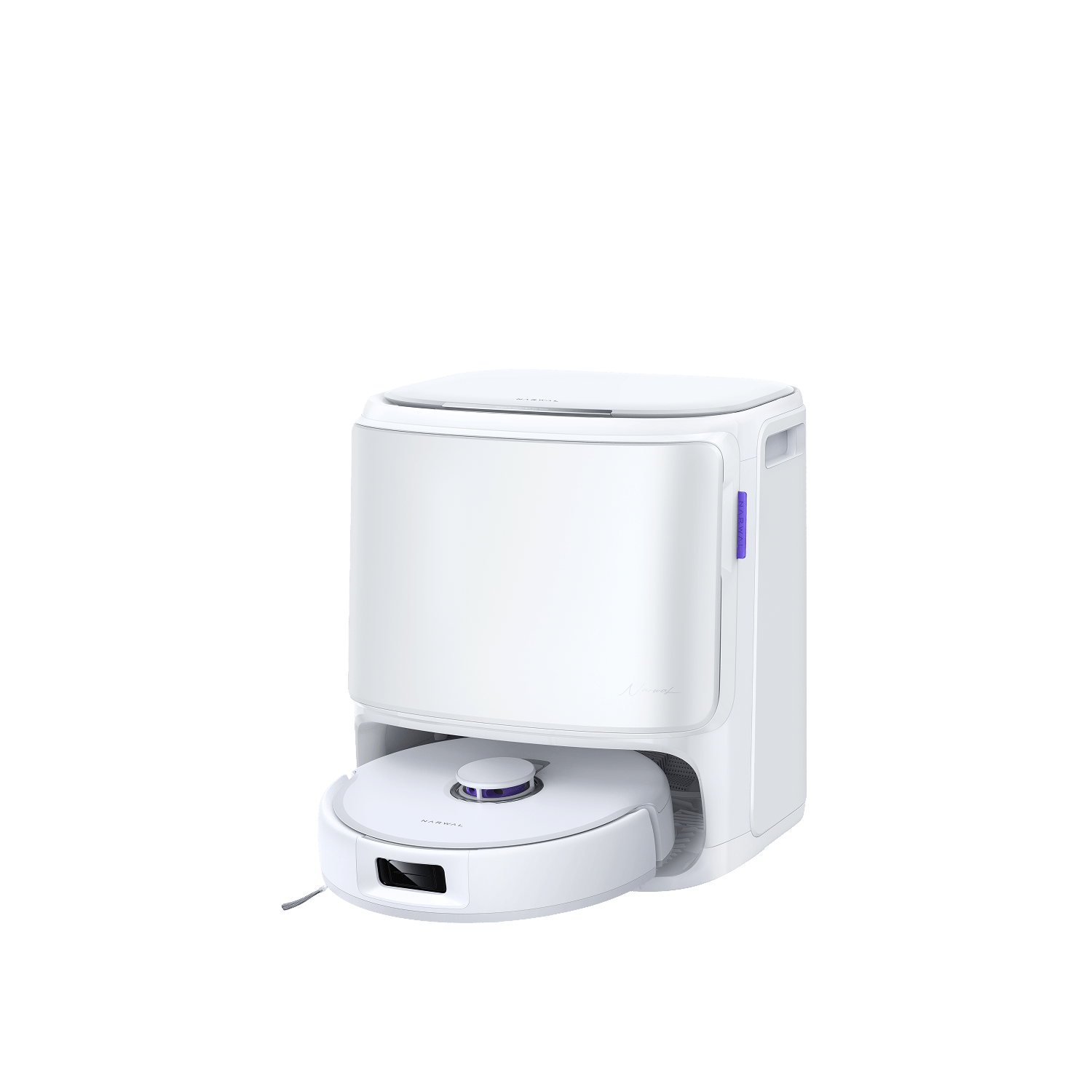
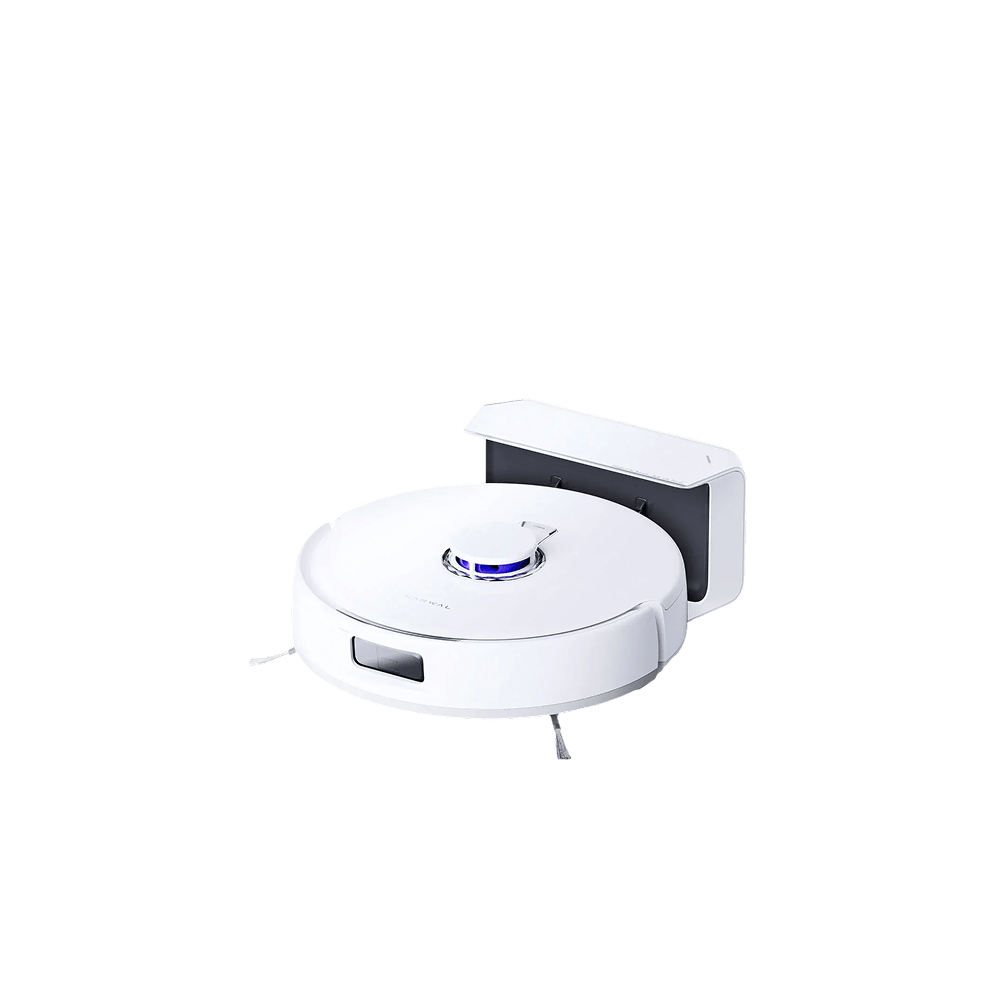
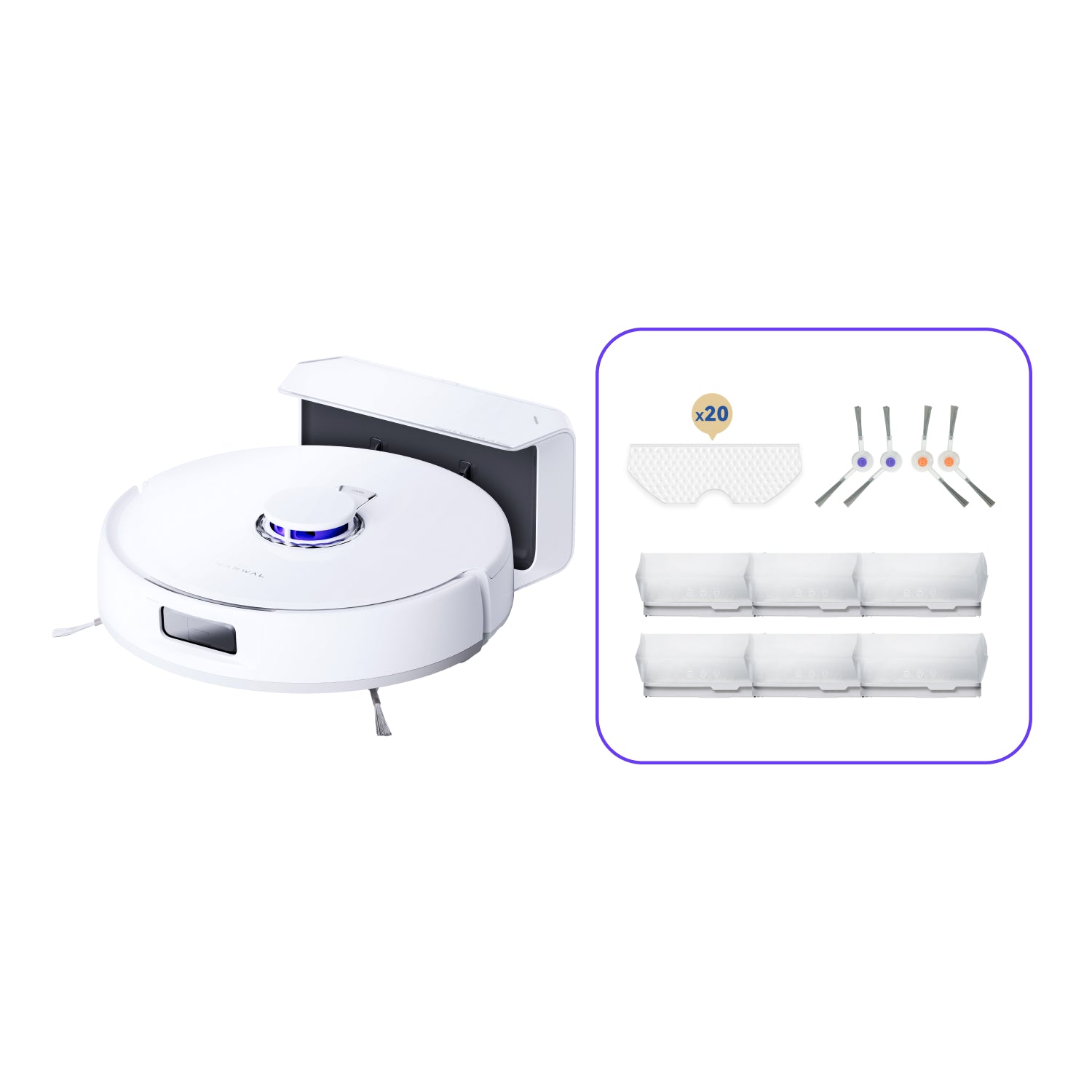
Freo X Plus is interesting because the station is small while the dust-management claim extends beyond emptying a tiny bin after every run. Narwal uses onboard compression and a disposable bag option rather than a conventional large suction-transfer dock. That can suit an apartment where floor space and auto-empty noise are significant concerns. It also means the owner still interacts with stored debris inside the robot. The first buying question should be whether that handling is comfortable and the correct bags are readily available. A compact station is a useful benefit, but only if the rest of the maintenance arrangement matches the household.
Storage claims need a debris reality check
Narwal describes up to seven weeks of onboard dust storage. Treat that as a conditional manufacturer claim rather than an instruction to leave the machine unchecked. Long hair, bulky pet fur and fine dust can affect collection differently. Inspect the storage area after early runs to understand your own load, and follow the instructions for changing or cleaning the appropriate container. Compression does not remove the need for airflow through a maintained filter. A robot that stores dirt for longer may reduce the frequency of handling, but the owner should still check performance and odour rather than waiting for the advertised interval before looking inside.
The robot itself is not especially miniature
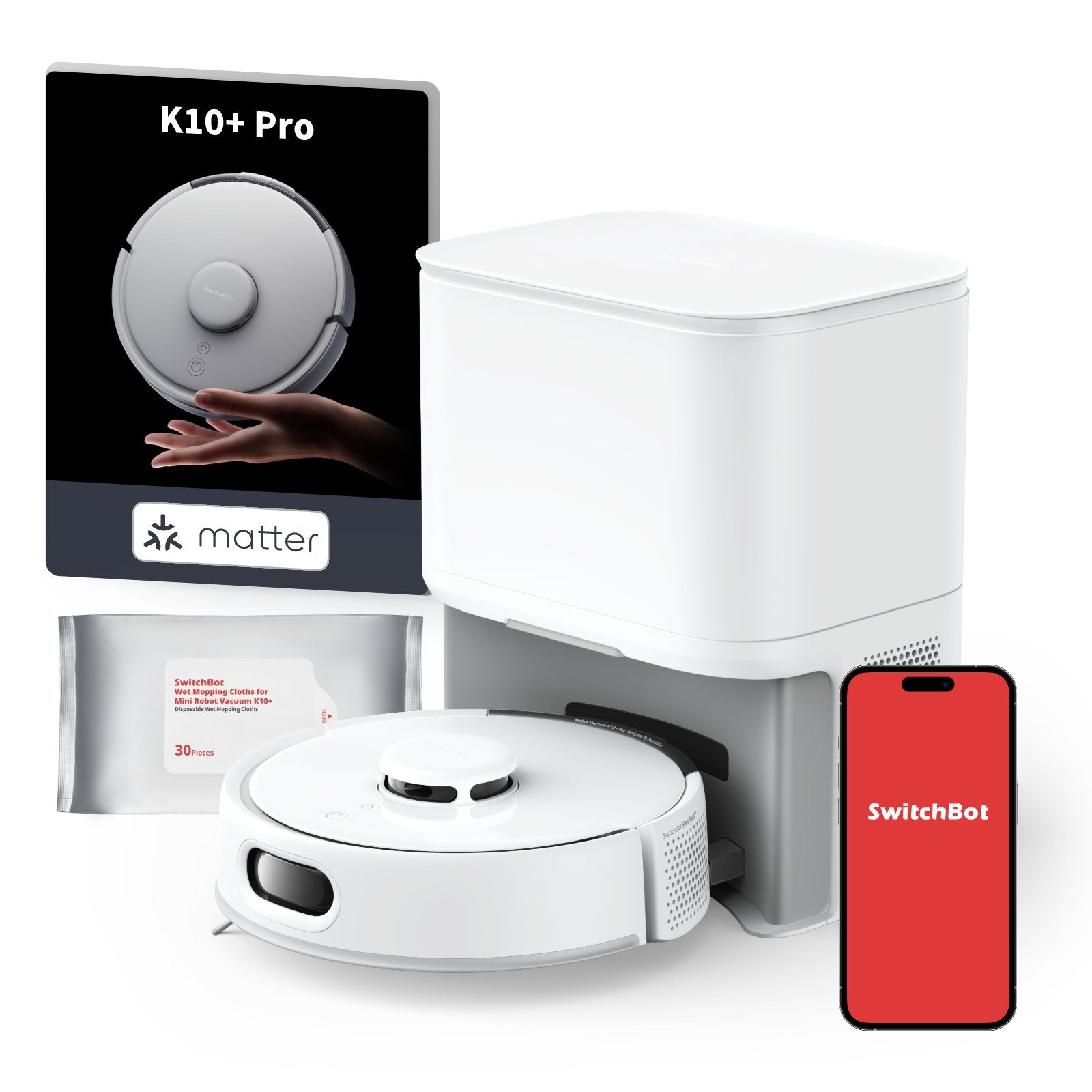
The listed body is about 35 cm across and 10.7 cm tall. That makes the compact base the space-saving element, rather than the cleaning machine itself. Measure furniture entry gaps accordingly. A small charger behind a chair does not help if the robot cannot pass between the legs to reach it. Low sofas may also remain inaccessible. This distinction is useful when comparing X Plus with a genuinely smaller-diameter robot such as SwitchBot K10+ Pro. One prioritises a compact docking footprint; the other changes the physical access of the robot. The right choice depends on which space problem the household is trying to solve.
Mopping remains an owner-managed addition
The wet-cleaning arrangement does not include a large station that repeatedly washes and dries pads. The owner needs to prepare and service the mop according to the manual, which makes selected hard-floor tasks a more realistic brief than unattended intensive washing. Use a clean pad, follow floor-safe moisture guidance and inspect the dry finish for residue. A robot described as vacuuming and mopping in one pass can still move dirty textile across subsequent areas if the pad is not maintained. If regular pad washing is the task you most want eliminated, Freo X Ultra or X10 Pro offers a different ownership proposition despite the similar family names.
A focused recommendation
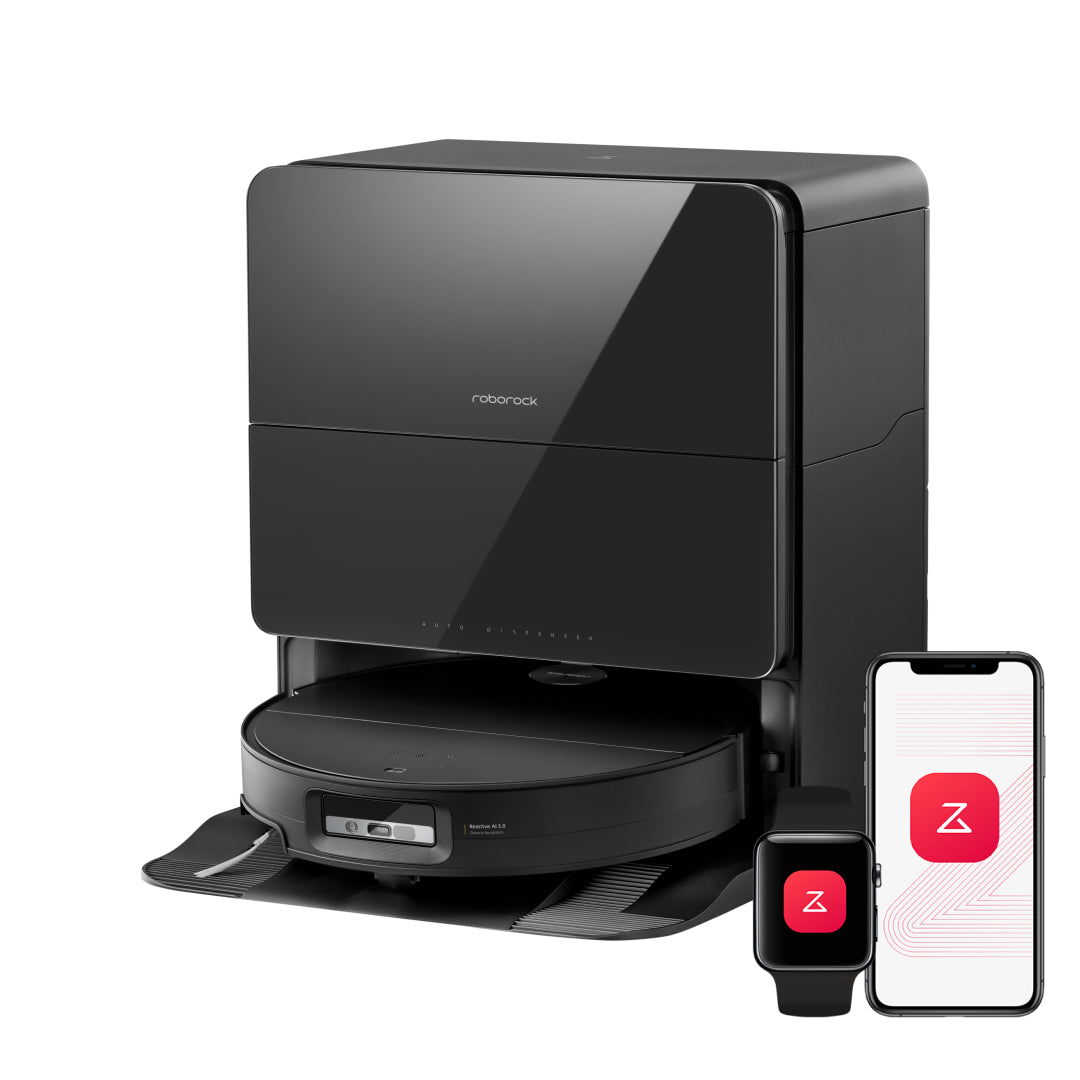
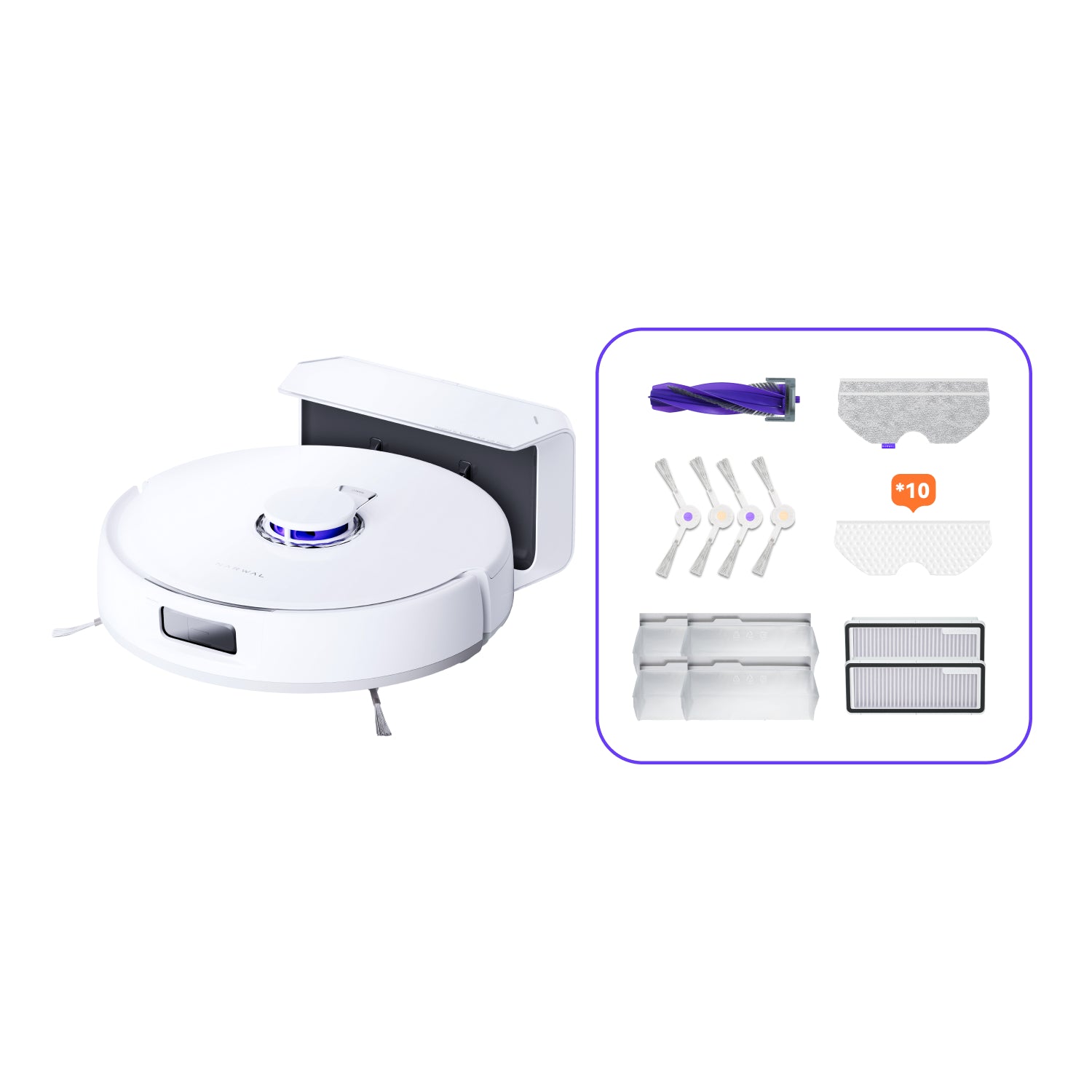
Choose Freo X Plus for its compact base and onboard storage approach when those characteristics solve a real installation or noise problem. Compare K10+ Pro for narrow-space access and X10 Pro for fuller station automation. We have not measured the convenience of compressed-bag removal, pickup quality or obstacle success. A proper trial should record those outcomes and the time spent on wet aftercare. The design can make sense for an involved owner in a modest space. It is less suitable for someone who expects a small base to deliver all the maintenance functions of a much larger washing and dust-collection station.
Compact docking without imaginary automation
X Plus should be installed with the robot's full dimensions in mind, not only the small base. Check the approach width, furniture legs and overhead clearance, then repeat a return-to-charge from the farthest intended room. A charger can fit neatly behind a chair while the robot cannot turn into it reliably. Keep the path stable during initial mapping and avoid using a narrow decorative gap as a permanent dock location without testing it. Observe normal operation before deciding whether the compact base has actually solved the space problem. If the real issue is passage between close furniture legs, a smaller-diameter cleaner may be more useful. The X Plus saves station space, which is a different advantage from making the moving robot miniature.
The onboard compression arrangement should be evaluated through a real bag or bin service. Learn how the stored material is removed and whether that handling is manageable for the person maintaining the appliance. Inspect sooner than the maximum advertised interval with pets, long hair or frequent cleaning. Check the filter and intake at the same time, because storage capacity alone does not guarantee airflow. The wet attachment has its own manual routine: clean preparation, a suitable floor area and care afterwards. The small base does not wash pads, so do not leave dirty damp textile attached indefinitely. A spare compatible pad and an easy drying location can make occasional wet tasks practical, while daily intensive mopping may justify a different station architecture.
For an older or discounted X Plus listing, confirm condition, included containers and the supply of exact disposable bags or reusable-bin parts. A Canadian buyer should establish warranty eligibility and the repair route before importing from a US seller. The current app's room controls should be checked during the return period, and any previous owner's association should be removed correctly on a second-hand unit. Review map-sharing and account permissions even without a remote-camera use case. Compare the total routine against K10+ Pro for access and X10 Pro for station automation. The compact X Plus design is useful when reduced dock size and onboard storage fit the owner. It is a poor compromise if the missing wet-care or station-transfer functions are precisely the chores the buyer was trying to eliminate.
The small charging base can be easier to reposition than a water station, but moving it frequently may complicate an otherwise stable routine. Establish one permanent location after the initial trial and keep its approach clear. Compactness is most useful when it produces a dependable installation, rather than encouraging the charger to be tucked into whichever temporary gap is available.
Sources & further reading.
These are the sources behind this research review. Manufacturer claims are not independent performance measurements. Community accounts, when cited, describe individual experiences.
Documentation reviewed: 9 October 2026. Product software and regional bundles can change. Corrections and editorial disclosures.