An editorial assessment of documented capabilities and ownership trade-offs. This is not a hands-on test result or a measurement of reliability.
Task capability 30%7.8
The documented coverage fits common submerged maintenance.
Navigation & control 20%7.6
Several paths and modes can adapt the routine to conditions.
Ownership & upkeep 20%7.0
Two filter layers create useful retention and additional cleaning work.
Setup & usability 15%7.3
Cordless deployment is simple, with hook retrieval and charging remaining.
Documentation & support clarity 15%7.4
The FAQ states water-quality limits, though filtration wording is inconsistent.
Compare scores within the same product category. Small decimal differences should not override your needs or the evidence limits.
How the Standpoint Score works
We score five aspects of the documented product on a 0–10 scale, then calculate a weighted total:
- Task capability30% of the total
- Navigation & control20% of the total
- Ownership & upkeep20% of the total
- Setup & usability15% of the total
- Documentation & support clarity15% of the total
This product’s 7.5/10 is a provisional research assessment. It does not claim measured performance, tested reliability or a verified customer satisfaction rate. Compare it with products in the same category, and read each criterion’s reasoning above.
Read the full rubric and score bands ↗The ownership case.
The C2 is worth considering for straightforward submerged cleaning where the owner values mode selection and is willing to maintain dual-layer filtration.
Reasons to consider it
- Dual-layer filtration
- Multiple paths and modes
- Floor, wall and waterline coverage
Go in knowing
- Current page identifies a 2026 upgrade
- Hook retrieval remains manual
- Robot does not manage water chemistry
The specification sheet.
Published specifications from the linked sources. Configurations and availability can differ by country.
- Coverage
- Floor, walls and waterline
- Basket
- 3 L
- Modes
- 7, current manufacturer page
- Floor endurance
- Up to 180 minutes, manufacturer claim
The C2's strongest case is fairly conventional
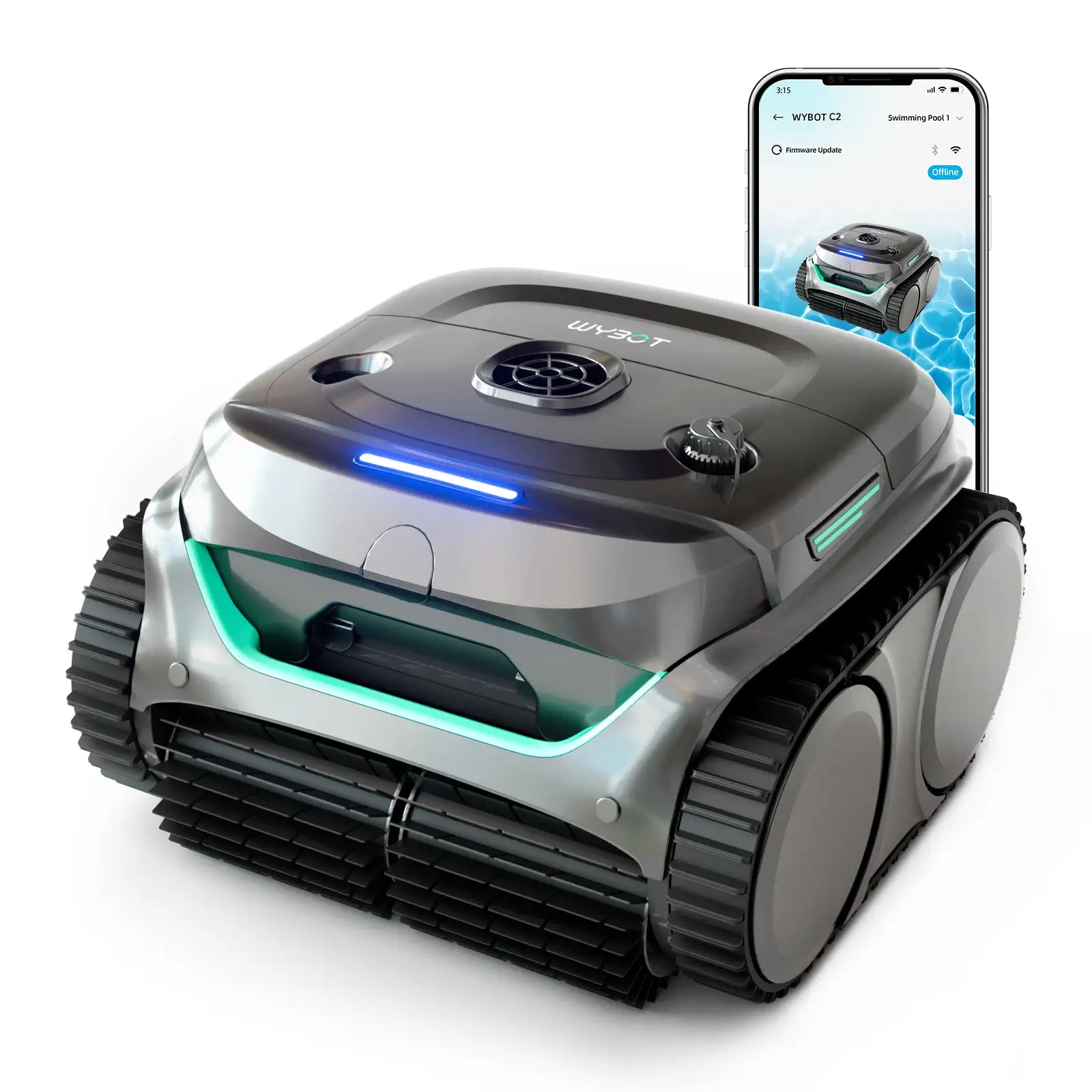
The current WYBOT C2 page describes a cordless cleaner covering floor, walls and waterline, with a three-litre basket and dual-layer filtration. It offers app-selected cleaning modes and paths rather than relying on one fixed routine. That is a sensible package for a pool owner who wants broad submerged coverage without buying a surface-skimming machine. The page identifies a 2026 upgrade, so older C2 coverage should not be assumed to describe the same supplied filter or software. The model deserves consideration for the work it is documented to do, not for features belonging to C2 Vision or the larger S-series. Our assessment is based on manufacturer material and original analysis; no pool testing was performed.
Dual-layer filtration is the central detail
WYBOT describes a coarse basket combined with a finer secondary element. This arrangement can separate the storage of larger debris from the interception of smaller material, but it also creates two components to clean. The product page uses strong fine-filtration language while its FAQ correctly cautions that the robot is not a water-quality-management system. That distinction is useful. Collecting particles is not the same as correcting the pool's chemistry or replacing circulation. Ask which filter layers ship with the exact revision, how each should be cleaned and whether replacement media remain available. We would evaluate retained fine material, flow after loading and the time required to restore the filter, rather than ranking the cleaner solely by a micron number.
Seven modes are useful only when they are understandable
Multiple cleaning modes can help an owner devote effort to the floor, wall or waterline as conditions change. They can also create uncertainty if the difference between modes is unclear. Before purchase, review the app instructions and identify the programme you would actually use most weeks. Check when a programme can be changed and whether the robot needs to be out of the water to communicate reliably. A cycle timer is not necessarily unlimited unattended cleaning: the battery and basket still set practical limits. An owner should know what happens after charging or a software update and whether a schedule remains active. The best automation is the routine that behaves predictably without frequent troubleshooting.
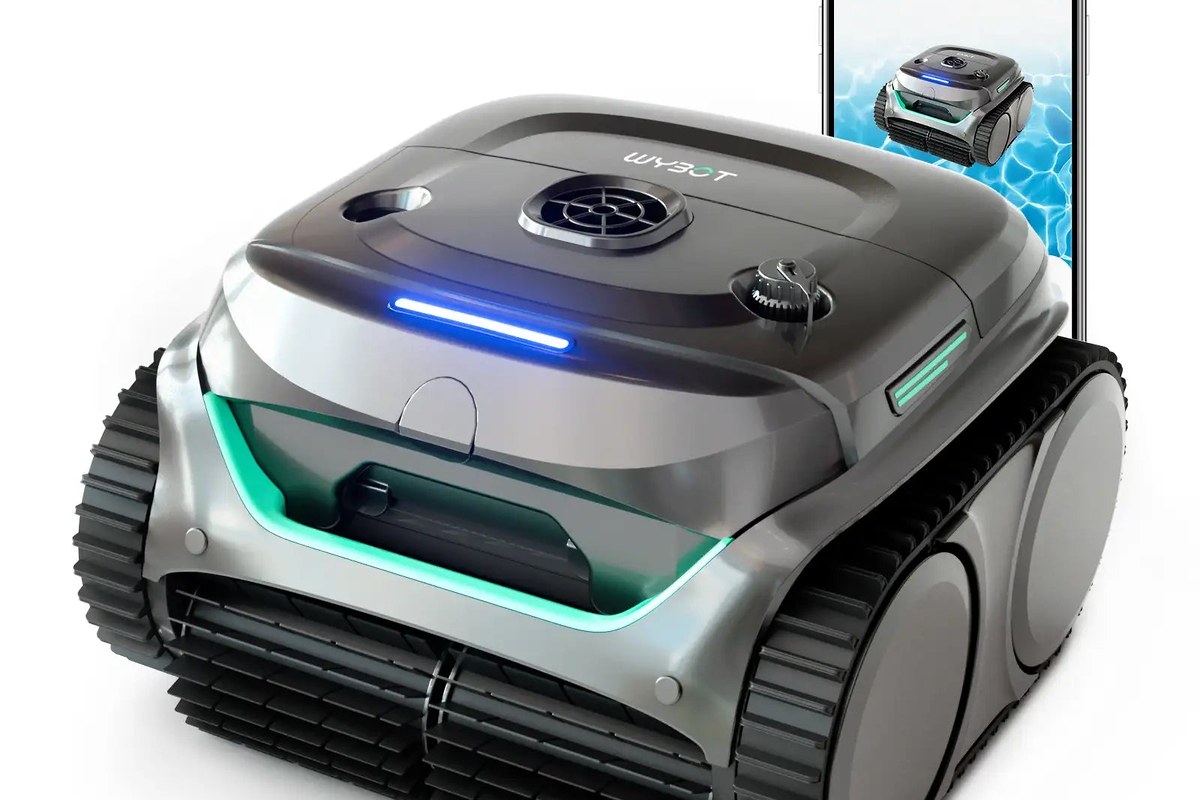
Path options versus adaptive understanding
The C2 offers several cleaning paths. That can be helpful when one pattern suits a pool better than another, but it should not automatically be equated with a detailed map or visual debris recognition. The ordinary C2 and C2 Vision need to remain separate in a comparison. Watch how the base model handles a sloping floor, a ladder and a tight corner. If a different path improves coverage, that is a useful setting; if every path repeatedly misses the same inaccessible feature, more menu choices will not solve the geometry. Record which programme was used during a trial so that results are reproducible. A favourable one-off run without settings or pool details offers weak evidence for another buyer.
Wall and waterline performance need inspection
Climbing a wall is only one part of cleaning it. The brush and intake must remain productively positioned, and the robot must distribute its effort around the pool. A loaded filter, slippery finish or abrupt transition can change that behaviour. We would inspect the waterline beside fittings and in corners, not just the centre of a long wall. For the floor, compare the shallow and deep ends after the same run. The stated maximum pool area is best treated as a compatibility ceiling, not a guarantee that every surface in a complex pool will receive equal attention. Leaving comfortable capacity margin may be more valuable than buying a robot exactly at its advertised limit.
Retrieval still involves a person
The current C2 package includes a hook, and the ownership routine should be understood around actual retrieval rather than around a broad promise of autonomy. Consider the reach required from the pool edge, how quickly the robot releases water and where the wet machine will be placed for cleaning. A cordless design removes the floating cable but also removes that visible connection to the machine's location. Do not improvise lifting methods that the manual does not permit. Check whether a suitable pole is already available and whether the handle is easy to engage. A machine that cleans well can still be a poor match for an owner who finds its end-of-cycle handling physically difficult.
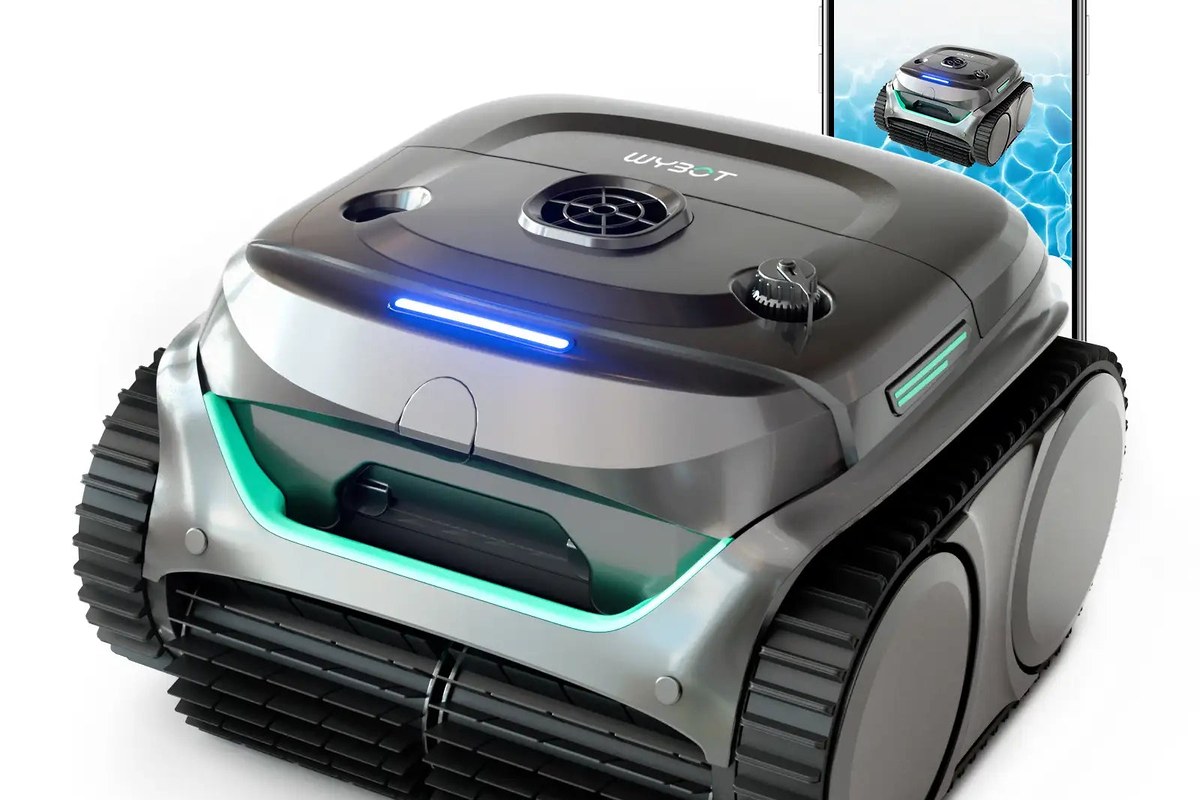
The manufacturer's dirty-water caution is valuable
WYBOT notes that very dirty water and suspended particles can affect operation and recommends improving clarity through the pool's circulation and filtration first. That is a useful boundary, not a reason to dismiss the robot. Routine maintenance and severe opening cleanup are different tasks. Remove oversized debris manually and maintain the main filtration system rather than expecting a compact cleaner to rescue every neglected pool condition alone. If the water becomes cloudy during a run, inspect the filter and the source of the material instead of immediately increasing runtime. The C2 can plausibly reduce recurring physical cleaning, but its role remains one part of a pool-care system that includes testing, circulation, brushing and occasional specialised intervention.
The service questions behind a low sale price
A promotional price can make the C2 attractive, but compare the basket, fine-filter replacements, brushes, charger and possible battery service as well. Ask whether repairs are handled locally or require shipping the entire robot, and keep the seller's exact return terms. Seasonal buyers should ensure they have time to test the machine in water before the return period expires. Online star ratings and isolated complaints do not establish a representative failure rate. We have not measured long-term durability. The rational value case is that the machine performs the required work with manageable maintenance and an accessible support route. A cheap robot that cannot be repaired during the swimming season may be more costly in inconvenience than its invoice suggests.
Our shortlist position
The C2 is worth considering for straightforward submerged cleaning where the owner values mode selection and is willing to maintain dual-layer filtration. The C2 Vision's camera should be evaluated separately rather than assumed necessary for every pool. A surface skimmer is the better companion if floating leaves dominate, while a corded cleaner may suit frequent consecutive runs. The evidence still needed includes coverage consistency, loaded-filter climbing, retrieval effort and app behaviour after repeated use. A proper trial should log those points over several cycles. Until then, this is a conditional recommendation based on a coherent feature set, with the filter-maintenance routine and the exact 2026 revision carrying more weight than a long list of cleaning modes.
Sources & further reading.
These are the sources behind this research review. Manufacturer claims are not independent performance measurements. Community accounts, when cited, describe individual experiences.
- WYBOT C2 — official product information ↗manufacturer
Documentation reviewed: 9 October 2026. Product software and regional bundles can change. Corrections and editorial disclosures.