An editorial assessment of documented capabilities and ownership trade-offs. This is not a hands-on test result or a measurement of reliability.
Features & capability 30%8.7
Adaptive listening, spatial options and flexible controls provide a broad documented feature set.
Compatibility & connectivity 20%8.0
Strong Apple integration is offset by reduced functionality with other platforms.
Ownership & upkeep 20%6.8
Three batteries, fitting parts and account transfer need individual used-purchase checks.
Setup & everyday use 15%8.7
Stem gestures and multiple charging methods can reduce everyday friction.
Documentation & support clarity 15%8.8
Apple clearly distinguishes the USB-C generation and publishes detailed feature conditions.
Compare scores within the same product category. Small decimal differences should not override your needs or the evidence limits.
How the Standpoint Score works
We score five aspects of the documented product on a 0–10 scale, then calculate a weighted total:
- Features & capability30% of the total
- Compatibility & connectivity20% of the total
- Ownership & upkeep20% of the total
- Setup & everyday use15% of the total
- Documentation & support clarity15% of the total
This product’s 8.2/10 is a provisional research assessment. It does not claim measured performance, tested reliability or a verified customer satisfaction rate. Compare it with products in the same category, and read each criterion’s reasoning above.
Read the full rubric and score bands ↗The ownership case.
A compelling documented package for compatible Apple devices when the exact USB-C generation, fit and condition are established before purchase.
Reasons to consider it
- USB-C, MagSafe, Qi and Apple Watch charging compatibility
- Adaptive listening options and stem volume gestures
- Four supplied tip sizes and Apple ecosystem integration
Go in knowing
- Advanced functions depend on compatible hardware and software
- Vision Pro lossless capability is not general Bluetooth lossless
- Battery balance and previous-owner account removal need checking
The specification sheet.
Published specifications from the linked sources. Configurations and availability can differ by country.
- Introduced
- 2023; USB-C charging-case version
- Chips
- Apple H2 earbuds; U1 charging case
- Bluetooth
- 5.3
- Resistance
- IP54 earbuds and case under specified conditions
- Battery claim
- Up to 6 hours earbuds; 30 hours with case
- Tip sizes
- XS, S, M and L
The USB-C version is a specific product
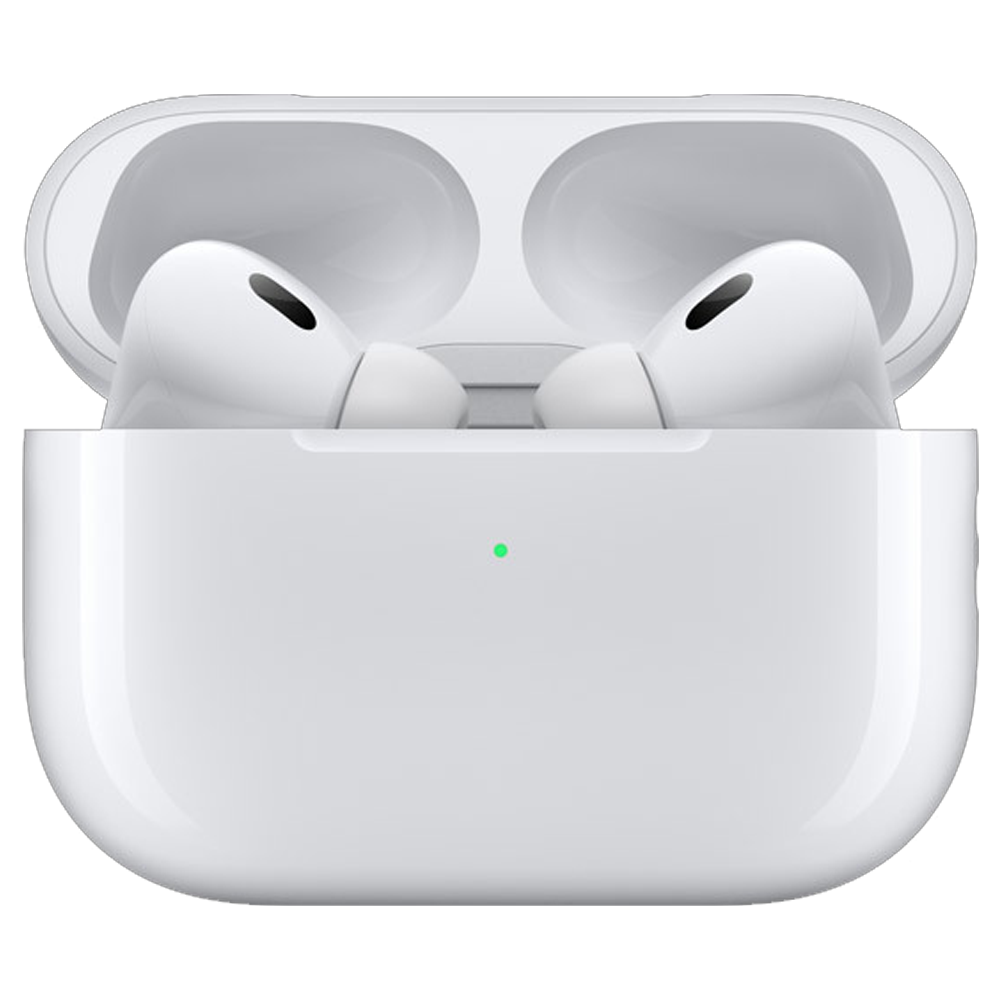
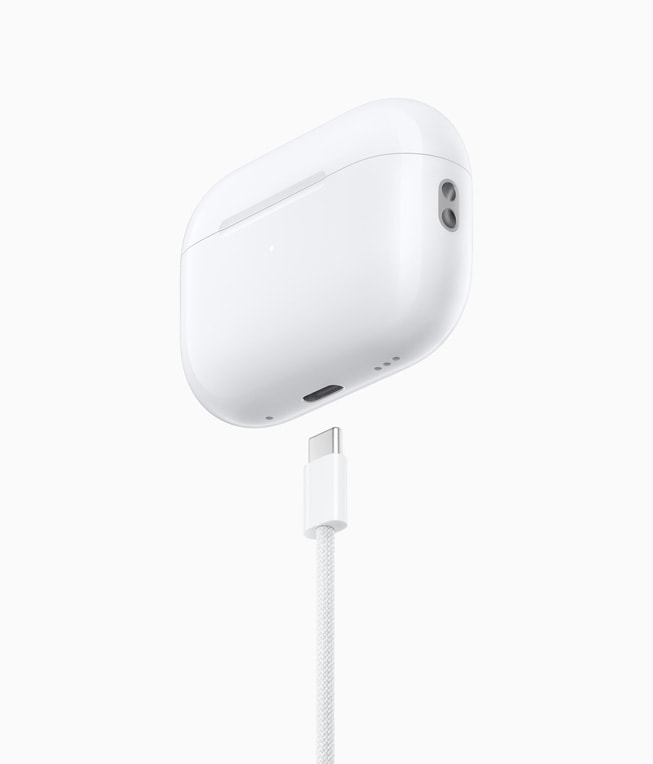
AirPods Pro 2 with the USB-C case are the 2023 version considered here. Identifying that version matters because the second-generation name also appears on an earlier package with a Lightning case. A marketplace description that says only “Pro 2” is insufficient if charging compatibility, resistance specifications or the special Vision Pro audio connection is part of your reason for buying. Inspect the case connector and confirm the model through Apple's identification guidance before comparing the offer with other listings.
The central appeal is integration for someone already using compatible Apple devices. That is a practical benefit rather than a universal sound-quality verdict. A buyer who spends the day with an Android phone and a Windows computer should count only the functions available in that actual combination. Conversely, an iPhone owner who often moves between a Mac and a tablet may value the reduced setup effort more than an additional equaliser option. Your device routine determines which parts of this feature set earn their keep.
Small fit changes affect the entire experience
Apple supplies four silicone tip sizes, including extra small. That gives useful scope to address a seal that feels too loose or a tip that creates pressure, but the number of sizes is not proof that one will suit every ear. Start with comfort and stability, then use the available fit guidance. A tip that briefly seals while you hold the earbud in position is not necessarily the right choice for a conversation, a commute or a long work session.
With used earbuds, replacing personal-contact parts is a sensible way to begin the assessment. Confirm that the replacements are appropriate for this generation and that they attach securely. Check both ears independently rather than assuming they need the same size. If bass balance or cancellation changes when you touch one side, investigate fit before drawing a conclusion about the electronics. Consistency is the goal: you should not have to keep correcting the position simply to maintain the listening experience you heard during the initial demonstration.
Adaptive features deserve individual decisions
Adaptive Audio, Conversation Awareness and Personalised Volume attempt to reduce the number of manual adjustments an owner makes. Their usefulness depends on how well the automatic behaviour matches your preferences. Someone who regularly starts brief conversations may welcome an automatic reduction in playback, while someone who talks aloud while working might prefer a more predictable manual routine. Treat each setting as a separate experiment rather than enabling everything and trying to judge the combined result.
There is also a distinction between an available feature and one supported by your current hardware, software and region. Apple's support page includes compatibility conditions that should be checked alongside the headline list. This is especially relevant when buying older earbuds for an older phone: the physical connection can work while some newer software functions remain unavailable. The appropriate comparison is the capability you can use now, with your devices, not the full list shown beside the product when paired with the latest compatible system.
Stem controls and everyday handling
Press and swipe controls on the stems provide a relatively compact way to manage playback, calls and volume. The question for a prospective owner is whether those gestures feel deliberate and easy to repeat. Try changing volume without dislodging an earbud, and check how reliably you distinguish a single press from the commands that require repeated presses. Small controls can be efficient once learned but may be awkward for someone who prefers a larger physical button.
Handling includes the case as well as the earbuds. Open it one-handed, remove each side and put both back without looking closely. Those ordinary motions can reveal whether the shape and magnets suit your dexterity and routine. If you often use earbuds outside, consider where you will put the case while switching between listening and conversation. A product can be electronically sophisticated yet easy to drop during a hurried exchange. The convenience of the system depends partly on these unremarkable physical actions that specification sheets rarely help you evaluate.
Charging is unusually flexible
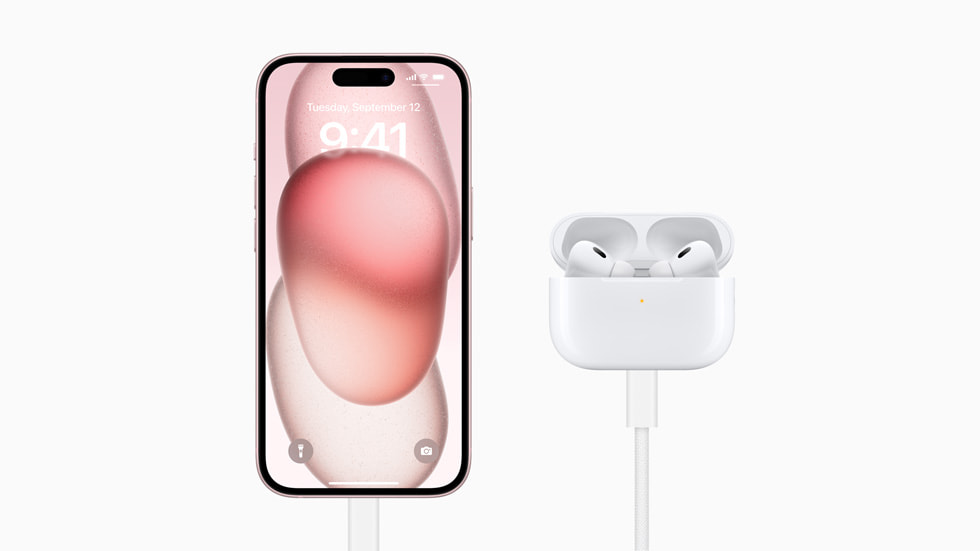
The USB-C case supports cable charging and several compatible wireless charging options, including MagSafe, Qi and an Apple Watch charger. That flexibility can reduce the number of dedicated accessories required at home or on a trip. It is still useful to choose a primary charging method and verify it with the actual equipment you own. A magnetic attachment or a charging icon is reassuring only if the case reliably gains charge in the position where you leave it.
Apple claims up to six hours of listening for the earbuds and up to thirty hours with the case under its stated test conditions. A second-hand pair should be evaluated as three batteries rather than one number. Check whether both earbuds discharge at a reasonably similar pace during the same session and whether the case provides dependable recharging. The battery display immediately after connection cannot establish capacity. A return period that includes a normal week of listening is much more informative than a short handover in which everything begins fully charged.
Spatial and lossless claims need context
Personalised Spatial Audio with head tracking is part of the documented feature set, but compatible content and devices remain relevant. Try it with a film and with ordinary stereo music before deciding how much it matters to you. A presentation that helps a film feel anchored to the screen may not be the one you prefer for an album. Switching modes is an ownership choice, not an admission that one feature has failed to be universally better.
The special lossless capability described for this USB-C generation is associated with Apple Vision Pro. It should not be reinterpreted as a promise of lossless playback from every Bluetooth phone. That distinction is easy to lose in a shortened sales description and important if audio transport is your main buying criterion. Write down the source device and connection you actually intend to use. If neither involves the documented compatible arrangement, judge the earbuds on the ordinary listening and convenience features available to you instead.
Account transfer and condition are essential
Apple instructs an owner to remove AirPods from their Apple Account before selling or giving them away. Make successful transfer part of the transaction, not a task postponed until the seller becomes difficult to contact. Being able to hear music is not the whole ownership experience; account-linked functions such as Find My matter too. Confirm the pair can be set up properly with your account and that the product identity agrees with the version you intended to buy.
The IP54 rating covers the earbuds and case under Apple's specified conditions, but resistance can decline with wear. Inspect for contamination, damaged meshes and unreliable charging contacts rather than interpreting the rating as a clean bill of health. Follow the official cleaning guidance, particularly around the openings involved in sound and noise control. If accessibility or hearing-related features motivate the purchase, check Apple's current eligibility and regional documentation directly. This review does not assess their effectiveness or assume they are available in every device configuration.
A strong fit for an Apple-centred routine
The USB-C AirPods Pro 2 offer a well-documented combination of compact controls, flexible charging and Apple-specific conveniences. Their strongest argument is the way those pieces fit together for an owner whose devices support them. The argument weakens when the buyer pays for ecosystem functions that remain inaccessible, or accepts uncertain condition simply because the model is familiar. Fit, battery balance and successful account transfer should be established before the former retail price enters the conversation.
Our provisional score evaluates the documented system and its ownership tradeoffs, without claiming measured cancellation, sound quality or microphone performance. For a used purchase, prefer evidence of normal daily operation and a clear return route over a collection of attractive photographs. A complete, properly transferred pair with healthy batteries can still be a useful everyday tool. If charging, fit or account status is unresolved, a newer or less elaborate alternative may deliver a more dependable result at a similar complete cost.
Sources & further reading.
These are the sources behind this research review. Manufacturer claims are not independent performance measurements. Community accounts, when cited, describe individual experiences.
- Apple specifications and ownership guidance ↗manufacturer
- Apple original launch documentation ↗manufacturer
- Apple specifications and ownership guidance ↗manufacturer
Documentation reviewed: 9 October 2026. Product software and regional bundles can change. Corrections and editorial disclosures.