An editorial assessment of documented capabilities and ownership trade-offs. This is not a hands-on test result or a measurement of reliability.
Features & capability 30%8.3
Multiple listening and tuning options create a broad home proposition; tonal quality is untested.
Compatibility & connectivity 20%8.6
Wi-Fi, Bluetooth, AirPlay and optional line-in provide flexible documented source paths.
Ownership & upkeep 20%7.4
Adapters, placement and ecosystem expansion add costs and dependencies.
Setup & everyday use 15%7.8
Physical controls are useful, with app and shared-household behaviour still needing evaluation.
Documentation & support clarity 15%8.6
The model guide explains source conditions and microphone controls; support interactions are not rated.
Compare scores within the same product category. Small decimal differences should not override your needs or the evidence limits.
How the Standpoint Score works
We score five aspects of the documented product on a 0–10 scale, then calculate a weighted total:
- Features & capability30% of the total
- Compatibility & connectivity20% of the total
- Ownership & upkeep20% of the total
- Setup & everyday use15% of the total
- Documentation & support clarity15% of the total
This product’s 8.2/10 is a provisional research assessment. It does not claim measured performance, tested reliability or a verified customer satisfaction rate. Compare it with products in the same category, and read each criterion’s reasoning above.
Read the full rubric and score bands ↗The ownership case.
An appealing documented home-listening hub for a buyer who wants several source paths and understands the network and adapter requirements; sound quality remains to be assessed.
Reasons to consider it
- Several documented source paths
- Room-tuning tools
- Physical microphone control
Go in knowing
- Not a battery-powered portable speaker
- Line-in adds an adapter and source checks
- Expansion adds cost and network dependencies
The specification sheet.
Published specifications from the linked sources. Configurations and availability can differ by country.
- Type
- Powered home speaker
- Wireless sources
- Wi-Fi, Bluetooth, Apple AirPlay 2
- Analogue source
- Line-in requires a separate compatible adapter
- Room tuning
- Trueplay
- Microphone control
- Hardware switch documented in the guide
A speaker for a room, rather than a speaker for everywhere
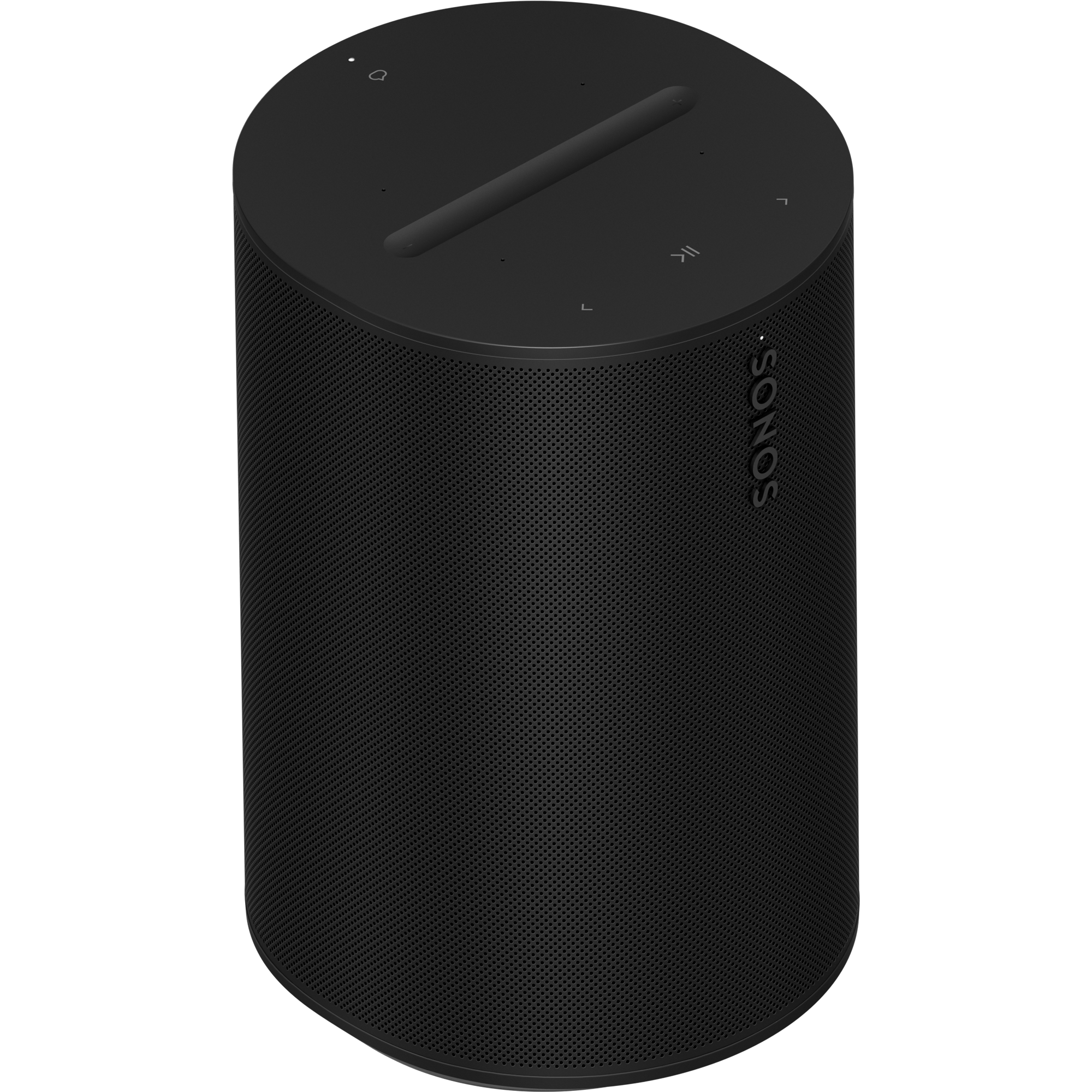
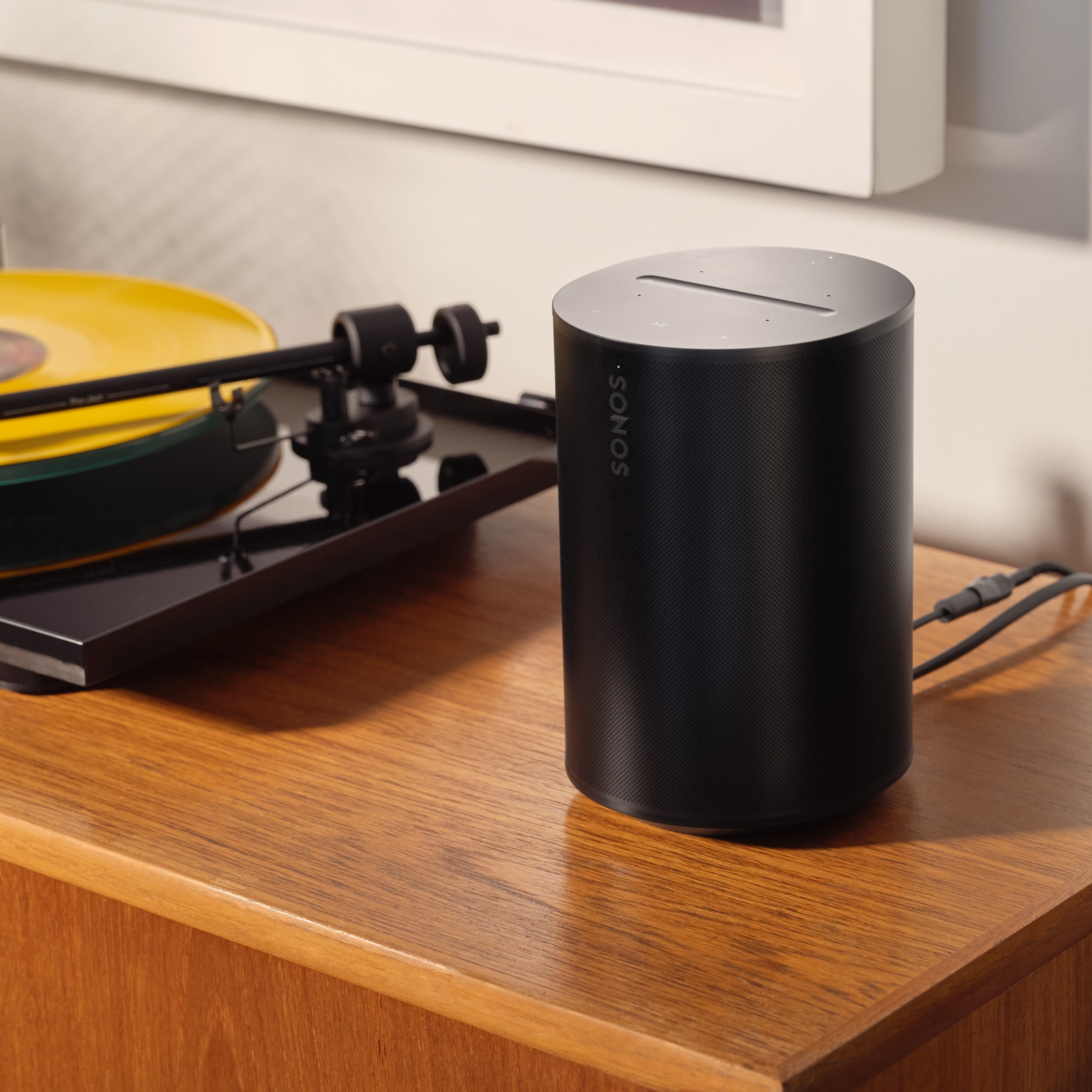
The Sonos Era 100 is a compact powered speaker with a proposition built around flexible home listening. It is appealing for a person who wants music in a kitchen, study or bedroom and may later expand into a connected household system. That is different from choosing a portable speaker for a park or an occasional outdoor gathering. Start with the room, the listening position and the sources you want to use. A speaker earns its place by making those ordinary sessions easier.
This research review considers Sonos's current product page and model guide. We have not listened to the Era 100, measured its response or tested the app on a household network. The provisional score therefore concerns the documented connection choices and ownership arrangement. It is not a sound-quality grade. The interesting question is whether the speaker provides enough flexibility to justify choosing an ecosystem product over a simpler speaker, and whether the buyer understands what depends on the app, network and additional accessories.
One cabinet does not remove room acoustics
Sonos documents a driver arrangement intended to create stereo output from one enclosure. That offers a compact listening proposition, but it should not be confused with placing two independent speakers apart across a room. The listening position, distance and surrounding surfaces still matter. A bookshelf, corner and open counter can change how a speaker is perceived. We would compare ordinary placements before claiming that one location is representative of the product's sound.
For a buyer, begin with the practical position that is actually available. Check space, access to power and whether people will place objects directly beside the speaker. A kitchen installation also needs to respect the manufacturer's environmental guidance. Do not assume that a humidity-resistant description means the product can be exposed freely to splashes or outdoor weather. The aim is to choose a position where the speaker can remain useful and accessible, rather than reproduce a marketing photograph that overlooks the habits of the household.
Wi-Fi, Bluetooth and AirPlay solve different problems
The documented connection options include Wi-Fi, Bluetooth and Apple AirPlay 2. That breadth is useful because listening does not have to follow one source path. A regular streaming service can suit household use, while a visitor may prefer a direct phone connection. Check the setup and operating conditions for each option rather than assuming every function remains available in every mode. An ecosystem speaker's flexibility is most valuable when the transitions are understandable.
Think about interruptions as well as convenience. A phone used as the source may behave differently when a call arrives or its owner leaves the room. A household system should make it clear who can change playback and how to stop it without searching through an application. We would test those everyday situations alongside connection reliability. A successful first pairing is only the start of the evaluation; reconnecting after a router restart or switching sources during a gathering can reveal far more about whether the speaker fits a shared home.
Line-in requires the right adapter and source
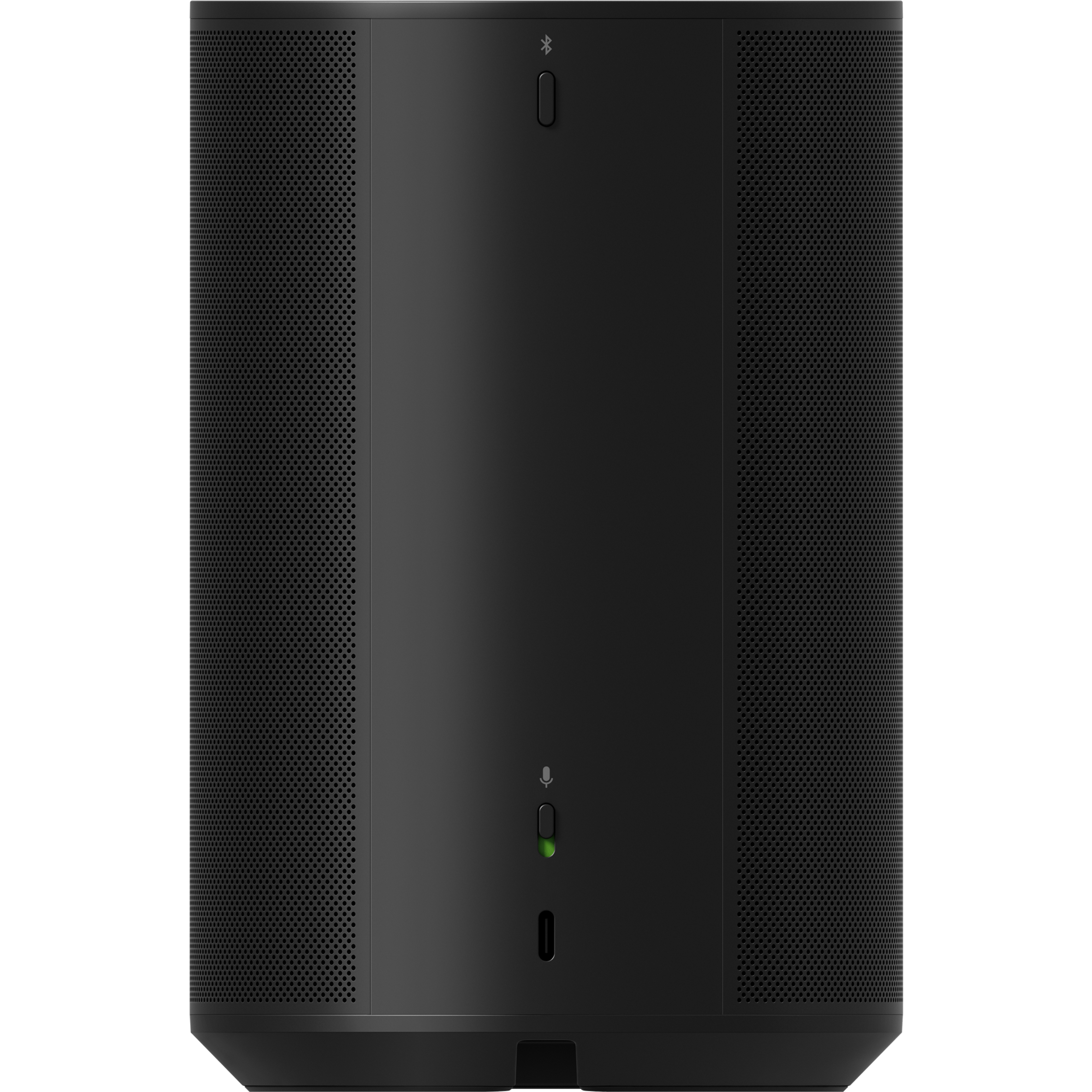
Sonos lists line-in through an additional adapter. That is an important purchasing detail for anyone planning to attach a turntable or another analogue source. Budget for the exact compatible adapter and verify the source's output requirements. A record player may need appropriate amplification before it reaches the speaker. The presence of a USB-C connector is not a reason to assume that any inexpensive adapter or USB audio device will behave as intended.
Also consider how that source will be used. If the speaker forms part of a larger grouped system, check the current guide for relevant operating conditions and settings. Someone wanting immediate audio feedback from an instrument or another timing-sensitive source should investigate latency before buying. We have not measured that behaviour. The right conclusion is that line-in broadens the documented possibilities while bringing a compatibility step; it does not make the Era 100 a universal replacement for every powered speaker or dedicated audio component.
Trueplay is a tool, not a listening verdict
Sonos offers Trueplay tuning, with procedures explained in its guide. Follow the method appropriate to the device and platform in use. A tuning function may help adapt a speaker to its position, but the existence of calibration does not establish that every listener will prefer the result. Keep the original setting available and compare with familiar material at a consistent volume. The purpose is to make a practical listening improvement, rather than assume the automated result must be correct.
We would investigate several placements and document the process used for each. A room correction result should be evaluated where people actually sit and stand, including off-centre listening if the speaker is used while cooking or working. Speech clarity, bass balance and comfort at ordinary levels are useful questions. This article deliberately avoids inventing answers to them. The provisional capability assessment recognises that the tuning tool is available, while any claim about its effect belongs in a future report with observations and repeatable conditions.
Voice controls and physical privacy choices
The model guide describes voice-related controls and a hardware microphone switch. These deserve attention in a shared room. Decide whether voice operation is useful for the household and inspect the currently supported services and languages. A music command while cooking can be convenient, while another household may prefer physical or app controls. Choose intentionally rather than enabling every available service during setup and discovering its behaviour later.
Privacy also involves accounts and room access. Consider who can start playback, how music services are linked and whether a guest should have access to the same controls as an owner. Keep account recovery information separate from the speaker's physical location. We would review the current settings with a working system before judging how easy they are to understand. The documentation establishes available controls; it does not establish that every owner configures them correctly or that a default arrangement fits every household's expectations.
Expanding the system changes both cost and dependency
The Era 100 can be considered as the beginning of a larger audio arrangement, but future plans should not automatically justify today's purchase. Start with one room and decide whether another speaker would solve a real need. A stereo pair, grouped rooms and a television-oriented system are different arrangements with distinct compatibility conditions. Check the current Sonos guide for the exact components rather than assume that every product carrying the brand can be combined in every role.
Network quality and software become part of ownership as the system grows. Before buying several units, try the proposed arrangement on the actual household network. Record where playback is reliable and how readily another person can operate it. Keep the total cost of adapters, stands and additional speakers visible. A system that is convenient for its administrator may be frustrating for everyone else. We would treat shared usability and recovery after an interruption as central review questions, rather than count the number of rooms connected and declare the project successful.
The Standpoint assessment
The Era 100's strongest documented advantage is connection flexibility in a compact home speaker. It is a plausible fit for a buyer who wants several source options and understands the Sonos setup arrangement. It is a weaker fit for someone wanting battery-powered portability, a timing-sensitive studio monitor or guaranteed simplicity without app involvement. Those roles should be compared with products designed specifically for them. The provisional score does not award points for imagined bass output or a listening impression we do not have.
Our next assessment would include familiar music and spoken material, several placements, source switching, a router restart and use by another household member. We would also document software versions and accessory configurations. Before ordering, confirm the Canadian or US package, local service route and the cost of any line-in equipment. The sensible purchase is the complete arrangement that makes music easier to enjoy. If the planned expansion remains vague, a simpler speaker or the equipment already owned may be a better answer than buying into a system on the strength of future possibilities alone.
Sources & further reading.
These are the sources behind this research review. Manufacturer claims are not independent performance measurements. Community accounts, when cited, describe individual experiences.
- Era 100 — official Sonos product page ↗manufacturer
- Era 100 — model-specific operating guide ↗manufacturer
Documentation reviewed: 9 October 2026. Product software and regional bundles can change. Corrections and editorial disclosures.