Not tested. This is a research score for the documented features, compatibility and ownership trade-offs discussed in this review, not a performance measurement.
Features & capability 30%8.5
Three drivers, a physical Flat EQ switch, per-driver EQ, LDAC and USB-C lossless impress reviewers, but noise cancelling scores below Sony and Bose.
Compatibility & connectivity 20%8.3
Bluetooth 6.1, LDAC, two-device connection, Auracast, a 3.5 mm cable and USB-C audio cover most setups, though LC3 is for broadcast audio only.
Ownership & upkeep 20%6.9
CA$589.99, a 12-month warranty, a 383.5 g case heavier than the headphones and a 30-hour ANC battery claim hold it back, and update length is unverified.
Setup & everyday use 15%8.0
Reviewers praise comfort and tactile controls, but note an awkward Flat EQ switch, easy accidental volume nudges and a bulky case.
Documentation & support clarity 15%7.6
Nothing's spec pages are detailed and candid about lab limits, but Canadian update promises and cushion replacement costs weren't found.
Compare scores within the same product category. Small decimal differences should not override your needs or the evidence limits.
How the Standpoint Score works
We score five aspects of the documented product on a 0–10 scale, then calculate a weighted total:
- Features & capability30% of the total
- Compatibility & connectivity20% of the total
- Ownership & upkeep20% of the total
- Setup & everyday use15% of the total
- Documentation & support clarity15% of the total
This product’s 7.9/10 is an editorial research assessment. It does not claim measured performance, tested reliability or a verified customer satisfaction rate. Compare it with products in the same category, and read each criterion’s reasoning above.
Read the full rubric and score bands ↗From a tech standpoint.
Buy the Nothing Headphone (1) Pro if the look, the deep EQ and the Flat EQ switch are what you're paying for. Gizmodo gave it 4.5 out of 5 and Tom's Guide gave it 4 out of 5, and both liked the sound. Skip it if noise cancelling is your first priority, because Tom's Guide, T3, Gizmodo and SlashGear all say Sony and Bose do it better. Skip it as an upgrade if you own the Headphone (1), since T3 and Creative Bloq both say the gap is smaller than the price jump. In Canada it lists at CA$589.99, which is within about ten dollars of the Sony WH-1000XM6 and Bose QuietComfort Ultra (2nd Gen) at the retailers checked. This is a research review: Cameron hasn't used these headphones, and every observation here belongs to the outlet named.
Reasons to consider it
- Three drivers per ear and a deep app EQ: Tom's Guide, Creative Bloq, T3 and Gizmodo all rate the sound as a clear step up, and the Personal Sound hearing test is a bonus.
- A physical Flat EQ switch for checking mixes or hearing a track with less processing, which Creative Bloq calls the strongest reason to buy.
- Comfort and controls: a roller, a paddle and a button you can find without looking, plus a headband and cushions that Tom's Guide and Creative Bloq found easy to wear for hours.
- Long battery with ANC off (68 hours) and a fast charge that gives up to 4 hours from five minutes, per Nothing.
Go in knowing
- Noise cancelling is the weak spot: Tom's Guide scored it 3 out of 5, T3 puts Sony ahead, and Gizmodo says Sony and Bose both beat it.
- At CA$589.99 it costs about the same as the Sony and Bose flagships, so you're choosing style and tuning over cancelling strength.
- The hardshell case weighs 383.5 g, more than the 327 g headphones, leaves the headband exposed and has no room for cables.
- ANC-on battery fell from 35 hours on the Headphone (1) to 30 hours, and the Flat EQ switch sits where Tom's Guide found it hard to reach while wearing them.
Affiliate link. As an Amazon Associate, Tech Standpoint earns from qualifying purchases. It never changes our verdict or score. Disclosure
The specification sheet.
Published specifications from the linked sources. Configurations and availability can differ by country.
- Canadian price (Nov 1, 2026)
- CA$589.99 at Nothing Canada (ca-en.nothing.tech), where the page also showed a Sold Out label on at least one option. Best Buy Canada blocked the check, so no second Canadian price for this model was verified
- US and UK launch price
- US$399 and £349, on sale from September 29, 2026, per Tom's Guide, T3 and SlashGear
- Drivers (per ear)
- 40 mm dynamic for bass, 13 x 8 mm precision dynamic for mids, xMEMS solid-state driver for treble; 20 Hz to 40 kHz
- Noise cancelling
- Adaptive hybrid ANC, up to 46 dB (Nothing says this is a lab maximum), 10 microphones, new silicone sound seal
- Battery (Nothing's claims)
- Up to 68 hours with ANC off, 30 hours with ANC on; with LDAC, 53 and 28 hours. Five minutes of charging gives up to 4 hours with ANC off
- Connectivity
- Bluetooth 6.1, AAC, SBC and LDAC (LC3 for broadcast audio only), two-device connection, Auracast, USB-C lossless up to 24-bit/192 kHz, 3.5 mm cable in the box
- Weight
- 327 g headphones; 383.5 g hardshell case
- Durability claims
- IP52 dust and water resistance (Nothing says not waterproof), 9H scratch-resistant glass earcup windows
- Standout features
- Physical Flat EQ switch tuned with Metropolis Studios, head-tracked spatial audio, Personal Sound hearing profile, per-driver EQ in the Nothing X app
- Warranty in Canada
- 12-month limited warranty on headphones, covering hardware defects, per Nothing Canada's terms; software, consumables and accessories are excluded
In Canada the Nothing Headphone (1) Pro costs $589.99, about ten dollars less than the Sony and Bose it can't beat on noise cancelling
Here's the money fact. Nothing Canada lists the Headphone (1) Pro at CA$589.99. On November 1, 2026, Bose Canada listed the QuietComfort Ultra Headphones (2nd Gen) at CA$599.00, and the Canadian retailer Canex listed the Sony WH-1000XM6 at CA$599.99. In the US the gap is wider. Nothing launched at US$399, and Gizmodo says the Sony and Bose cost about $50 more there. Canadians don't get that discount.
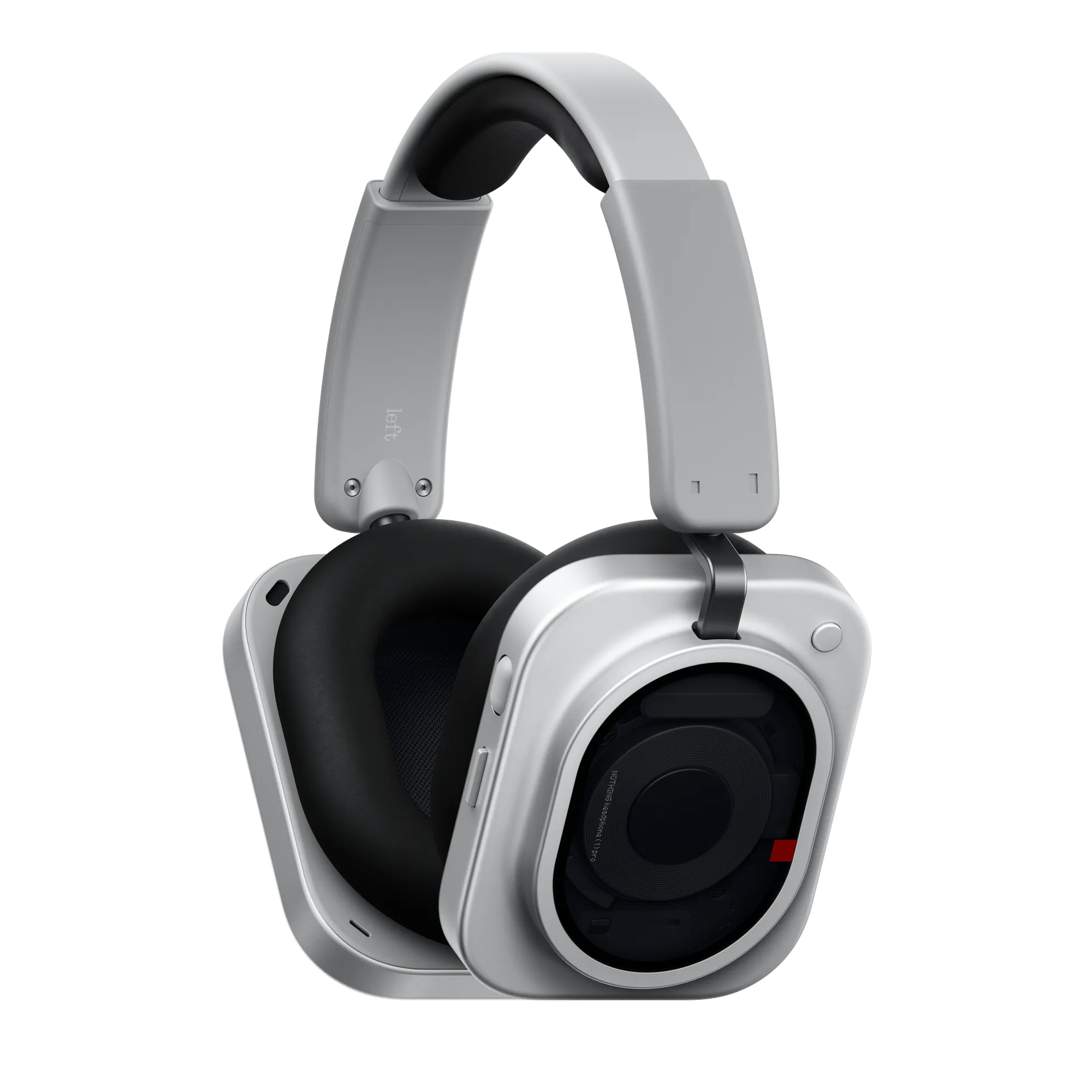
The Pro is Nothing's top over-ear: closed-back, wireless, active noise cancelling, with three drivers in each ear. It went on sale on September 29, 2026. Reviews are warm overall. Gizmodo gave it 4.5 out of 5 and an Editor's Choice badge, and Tom's Guide gave it 4 out of 5. Nearly every reviewer then names the same weak spot, which is noise cancelling. So the question here is simple: at a Canadian price this close to the best, is style and tuning enough?
A note on sourcing. This is a research review, so it draws on Nothing's own pages and outside reviews from Gizmodo, Tom's Guide, Creative Bloq, T3 and SlashGear. Nothing Canada's page showed a Sold Out label on at least one option when checked, and Best Buy Canada blocked the check, so there's no second Canadian price for the Pro. Stock may be patchy.
What the Pro adds over the Headphone (1), and why two reviewers say keep the cheaper one
On paper the list is long. Gizmodo notes the original Headphone (1) has a single 40 mm driver, where the Pro splits the sound across three. Nothing adds ten microphones and a silicone sound seal for noise cancelling, glass earcup windows, titanium arms, a physical Flat EQ switch and a Personal Sound hearing test. It also claims softer cushions, a wider headband and more padding. Against that, ANC-on battery drops from 35 hours to 30, per Gizmodo and Creative Bloq.
The price jump is the catch. T3 and Creative Bloq both say the UK price is £349, exactly £100 more than the Headphone (1) launched at. Nothing Canada lists the Headphone (1) at CA$369, so the Pro costs CA$220.99 more. T3's reviewer swapped back to the older pair and says the gap isn't massive, and calls the standard model the better value. Creative Bloq calls the Pro an easy recommendation for newcomers, but a tough sell for current owners.
So who should not upgrade? Anyone who owns a Headphone (1) and mostly wants better noise cancelling, since the improvement is described as subtle by Gizmodo and T3. The exception is a music maker who'd really use the Flat EQ switch. SlashGear goes further and calls the $199 Headphone (a) the better value overall. For most buyers, the Pro is a luxury version of something that already works.
Three drivers per ear: where the reviewers agree on the sound, and where they flatly disagree
Nothing gives each driver a job. A 40 mm dynamic driver handles bass, a 13 x 8 mm driver covers the mids, and a small solid-state xMEMS driver does the treble. The company says the bass driver has 15 percent more punch and 26 percent more sensitivity than the one in the Headphone (1), but it also says those are theoretical lab figures. Treat them as marketing until an outside lab measures them.
The outlets mostly agree on the shape. Tom's Guide describes a warm, wide presentation with tight, controlled bass and crisp treble that isn't tiring, and says it beats the pricier Sony on warmth and soundstage. Creative Bloq hears more bass authority and more texture in vocals. T3 hears good separation between voices and backing parts. Gizmodo calls the sound rich and well separated, with bass a little heavier than the reviewer likes out of the box.
Then comes the disagreement. SlashGear's reviewer finds the midrange prominent and the bass light, which is close to the opposite of Tom's Guide and Gizmodo. Creative Bloq adds that the stock tuning is the usual bass-and-treble boosted V shape. So the stock tuning is a matter of taste, and the app EQ is the real answer. Tom's Guide praises per-driver controls and the three-minute Personal Sound test, so you can fix the sound to match your ears.
The noise cancelling is the soft spot, and it's the thing a premium price should buy
Nothing quotes up to 46 dB of noise cancelling, from ten microphones and a new silicone seal. Its own footnote says that is a theoretical maximum from its lab, so it isn't a promise for your commute. Nothing also says the new design improves on the Headphone (1) by 2 dB, according to Gizmodo, whose reviewer found the change subtle.
Outside verdicts are consistently a notch below the leaders. Gizmodo calls it average, with train noise and conversation still audible. Tom's Guide scored it 3 out of 5: colleagues went silent and bus chatter faded, but a mechanical keyboard and loud honking still came through. That reviewer rates it on par with the Marshall Monitor III and behind the Bose QuietComfort Headphones (2nd Gen) and the AKG N9 Hybrid. T3 says it dulled long-haul flight noise but falls short of Sony's WH-1000XM6.
Two outlets are kinder. SlashGear calls it very good, though not at Sony or Bose flagship level. Creative Bloq says it's strong and brought comfort and isolation on an 11-hour flight. Put together, four of five reviews place it below the best. If you ride a loud train, work in an open office or fly a lot, that matters more than the sound tuning. If you mostly listen at a desk or at home, it matters far less.
The Flat EQ switch is the 'Pro' in the name, and it comes with three catches
A small physical switch inside the left earcup turns off Nothing's tuning and processing for a neutral profile. The company says engineers at London's Metropolis Studios tuned it for reviewing music and mixing. Creative Bloq's reviewer calls it the strongest argument for buying the Pro. T3 likes it too and appreciates that it's a real switch rather than an app preset. Gizmodo calls it useful for checking mixes but niche.
The first catch is what it turns off. Creative Bloq says Flat EQ disables transparency mode, spatial audio and the EQ while it's on. The second is where the switch sits. Tom's Guide says it's hard to reach with the headphones on, so you may have to take them off to flip it. The third is audience. Gizmodo notes that most of the new features mainly appeal to creators, and that's a small slice of headphone buyers.
Nothing also lists low latency of under 15 ms over the 3.5 mm cable with Flat EQ on, which suits editing or monitoring. The spatial presets are a different story. Gizmodo disliked the club and concert hall modes and T3 called the venue presets gimmicky, while Tom's Guide praised head-tracked spatial audio. Verdict: the Flat EQ switch is a real feature with a narrow audience. Don't pay extra for it unless you'd use it weekly.
30 hours with noise cancelling on looks like a step back, but 68 hours with it off is the bigger story
Nothing rates the Pro at up to 30 hours with ANC on and up to 68 hours with it off. With the LDAC codec those numbers fall to 28 and 53 hours. The Headphone (1) was rated at 35 hours with ANC on, so this is a five-hour step back. T3 calls the ANC-on number curious, and Creative Bloq says the gap doesn't matter in practice, since 30 hours covers a long-haul flight door to door.
Fast charging is the more practical number. Nothing says five minutes of charging gives up to 4 hours with ANC off or 2 hours with it on, and a full charge takes about two hours over USB-C. Tom's Guide rated battery life 4.5 out of 5 and lists some rival ratings: Sony's WH-1000XM6 at up to 40 hours, Bose's QuietComfort Headphones (2nd Gen) at 24 and Marshall's Monitor III at 100.
One caution. None of the reviews read for this piece reports a full drain test. Gizmodo's reviewer played for an hour at half volume with ANC on and the app's 10 percent steps still read 100 percent, which says little. The 30-hour figure is Nothing's lab claim, not a measured result.
The case weighs more than the headphones, and reviewers keep comparing it to a handbag
Nothing's hardshell case weighs 383.5 g. The headphones weigh 327 g. T3 calls the case a design disaster and points out it has no room for cables or adapters, with the headband left sticking out as a handle. Tom's Guide says it looks silly and adds up to about 1.56 pounds together. Gizmodo and SlashGear dislike it too, and SlashGear notes the lanyard its tether points need isn't in the box.
Creative Bloq is split. That reviewer sees a handbag and would take the old case back, but also says it's smaller than the Headphone (1)'s case and likes that Nothing takes design risks. The case is the most unanimous complaint across the five reviews. Gizmodo even compares it to Apple's AirPods Max case, which has been mocked for years. If you commute with a crowded backpack, that extra weight is a real cost.
Comfort and controls fare better. Tom's Guide wore them for about six hours without wanting to take them off, and Creative Bloq says the changes help glasses wearers. The roller, paddle and button get praise from T3, Creative Bloq and SlashGear. But Tom's Guide and Creative Bloq both say the controls are easy to nudge by accident, and Tom's Guide says even a light touch changes the volume.
How it stacks up in Canada: eight headphones, priced in Canadian dollars
Canadian prices checked on November 1, 2026: Nothing Headphone (1) Pro CA$589.99 at Nothing Canada, Sony WH-1000XM6 CA$599.99 at Canex (Protégez-Vous's price comparison page showed retailers closer to $498 to $501, so shop around), Bose QuietComfort Ultra Headphones (2nd Gen) CA$599.00 and Bose QuietComfort Headphones (2nd Gen) CA$479.00 at Bose Canada, Sennheiser Momentum 5 Wireless CA$449.95 at Sennheiser's Canadian shop, Apple AirPods Max CA$799.00 at Apple Canada. Nothing's own cheaper models are the Headphone (1) at CA$369 and the Headphone (a) at CA$249.
Against the Sony and Bose flagships, reviewers say the Nothing wins on design and is competitive on sound but loses on cancelling. Tom's Guide says it sounds warmer and wider than the Sony and has better battery life. T3 says the Sony still has the best ANC at this price. Bose's QuietComfort Ultra (2nd Gen) wasn't compared head to head in the reviews read, so treat that matchup as unproven.
T3 suggests the Sennheiser Momentum 5 Wireless for anyone who wants a stealthier look, and the Headphone (1) for anyone happy with the Nothing style. Tom's Guide lists the Marshall Monitor III as the battery leader. Of those, the Sennheiser is the clearest value pick, at about CA$140 less than the Nothing. For the Sony and Bose, see their existing reviews on this site.
Living with it: a 12-month warranty, glass earcups and a price that may well drop
Nothing Canada's terms give headphones a 12-month limited warranty that starts at delivery. It covers hardware defects from workmanship or materials, and excludes software, consumables and accessories even when packaged with the product. It can only be claimed in the country of purchase, with proof of purchase and photos of the defect. Twelve months is on the short side for a CA$589.99 purchase.
Nothing says the earcup glass passed a 1.8 m lab drop test and carries a 9H scratch rating, and that the headphones are IP52, which it says is not waterproof and not meant for rain or heavy sweat. The ear cushions are removable, but Nothing warns that refitting them wrongly can hurt the seal and noise cancelling. The company's own footnotes describe lab results, so none of this is proof of long-term durability.
Two things couldn't be verified: how long Nothing promises software updates for this model, and what replacement cushions cost in Canada. Neither appeared on the pages checked. As for the price, T3 notes that the Headphone (1) has seen temporary sales since launch. No Canadian promotion for the Pro was found, but waiting for a holiday discount is a reasonable bet for a headphone this close to the Sony and Bose in price.
Buy, skip, or buy something else: who the Nothing Headphone (1) Pro is really for
Buy it if you love the look, you want deep EQ control, and you'd use Flat EQ to check mixes or just hear tracks with less processing. Tom's Guide says design-conscious audio fans are the target, and that reviewer says the design alone justifies it. Creative Bloq says the extra hardware makes sense for audiophiles, music obsessives and creatives. Add LDAC and USB-C lossless if you own a phone or laptop that can use them.
Skip it if noise cancelling is the main thing. Sony's WH-1000XM6 or Bose's QuietComfort Ultra (2nd Gen) cost within about CA$10 of it at the retailers checked, and the reviews put them ahead on cancelling. Skip it as an upgrade if you own the Headphone (1). And skip it if you hate hauling a bulky case.
Buy something else in three cases. If price is the pain point, the Headphone (1) at CA$369 or the Headphone (a) at CA$249 keep most of the style. If you want a low-key look, T3 points to the Sennheiser Momentum 5 Wireless. If you want the strongest noise cancelling, T3 names the Sony as the best it has used at this price. If you can, try the Pro in a store first and see how the case and the controls feel.
The closest alternatives.
| Product | Standpoint Score | Best for | Price |
|---|---|---|---|
| Nothing Headphone (1) ProThis review | 7.9Research | Design-minded listeners and music makers who want a tunable, warm-sounding pair with a physical Flat EQ switch, and who… | Amazon.ca ↗ |
| Sony WH-1000XM6 | 8.3Research | A frequent traveller or desk worker who wants cancellation, multipoint, a wired option and a folding over-ear in one… | Amazon.ca ↗ |
| Bose QuietComfort Ultra Headphones (2023) | 7.9Research | A seated traveller or office listener who wants heavy, adjustable cancellation and is curious about spatial audio. | Amazon.ca ↗ |
| Sennheiser Momentum 4 Wireless | 8.3Research | A listener who moves between Bluetooth on the go, USB audio at a computer and analogue sources on a plane. | Amazon.ca ↗ |
Compare scores within a category: Tested means our own use, Research means documentation and attributed outside testing. Price links are affiliate links. As an Amazon Associate, Tech Standpoint earns from qualifying purchases. Disclosure
Questions before checkout.
How much is the Nothing Headphone (1) Pro in Canada?
Nothing Canada lists it at CA$589.99. The US launch price is US$399 and the UK price is £349. Nothing's Canadian page showed a Sold Out label on at least one option on November 1, 2026, and Best Buy Canada blocked the check, so confirm stock and price before you order.
Is the Nothing Headphone (1) Pro's noise cancelling as good as Sony or Bose?
Reviewers say no. Tom's Guide scored it 3 out of 5 and ranks it below the Bose QuietComfort Headphones (2nd Gen). T3 says it falls short of the Sony WH-1000XM6, and Gizmodo calls it average. SlashGear and Creative Bloq are kinder, but neither claims it beats the best.
Should Nothing Headphone (1) owners upgrade to the Pro?
Probably not. T3's reviewer says the gap to the Headphone (1) isn't large enough for the price jump, and Creative Bloq calls it a tough upgrade sell. The main reasons to move are the physical Flat EQ switch and somewhat stronger noise cancelling, which Gizmodo describes as subtle.
What codecs and connections does the Headphone (1) Pro support?
Nothing lists Bluetooth 6.1 with AAC, SBC and LDAC for music, plus LC3 for broadcast audio only. It connects to two devices at once, supports Auracast, plays lossless audio over USB-C up to 24-bit/192 kHz, and includes a 3.5 mm cable. Nothing lists support for Android 8.0 and iOS 13 or newer.
How long does the battery last?
Nothing rates it at up to 30 hours with noise cancelling on and up to 68 hours with it off, or 28 and 53 hours using LDAC. Five minutes of charging gives up to 4 hours with ANC off. Those are lab claims, and none of the reviews read here ran a full drain test.
Sources & further reading.
These are the sources behind this research review. Manufacturer claims are not independent performance measurements. Community accounts, when cited, describe individual experiences.
- Nothing Canada: Headphone (1) Pro product page and specifications ↗manufacturer
- Nothing Canada: Terms of Service (warranty policy) ↗manufacturer support
- Nothing Canada: Headphones collection (CAD prices) ↗manufacturer
- Gizmodo: Nothing Headphone (1) Pro review ↗independent review
- Tom's Guide: Nothing Headphone (1) Pro review ↗independent review
- Creative Bloq: Nothing Headphone (1) Pro review ↗independent review
- T3: Nothing Headphone (1) Pro review ↗independent review
- SlashGear: Nothing Headphone (1) Pro review ↗independent review
- Bose Canada: QuietComfort Ultra Headphones (2nd Gen) ↗manufacturer pricing
- Canex: Sony WH-1000XM6 headphones ↗retailer pricing
- Sennheiser Canada: Momentum 5 Wireless ↗manufacturer pricing
- Apple Canada: AirPods Max ↗manufacturer pricing
Product software and regional bundles can change. Corrections and editorial disclosures.
Affiliate link. As an Amazon Associate, Tech Standpoint earns from qualifying purchases. It never changes our verdict or score. Disclosure