An editorial assessment of documented capabilities and ownership trade-offs. This is not a hands-on test result or a measurement of reliability.
Features & capability 30%8.6
Noise control and personalisation combine with a large documented runtime reserve.
Compatibility & connectivity 20%8.9
Three audio paths broaden compatibility when the source requirements are respected.
Ownership & upkeep 20%7.3
Documented pad replacement helps; the battery and sensors still require individual assessment.
Setup & everyday use 15%7.8
Automatic functions and touch controls are flexible but need configuration for the owner.
Documentation & support clarity 15%8.8
The detailed manual explains USB audio, passive use and maintenance clearly.
Compare scores within the same product category. Small decimal differences should not override your needs or the evidence limits.
How the Standpoint Score works
We score five aspects of the documented product on a 0–10 scale, then calculate a weighted total:
- Features & capability30% of the total
- Compatibility & connectivity20% of the total
- Ownership & upkeep20% of the total
- Setup & everyday use15% of the total
- Documentation & support clarity15% of the total
This product’s 8.3/10 is a provisional research assessment. It does not claim measured performance, tested reliability or a verified customer satisfaction rate. Compare it with products in the same category, and read each criterion’s reasoning above.
Read the full rubric and score bands ↗The ownership case.
A versatile documented choice when the exact sources work, the sensor behaviour is predictable and an older battery retains enough reserve.
Reasons to consider it
- Bluetooth, USB audio and analogue listening paths
- Manufacturer claim of up to 60 hours with ANC under stated conditions
- App personalisation and documented pad replacement
Go in knowing
- Used battery health remains individual
- Wear sensing and touch controls need a practical trial
- Codec support depends on the connected source
The specification sheet.
Published specifications from the linked sources. Configurations and availability can differ by country.
- Driver
- 42 mm dynamic
- Bluetooth
- 5.2; SBC, AAC, aptX and aptX Adaptive
- Battery claim
- Up to 60 hours Bluetooth with ANC, under manufacturer conditions
- Digital connection
- USB audio and charging
- Analogue cable
- 3.5 mm source to 2.5 mm headphone-side plug
- Charging time
- Approximately 2 hours, conditions dependent
A long-runtime headphone with several connection paths
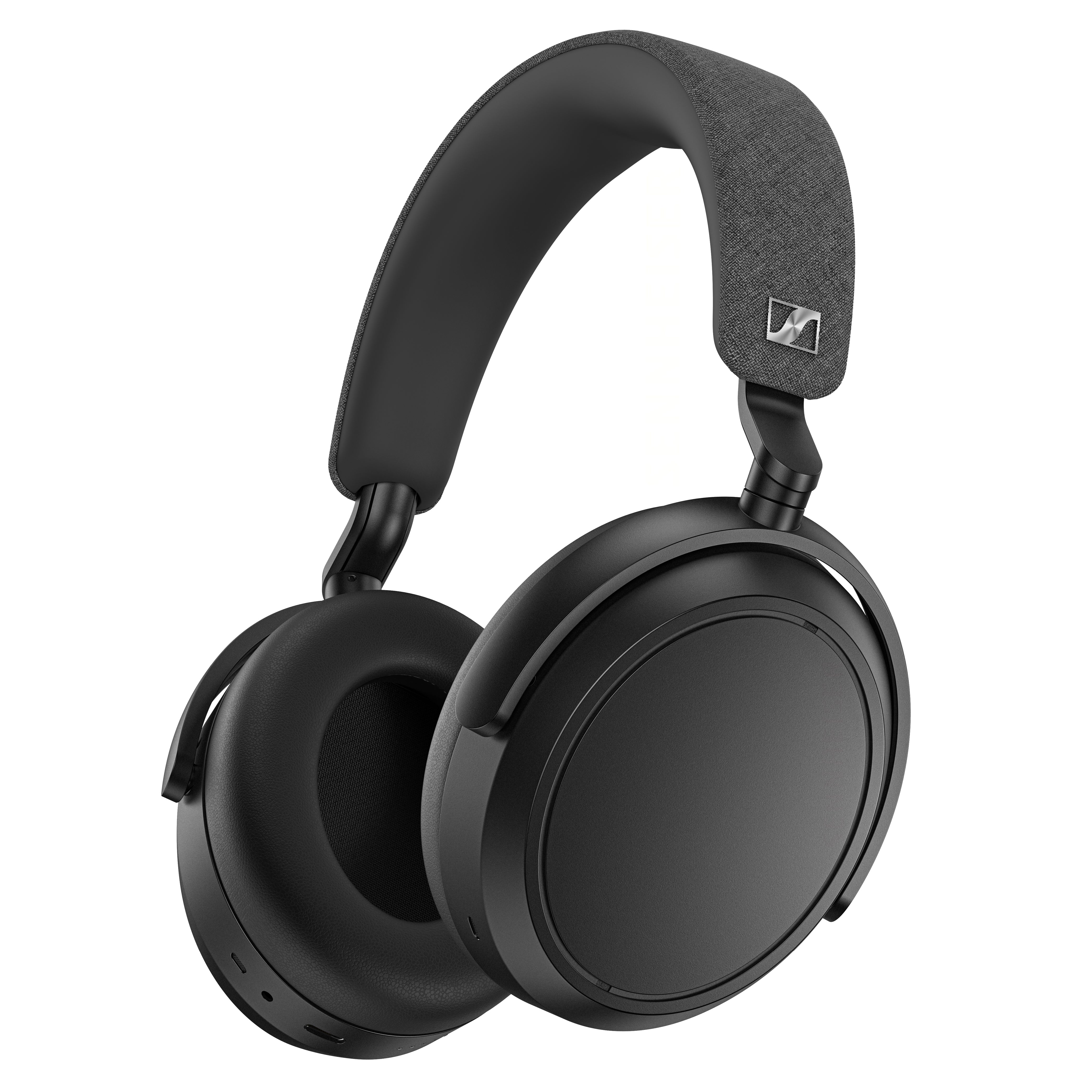
MOMENTUM 4 Wireless has a particularly practical documented combination: wireless listening, an analogue cable and USB audio. That makes it worth considering for a person whose day moves between a desk, a phone and an aircraft system. The benefit is not simply having more sockets and modes. It is the possibility of solving several recurring connection problems with one familiar fit, provided the exact source devices work as expected.
The prominent battery claim can also make the model attractive as older stock, but it should not overshadow the rest of the purchase. A used pair with unreliable sensing or a loose connector can be frustrating despite substantial remaining capacity. Start by defining the two or three connections you genuinely need, then test those. If all listening will happen through a single phone, the additional wired options are useful insurance rather than a reason by themselves to pay more.
What sixty hours actually tells a buyer
Sennheiser specifies up to sixty hours of Bluetooth music playback with cancellation under its stated iPhone and volume conditions. That is a manufacturer test claim, not a runtime measured for this article. Its useful implication is a design intended to provide considerable reserve between charges. The condition of an individual older battery, the selected settings and the source connection still determine how much reserve remains in practice.
Evaluate the pair across your normal routine instead of trying to extrapolate from the first few percentage points. An owner who listens for two hours each evening has a different charging problem from someone wearing headphones throughout a working day. Also observe storage behaviour: a generous playback claim is less valuable if the headphones remain active when you expect them to sleep. The manual's guidance on sensors and case storage is therefore relevant to battery ownership, rather than merely an optional convenience chapter.
USB audio adds a useful desk option
The instruction manual explicitly describes digital audio through a USB connection and selection of the MOMENTUM 4 as an input or output on a compatible computer or device. This is more informative than seeing USB-C listed only as a charging connector. For a desk, it provides an alternative path when a wireless connection is inconvenient, or when you want a repeatable wired arrangement for both playback and microphone use.
Test the actual cable and hub you intend to use. A cable that charges successfully does not necessarily establish that the complete data connection is working. Check the operating system's selected audio device and then the choices inside a conferencing application; they may not be the same. If you regularly undock a laptop, try reconnecting it and resuming a call or recording. The point of this option is to simplify the desk routine, and that is best assessed with the whole routine rather than a single song.
Analogue listening has different behaviour
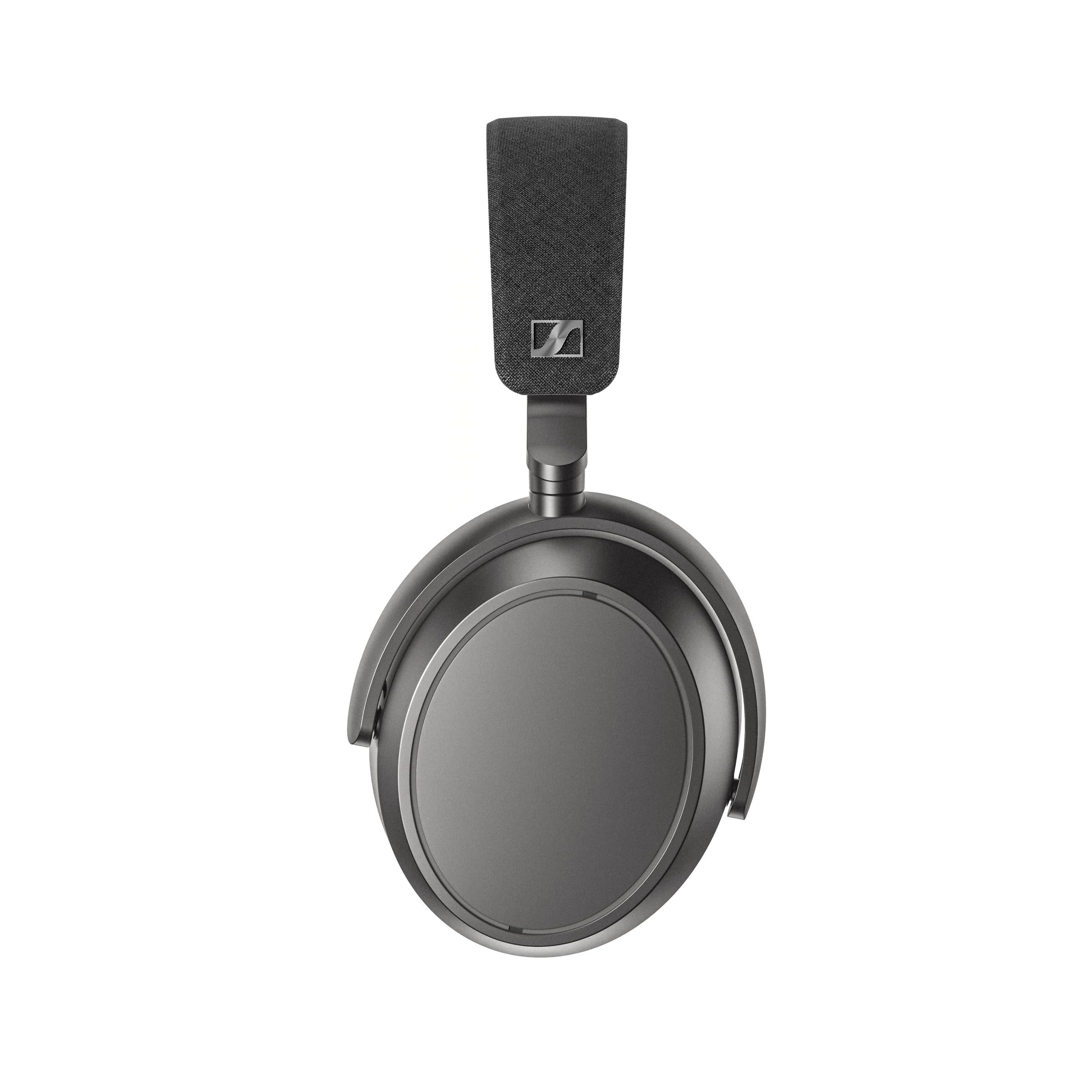
The supplied analogue arrangement uses a 3.5 mm source plug and a 2.5 mm headphone-side plug. The manual distinguishes active operation from passive use and notes that attaching the analogue cable changes the wireless connection state. That makes the cable a deliberate operating choice, not simply another connection to leave in place while expecting every wireless function to remain unchanged.
For travel, verify the cable and any required adapter before departure. A missing proprietary-sized end can turn a seemingly complete used purchase into an inconvenient search for the correct accessory. Listen in the intended powered state as well, because processing and passive operation should not be assumed to sound identical. We have not measured either response here. The practical advantage is the additional route to audio; whether it replaces a dedicated wired headphone for your purposes depends on the source, the listening task and your expectations.
Codec support is only half the connection
Bluetooth 5.2 with SBC, AAC, aptX and aptX Adaptive gives the model several documented wireless options. The source decides which compatible mode is available, so begin with the phone or computer you actually own. A codec logo on the headphone does not make an unsupported laptop transmit in that format. If you are comparing purchases around a particular wireless feature, verify the complete chain before treating it as an advantage.
Calls deserve a separate check from music. The microphone route and the application's settings can change the experience, and the quality of cancellation heard inside the cups does not establish the quality of speech sent outward. Record a short sample through the work application you use most often. Then reconnect through the other intended path, such as USB, and check again. These are compatibility checks a buyer can perform without pretending they are controlled measurements of microphone performance.
Personalisation should remain understandable
The app provides equalisation and sound-personalisation options alongside noise-control settings. That flexibility can help an owner adapt the headphones to preferences, but it is easier to assess when changes are made one at a time. Keep a familiar reference recording and return to the original settings between experiments. Otherwise a change in loudness, cancellation or tonal balance can obscure which adjustment you actually prefer.
Touch controls and wear detection also need to match your habits. Try resting a hand near the cup, removing the headphones briefly and returning them to your head. If an automatic action conflicts with your routine, consult the available settings before deciding the hardware is unsuitable. The manufacturer's manual documents substantial control over operation, which is useful, but it also means a used pair may arrive configured for somebody else. Begin with a known configuration so that your evaluation concerns the headphone rather than an unexplained collection of prior preferences.
Pads, hinges and storage are the lasting questions
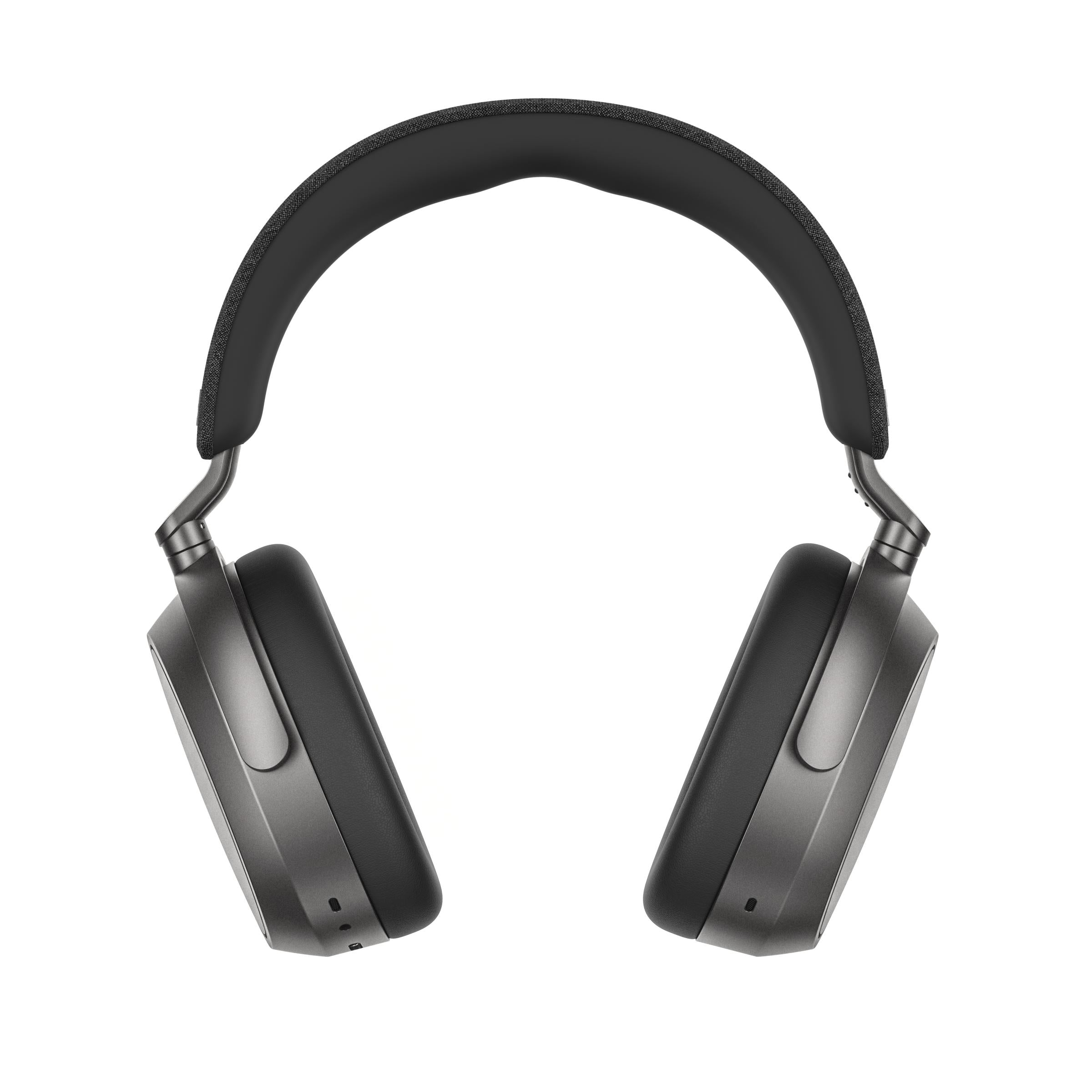
The manufacturer documents ear-pad replacement, an important distinction between a worn contact surface and a terminal electronic failure. Check local availability and the complete cost of suitable pads before buying a tired-looking pair. Aftermarket parts can alter fit and the acoustic seal, so their presence should be identified rather than treated as automatically equivalent to the documented configuration.
Inspect the headband adjustment and cup movement for symmetry. A case should hold the headphones in their intended position without forcing the joints, and the USB and analogue plugs should seat consistently. For Canadian and US buyers, the service route for an imported unit may be less convenient than the purchase price suggests. Ask about the actual product and proof of purchase, not merely whether the brand offers support in your country. A durable ownership plan includes the items likely to wear as well as the electronics you hope will last.
The buyer who benefits most
MOMENTUM 4 Wireless is most persuasive for someone who will use its connection flexibility and appreciates a large documented runtime reserve. A desk-to-travel routine makes those attributes easy to understand. It is less compelling to buy solely for the largest battery number while ignoring comfort, touch-control preference or the source device's codec support. Those everyday factors determine whether the headphone feels convenient long after its specifications stop being novel.
Our provisional score reflects the breadth of the documented design and the clarity of the manual, with uncertainty reserved for measured sound, cancellation and the condition of used examples. A good purchase includes the required cables, comfortable pads and enough time to check idle behaviour and normal charging. Once those points are established, the MOMENTUM 4 offers several sensible ways to stay useful. If they remain unresolved, its feature count alone cannot turn an uncertain pair into dependable equipment.
Sources & further reading.
These are the sources behind this research review. Manufacturer claims are not independent performance measurements. Community accounts, when cited, describe individual experiences.
- Sennheiser manufacturer specifications, documentation or release ↗manufacturer
- Sennheiser manufacturer specifications, documentation or release ↗manufacturer
- Sennheiser manufacturer specifications, documentation or release ↗manufacturer
Documentation reviewed: 9 October 2026. Product software and regional bundles can change. Corrections and editorial disclosures.