Not tested. This is a research score for the documented features, compatibility and ownership trade-offs discussed in this review, not a performance measurement.
Task capability 30%8.4
Attributed model-specific pickup and stain findings support the mixed-floor capability; pad clearance still limits rugs.
Navigation & control 20%8.0
LiDAR, recognition and area controls are useful, with an imperfect independent obstacle result and floor preparation still required.
Ownership & upkeep 20%7.9
Washing and drying reduce handling, but tanks, roller ends, filters and removable tray parts retain owner chores.
Setup & usability 15%7.7
Dock access, 2.4 GHz pairing, furniture height and deliberate carpet routing shape the everyday setup.
Documentation & support clarity 15%7.6
Matching support comparisons and the FCC manual explain capacities and restrictions; regional bundles and service eligibility require checking.
Compare scores within the same product category. Small decimal differences should not override your needs or the evidence limits.
How the Standpoint Score works
We score five aspects of the documented product on a 0–10 scale, then calculate a weighted total:
- Task capability30% of the total
- Navigation & control20% of the total
- Ownership & upkeep20% of the total
- Setup & usability15% of the total
- Documentation & support clarity15% of the total
This product’s 8.0/10 is an editorial research assessment. It does not claim measured performance, tested reliability or a verified customer satisfaction rate. Compare it with products in the same category, and read each criterion’s reasoning above.
Read the full rubric and score bands ↗From a tech standpoint.
Buy the Qrevo Master if you have mostly hard floors, ordinary rugs, room for a water-tank dock and a sale price that reflects its age; Vacuum Wars' results back up its cleaning. Skip it if thick rugs sit between the rooms you want mopped or your sofa is lower than 10.3 cm, and never pay extra for a former flagship badge.
Reasons to consider it
- Vacuum Wars reported strong debris pickup and near-perfect dried-stain mopping in its own tests
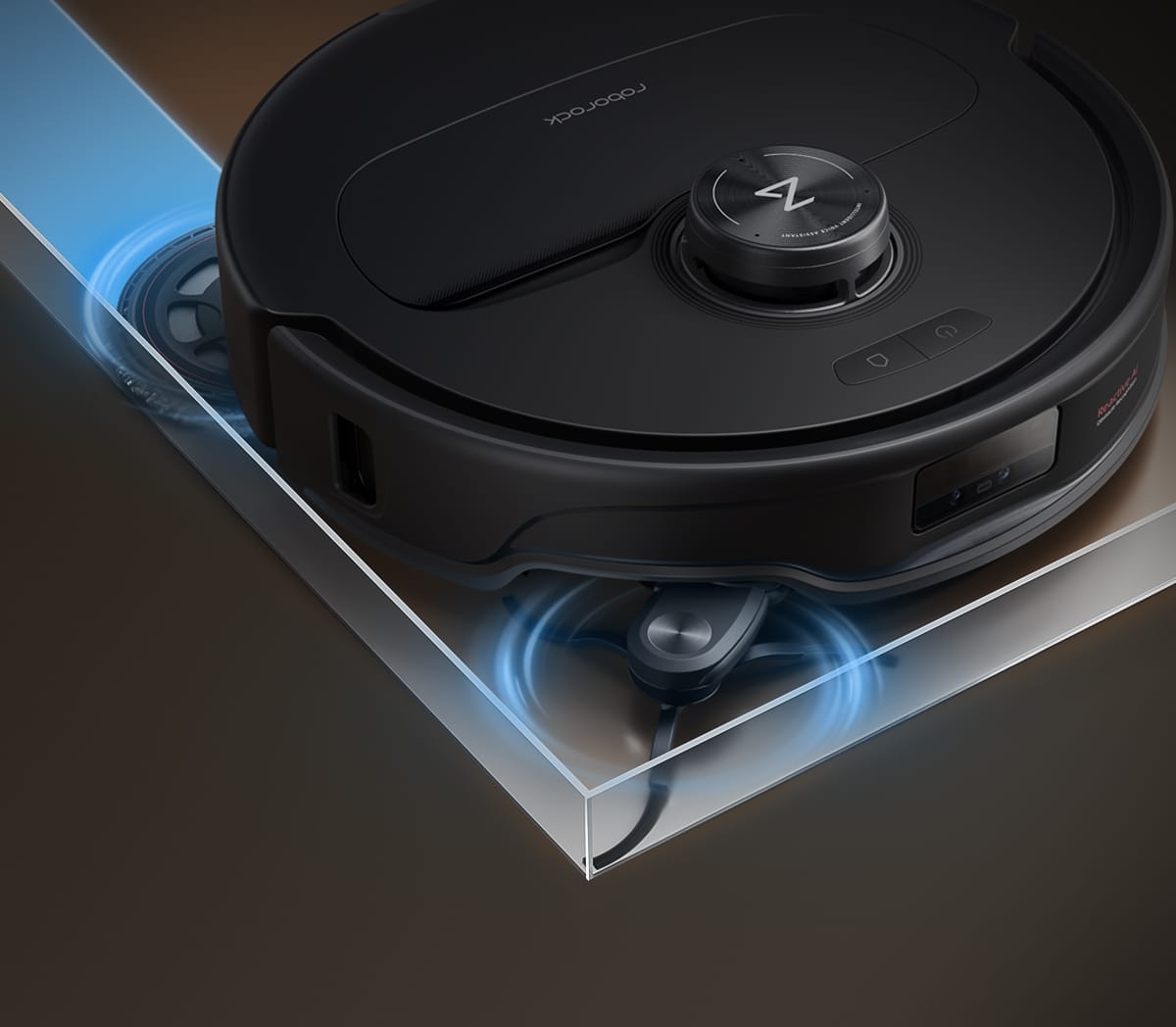
- FlexiArm extends the side brush and right mop to back up the dual rollers and rotating pads
- The dock washes, dries, refills and empties, removing most hands-on pad handling
Go in knowing
- A 10 mm pad lift won't keep a damp mop off high-pile rugs
- At 103 mm tall, the robot won't fit under some low furniture
- Emptying dirty water and cleaning brushes, filters and the tray are still your jobs
Affiliate link. As an Amazon Associate, Tech Standpoint earns from qualifying purchases. It never changes our verdict or score. Disclosure
The specification sheet.
Published specifications from the linked sources. Configurations and availability can differ by country.
- Advertised suction
- 10,000 Pa; manufacturer laboratory claim, not a pickup score
- Cleaning hardware
- Two rubber rollers; rotating pads; extending side brush and right mop
- Robot dimensions
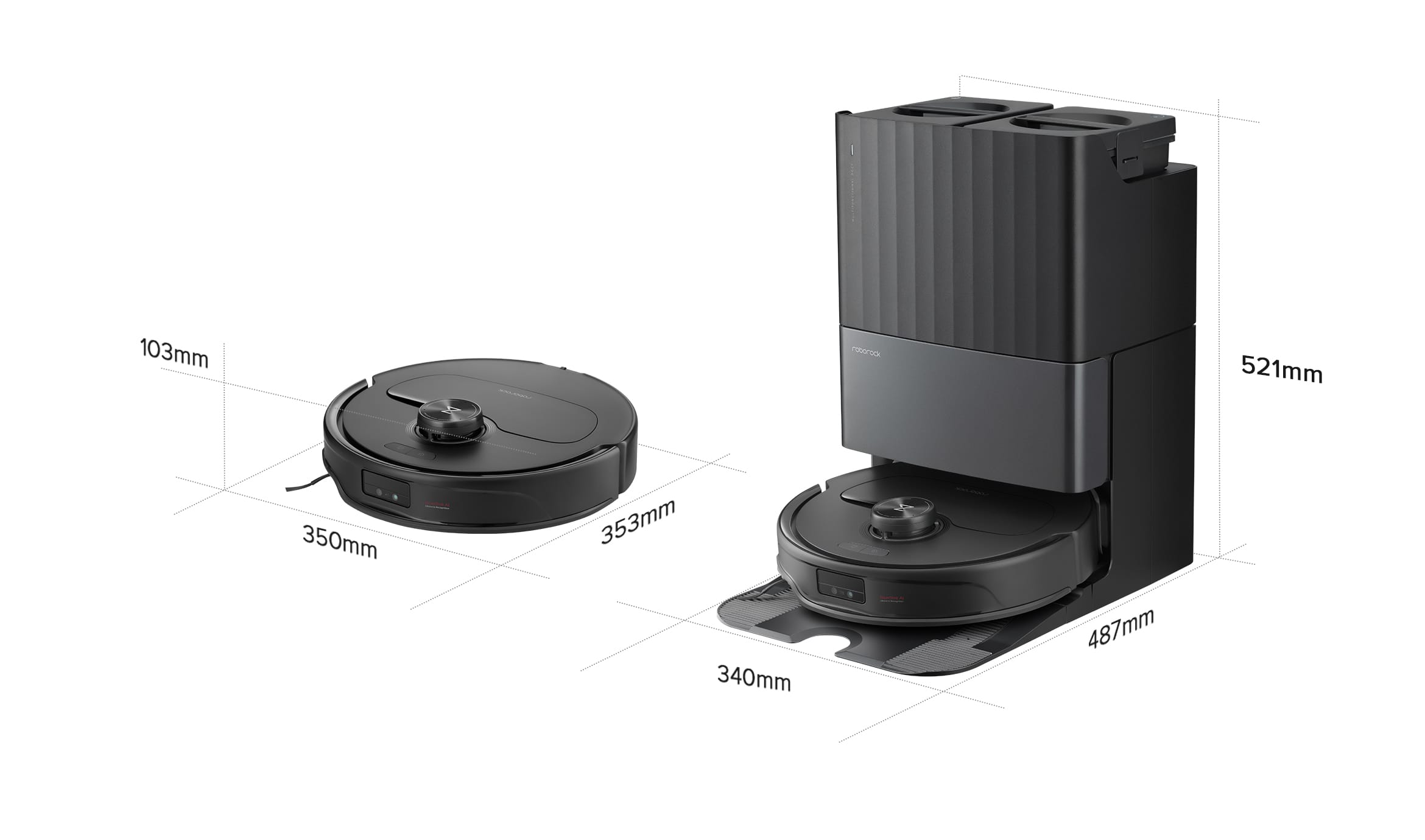
- 350 × 353 × 103 mm
- Dock dimensions
- 340 × 487 × 521 mm; allow additional access space
- Water capacities
- 80 mL onboard; 4 L clean / 3.5 L dirty in dock
- Carpet separation
- Up to 10 mm mop lift; assess rug pile and routing
An old flagship that still cleans like one
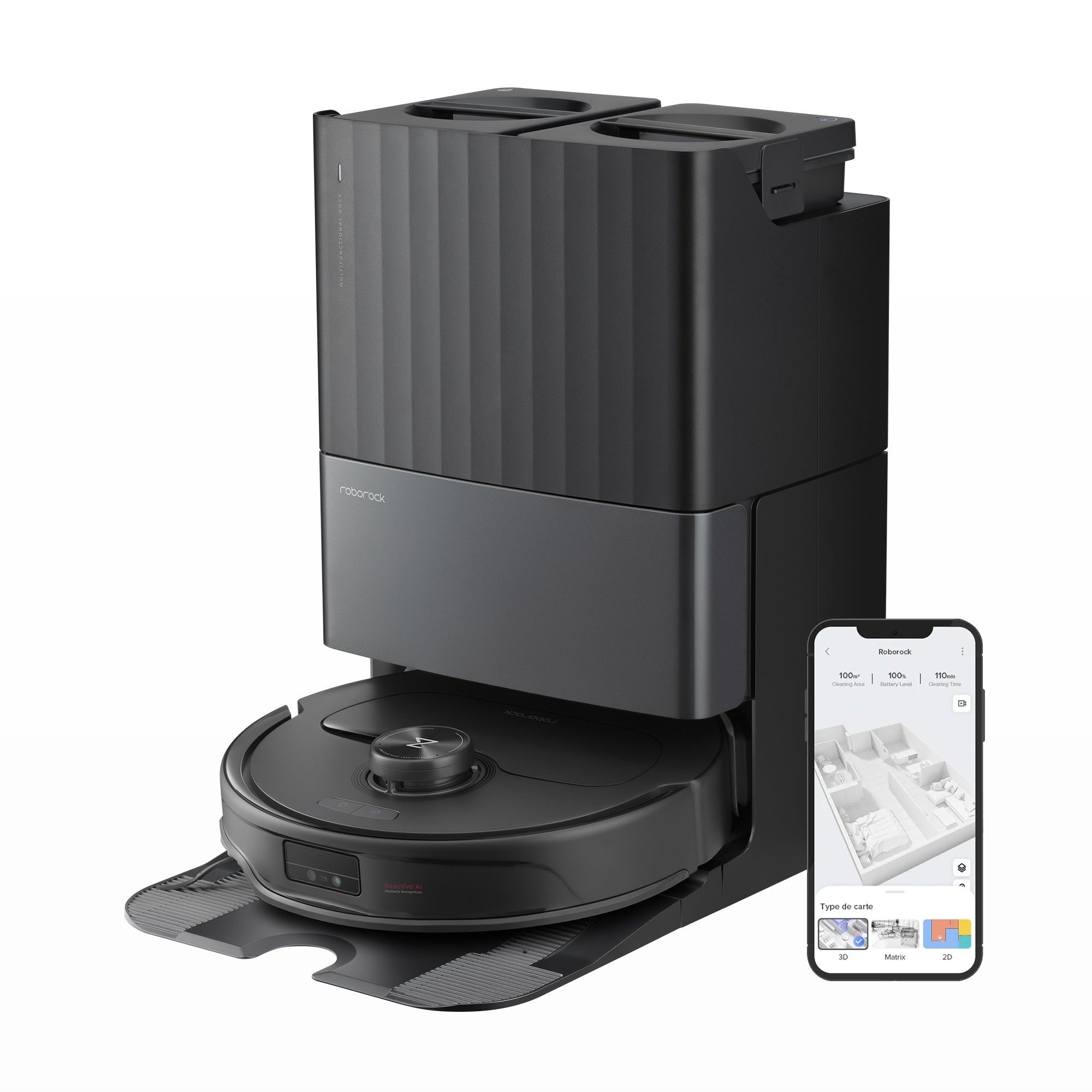
The Qrevo Master is an older premium robot whose useful parts have outlived its place at the top of the range. The pitch is simple: it picks up dry debris, mops hard floors and goes back to a station that looks after the pads. That combination matters far more than whether a newer model prints a bigger number on its box. In a home with an open kitchen, ordinary rugs and clear paths between rooms, the Master is still a sensible buy. In a home full of deep pile or very low furniture, the same spec sheet looks a lot less convincing.
This assessment draws on Roborock's instructions and comparisons together with Vacuum Wars' identified testing of the Master. Tech Standpoint has not run a separate cleaning trial. The independent findings support recommending the model, and the documentation spells out the limits that a short demo tends to hide. The judgement here covers the whole robot-and-dock package, not the robot on its own as a bargain. Before you chase a sale, decide where the station will live and which floors you want wet-cleaned. Those two answers expose most of the expensive mistakes up front.
Pickup results beat the pascal count
The hardware pairs counter-rotating rubber rollers with an advertised 10,000 Pa maximum. That pressure figure reflects Roborock's lab conditions; it isn't a direct measure of how much dirt comes out of your carpet. Vacuum Wars reported strong pickup on hard floors and carpet, plus above-average recovery in its embedded-sand test on medium-pile carpet. Yet its maximum-airflow measurement came in at only 13 CFM, below its comparison average. Put together, those results are a neat reminder that a cleaning result and a single bench number answer different questions.
When you're shopping, give the real pickup evidence more weight than any ranking of advertised pressure. A medium-pile test carpet doesn't speak for every rug, and loose crumbs on the surface are a different job from grit worked down into fibres. A robot that runs often keeps everyday debris from building up between proper cleans, but don't buy it on the assumption that your existing vacuum is about to become redundant. Stairs, upholstery, tight corners and the occasional concentrated mess are still on you. The Master's value is the floor it can cover routinely, not a promise to replace every cleaning tool you own.
Arms that reach where round robots can't
Roborock's FlexiArm setup extends both the side brush and the right-hand mop. That's a sensible fix, because the middle of a circular robot can never sit in the corner where two cabinets meet. The supplied illustration below shows how it works; it is not a photograph of a Tech Standpoint cleaning result. Don't read a promotional edge-coverage percentage as a promise about every skirting board in your home. Furniture shape and the path open to the robot still decide where the body can go.
This is the upgrade worth paying for when the perimeter is the bit you always finish by hand. A big empty floor gives extending tools little chance to justify their complexity; a kitchen lined with cabinet bases gives them plenty. On the other hand, a narrow gap the body can't get into isn't fixed by poking a small arm at it. Measure the awkward spots and picture how the machine will approach them. The real question is whether the mechanism reaches the specific strip you need cleaned, with room to turn and get out again, not whether the marketing image shows a perfectly open corner.
Great stain scores, but your floor sets the rules
Vacuum Wars reported near-perfect results on its dried coffee and grape-juice challenges. Those are useful, model-specific findings for sticky household marks; they are not our own observations, and they don't mean every stain will vanish. A coloured spill on a floor finish you don't know well should be dealt with according to that floor's care instructions. Having a mop on board doesn't mean every sealed, oiled or worn surface can take the same moisture setting. Check compatibility before you set an unattended routine loose.
Start with a modest wet job in a room you can check afterwards. More water isn't automatically better, especially when the aim is frequent upkeep rather than soaking one stubborn patch. A busy dining area can justify a different schedule from a room nobody uses much. Roborock also notes that automatic re-mopping has to be switched on in the app. Treat that extra pass as a choice that costs time and water, not something the robot always decides for you. If a stain survives a routine run, deal with that spot directly rather than cranking up the wetness across the whole house.
The rug problem in one number: 10 mm
The advertised mop lift is up to 10 mm. That's enough separation on suitable low-pile surfaces, but it can't promise a damp pad stays off a tall or uneven rug. This matters most when a carpet is the corridor between two rooms you want mopped. A plan that looks fine on paper can still drag wet cleaning hardware close to the fibres on the way through. Where the material or the clearance makes combined cleaning a bad idea, use carpet avoidance or a separate dry-only routine.
Think about the trip home as well as the destination. A kitchen on the far side of a valuable rug may suit the Master worse than a bigger hard-floor area with a direct path to the dock. Rug fringes and loose edges deserve attention whatever their pile height: the robot needs a workable route, not just enough vertical pad clearance. If protecting a particular rug is non-negotiable, only buy if you can set it up to keep wet hardware away from it. One clean pass doesn't prove every later cycle will behave the same. That's a buying limit, and not one unique to the Master.
The heat stays in the dock
Roborock's support comparison specifies a heater that warms water in the cleaning tray to 60°C. The product page describes 45°C warm-air drying. Both figures are about servicing the pads at the station; neither describes a steam mop putting that heat on your floor. The manual tells owners to fill the clean tank with cold water and use only the recommended cleaning solution. Pouring in hot water or a household disinfectant is not a shortcut to the advertised washing process.
Seen that way, the dock's benefit is easy to grasp. Instead of hand-washing a pair of filthy pads after every job, you supply water and deal with the waste while the station handles the repeated servicing. That's a real change in routine if you already mop often. It's much less compelling if you rarely need wet cleaning or have nowhere handy to empty a tank. Make sure the drying stage can actually finish where the dock is installed. Nothing in this assessment settles how quiet the station is in a bedroom, or whether your household will put up with its servicing cycle at night.
Smaller tanks, more trips to the sink
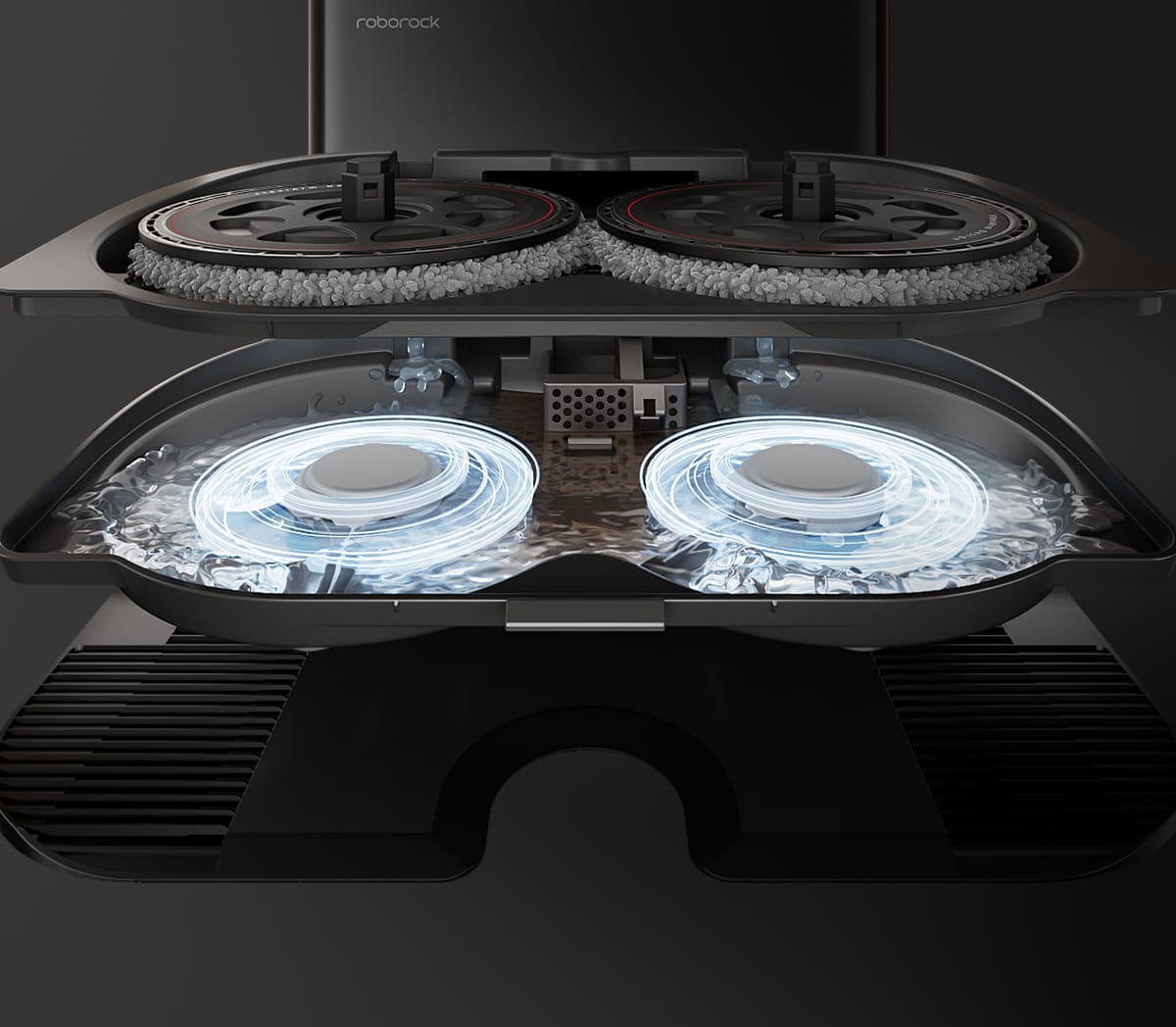
The Master's station holds a 4 L clean-water tank and a 3.5 L dirty-water tank, with an 80 mL reservoir on the robot itself. Those are smaller than the original Qrevo's tanks. Frequent washing and re-mopping change how often you'll refill and empty them, so capacity alone can't give you a dependable count of hands-off days. The dirty tank, the removable cleaning parts and the bagged dust transfer should be part of the household routine from day one.
The manual calls for rinsing the dirty tank and cleaning the removable washing module. So the station's self-cleaning trims one chore without removing inspection or waste handling. The cutaway supplier image below explains the layout, not the state you should expect after weeks of kitchen duty. Keep the dirty tank easy to reach and agree who empties it. A dock that's beautifully hidden but awkward to service turns a genuinely useful feature into a weekly irritation. When you weigh value, count bags, matching pads and time spent carrying water, not just the minutes the robot runs unsupervised.
Check the sofa before the spec sheet
The robot measures 350 × 353 × 103 mm, and the dock 340 × 487 × 521 mm. The manufacturer's dimension image below helps you check the body, but an installed station needs more room than its outer shell. A shelf directly above the water tanks can block routine servicing even if the dock technically slides underneath. Mark out the space and rehearse lifting out a full tank before you settle on a spot.
For low furniture, Roborock's own Master-versus-Slim comparison gives heights of 10.3 cm and 8.2 cm. That's a big gap if cleaning under the sofa is the main reason you want a robot. Leave a margin for sagging upholstery and floors that aren't perfectly level, rather than treating a gap that exactly matches the robot's height as a comfortable fit. A room can be easy to map and still hide large patches the robot can't reach. Buying the more feature-packed machine that can't get to the floor you care about most is a poor trade. Settle furniture access before you compare voice features or dock temperatures.
Good at dodging, not a licence to leave things out
The Master pairs LiDAR mapping with an RGB camera and structured-light recognition. Vacuum Wars scored it 10 out of 12 in its obstacle trial and reported efficient navigation. That gives the recognition system more credibility than a feature badge, but it also shows the robot wasn't infallible. Roborock's recognition claim comes with minimum object-size conditions. Thin cables and possible pet accidents shouldn't be left on the floor to see whether the marketing holds up.
Prepare the route for the robot you actually own. Pick up small valuables, tidy charging leads and supervise the first runs, as the manual directs. Where a raised edge creates a fall risk, you need a physical barrier. Map edits are handy for floors the robot shouldn't touch, but a digital line shouldn't be your only protection where a mistake would be serious. Pet owners especially need a habit of checking the floor before an unattended clean. Recognition cuts down ordinary rescues; it doesn't make leaving every possible hazard in place a reasonable plan.
Smart features worth configuring on purpose
The support comparison lists SmartPlan, Add Area, Skip Area and remote viewing. SmartPlan adjusts cleaning choices based on your home and past habits, while the area controls let you redirect work without kicking off an unrelated whole-floor run. They're genuinely practical when a small kitchen spill shouldn't trigger a grand tour of the house. For predictable rooms, though, a schedule you set up deliberately is often easier to understand than letting every automatic option shape the routine.
Initial setup needs 2.4 GHz Wi-Fi. The separate Hello Rocky voice feature supports selected languages and advertised offline commands, which is not the same as the whole app working without a connection. Give rooms clear names and confirm an everyday command lands on the area you mean. Remote viewing makes account access a household decision: check who can use it and secure the account accordingly. A camera feature may be useful for a specific purpose, but it doesn't clean better just by existing. If you'll never touch it, compare prices on the cleaning features you will use.
The fortnightly jobs no dock handles
The manual specifies cleaning the main brush every two weeks, with particular care around the blades inside the brush cover. Both rollers must be in place before the cover goes back on. Washed filter and dustbin parts need at least 24 hours to dry before refitting. Those instructions matter more than any blanket promise of easy ownership, because careless servicing of the wrong part creates problems no amount of automation will fix. Follow the manual for this exact model rather than treating all Roborock consumables as interchangeable.
A spare filter or pad set of the right type makes maintenance easier to schedule, especially if the robot runs every day. Keep the charging contacts and sensors reachable for a dry wipe. Don't rinse the robot or the dock as if they were removable water tanks. For long hair, look at the real roller ends after normal use rather than assuming a detangling claim retires the job forever. No verified long-term failure-rate data sits behind this review. The recommendation rewards the documented cleaning system and leaves room for the ordinary wear and service uncertainty that comes with any complex appliance.
Pay for a complete kit at an older-model price
With an ageing premium model, condition and completeness can matter more than the headline discount. Confirm the exact dock, tanks, pad mounts and included accessories, especially on refurbished or open-box deals. Ask the seller about regional warranty eligibility before importing a US bundle into Canada; a listing from another market doesn't prove local repair support comes with it. Check that matching consumables are available, and compare the final delivered price with alternatives that solve your particular furniture or carpet problem.
The 8.0 Standpoint Score is an editorial research assessment of the model's capability, control, upkeep, usability and documentation. It reflects convincing attributed cleaning results and extensive dock automation, pulled back by carpet clearance, owner maintenance and regional purchase checks. The Master makes sense when you'll use both its vacuuming and mopping routinely and the older-model price is genuinely attractive. It makes less sense when thick rugs or low furniture get in the way of the core job. Buy it because the whole route from dirty floor to serviced pads fits your home, not because the name suggests it must still be the most advanced option.
The closest alternatives.
| Product | Standpoint Score | Best for | Price |
|---|---|---|---|
| Roborock Qrevo MasterThis review | 8.0Research | Mixed-floor households with accessible hard floors, manageable rugs and space for a water-tank dock, buying at a price… | Amazon.ca ↗ |
| Roborock Qrevo Curv | 8.3Research | Pet households with hard floors and awkward room transitions that strand a fixed-height robot. | Amazon.ca ↗ |
| Roborock Qrevo Slim | 8.2Research | Apartments and houses with low sofas or cabinets that block conventional turret-style robot vacuums. | Amazon.ca ↗ |
| Roborock Saros 10 | 8.4Research | Homes with low furniture, washable hard flooring and rugs that need a deliberate cleaning sequence. | Amazon.ca ↗ |
Compare scores within a category: Tested means our own use, Research means documentation and attributed outside testing. Price links are affiliate links. As an Amazon Associate, Tech Standpoint earns from qualifying purchases. Disclosure
Sources & further reading.
These are the sources behind this research review. Manufacturer claims are not independent performance measurements. Community accounts, when cited, describe individual experiences.
- Roborock Qrevo Master official features, dimensions and supplier imagery ↗manufacturer
- Master versus original Qrevo: tanks, controls and tray heater ↗support
- Slim versus Master: furniture clearance and sensing hardware ↗support
- Qrevo Master FCC user manual: installation and maintenance ↗manual
- Vacuum Wars’ purchased-unit Qrevo Master cleaning tests ↗independent
Product software and regional bundles can change. Corrections and editorial disclosures.
Affiliate link. As an Amazon Associate, Tech Standpoint earns from qualifying purchases. It never changes our verdict or score. Disclosure