Not tested. This is a research score for the documented features, compatibility and ownership trade-offs discussed in this review, not a performance measurement.
Features & capability 30%7.9
Documented open-back design and identified independent tonal observations support focused listening, with bass and treble qualifications.
Compatibility & connectivity 20%7.7
Analogue listening and an identified balanced-cable option are useful, but there is no wireless connection or integrated microphone.
Ownership & upkeep 20%8.5
Passive operation avoids battery ageing; a removable cable helps, while pads and exact replacement costs still need inspection.
Setup & everyday use 15%8.1
Straightforward wired use depends on a quiet room, personal fit and practical cable routing.
Documentation & support clarity 15%8.7
Manufacturer FAQs resolve amplifier requirements, removable cable and balanced compatibility; package revisions must be checked.
Compare scores within the same product category. Small decimal differences should not override your needs or the evidence limits.
How the Standpoint Score works
We score five aspects of the documented product on a 0–10 scale, then calculate a weighted total:
- Features & capability30% of the total
- Compatibility & connectivity20% of the total
- Ownership & upkeep20% of the total
- Setup & everyday use15% of the total
- Documentation & support clarity15% of the total
This product’s 8.1/10 is an editorial research assessment. It does not claim measured performance, tested reliability or a verified customer satisfaction rate. Compare it with products in the same category, and read each criterion’s reasoning above.
Read the full rubric and score bands ↗From a tech standpoint.
Buy the HD 560S if you have a quiet desk or study, a reasonable headphone output and want a passive open-back for music or audio editing with nothing to charge or pair. Skip it for a shared office, a commute or an all-in-one gaming and call headset, and think twice if you love heavy low bass or are sensitive to sharp treble. Our 8.1 Standpoint Score weighs documented capabilities and ownership demands; it is not a Tech Standpoint acoustic test result.
Reasons to consider it
- RTINGS reports broadly flat tuning and consistent sound delivery across wearers
- Passive and wired, so there's nothing to charge or pair
- A removable cable, plus clear Sennheiser guidance on amplification and a compatible balanced cable
Go in knowing
- Open cups block little outside noise and leak sound into the room
- No built-in microphone and no playback controls on the headphone
- The launch and current cable packages differ, so check exactly what's in the listing
Affiliate link. As an Amazon Associate, Tech Standpoint earns from qualifying purchases. It never changes our verdict or score. Disclosure
The specification sheet.
Published specifications from the linked sources. Configurations and availability can differ by country.
- Introduced
- 2020
- Construction
- Dynamic open-back, around-ear
- Nominal impedance
- 120 ohms
- Driver arrangement
- E.A.R. angled alignment
- Current referenced cable
- Detachable 1.8 m with 3.5 mm plug
- Adapter
- 3.5 mm to 6.3 mm screw-on adapter in referenced package
An open-back for people who sit down to listen
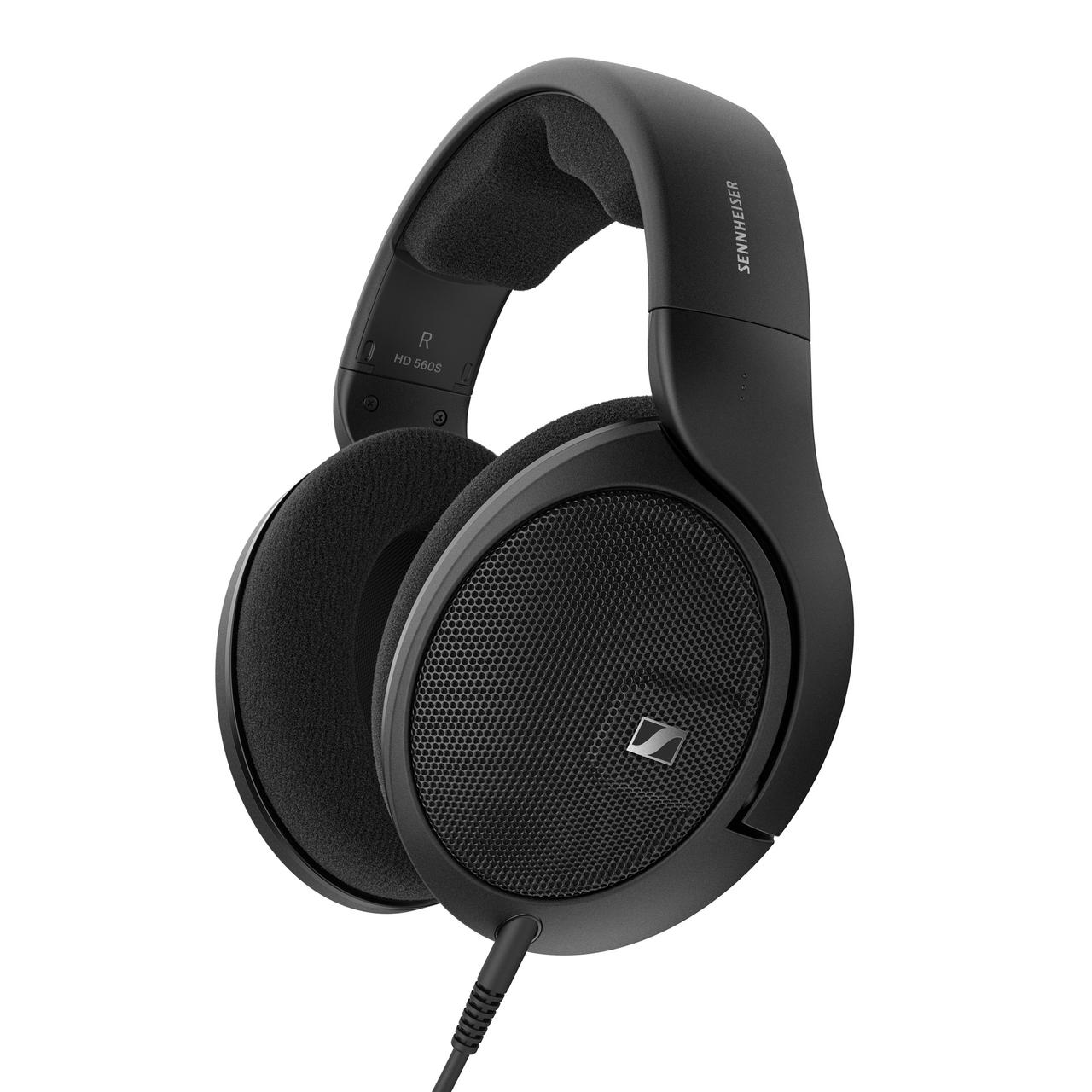
Sennheiser introduced the HD 560S in 2020 as an open-back headphone for analytical listening. The useful part of that pitch is its focus: passive, wired playback somewhere an open design is acceptable. It doesn't try to be a commuting headset, a wireless call companion and a studio monitor all at once. That narrower job makes it easy to judge, as long as you know where and how you'll listen.
Start with the room. A quiet desk, a reading chair near a source or a home editing setup suits it far better than a busy shared workspace. Then ask whether the cable and the lack of call controls fit your routine. A headphone can be affordable on its own and still need accessories or compromises that make another design the smarter buy. The HD 560S earns its place through the right use case, not because it's a cheap way into a respected product family. This review combines Sennheiser's documentation with the public findings of RTINGS reviewers Dagobiet Morales Alfaro, Evan Jakab and Yannick Khong. Tech Standpoint has not auditioned or measured an HD 560S sample.
Angled drivers are a design choice, not a guarantee
Sennheiser describes its E.A.R. arrangement as an angled driver alignment inside the open cups. That's a deliberate acoustic decision, but it can't promise how every listener will perceive space or tonal balance; ear shape, placement and the recording all still matter. Treat it as something to explore with music you know, not a guaranteed substitute for a pair of speakers in a real room.
For a fair comparison, keep the source and level the same. A louder headphone often seems more detailed in a short demo without being more useful over an evening. Include ordinary speech and several recordings you know well rather than only showpiece tracks. If you'll be editing, use a real project. The question is whether you can make repeatable decisions and stay comfortable, not whether one clip produces a 'wow'. This article claims no measured response or controlled soundstage result.
Flat overall, a bit shy in sub-bass, uneven up top
RTINGS describes the response as broadly flat, with somewhat restrained low bass and uneven treble that can make cymbals sound subdued or sharp. Those are RTINGS' findings, not a listening impression from Tech Standpoint. They're far more useful than Sennheiser's wide published frequency range, because covering a frequency and reproducing it at the right level relative to the rest of the music are different things.
If you're coming from a bass-heavy wireless headphone, the question is whether familiar bass lines keep enough weight without swamping voices. Use an ordinary playlist, not just demo tracks. With acoustic recordings, notice whether cymbals and consonants become tiring over time. A quick impression of extra detail can be appealing and still wear you out over a full album. These are questions for your own trial, not results we claim to have obtained.
The HD 560S has no onboard EQ, so any adjustment has to come from your source or playback software. Check whether your setting applies to every program or just one player. For editing, write the configuration down and keep it consistent; quietly changing processing between projects makes your reference harder to learn. EQ can tailor the sound to your taste, but it can't prove a given setting is correct for every recording or listener.
Your room becomes part of the sound
RTINGS reports poor noise isolation and substantial leakage. That makes the room a buying constraint, not a footnote. Computer fans, ventilation and conversation stay audible through the open cups. A headphone that's perfect in a private study can become maddening at the same desk once someone starts a meeting nearby. Turning up the volume is a poor fix for a setting that fights the design.
Sound escaping outward matters as well. Ask someone nearby whether your usual level bothers them, especially if you listen late at night. For microphone work, check spill into your actual recording setup rather than assuming a 'reference' label makes it right for every stage of production. The same headphone can be handy for editing a podcast and awkward while recording a quiet speaker next to an open mic. Match the tool to the stage of work rather than giving it a universal studio role.
Try your laptop before buying an amp
Sennheiser documents a 120-ohm transducer and says a separate amplifier isn't automatically necessary for ordinary use. That's a reason to try the source you already own, not a promise that every output behaves the same. Check whether your device gives a usable volume range with the recordings you enjoy, including quieter ones. If you genuinely need more headroom, identify that limitation before shopping for something to fix it.
A separate DAC or amp also changes your setup. It takes space, needs a connection and may add another volume knob. That can be worthwhile, but it should have a purpose. On a laptop without a headphone socket, a compact compatible adapter may be all you need. On a desk with several sources, a dedicated output might simplify switching. The HD 560S doesn't dictate one correct way to own it; let your actual devices and needs decide.
1.8 metres or three? Open the box
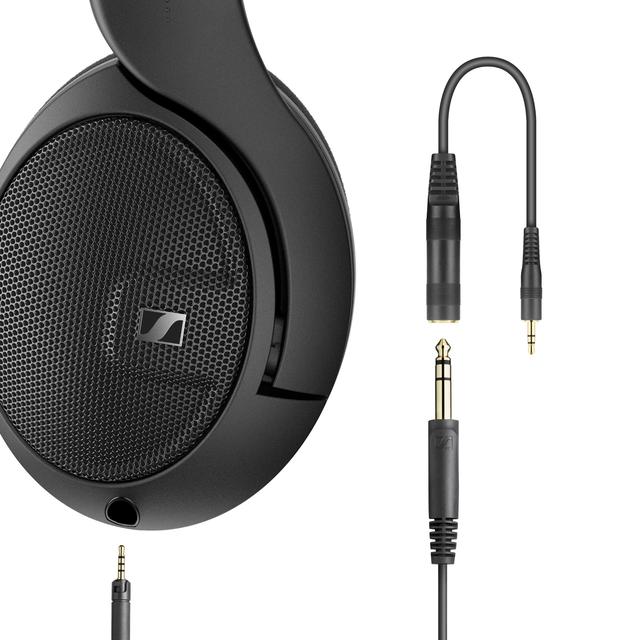
Sennheiser's current global listing specifies a detachable 1.8-metre lead with a 3.5 mm plug and a screw-on 6.3 mm adapter. The launch release described a three-metre lead ending in 6.3 mm, with a short flexible adapter to 3.5 mm. Those are genuinely different packages, not two descriptions of the same accessory. The supplied photo below shows the larger-plug arrangement. Confirm what's in a Canadian or US listing rather than assuming every box or promo image matches the global package.
A detachable cable is handy when one gets damaged or you want a different length, but the headphone-side connector still has to fit properly. Check that it seats securely and that both channels stay solid when you move. A generic replacement advertised for several models may need closer compatibility checking. If you'll carry the headphone between rooms, give the lead a consistent route and storage spot to avoid strain. Cables are boring next to acoustic marketing, but they affect nearly every listening session.
Balanced means part 700403, not a bigger plug
Sennheiser's support answer separates the headphone from its supplied lead: the HD 560S supports balanced audio, but the supplied cable isn't balanced at its 3.5 mm end. Sennheiser names the compatible 4.4 mm cable sold as spare part 700403 for the HD 620. That's a specific compatibility answer, not a reason to buy any adapter with a bigger plug.
Keep a socket-size adapter and balanced wiring separate in your head. The included 3.5-to-6.3 adapter matches a socket size; it doesn't make the supplied lead balanced. If your amp's useful headphone output is 4.4 mm, confirm the correct cable and the amp's instructions before connecting anything. A plug that physically fits the headphone isn't evidence of how the other end is wired.
Go balanced only to solve a source requirement you actually have. We have no controlled comparison showing an audible improvement from simply changing the connection type on this headphone. Buying a cable and an amp together to chase a label can wipe out the appeal of an otherwise simple purchase. Start with the supplied setup if it suits your source, then address any shortfall you can name. Check the local price and availability of the compatible spare before adding it to a Canadian or US budget.
Light, comfy, and glasses-friendly according to RTINGS
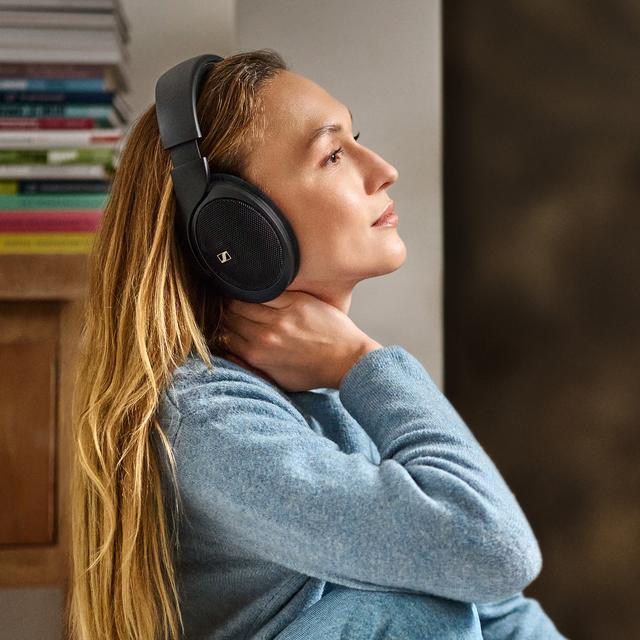
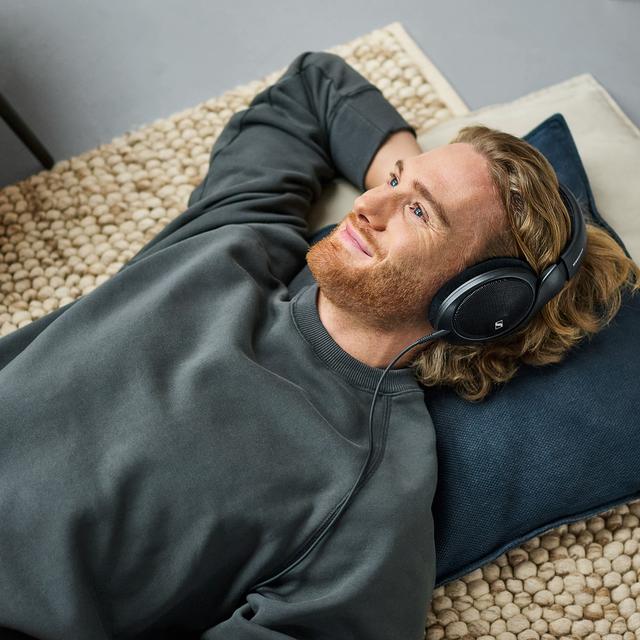
RTINGS describes comfortable padding and a relatively light fit, with consistent sound delivery even with glasses or thick hair. That's useful outside evidence, though comfort is personal. Check ear clearance, headband adjustment and pressure in the positions you actually sit in. Looking down at a keyboard and leaning back can reveal problems an upright demo misses, and a return policy helps because discomfort often shows up later than a first tonal impression. Sennheiser's supplied photos show wearing contexts; they don't document a comfort assessment by this publication.
On a used pair, check pad compression and how the pads attach. Uneven or non-original pads can change the fit enough to make comparisons with a new demo unit misleading. Ask what's been replaced and why, then check that the right parts are available in your region. The passive design means no charging routine, but the parts that touch your head are still consumables. A realistic price comparison includes restoring them when needed, not just the headline cost.
Learn it with the same handful of tracks
The HD 560S is marketed on revealing detail, but a consistent listening method matters more than the slogan. Pick a small set of recordings you know well and come back to them whenever you change gear or settings. Note specific questions, such as vocal balance, editing artefacts or how clearly you can follow overlapping instruments. That builds a far more useful personal reference than broad impressions gathered at random volumes.
If you make audio, check important decisions elsewhere too. No headphone can show how a speaker interacts with a room just because it's called analytical, and one frequency-range spec doesn't tell you how evenly everything inside that range is reproduced. That's why this review treats Sennheiser's specifications as design information, not independent test results. The real benefit is a focused tool whose behaviour you can learn, not an automatic guarantee of correct production decisions.
Gamers will need their own microphone
RTINGS reports well-matched left and right drivers, which supports its stereo-imaging assessment. That's encouraging if you value positional cues, but it doesn't guarantee an edge in every game; the recording, the game's audio engine, the output mode and your own hearing all play a part. The supplied desktop photo shows an advertised use, not evidence of gameplay testing by us.
There's no built-in microphone. For voice chat or work meetings, decide what will capture your voice before treating this as a headset replacement. A laptop mic, an external desktop mic and a separate headset all have different placement demands. The HD 560S only handles analogue listening, so plugging it in doesn't change which input your conferencing software uses. Confirm both devices in the actual program.
Open-back spill matters when the microphone sits close to the headphone or is sensitive enough to pick up playback. Ask another caller whether your normal listening level is bleeding into the conversation, with the mic in its usual spot. That's especially important for quiet speech or recording work, where aggressive noise suppression may not suit the job. Give the cable a clear path around your mouse and keyboard too; a great listening tool gets annoying fast if every reach tugs at the earcup.

Worth buying for a quiet desk and a wired source
The HD 560S makes sense if you have a quiet place, a suitable wired source and the patience to actually sit with music or material. The removable cable means a damaged lead is a replacement part, not a reason to bin the headphone. It loses its appeal if what you really need is isolation, wireless freedom around the room or a built-in microphone. Let those requirements drive the decision before the reputation of the product family does.
For an older pair, confirm the cable package, pad condition and return terms before judging the price. Our 8.1 Standpoint Score credits supported listening capability, documented connection options and simple passive ownership, while accounting for the open-room limit and missing headset conveniences. It doesn't certify measured neutrality or listening superiority. A complete pair that fits can outlast phone software and wireless standards, but that independence won't make up for a daily routine that clashes with an open, wired design.
The closest alternatives.
| Product | Standpoint Score | Best for | Price |
|---|---|---|---|
| Sennheiser HD 560SThis review | 8.1Research | A listener or audio editor with a quiet room, a suitable headphone output and no need for built-in voice chat. | Amazon.ca ↗ |
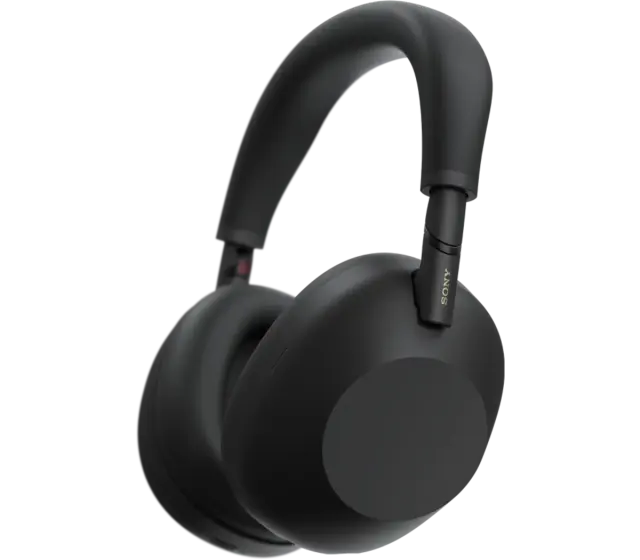
| Sony WH-1000XM6 | 8.3Research | A frequent traveller or desk worker who wants cancellation, multipoint, a wired option and a folding over-ear in one… | Amazon.ca ↗ |
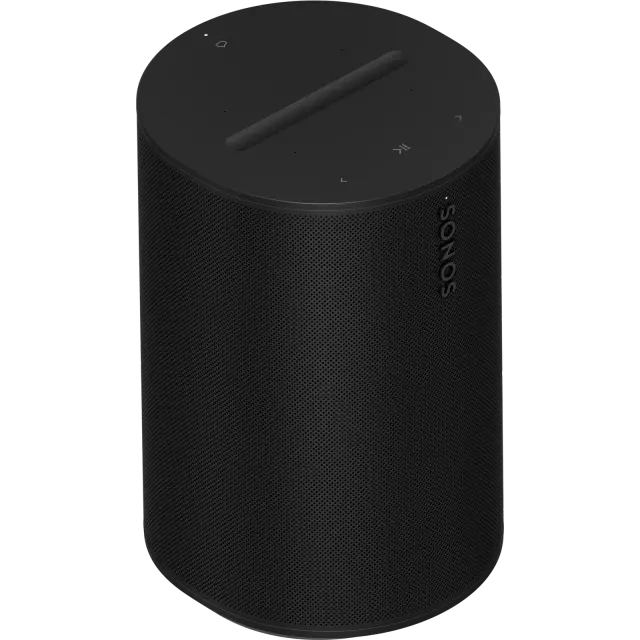
| Sonos Era 100 | 7.9Research | A kitchen, bedroom or study where music stays in the room and a supported phone is on hand for setup and tuning. | Amazon.ca ↗ |
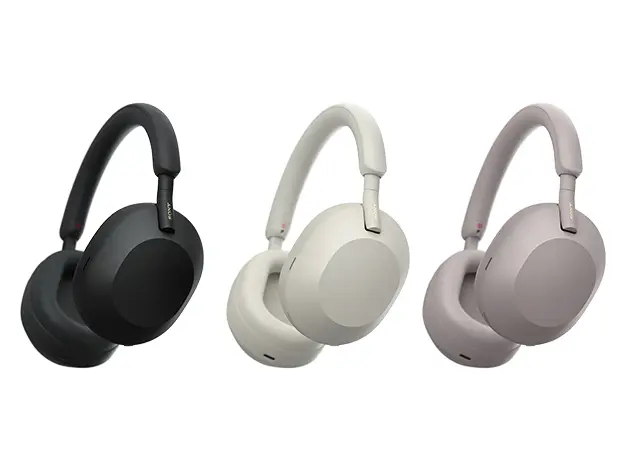
| Sony WH-1000XM5 | 8.2Research | A commuter or desk worker who wants strong cancellation, two-device switching and a cable backup, and has the bag room… | Amazon.ca ↗ |
Compare scores within a category: Tested means our own use, Research means documentation and attributed outside testing. Price links are affiliate links. As an Amazon Associate, Tech Standpoint earns from qualifying purchases. Disclosure
Sources & further reading.
These are the sources behind this research review. Manufacturer claims are not independent performance measurements. Community accounts, when cited, describe individual experiences.
- Sennheiser current global specifications and 1.8 m cable package ↗manufacturer
- Sennheiser supplied product and wearing photographs ↗manufacturer
- Sennheiser launch documentation and original three-metre cable ↗manufacturer
- RTINGS evaluation by Dagobiet Morales Alfaro, Evan Jakab and Yannick Khong ↗independent
- Sennheiser amplification guidance ↗support
- Sennheiser balanced connection and compatible cable 700403 ↗support
- Sennheiser removable-cable confirmation ↗support
Product software and regional bundles can change. Corrections and editorial disclosures.
Affiliate link. As an Amazon Associate, Tech Standpoint earns from qualifying purchases. It never changes our verdict or score. Disclosure