An editorial assessment of documented capabilities and ownership trade-offs. This is not a hands-on test result or a measurement of reliability.
Features & capability 30%8.0
A focused passive open-back design suits deliberate home listening.
Compatibility & connectivity 20%7.2
Standard analogue connections help, while source output and open-room requirements constrain use.
Ownership & upkeep 20%8.7
Replaceable contact parts and cable avoid several common sealed wireless-product ownership limits.
Setup & everyday use 15%8.0
Operation is simple once the room, fit and source are appropriate.
Documentation & support clarity 15%8.4
Manufacturer specifications and service illustrations are available; older examples need revision-aware checking.
Compare scores within the same product category. Small decimal differences should not override your needs or the evidence limits.
How the Standpoint Score works
We score five aspects of the documented product on a 0–10 scale, then calculate a weighted total:
- Features & capability30% of the total
- Compatibility & connectivity20% of the total
- Ownership & upkeep20% of the total
- Setup & everyday use15% of the total
- Documentation & support clarity15% of the total
This product’s 8.0/10 is a provisional research assessment. It does not claim measured performance, tested reliability or a verified customer satisfaction rate. Compare it with products in the same category, and read each criterion’s reasoning above.
Read the full rubric and score bands ↗The ownership case.
A coherent long-term listening tool for a quiet room and an adequate wired source, provided an older pair is priced with any restoration work included.
Reasons to consider it
- No battery, wireless pairing or app dependency
- Detachable cable and replaceable ear pads
- Focused open-back home-listening design
Go in knowing
- Sound leakage limits shared-space use
- The 300-ohm load requires checking the actual source
- Pad wear and non-original components can change fit
The specification sheet.
Published specifications from the linked sources. Configurations and availability can differ by country.
- Construction
- Open-back, circumaural
- Transducer
- Dynamic
- Nominal impedance
- 300 ohms
- Cable
- Detachable; referenced manual specifies 3 m
- Connection
- 3.5 mm with 6.35 mm adapter in referenced manual
- Maintenance
- Replaceable ear pads and cable
A home-listening tool with a defined environment
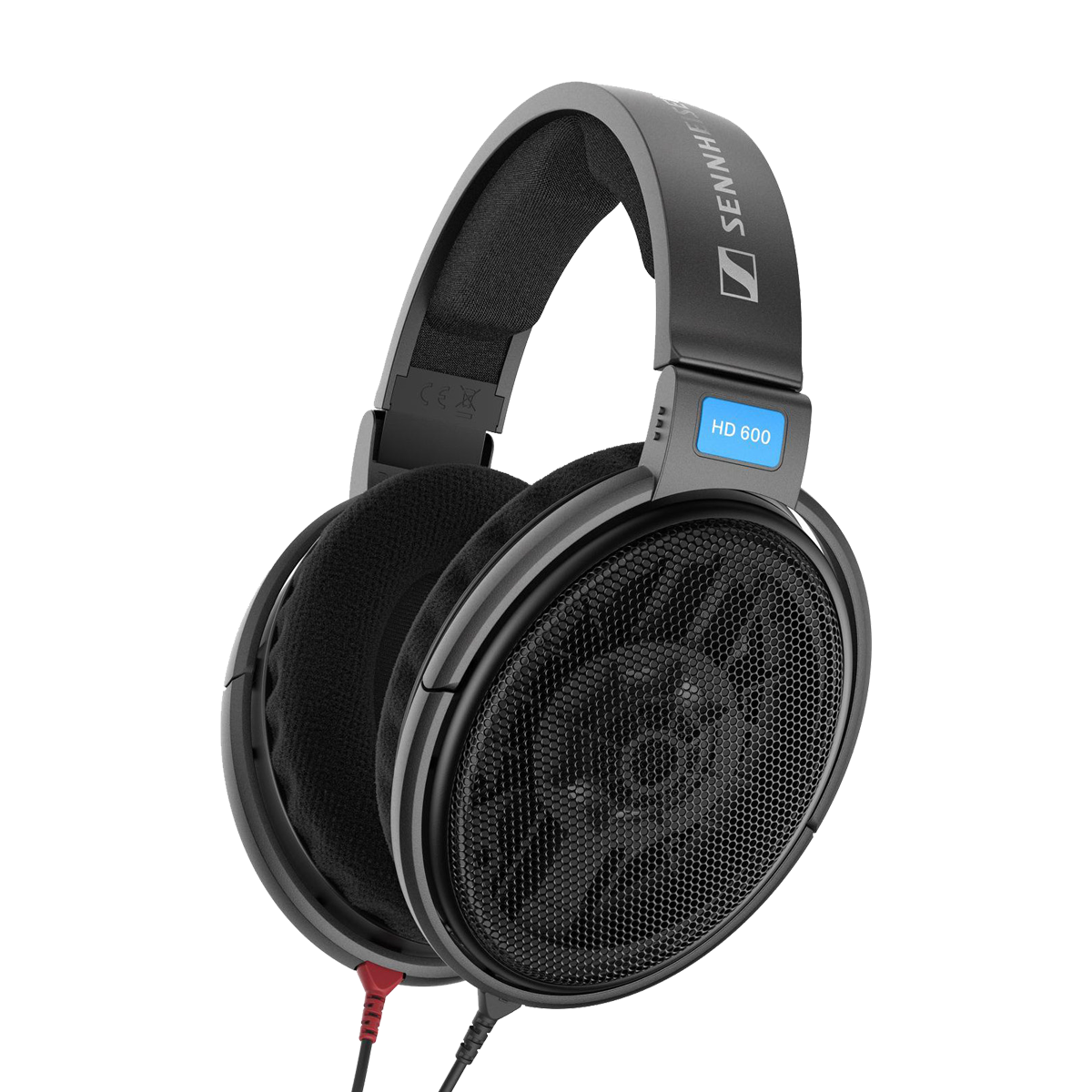
The HD 600 is a passive, open-back headphone whose appeal starts with a relatively simple proposition: a wired listening system without a battery, wireless pairing or app dependency. That simplicity does not make it suitable for every room. It is best considered as part of a quiet listening arrangement in which sound escaping from the cups will not disturb someone nearby and external noise will not repeatedly compete with the recording.
That environmental requirement should come before arguments about amplifiers or replacement cables. A shared office beside a busy television is a very different setting from a quiet study. If the room is wrong, spending more on the source will not make the open construction behave like an isolating headphone. The useful question is whether you can give the HD 600 the setting it needs often enough to justify a dedicated place in your system. Its long-standing model name should not substitute for that practical decision.
Open construction changes shared-space listening
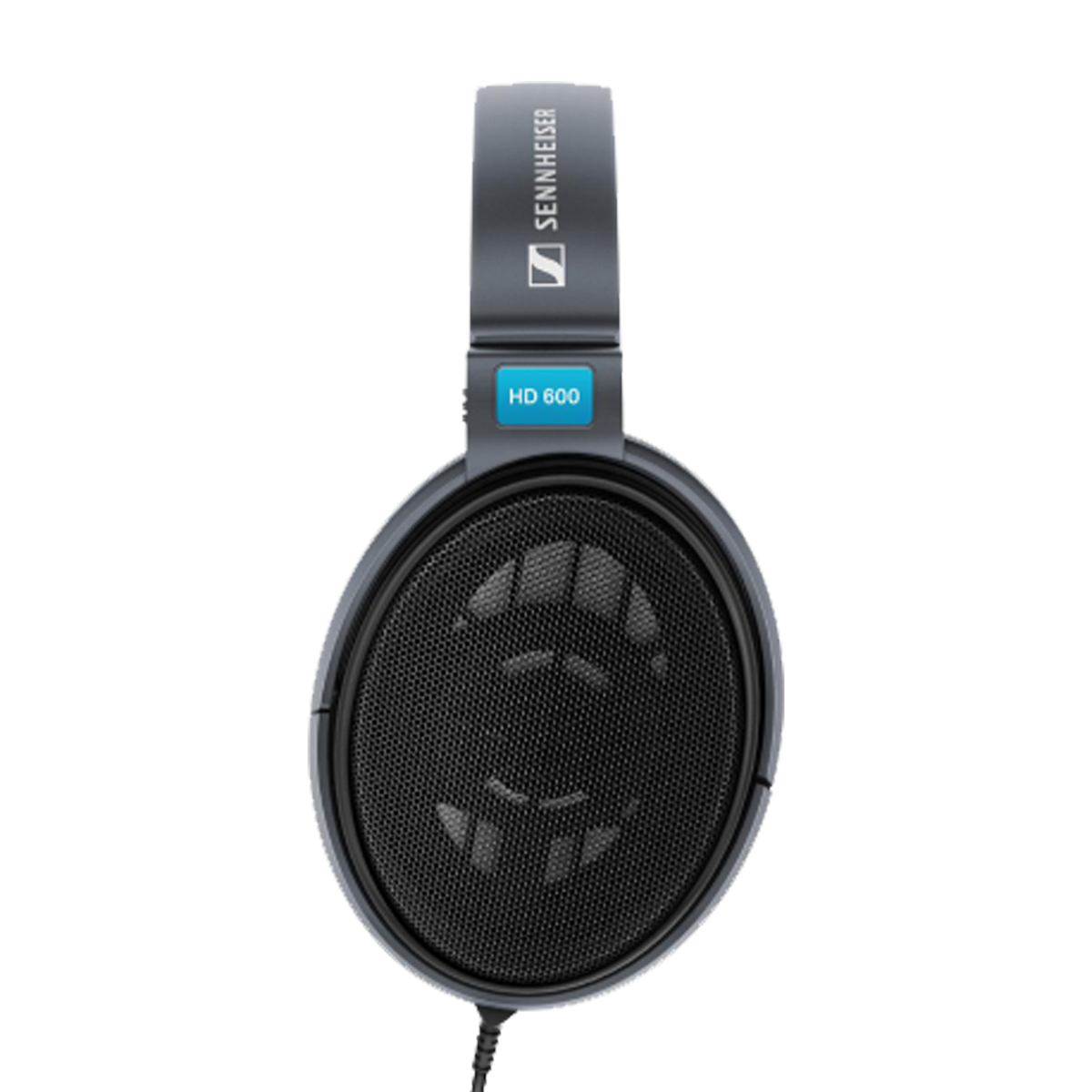
The rear grilles are part of an acoustically open design. This affects both the listener and anyone nearby, so include another person in a realistic volume check if the room is shared. A headphone can feel private because it sits on your head while still allowing enough sound out to be distracting. Likewise, a computer fan or household conversation can remain relevant to the listening experience even when the music itself is clear.
For recording work, consider whether a microphone will pick up playback. That is a workflow question rather than a blanket prohibition: the arrangement, level and microphone position all matter. If tracking vocals is the principal task, a closed design may be more appropriate. If the work is quiet editing or reviewing completed material, openness may be easier to accommodate. This review does not infer superior imaging or tonal accuracy merely from the construction; those are listening and measurement questions beyond the documentation assessed here.
Impedance calls for a source check
The documented nominal impedance is 300 ohms. That number helps describe the electrical load, but it is not a complete instruction to buy a particular amplifier or spend a particular amount. Sensitivity, available voltage and your listening level also matter. Begin with the intended source and establish whether it provides sufficient clean level and adjustment range for your material, rather than choosing accessories on the basis of impedance alone.
Pay attention to quieter recordings and to any equalisation you expect to use. A setup that becomes loud with a compressed pop track may leave little useful margin with different content. Conversely, an adequate existing output need not be discarded because a product discussion assumes every HD 600 owner wants a separate desktop stack. The sensible purchase order is headphone, verified source behaviour and then any accessory that solves an identified limitation. That keeps compatibility work connected to a real need rather than to the prestige of the system surrounding it.
The cable is replaceable, but still deserves care
Sennheiser documents a detachable cable connected at both earcups. This makes a damaged lead a serviceable part of the arrangement instead of automatically condemning the whole headphone. For a used purchase, inspect both connectors and listen while moving the cable gently in a normal range. Intermittent sound can originate in the lead or the connection, and the distinction affects what a repair will involve.
The referenced manual describes a three-metre cable with a 3.5 mm plug and a larger-jack adapter. That length can suit a seat away from an amplifier, but it may be excessive beside a laptop. Plan where the slack will go so it does not catch under a chair or pull on a cup. Confirm what is actually included with the individual unit, since a long-lived product can be sold used with replacement accessories. A different cable is not inherently a problem, but its fit and condition should be known.
Pads are part of the acoustic condition
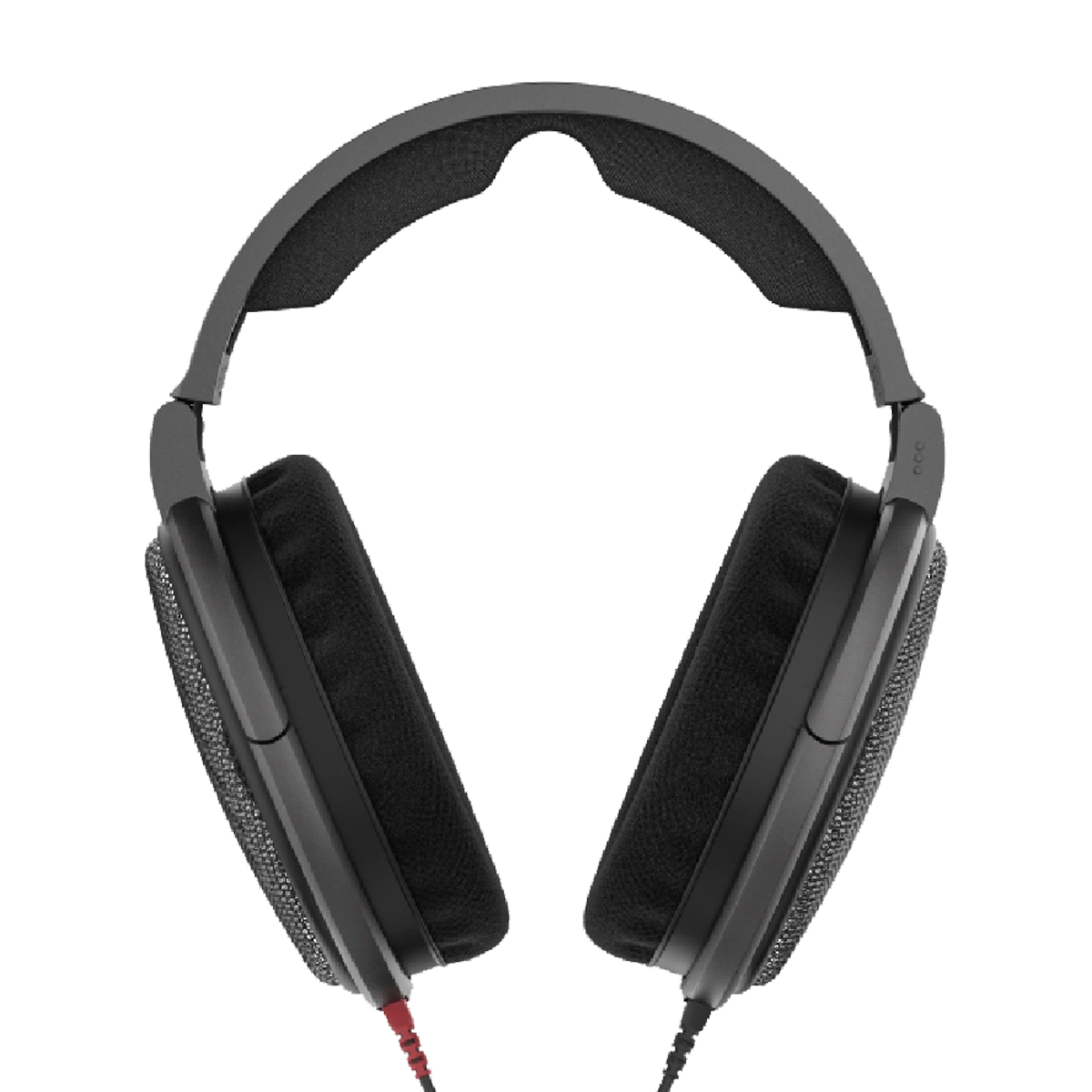
The replaceable ear pads are central to evaluating an older HD 600. Their shape determines how the cups sit around the ears, and uneven compression can change both comfort and the relationship between the driver and the listener. A listing that emphasises pristine grilles while showing flattened pads is incomplete as a condition report. Include fresh compatible pads in the ownership budget when their history is uncertain.
Try the headband adjustment without forcing it and check that both sides hold position. The aim is a stable fit that does not require frequent correction, especially during a long seated session. If you wear glasses, test the complete combination rather than assuming an open headphone avoids all pressure issues. Comfort is individual, and this review does not convert the manufacturer's construction claims into a promise of fatigue-free listening. A meaningful trial remains necessary even for a design with extensive documentation and a familiar reputation.
A reference role requires familiarity
Sennheiser positions the HD 600 for high-quality home listening, but using any headphone as a reference requires learning how it presents the material you care about. Start with recordings whose balance and production choices you already know. Make comparisons at similar perceived levels and avoid changing several parts of the chain at once. Otherwise it becomes difficult to distinguish a source change, a pad change and a simple increase in loudness.
For creative work, check decisions on another appropriate playback system when possible. The HD 600's specifications do not guarantee that a mix will translate identically to a car, loudspeaker or inexpensive earbud. Its potential value is as a consistent part of a broader listening process. That is a more defensible role than treating any one headphone as an infallible authority. We have not measured its response or performed a controlled listening comparison, so the score does not represent a laboratory finding about neutrality.
Older units need identification and a repair plan
The same model name has remained in use through different appearances and production periods. Photographs in this article show the manufacturer example used for source verification, not a promise that every used unit will have the same finish or accessories. Ask about modifications, replaced drivers and non-original pads, and compare the actual unit with the documentation relevant to it. A seller's use of the HD 600 name is a starting point, not a complete service history.
The absence of a rechargeable battery removes one common ageing concern, but it does not make the headphone maintenance-free. Cables, pads, headband parts and connectors still experience wear. Check current local parts and service options before treating repairability as a guaranteed low-cost outcome. For a cross-border purchase, shipping a delicate item back for diagnosis can erase a modest saving. A transparent condition description and an uncomplicated return route are worth considering alongside cosmetic appearance.
A sensible choice when the room and source fit
The HD 600 remains a coherent proposition for a quiet home setup where open playback and a wired source are welcome. Its documented replaceable contact parts and cable give it an understandable maintenance path, while the passive design avoids software dependence. Those qualities are more relevant to long-term ownership than a claim that an older product is automatically better because it has remained familiar for years.
The purchase is less convincing when the room needs isolation, the source cannot provide useful level or the buyer must immediately replace several worn components. Our provisional score recognises a focused, serviceable design while leaving sound-quality judgments and the state of individual examples unresolved. Evaluate the total system and complete restoration cost before deciding. A well-kept HD 600 in an appropriate room can be a rational long-term listening tool; a cheap incomplete pair in the wrong environment may be a much less economical choice.
Sources & further reading.
These are the sources behind this research review. Manufacturer claims are not independent performance measurements. Community accounts, when cited, describe individual experiences.
- Sennheiser manufacturer specifications, documentation or release ↗manufacturer
- Sennheiser manufacturer specifications, documentation or release ↗manufacturer
- Sennheiser manufacturer specifications, documentation or release ↗manufacturer
Documentation reviewed: 9 October 2026. Product software and regional bundles can change. Corrections and editorial disclosures.