Not tested. This is a research score for the documented features, compatibility and ownership trade-offs discussed in this review, not a performance measurement.
Features & capability 30%8.1
ANC, ambient control and configurable listening are supported by documentation and identified independent observations.
Compatibility & connectivity 20%7.9
Three codecs and updated multipoint offer useful options with source, app and handoff requirements.
Ownership & upkeep 20%5.9
Battery condition, compatible foam replacements and case health weigh heavily in an older sealed rechargeable design.
Setup & everyday use 15%7.5
Fit verification, deliberate connection settings and practical charging checks support a dependable routine.
Documentation & support clarity 15%8.7
Sony provides exact runtime tables, charging conditions and a specific imbalance troubleshooting procedure.
Compare scores within the same product category. Small decimal differences should not override your needs or the evidence limits.
How the Standpoint Score works
We score five aspects of the documented product on a 0–10 scale, then calculate a weighted total:
- Features & capability30% of the total
- Compatibility & connectivity20% of the total
- Ownership & upkeep20% of the total
- Setup & everyday use15% of the total
- Documentation & support clarity15% of the total
This product’s 7.6/10 is an editorial research assessment. It does not claim measured performance, tested reliability or a verified customer satisfaction rate. Compare it with products in the same category, and read each criterion’s reasoning above.
Read the full rubric and score bands ↗From a tech standpoint.
Buy a WF-1000XM4 if the foam tips fit, the seller gives you real inspection or return time, and both earbuds plus the case hold up through your normal routine; SoundGuys' noise-control results back up the rest. Skip it if the listing is a short pairing demo and a vague 'refurbished' label, if calls in noisy places are central to your work, or if a new alternative with warranty costs only a little more. The 7.6 Standpoint Score reflects documented features and ownership demands, not our own acoustic or endurance measurements.
Reasons to consider it
- SoundGuys' evaluation backs up strong ANC and substantial passive isolation from the foam tips
- SBC, AAC and LDAC depending on the source, and later firmware added two-device connection
- Sony publishes a specific test for spotting a serious left-right battery imbalance
Go in knowing
- Launch runtime figures tell you nothing about how much life an older pair has left
- Worn or poorly fitted foam tips hurt sound, cancellation and calls, not just comfort
- Calls, playback and charging all need separate checks on the exact set you're buying
Affiliate link. As an Amazon Associate, Tech Standpoint earns from qualifying purchases. It never changes our verdict or score. Disclosure
The specification sheet.
Published specifications from the linked sources. Configurations and availability can differ by country.
- Drivers
- 6 mm
- Bluetooth / codecs
- 5.2; SBC, AAC and LDAC
- AAC runtime claim
- Up to 8 hours with ANC on and DSEE Extreme off
- LDAC runtime claim
- Up to 5 hours with ANC on and DSEE Extreme off
- Earbud charging
- Approximately 1.5 hours
- Earbuds and case charging
- Approximately 3 hours from empty under stated conditions
- Charging methods
- USB-C to the case; Qi-compatible wireless charging
- Resistance
- IPX4 earbuds; charging case is not water resistant
- Firmware checked
- Sony lists 2.3.1; its history includes multipoint
Three batteries decide what a used pair is worth
An old flagship earbud is not like an old passive headphone. The WF-1000XM4 relies on three rechargeable batteries, one in each bud and one in the case, and the original price tier says nothing about how much life they have left. If your own pair still fits and lasts through your routine, keep it. An unknown set offered cheap needs a much tougher look before money changes hands.
This review draws on Sony's specifications, help guide and support pages, plus Christian Thomas's evaluation for SoundGuys. Tech Standpoint has not tested a WF-1000XM4 sample, and we keep outside acoustic findings, Sony's published conditions and our own buying judgement separate. Ask what 'refurbished' actually means in the listing, including whether battery work was done and documented. Add up the cost of fresh tips and any missing accessories. A proper return window is often worth more than a modest discount when the seller would otherwise give you a quick pairing demo and nothing else.
Worn foam ruins more than comfort
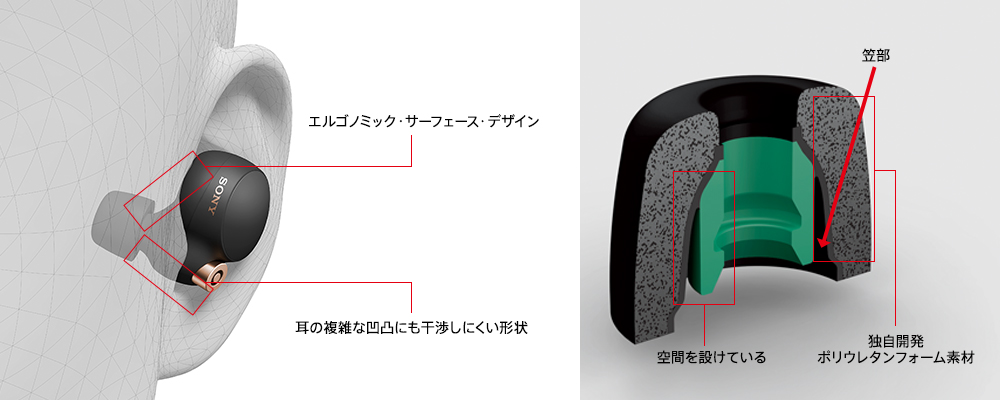
Sony's tip instructions tie a poor fit to worse sound, weaker cancellation, poorer calls and even some unreliable controls. Your left and right ears may need different sizes. The diagram below is Sony's own illustration of the earpiece shape and foam-tip construction; it's manufacturer material, not a fit result from Tech Standpoint.
Judge comfort across a normal listening session, not in the first minute. Talk, turn your head and see whether keeping the seal means constant fiddling. Don't force a size that hurts just because it blocks more sound at first. On a used pair, inspect the tips and budget for compatible replacements if they look tired; Sony warns against using cracked, peeled or chipped tips. Care matters too: wipe dirt off with a dry cloth, and never wash the foam in water or use alcohol on it. A degraded tip can change the whole listening experience without anything being wrong with the electronics.
Get the seal right before blaming the ANC
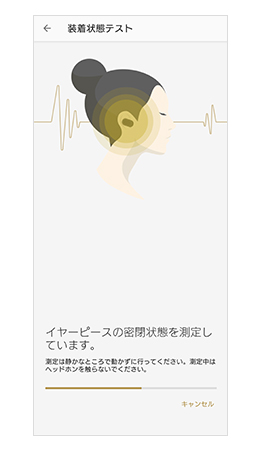
The Japanese-language interface image below is Sony's illustration of its wearing-condition check. It's an example screen, not a measurement by this publication, and the current app may look different. The purpose of the check is to get a workable fit first, so you don't attribute every change in sound to an electronic mode.
When comparing cancellation settings, keep the earbuds seated the same way. Start with no music against a steady background, then repeat with quiet playback. Nudging a tip between modes changes the seal as well as the setting, which muddies the comparison. If one side behaves differently from the other, recheck fit and settings before assuming a fault. Keep the trial practical: will this pair stay comfortable through a commute or a stretch at your desk? A reassuring graphic helps with setup, but actually wearing the earbuds is what tells you whether you'll keep using them.
SoundGuys backs the noise-control reputation
SoundGuys found strong active noise cancellation and substantial passive isolation from the foam tips. That's a solid reason to take the XM4 seriously as a listening device. It isn't a guarantee of the same attenuation in every ear, because the physical seal and the active cancellation both contribute to what reaches you, and only one of those is fixed by the hardware.
Choose based on the noise you actually want gone. A steady drone and nearby intermittent chatter are different problems, so one impressive demo shouldn't stand in for every situation. Check ambient mode too, especially if you have short conversations often. Cancellation that's welcome on a train can be too much at a desk where people regularly need your attention. Learn to switch modes on purpose and keep the volume sensible. Turning it up to cover a poor seal defeats the whole point of buying an isolating design.
A bass-forward default worth adjusting
SoundGuys described the default sound as bass-emphasised with less energy higher up, and suggested trying the equaliser rather than assuming the factory tuning is final. That's an attributed listening and measurement assessment, not something we auditioned. Whether you like that balance is personal; no review can make it the universal definition of good sound.
Start with a few familiar tracks at a matched volume. Change one setting, then go back to the original to make sure the change is actually better and not just different. If voices seem less clear than expected, recheck the fit before building an elaborate EQ curve. Processing should serve the music you play, not become a fidget you adjust all session. Sony's documents also show that processing choices affect battery life, so whatever sound settings you prefer belong in your battery trial. Timing one configuration and listening with another sets a misleading expectation.
LDAC needs a capable source and the right mode
Sony specifies SBC, AAC and LDAC for music. Its codec guide says LDAC requires the Priority on sound quality setting; the factory Priority on stable connection mode doesn't use LDAC for music. The source device has to support and choose a suitable codec as well. Bluetooth 5.2 on its own doesn't prove that a given phone, computer or app delivers every listening option you're hoping for.
Confirm the actual connection rather than buying for the most impressive acronym. An iPhone-centred AAC routine and an LDAC-capable source can lead to different sensible settings and different battery life. On a crowded commute, a dependable link can matter more than a quality mode that keeps dropping. Watch a familiar video in the app you use to check sync, and separately check which speaker and microphone your meeting software has selected. Music, video timing and call routing are three different jobs, and getting one right settles nothing about the others.
Two devices connected, one stream at a time
Sony's current firmware listing is 2.3.1, described as a security update, and its cumulative history includes connecting two devices at once. The help guide covers pairing both sources and enabling the two-device option in the companion app. Older guide pages call that app Headphones Connect; current update instructions call it Sound Connect. Check the installed software before trusting a launch-era feature list.
The switching behaviour is worth understanding: stop music on the first source before starting it on the other. Multipoint doesn't mix two music streams. If your day alternates between a laptop and a phone, rehearse that handoff in the programs you actually use. Check incoming calls as well as media playback, and know which source is active before treating a pause as a dropped connection. The update adds real convenience, but you still need to learn the handoff. Follow the official regional update instructions and give the process time to finish.
Eight hours is the best case, not the normal one
Sony's operating-time table lists up to eight hours with AAC, cancellation on and DSEE Extreme off. Switch to LDAC with the same settings and the figure is five hours; LDAC with DSEE Extreme set to Auto and cancellation on is rated at 3.5 hours. These are manufacturer ceilings under specific settings, so don't apply the eight-hour headline to every configuration.
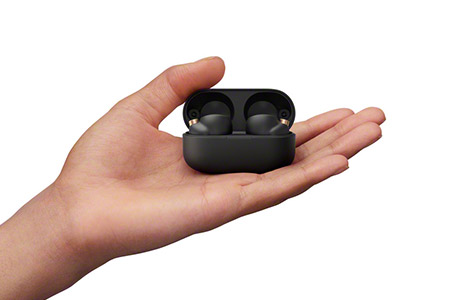
SoundGuys reported about seven hours and 43 minutes in its battery evaluation. That describes its sample and conditions, not the remaining capacity of a used pair. Settle on the settings you'll keep and time a normal session from full. Note which side quits first and whether the case reliably refills each bud. A battery percentage is a rough guide, not a substitute for actually running your routine. The photo below of the case in hand shows its pocket-sized form; it's a supplied image, not a record of an endurance run by Tech Standpoint. Buy for the hours you can verify now, not the hours promised at launch.
Sony's own three-hour imbalance check
Sony's US support article says some difference in drain between the buds can be normal, but a significant left-right gap during regular paired use shouldn't happen. After checking charging, it tells you to fully charge, play music at middle volume with AAC, cancellation on, DSEE Extreme off and other settings off, and see whether playback runs past three hours. Persistent problems go to support.
That procedure is troubleshooting guidance, not a three-hour warranty promise or a benchmark every buyer should accept. Still, it gives an owner a far better starting point than guessing from scattered percentage readings. If you're buying, insist on the runtime your own use needs and get a local service answer if the pair falls short. We don't infer a failure rate or claim any firmware version damaged every battery. A reported problem calls for a condition check, and any diagnosis or repair quote should come from evidence about that specific pair.
Check the case charges both buds every time
Sony's charging guide gives about 1.5 hours for the earbuds and about three hours for an empty headset-and-case combination. The case charges over USB and on a Qi-compatible pad. The guide recommends charging between 15 and 35°C and explains that poor alignment can interrupt wireless charging. Those are documented conditions, not a guarantee that any unfamiliar cable or pad will behave.
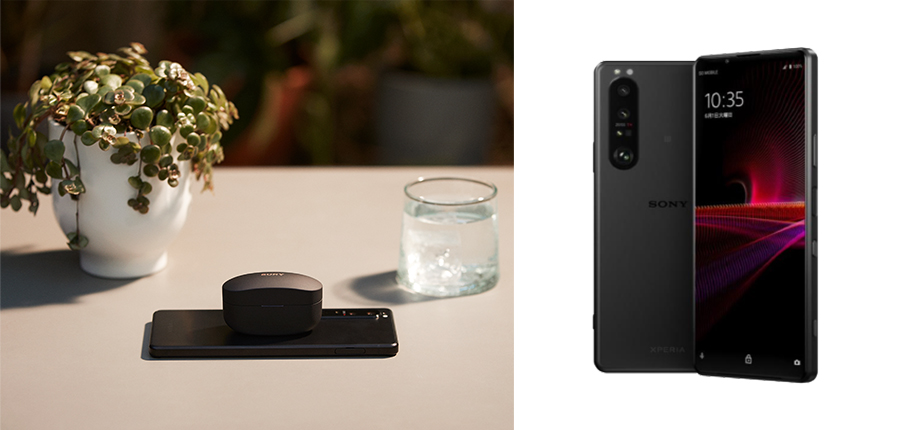
The supplied Sony photo below shows the case charging on a compatible Xperia phone. It doesn't prove reverse charging works with every phone. Try the actual cable or pad you'll carry, confirm both buds seat properly, and check that a replacement tip doesn't stop the lid closing. A case that sometimes skips one side can make a healthy earbud look unreliable. Keep the setup simple enough to repeat at home and on the road. A charging method only counts if you can depend on it.
Weak in wind and office noise, and Speak-to-Chat can misfire
SoundGuys found microphone clarity suffered in its office-noise and wind samples. That's a reason to try calls in the place you'll actually make them rather than borrowing confidence from the cancellation results. What you hear and what the person at the other end hears are two different parts of the experience.
Speak-to-Chat can pause or mute music when it detects your voice and then resume automatically; it ships switched off. Sony warns it can trigger on coughing, humming or other vibrations, and that some playback apps won't always pause or resume cleanly. Try it during your normal kind of listening. A handy quick-chat feature becomes a nuisance if it keeps reacting to things that aren't conversations. For long meetings, check comfort and get a listener's view of your outgoing voice before making the XM4 your main work device. Leave the feature on only if it solves more problems than it creates.
A worthwhile buy when the specific pair checks out
Sony rates the earbuds IPX4 for splashes and explicitly excludes the charging case. Immersion isn't covered, and the guide separates ordinary fresh water and sweat from soapy water, seawater and pool water. Dry wet earbuds before charging. Don't read the rating as permission to rinse the whole set, or as proof that a previously damaged pair still has its original protection.
Our 7.6 Standpoint Score credits useful listening controls, supported noise-control evidence and clear model-specific instructions. It also weighs heavily the ageing rechargeable design and the work needed to verify fit, charging and endurance. If you already own a pair that's comfortable and reliable, there's no reason to replace it just because it's older. A buyer needs a complete set, a workable trial or return route, and a price that leaves room for fresh tips. Compare that total against an alternative with proper warranty. The recommendation holds when the pair in front of you meets your routine, not when the listing repeats the original flagship pitch.
The closest alternatives.
| Product | Standpoint Score | Best for | Price |
|---|---|---|---|
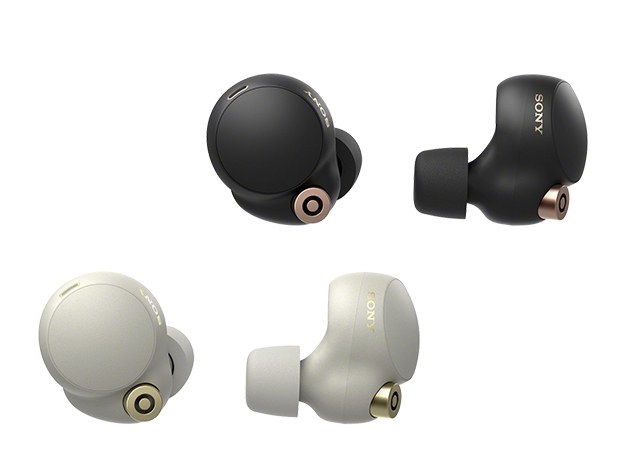
| Sony WF-1000XM4This review | 7.6Research | A budget-minded listener who can verify fit and battery health on the actual pair and wants effective isolation with ANC… | Amazon.ca ↗ |
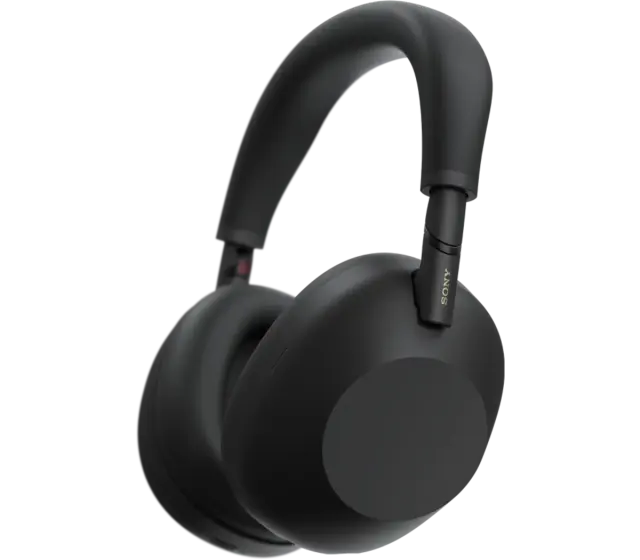
| Sony WH-1000XM6 | 8.3Research | A frequent traveller or desk worker who wants cancellation, multipoint, a wired option and a folding over-ear in one… | Amazon.ca ↗ |
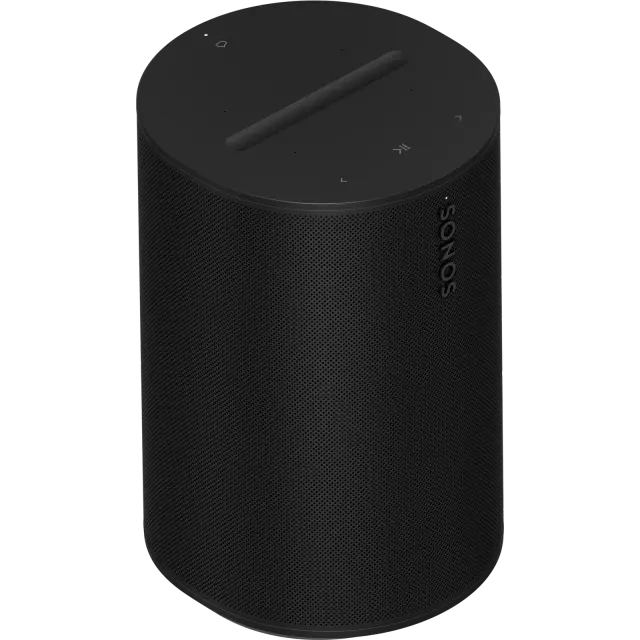
| Sonos Era 100 | 7.9Research | A kitchen, bedroom or study where music stays in the room and a supported phone is on hand for setup and tuning. | Amazon.ca ↗ |
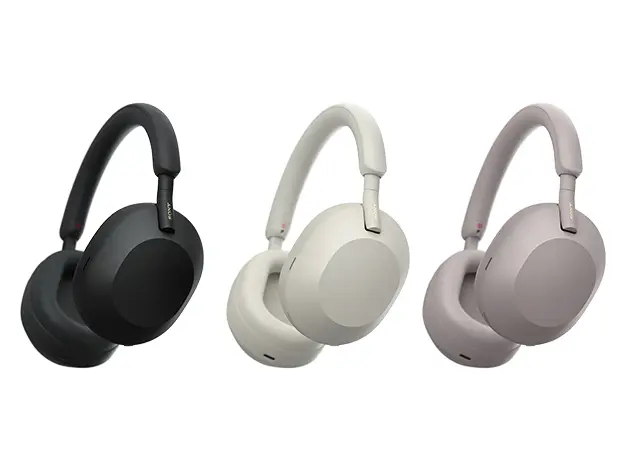
| Sony WH-1000XM5 | 8.2Research | A commuter or desk worker who wants strong cancellation, two-device switching and a cable backup, and has the bag room… | Amazon.ca ↗ |
Compare scores within a category: Tested means our own use, Research means documentation and attributed outside testing. Price links are affiliate links. As an Amazon Associate, Tech Standpoint earns from qualifying purchases. Disclosure
Sources & further reading.
These are the sources behind this research review. Manufacturer claims are not independent performance measurements. Community accounts, when cited, describe individual experiences.
- Sony US specifications ↗manufacturer
- Christian Thomas’s SoundGuys WF-1000XM4 evaluation ↗independent
- Sony’s supplied fit, case and charging illustrations ↗manufacturer
- Firmware 2.3.1 security update and cumulative features ↗support
- Tip replacement, fit and foam care ↗support
- Supported codecs and connection-mode requirements ↗support
- Two-device pairing and media switching ↗support
- Operating time by codec and DSEE settings ↗support
- Sony’s significant battery-imbalance troubleshooting check ↗support
- Case charging, Qi and temperature conditions ↗support
- Speak-to-Chat operation and limitations ↗support
- Water resistance and drying before charging ↗support
Product software and regional bundles can change. Corrections and editorial disclosures.
Affiliate link. As an Amazon Associate, Tech Standpoint earns from qualifying purchases. It never changes our verdict or score. Disclosure