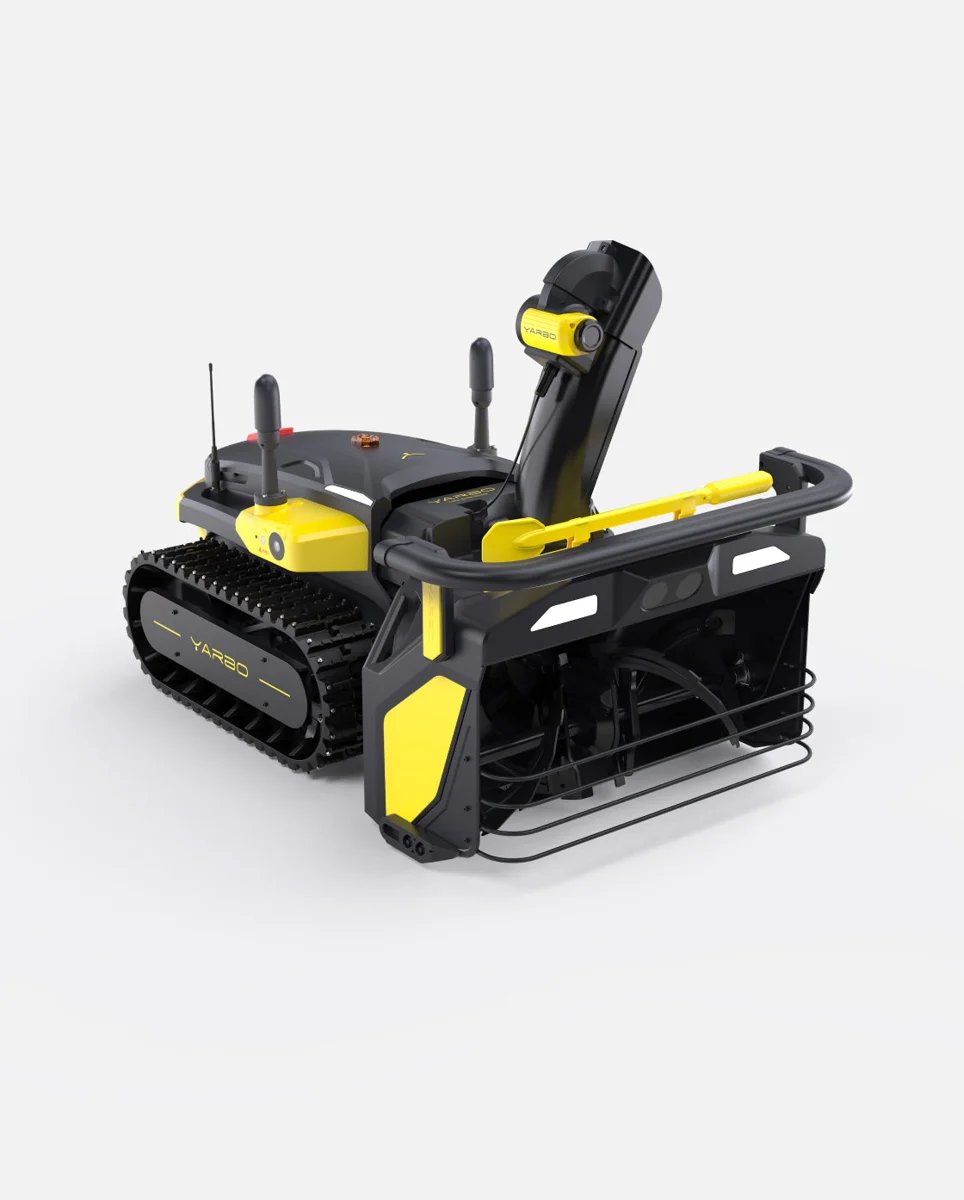
An editorial assessment of documented capabilities and ownership trade-offs. This is not a hands-on test result or a measurement of reliability.
Task capability 30%7.3
Adjustable autonomous blowing targets repeatable debris routes.
Navigation & control 20%7.2
Mapped paths and directional controls support task-specific planning.
Ownership & upkeep 20%5.8
Disposal remains manual and standalone core economics are demanding.
Setup & usability 15%5.7
Wind, discharge destinations and module handling complicate setup.
Documentation & support clarity 15%6.9
Air figures and task claims are documented, with real cleanup efficiency unmeasured.
Compare scores within the same product category. Small decimal differences should not override your needs or the evidence limits.
How the Standpoint Score works
We score five aspects of the documented product on a 0–10 scale, then calculate a weighted total:
- Task capability30% of the total
- Navigation & control20% of the total
- Ownership & upkeep20% of the total
- Setup & usability15% of the total
- Documentation & support clarity15% of the total
This product’s 6.7/10 is a provisional research assessment. It does not claim measured performance, tested reliability or a verified customer satisfaction rate. Compare it with products in the same category, and read each criterion’s reasoning above.
Read the full rubric and score bands ↗The ownership case.
Yarbo Blower is most compelling as an additional job for an already useful core. A standalone purchase needs to prove that automated movement and piling save enough real labour, because blowing leaves does not complete their collection or disposal.
Reasons to consider it
- Adjustable route and airflow controls
- Useful extra task for an existing Y40 core
- Published 21 N blowing force
Go in knowing
- Piling does not complete disposal
- Wind and debris conditions strongly affect usefulness
- Standalone economics need careful justification
The specification sheet.
Published specifications from the linked sources. Configurations and availability can differ by country.
- Configuration
- Y40 Core with Blower Module
- Published blowing force
- 21 N
- Published air figures
- 174 mph and 607 CFM
- Published runtime
- 70 minutes per charge
- Slope claim
- 70% / 35°
- Navigation
- RTK-GPS, stereo vision and odometry
The difficult part is deciding where the leaves go
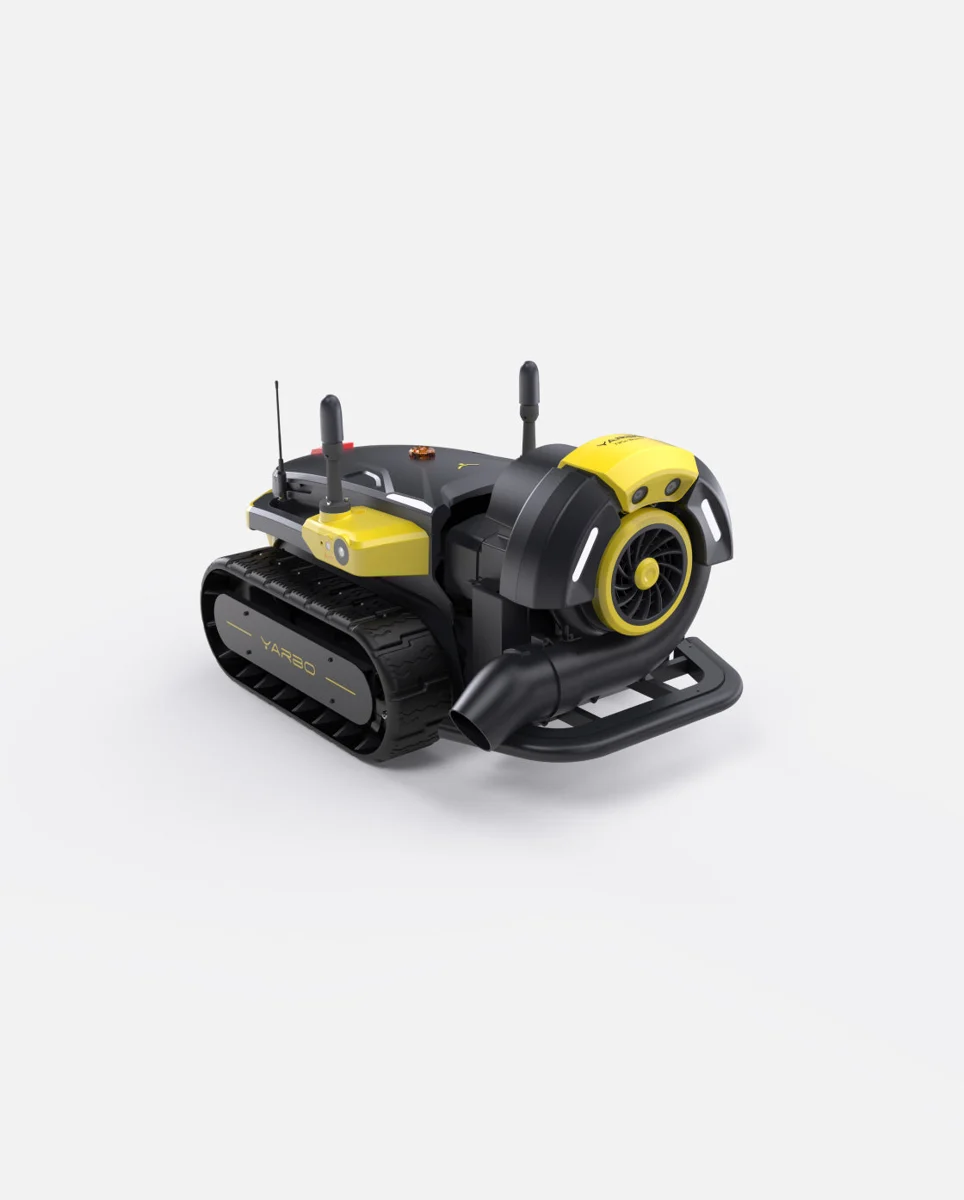
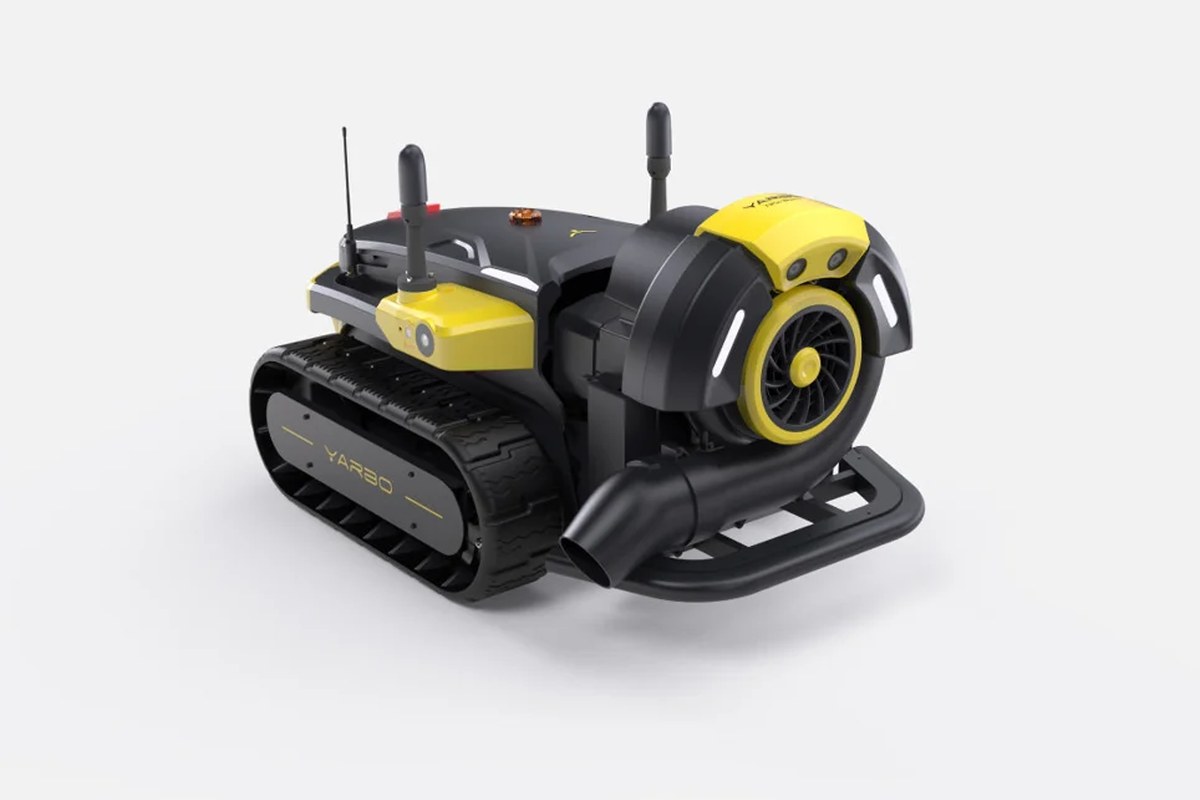
A robotic leaf blower faces a different problem from a mower. Cutting grass changes material in place; blowing moves it somewhere else. Yarbo's Y40 Blower pairs a tracked core with an air-moving module and planned routes. The manufacturer describes gathering debris into manageable piles, but the result depends on wind, surface, leaf condition and where the owner allows material to accumulate.
That makes the property plan central to the review. A broad paved area with a clear destination for debris is a more straightforward assignment than a narrow patio surrounded by beds and open doors. We have not tested the system. Its research appeal is the possibility of automating repeatable routes, while the unresolved question is whether those routes reduce the total cleanup task rather than merely relocate it.
Air specifications need a working context
Yarbo publishes 21 newtons of blowing force, 174 mph air velocity and 607 CFM volume. These numbers describe related but different aspects of the airflow, and they should not be combined into a simple ranking against every handheld blower. Nozzle configuration and test method matter. The useful comparison is how much relevant debris is moved, how many passes are required and what condition the surface is left in.
Wet leaves stuck to paving, dry leaves on short grass and loose clippings are different tasks. A responsible review would document them separately. The published 70-minute runtime is similarly a reference, not proof of an hour-plus at every airflow setting on sloped ground. Driving, positioning and the selected blower output all contribute to the actual energy demand.
Mapping must include a disposal strategy
The app allows work plans and adjustments such as airflow direction, travel speed and air velocity. Those controls could be useful for refining a route, but the first plan should be conservative. Identify the end point for each pass, the direction of the prevailing wind and areas that must not receive debris. Avoid sending material toward people, cars, open windows or neighbouring property.
Leaf piling is not leaf disposal. Someone still needs to collect, compost or otherwise handle the resulting material where appropriate. Include that time in any labour-saving estimate. A well-designed robot route may make the final collection easier, while a poor route can spread leaves into awkward corners and create extra work. We would compare the entire cleanup process, starting with preparation and ending with the collected material removed.
A practical acceptance test before relying on it
A practical Blower trial should start with a repeatable paved area and a clearly defined collection point. Photograph the debris distribution, run the planned route in safe conditions, and then time the remaining collection and finishing work. Repeat with a different but documented leaf condition. This reveals whether the robot is making useful piles or simply moving the job to another part of the property.
The comparison should include a normal manual cleanup of a similar area, with the same end point and standard of finish. Count setup, route corrections, battery or charging interruptions and disposal in both cases. The robot does not have to win every individual pass to be worthwhile; it needs to reduce the owner's overall effort reliably enough to justify its cost. We would also test how easy it is to pause when wind changes or someone enters the work area. Those ordinary adjustments will determine whether the system can be used confidently in a real household. An impressive airflow demonstration and a hands-free route are useful observations, but neither alone establishes that the complete cleanup task has become easier.
A tracked vehicle cannot reach everywhere a hand can
The manufacturer promotes terrain capability with a 70% slope claim. That can be relevant on larger grounds, but it does not make a tracked robot equally suitable for every tight planting bed or stairway. A person holding a blower can stand still and aim into places a vehicle cannot occupy. Before purchase, map inaccessible corners and decide how much manual finishing remains.
The robot also needs safe routes around gravel, loose mulch and lightweight objects. Airflow can move more than leaves, and a sensor that prevents a collision does not control everything carried by the air stream. We would begin with supervised, low-risk test areas and inspect the destination of debris after each pass. Strong airflow is useful only when the surrounding environment can accommodate it.
The same core creates an ecosystem decision
If the Y40 already earns its place as a mower or snow system, adding a blower module can be a logical way to extend its use. If this is the only desired task, the entire core, battery, charging and navigation system must be justified against simpler equipment. The comparison should include actual repeated cleanup frequency, not an assumption that a larger machine must be more efficient.
Shared hardware also creates shared downtime. A core awaiting repair cannot mow, clear snow or blow leaves with another attachment. Ask about module handling, storage space, replacement parts and the regional service route. A demonstration of changing attachments is more informative than a promise of tool-free installation. Confirm that the owner can physically manage the delivered equipment without relying on help that has not been planned.
Light snow is a separate, limited use case
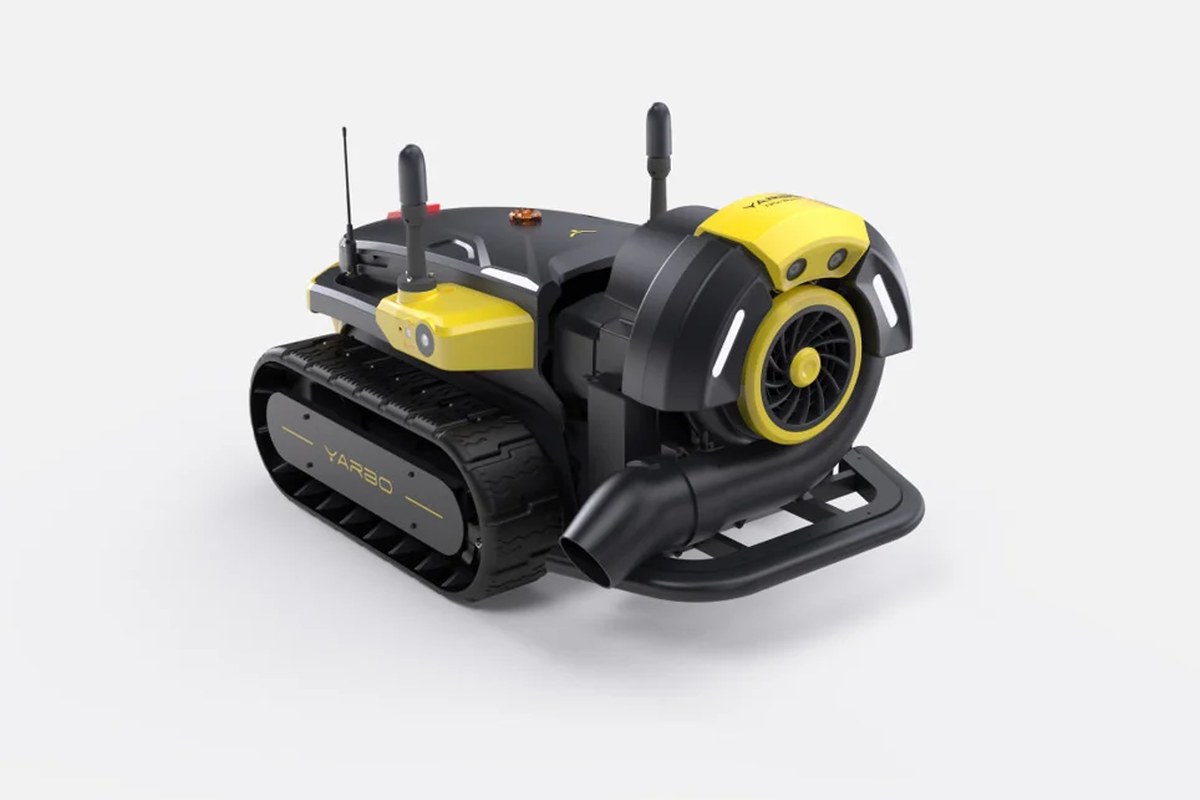
The product page describes clearing up to two inches of fresh dry snow with the blower. That should be treated as a powder-snow use case, not a substitute for the dedicated two-stage snow attachment. Wet snow, compacted accumulation and ice are materially different conditions. An owner buying primarily for winter should evaluate the actual local snow pattern before treating this additional claim as a major benefit.
Noise and airborne dust also deserve consideration. A robot can operate for long periods without tiring, but neighbours and nearby occupants still experience the airflow, sound and disturbed material. Set schedules and work areas accordingly. We would measure disturbance at relevant boundaries and avoid assuming that autonomous equipment is unobtrusive simply because nobody is holding it.
Control, privacy and the evidence still missing
Yarbo lists RTK-GPS, stereo vision and odometry for navigation, along with app control and live-view features. Confirm positioning requirements, network services and data-sharing settings before installation. Learn how to stop the machine locally and from the controller, and keep people and pets outside active work and discharge areas. Remote viewing should support observation rather than encourage operation where the owner cannot judge the debris path.
The decisive test would compare total human time across several genuine cleanup events, including preparation, route adjustment, rescues and final collection. We would record leaf moisture, surface, wind and the number of passes, then photograph the result. Until that evidence exists, Yarbo Blower is an intriguing modular tool with a narrow strongest case: repeated, well-defined debris routes on a property that can safely manage where the material goes.
Sources & further reading.
These are the sources behind this research review. Manufacturer claims are not independent performance measurements. Community accounts, when cited, describe individual experiences.
Documentation reviewed: 9 October 2026. Product software and regional bundles can change. Corrections and editorial disclosures.