Not tested. This is a research score for the documented features, compatibility and ownership trade-offs discussed in this review, not a performance measurement.
Task capability 30%8.0
Two-stage modular snow concept addresses repeated winter clearing.
Navigation & control 20%7.3
Planned routes and automatic charging offer substantial automation potential.
Ownership & upkeep 20%5.7
Season-critical uptime, heavy modules and shared-core repairs add uncertainty.
Setup & usability 15%5.8
Snow placement, dock access and seasonal positioning require extensive validation.
Documentation & support clarity 15%4.8
Preorder status and conflicting throw units materially limit confidence.
Compare scores within the same product category. Small decimal differences should not override your needs or the evidence limits.
How the Standpoint Score works
We score five aspects of the documented product on a 0–10 scale, then calculate a weighted total:
- Task capability30% of the total
- Navigation & control20% of the total
- Ownership & upkeep20% of the total
- Setup & usability15% of the total
- Documentation & support clarity15% of the total
This product’s 6.6/10 is an editorial research assessment. It does not claim measured performance, tested reliability or a verified customer satisfaction rate. Compare it with products in the same category, and read each criterion’s reasoning above.
Read the full rubric and score bands ↗From a tech standpoint.
Consider the Y40 Gen 2 if you face frequent snowfall, have a driveway with obvious, safe places to throw snow, and you're willing to supervise a modular autonomous system through its first winter while keeping your existing blower or contractor on standby. Skip it, or at least wait, if you need guaranteed clearing this season, if your problem is mostly ice, hard plow berms or a crowded parking area, or if you can't get the current manual to settle the throw distance and a firm delivery date.
Reasons to consider it
- One Y40 core can carry snow, mowing and other modules across the seasons
- A two-stage snow system with a published 24-inch width and 12-inch intake depth
- Repeated clearing with automatic charging, so snow can be moved before it piles up
Go in knowing
- Preorder status at the research date, with the module estimated for October 2026
- The product page mixes feet and yards for throw distance
- You need safe places for the snow to land and a backup clearing plan
Affiliate link. As an Amazon Associate, Tech Standpoint earns from qualifying purchases. It never changes our verdict or score. Disclosure
The specification sheet.
Published specifications from the linked sources. Configurations and availability can differ by country.
- Configuration
- Y40 Core with Snow Blower Module Gen 2
- Clearing system
- Two-stage
- Published clearing width
- 24 in
- Published intake depth
- Up to 12 in
- Status at research
- Preorder; module delivery estimated October 2026
- Throw-distance note
- Source mixes feet and yards; confirm current manual
Clearing the storm while it's still falling
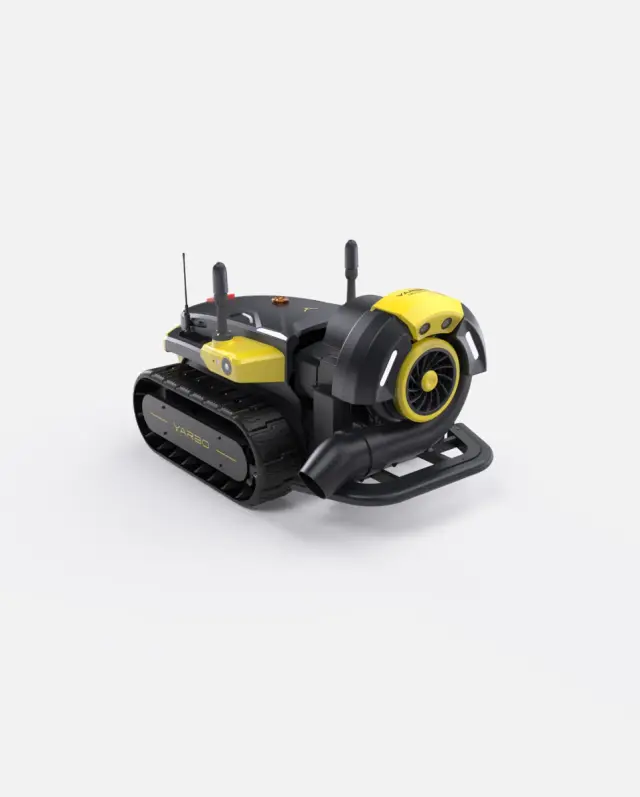
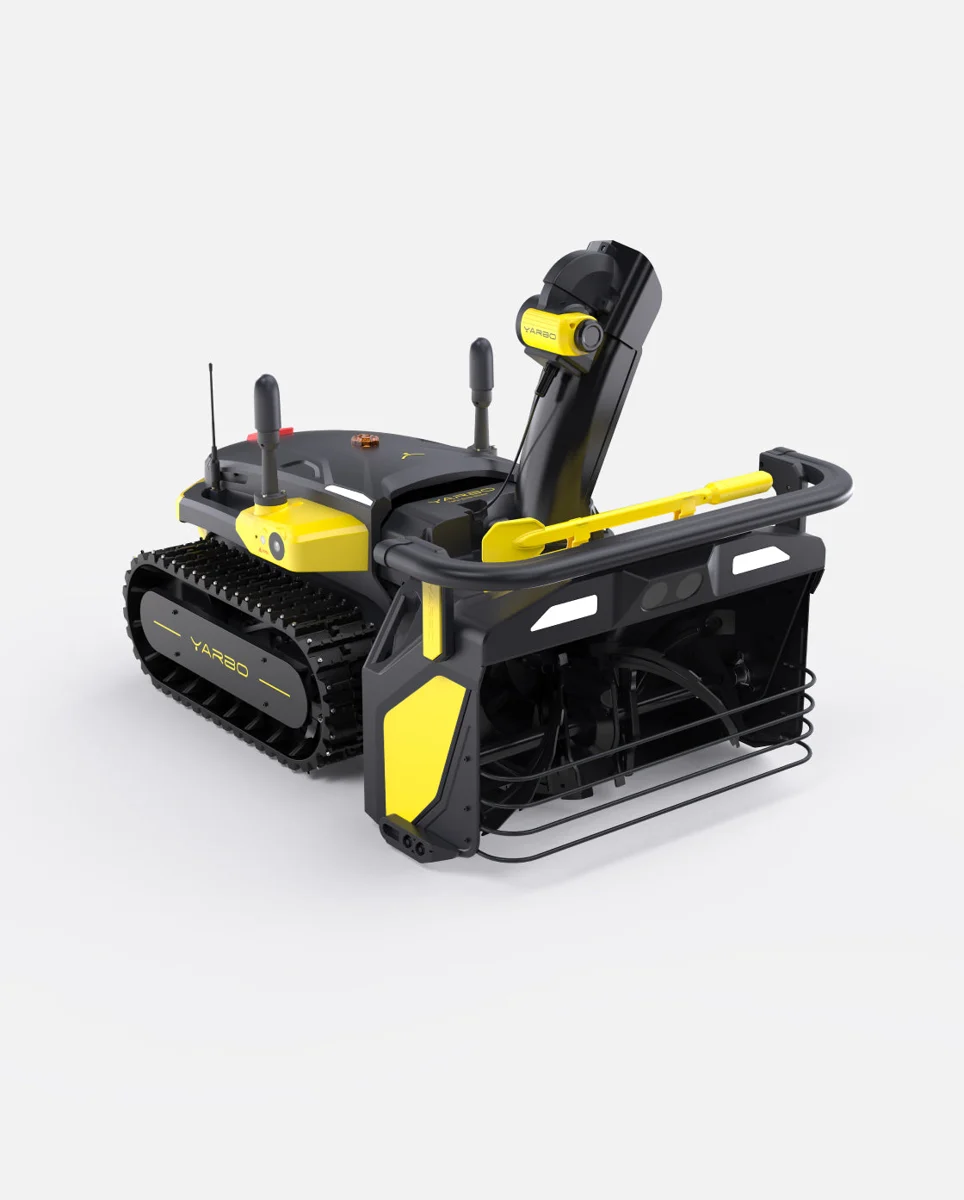
A robotic snow blower promises more than just taking the operator off a conventional machine. In theory it can make repeated passes as snow builds, so it never has to move a huge load in one go. Yarbo's Y40 package pairs a tracked core with the Gen 2 two-stage snow module and automatic charging. That's a genuinely relevant idea for anyone who gets frequent storms, but it raises a serious availability question: the machine has to work when you need the driveway, not just when conditions are kind.
The current Canadian page lists this configuration as a preorder, with the snow module estimated for October 2026. Tech Standpoint hasn't received or operated one. Read this as a research review of the advertised system, and don't scrap your existing snow-removal arrangement on the strength of an estimated shipping month.
Feet or yards? Get it in writing
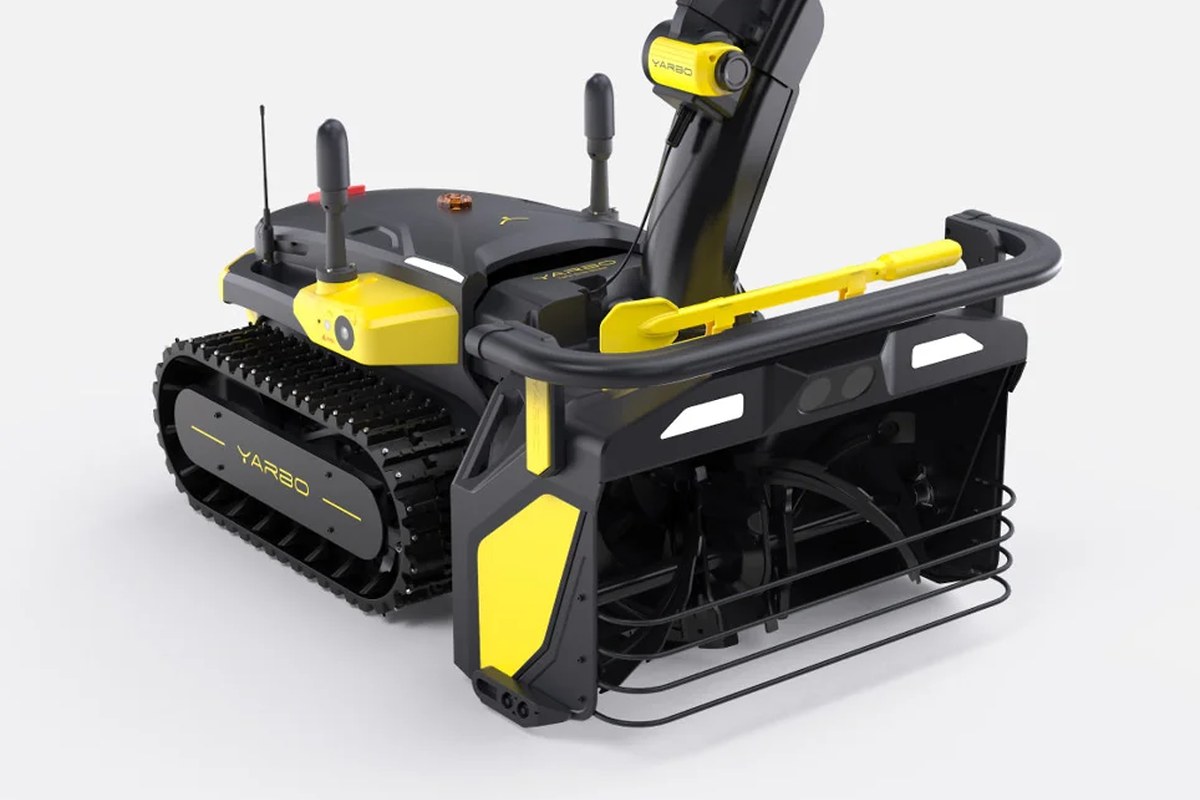
Yarbo lists a 24-inch clearing width and handling of up to 12 inches of snow. Those numbers describe the machine's geometry and a stated capability, not a measured clearing rate in every type of snow. Fresh powder, wet heavy snow, a frozen plow berm and refrozen tracks are completely different loads. A meaningful evaluation would treat them separately and record passes, interruptions and the state of the surface afterwards.
The product page also mixes up throw-distance units: one heading says yards, while other sections say feet and describe a 40-foot maximum. Neither counts as verified performance. Get the current Gen 2 manual and written clarification before you plan where snow will go on a long driveway. The discrepancy matters, because the throw distance decides where the machine can safely put snow.
Every pass needs somewhere to put the snow
Autonomous clearing isn't just a coverage problem. The machine has to move snow to a spot that stays usable as the storm goes on. A narrow driveway between buildings, an exposed stretch with crosswinds and a wide open apron all need different discharge plans. Mark windows, parked cars, walkways and the neighbour's property before mapping. The real question isn't how far snow flies in a demo, but whether every route sends it somewhere acceptable.
Start with a conservative map and supervised runs during manageable snowfalls. Confirm the edges of the paved surface before they disappear under accumulation. If there's gravel or loose debris, follow Yarbo's setup instructions closely and don't assume a raised intake rules out every projectile risk. The robot's cameras and obstacle sensors can't make the discharge zone harmless.
Rehearse before the first real storm
Delivery checks should start well before the first big storm. Confirm the carton and serial labels identify the Gen 2 module, that all promised charging and positioning equipment is there, and that the current manual sorts out the throw-distance wording. Practise stopping the system and putting it into its maintenance-safe state without going near moving parts. Then validate the map on your actual cleared driveway, including the places where snow is allowed to land.
The first winter should include several manageable snowfalls rather than waiting for a monster storm. Record the type of snow as well as the depth, because a centimetre of wet snow is nothing like a centimetre of powder. Keep your existing clearing option ready while these trials establish dependable docking and safe discharge. If something fails, note the cause and how support responded, without stretching one incident into a verdict on the whole brand. That way you build evidence for handing over responsibility gradually, which beats treating autonomy as an all-or-nothing promise.
Tracks grip snow, not necessarily ice
Tracks are a big part of Yarbo's winter appeal, but traction on snow isn't the same as grip on ice. Turning, reversing and getting back to the dock all need checking in the conditions your property actually throws at it. A machine that clears well but can't reliably reach its charger loses the whole advantage of repeated autonomous passes. Snow piled around the dock or a refrozen approach can change the installation overnight.
Positioning is its own seasonal headache. The yard looks different under snow, and parked cars and cleared banks reshape the surroundings. Confirm the local-reference or network-correction setup, the connectivity requirements and how it behaves when interrupted. Run a safe loss-of-signal scenario and learn exactly how to stop and recover the machine before relying on remote control in a storm.
One core, many jobs, one point of failure
Buying a Y40 Core opens the door to other seasonal tools, including a mower or leaf blower. That can spread the cost of the drive platform over more months. It also makes the core, battery and charging system shared dependencies. If the core needs repair, several planned jobs stop at once. So the economics have to include repair turnaround, transport and a fallback way to clear snow.
Swapping and storing modules takes real physical planning. Work out the space needed for the core, the detached snow assembly, summer tools and the shipping packaging. Ask a dealer or manufacturer rep to demonstrate handling and attachment with the equipment you'll actually receive. Tool-free wording doesn't mean every owner can comfortably move each component alone. Access and storage are part of how useful the product is, not afterthoughts.
What winter ownership really costs
Snow equipment needs checking after it hits hidden debris. Follow the manual's shutdown and isolation steps before going near an auger, impeller or chute, and never clear a blockage by hand. Keep people and pets away from both the machine and its discharge path. A robot that can start a scheduled job also needs a household routine that stops it running unexpectedly during an inspection or while someone moves a car.
Ask for the price and availability of wear parts, tracks, battery service and module repairs in Canada or the United States, whichever applies. Add those costs, any optional network services and the time spent preparing routes when comparing it with a conventional blower or a contractor. A smaller fuel bill isn't the whole story. Log every intervention across several storms, including cleaning, ice removal and finishing by hand, before estimating how much labour it really saves.
What would turn interest into a recommendation
The deciding evidence would be successful clearing across several kinds of snow, with safe discharge, reliable docking and a manageable number of interventions. That means recording snowfall depth, weather, surface type, working time and any areas that still needed a person. One video of a dramatic pass wouldn't be enough, especially for a product meant to work unattended again and again.
Yarbo's idea is most convincing on a property where the machine can work early and often, with plenty of room to store snow and clear routes. It's a weaker fit where ice, hard berms, crowded parking or uncertain service are the main problems. The current verdict is genuine interest in a distinctive system, with delivery, spec clarification and real winter operation still needed before it earns a strong recommendation.
Sources & further reading.
These are the sources behind this research review. Manufacturer claims are not independent performance measurements. Community accounts, when cited, describe individual experiences.
Product software and regional bundles can change. Corrections and editorial disclosures.
Affiliate link. As an Amazon Associate, Tech Standpoint earns from qualifying purchases. It never changes our verdict or score. Disclosure