Not tested. This is a research score for the documented features, compatibility and ownership trade-offs discussed in this review, not a performance measurement.
Features & capability 30%9.0
Five-second heart sampling, frequent HRV and a free Readiness score, with ZDNET's chest-strap run showing a 1.9 bpm average error; Live Rewind and Siri Recap still missing at launch.
Compatibility & connectivity 20%8.4
Works only with an iPhone 11 or later on iOS 27; hypertension notifications not yet cleared for this model in Canada and Siri AI starts in English only.
Ownership & upkeep 20%7.6
Still rated at 24 hours, with Macworld seeing inconsistent drains and charge speeds, though 15-minute top-ups and $49.99-a-year AppleCare+ ease the routine.
Setup & everyday use 15%8.4
Familiar setup and a useful new single-tap gesture, but Readiness needs about seven nights of data and early units saw reboots before watchOS 27.0.1.
Documentation & support clarity 15%8.8
Apple's Canadian pages spell out specs, age limits and the hypertension delay, though the clearance timing is only described as later this year.
Compare scores within the same product category. Small decimal differences should not override your needs or the evidence limits.
How the Standpoint Score works
We score five aspects of the documented product on a 0–10 scale, then calculate a weighted total:
- Features & capability30% of the total
- Compatibility & connectivity20% of the total
- Ownership & upkeep20% of the total
- Setup & everyday use15% of the total
- Documentation & support clarity15% of the total
This product’s 8.5/10 is an editorial research assessment. It does not claim measured performance, tested reliability or a verified customer satisfaction rate. Compare it with products in the same category, and read each criterion’s reasoning above.
Read the full rubric and score bands ↗From a tech standpoint.
Buy the Series 12 if your current Apple Watch is three or more years old or you're buying your first one: the new heart sensor, Readiness score and quicker top-ups are real upgrades, and outlets that compared it against chest straps came away impressed. Skip it if you bought a Series 11 last year, because battery life, screen and design barely moved. If high blood pressure alerts are the reason you want a watch, hold off or buy a Series 11, since Apple says the Series 12 doesn't have Health Canada clearance for that feature yet. The 42 mm aluminum GPS model at $549 is the one to get; titanium and ceramic add weight to your wallet, not health features.
Reasons to consider it
- Heart tracking that holds up against a chest strap: ZDNET's interval run logged a 1.9 bpm average error versus a Polar H10, compared with 5.3 bpm for the Pixel Watch 5.
- Readiness gives a 0 to 10 daily score with plain advice like Recover or Go For It, and it costs nothing extra, unlike the subscriptions some rival trackers charge for similar scores.
- Faster top-ups: Apple says 15 minutes now buys up to 12 hours of use, up from roughly 8 on the Series 11, so a charge while you shower usually covers the day.
- Same starting price as last year in Canada ($549 for 42 mm GPS), with tougher Ceramic Shield 2 glass on the aluminum models.
Go in knowing
- Hypertension notifications aren't available on the Series 12 in Canada at launch; Apple says Health Canada clearance is in process, while older supported models already have the feature here.
- Battery life is still rated at 24 hours, and Macworld's two runs averaged slightly less than its Series 11 with wide swings between them.
- Live Rewind and Siri Recap, two of the headline Audio Intelligence features, weren't available at launch, and Siri AI is English-only at first.
- Readiness needs about seven nights of sleep data before it gives a score, and early owners on Reddit complain the bezels look thicker than on recent models.
Affiliate link. As an Amazon Associate, Tech Standpoint earns from qualifying purchases. It never changes our verdict or score. Disclosure
The specification sheet.
Published specifications from the linked sources. Configurations and availability can differ by country.
- Canadian price (Oct 13, 2026)
- From $549 (42 mm GPS) at apple.com/ca, $549.99 at Best Buy Canada, $549.00 at Amazon.ca; 46 mm GPS $619 at Apple, $589.00 at Amazon.ca; GPS + Cellular from $679
- Case sizes and materials
- 42 mm or 46 mm; aluminum, titanium (from $999) or ceramic (from $1,299)
- Chip
- S11 (Series 11 used the S10)
- Display
- Always-on LTPO3 OLED, up to 2,000 nits; Ceramic Shield 2 on aluminum, sapphire on titanium and ceramic
- Heart sensing
- Redesigned optical and electrical heart sensors; background heart rate about every 5 seconds
- Battery (Apple claims)
- Up to 24 hours; 38 hours Low Power Mode; 10 hours outdoor workout
- Charging (Apple claims)
- About 30 minutes to 80%; 15 minutes for up to 12 hours of use
- Weight (aluminum GPS)
- 32.2 g (42 mm) or 39.5 g (46 mm)
- Water and dust
- 50 m water resistance (swim, snorkel to 6 m); IP6X
- Phone requirement
- iPhone 11 or later, or SE 2nd generation or later, on iOS 27
The health alert your old Series 11 has and this one doesn't (yet)
Here's the strange part of the Series 12 launch in Canada. Apple has offered hypertension notifications here since October 8, 2025, after Health Canada licensed the feature, and earlier supported watches like the Series 11 can use it. The brand-new Series 12 can't. Apple's Canadian announcement says the feature won't be available on the Series 12 or Ultra 4 at first because regulatory clearance for the new hardware is still in process, with availability expected later this year.
That matters because the two watches cost the same on Amazon.ca as of October 13, 2026: $549.00 for a 42 mm GPS Series 11 and $549.00 for a 42 mm GPS Series 12. Apple's own store and Best Buy Canada list the Series 12 at $549 and $549.99. So the question this review answers is simple. Is the new heart sensor worth more to you than a blood pressure alert you can turn on today?
For most people the answer is yes, and the rest of this review explains why. But if a parent or partner wants a watch mainly because their doctor mentioned blood pressure, that changes the pick. What does the Series 12 actually do better?
Same body, new back: what changed from the Series 11
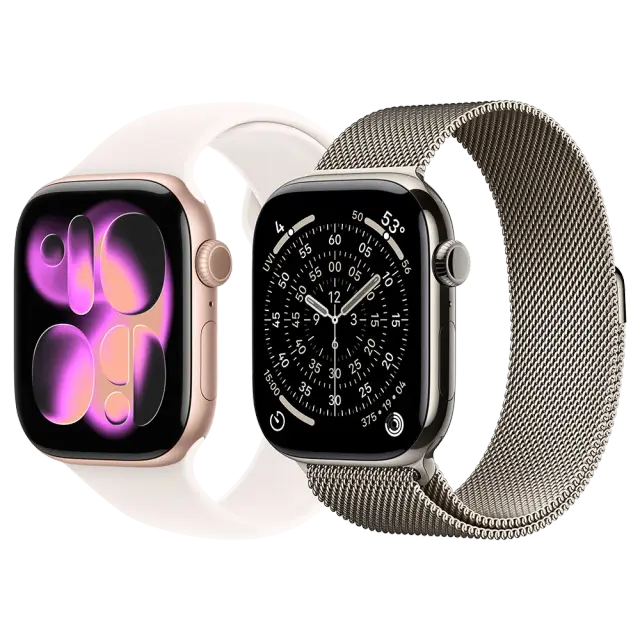
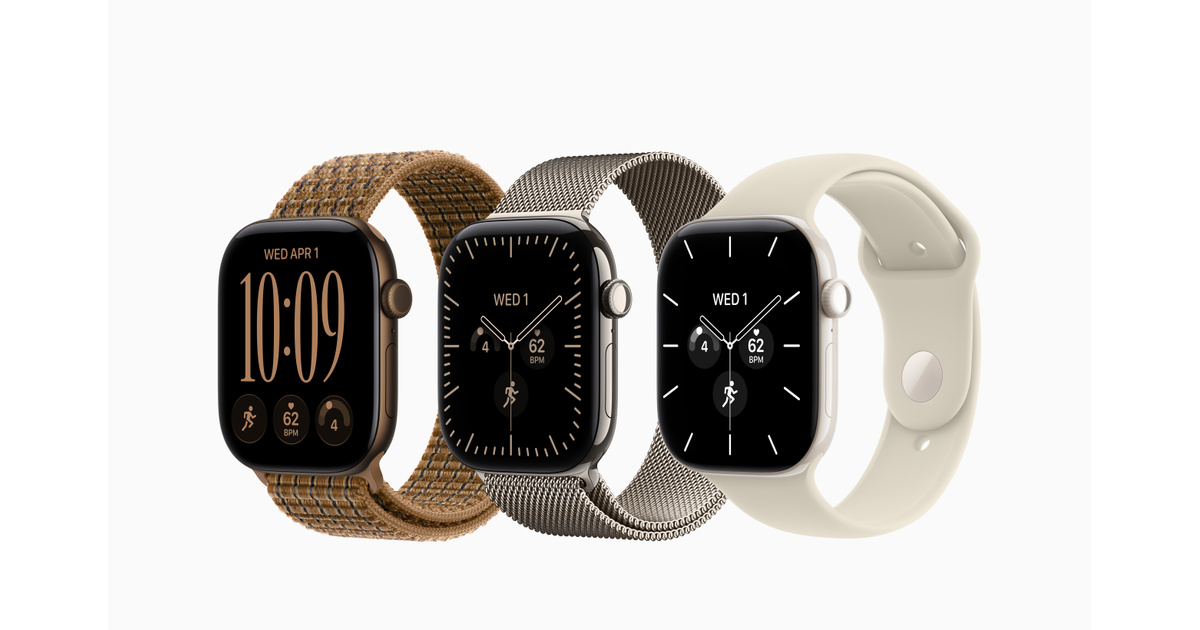
From the front you'd struggle to tell them apart. Tom's Guide calls the design pretty much identical, and The Verge points out it keeps the same buttons, sizes and sensor types. The changes are underneath. There's a new S11 chip, and a redesigned heart sensor on the back that ZDNET describes as 32 electrodes and eight photodiodes with stronger green lights. Background heart rate readings jump from every five minutes to every five seconds. Heart rate variability (HRV, the beat-to-beat timing that hints at stress and recovery) goes from every few hours to as often as every five minutes.
Apple also moved the aluminum models to Ceramic Shield 2 glass, which it claims is 60% tougher than the Series 11's Ion-X glass. The 46 mm case grew a millimetre wider (46 by 40 mm versus 46 by 39 mm, per Tom's Guide's spec table) while screen resolution stayed the same, which explains the bezel complaints you'll read about later. Outdoor workout battery rises from 8 to 10 hours, and the step counter was rebuilt around the new chip, so older watches won't get it.
Who shouldn't upgrade? iPhone in Canada's reviewer says Series 11 owners can comfortably skip this one, and that's right. Series 10 owners are borderline. If your watch is a Series 8 or older, keep reading.
Every five seconds, and a chest strap that backs Apple up
Apple claims the Series 12 has the most accurate heart-rate sensing of any wearable, based on a study of more than 1,000 people. Claims like that usually deserve an eye-roll. This one has some outside support. ZDNET ran an hour of alternating walking and running with the Series 12 on one wrist, a Pixel Watch 5 on the other and a Polar H10 chest strap as the reference. The Series 12 averaged a 1.9 bpm error and a 0.998 correlation with the strap. The Pixel Watch averaged 5.3 bpm, mostly because it lagged during the switches between running and walking.
Other outlets point the same way, with less formal setups. Engadget's reviewer saw readings within 2 bpm of a Fitbit Air worn alongside it. Tom's Guide compared it with a Garmin chest strap on runs and called the results close to spot on. None of these outlets reported the Series 12 losing badly to a reference device, though one run in a park isn't a lab study.
Why should you care if you're not a runner? Heart data feeds sleep scores, HRV, workout calories and ovulation estimates. Better input makes all of that more trustworthy. It also means interval sessions, like a spin class or hill repeats, finally show your real peaks instead of a smoothed guess. The bigger question is what Apple does with all that extra data.
Readiness wants a week of your sleep before it says a word
The new Readiness score rates each day from 0 to 10 using your recent activity, training load, overnight vitals and sleep score, then gives one of four labels: Recover, Pace Yourself, Ready or Go For It. It's exclusive to the Series 12 and Ultra 4. Garmin, Fitbit, Samsung and Oura have offered something similar for years, which is why Engadget framed this launch as Apple catching up. The difference is Apple doesn't charge a subscription for it.
The catch is patience. Tom's Guide says you need seven nights of wear with at least four hours of sleep each. Engadget's reviewer wore it every night for about a week and still had no score because the Vitals app wanted five more nights of wrist temperature data. Macworld adds that the full iPhone side of Readiness waits for the Health app redesign coming with iOS 27.2.
Early owners on r/AppleWatch are mostly positive. Several posts describe the score dropping and telling them to pace themselves the day a cold arrived, with higher resting heart rate and wrist temperature flagged. A few say it rated them as ready while sick, and others grumble that the Activity rings still nag you on rest days. Our take: treat it as a second opinion, not a coach. Now, can the battery keep up with all this sensing?
The battery number didn't move, but the charger got faster (mostly)
Apple still rates the Series 12 at up to 24 hours, or 38 in Low Power Mode, the same as the Series 11. Real-world results run longer and vary a lot. Engadget's low-activity days usually ended with about half the battery left. Macworld's two full-drain runs lasted about 51 and 40 hours, averaging 45.5 hours, slightly behind the 47.5 it measured on a Series 11, and far less consistent.
Charging is the real upgrade. Apple claims about 30 minutes to 80% and 12 hours of use from a 15-minute top-up. Engadget saw 51% to 79% in 12 minutes. Macworld wasn't as lucky: one test reached only 58% after 30 minutes and another hit 72%, while a colleague got 62%. Tom's Guide found Apple's claims accurate and noticed the faster charging daily.
Owners on Reddit report anywhere from about 40 hours with always-on display to well past two days with it off, and several have settled into a short daily charge while getting ready for work. If you sleep-track, that routine is the realistic one: 15 minutes on the puck while you shower, and you're covered until the next morning. A few owners also worry about what happens once the always-listening features arrive, which brings us to the AI.
Half the AI features aren't here yet, and Siri AI speaks English only
Apple's Audio Intelligence has four parts. Sound Recognition alerts you to things like sirens or a crying baby, and Shazam can identify songs in the background. Those work now. Live Rewind, a double press of the Digital Crown that shows the last 15 seconds of conversation as text, and Siri Recap, which summarises conversations into key points, are promised in beta later this year. Live Rewind also needs an iPhone 16 or newer, not the 16e.
The Verge's review lists the missing features as its main complaint, alongside a sense that Apple's careful privacy design may not reassure ordinary people. Apple says audio is processed in a secure part of the chip, then deleted, and that Live Rewind plays a chime and shows an indicator. Tom's Guide notes these features are off until you opt in. Engadget's reviewer saw Sound Recognition falsely flag running water.
For French-speaking Canadians, check before you buy. Apple's feature page lists Siri AI and Workout Buddy in English (Canada) only, though Apple says French support for Siri AI begins rolling out in October. Reddit owners have also complained that the new Siri sometimes fails basic requests like opening an app. Buy this watch for the health sensing. Treat the AI as a bonus that may or may not land well.
How it stacks up at Canadian prices
Prices below were checked on October 13, 2026. The Series 12 runs $549 (42 mm GPS) to $749 (46 mm GPS + Cellular) at apple.com/ca, with matching prices plus 99 cents at Best Buy Canada. Amazon.ca had the 46 mm GPS at $589.00, $30 under Apple. Titanium starts at $999 and ceramic at $1,299, both with cellular included. Apple's comparison shows the pricier cases get sapphire glass and a new look, not extra health features.
Inside Apple's lineup, the Apple Watch SE 3 costs $329 but skips the ECG app, blood oxygen and the new sensor, and is rated for 18 hours. The Ultra 4 at $1,099 adds a 3,000-nit screen, dual-frequency GPS, satellite SOS and up to 50 hours of battery. If you hike the Bruce Trail or ski backcountry, the Ultra's battery is worth the gap. For everyone else it isn't.
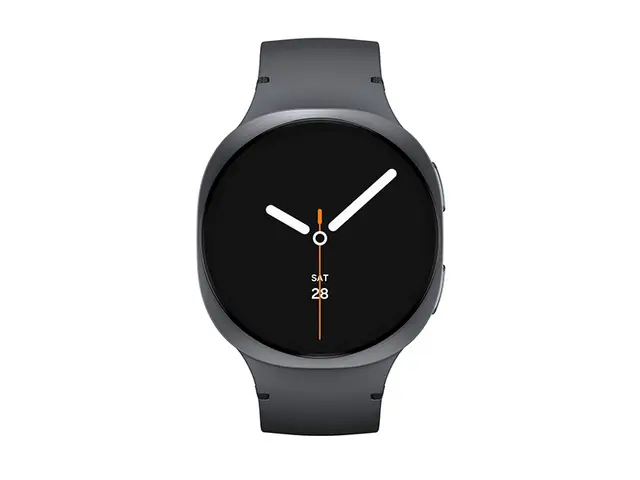
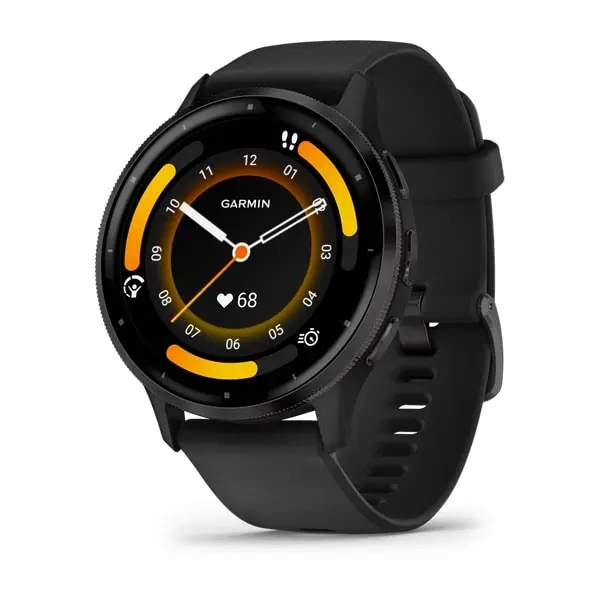
Outside Apple, the Series 12 only makes sense with an iPhone. Android owners should look at the Galaxy Watch8, on sale at Best Buy Canada for $369.99 (40 mm) and $399.99 (44 mm), or the Pixel Watch 5, which MobileSyrup lists from $549.99. The Garmin Venu 3 at $659.99 works with iPhone too and lasts days instead of hours, but its apps and message handling are thinner than Apple's. So what does owning one look like after the first month?
Bezels, early reboots and the four-year clock
The loudest early complaint on r/AppleWatch isn't health or battery. It's looks. Several threads from launch week argue the bezels look thicker than on the Series 10 and 11, especially with light or colourful watch faces, and some say the Digital Crown sticks out more. Other owners say they barely notice, and dark faces hide it. The spec sheet supports the complaint: the case is slightly wider while the screen resolution didn't change. Try one at a Best Buy or Apple Store before ordering online.
Reliability had a rocky start. Macworld's watch reset itself three times in one day and felt sluggish at times, and some Reddit owners mention random restarts too. Macworld notes watchOS 27.0.1 reportedly addresses the reboot issue. Macworld also found a sharp edge between the screen and bezel on its unit, a one-off so far.
Plan on roughly four years of updates. watchOS 27 supports the Series 9 and later, so the 2022 Series 8 has been left behind, and Reddit owners of the original Ultra are unhappy about losing support. AppleCare+ in Canada costs $4.99 a month or $49.99 a year and includes battery service. Cellular models work with Bell, Rogers, Telus, Freedom, Koodo, Virgin, Videotron and SaskTel, at an extra monthly cost.
Who should buy it, and who should spend their $549 elsewhere
Buy it if you're on a Series 8 or older, or getting your first Apple Watch. You'll get much better heart tracking, Readiness, sleep scores, faster charging and tougher glass for the same $549 Apple charged last year. Get the 42 mm aluminum GPS model unless your wrist or eyesight needs the bigger screen. Skip cellular unless you run or cycle without your phone, since the carrier plan is a cost every month.
Skip it if you own a Series 11 or Series 10. The gains are real but small for you, and Series 11 owners in Canada would lose hypertension alerts until clearance arrives. Pick the Series 11 instead if blood pressure alerts are the main reason you're buying and you find it at the same $549 or lower. Pick the SE 3 at $329 if you mostly want notifications and step counts, and the Garmin Venu 3 if charging every day is the thing you hate most.
Questions before checkout.
Is the Apple Watch Series 12 worth upgrading from the Series 11?
Probably not. Battery life, screen and design are nearly identical, and iPhone in Canada's reviewer says Series 11 owners can skip it. The gains are the faster heart-rate sampling, Readiness and quicker charging. In Canada you'd also give up hypertension notifications until Health Canada clears the feature for the new model.
Do hypertension notifications work on the Series 12 in Canada?
Not at launch. Apple's Canadian announcement says the feature won't initially be available on the Series 12 or Ultra 4 because regulatory clearance is in process, with availability expected later this year. Older supported models have had it in Canada since October 8, 2025. ECG, irregular rhythm and sleep apnea notifications are listed for Canada.
Which iPhone do I need for the Apple Watch Series 12?
Apple lists an iPhone 11 or later, including the iPhone SE 2nd generation or later, running iOS 27. Some extras need more: Live Rewind requires an iPhone 16 or newer (not the 16e), and Siri AI needs an Apple Intelligence-capable iPhone. It doesn't work with Android phones at all.
How long does the Series 12 battery really last?
Apple rates it at 24 hours. Engadget's lighter days usually ended near 50%, and Macworld's full-drain runs lasted about 51 and 40 hours. Owners on Reddit report around 40 hours with always-on display. Plan on a short daily charge if you wear it to bed, since 15 minutes adds up to 12 hours by Apple's claim.
Where is the Series 12 cheapest in Canada right now?
On October 13, 2026, the 42 mm GPS model was $549 at apple.com/ca, $549.99 at Best Buy Canada and $549.00 at Amazon.ca. The 46 mm GPS was $619 at Apple and $589.00 at Amazon.ca, the lowest price on this check. Prices change often, so check before you order and compare return windows.
Does Readiness or any health feature need a subscription?
No. Readiness, sleep score, Vitals, HRV and the heart notifications are included with the watch. ZDNET points out that some competing trackers charge a monthly fee for similar recovery data. Apple Fitness+ is a separate paid service, and a cellular plan with your Canadian carrier costs extra each month if you choose that model.
Sources & further reading.
These are the sources behind this research review. Manufacturer claims are not independent performance measurements. Community accounts, when cited, describe individual experiences.
- Introducing Apple Watch Series 12 with the all-new Health Sensing System (Apple Newsroom Canada) ↗manufacturer
- Apple Watch Series 12 technical specifications (Apple Canada) ↗manufacturer
- Buy Apple Watch Series 12 and model comparison (Apple Store Canada) ↗manufacturer
- watchOS feature availability ↗manufacturer
- Hypertension notifications available today on Apple Watch (Apple Newsroom Canada, 2025) ↗manufacturer
- The Verge: The Apple Watch Series 12 is the start of a new wearable era ↗independent review
- Engadget: Apple Watch Series 12 review: Catching up and catching heat ↗independent review
- Tom's Guide: Apple Watch Series 12 review ↗independent review
- Macworld: Apple Watch Series 12 review ↗independent testing
- ZDNET: Apple Watch Series 12 heart-rate claims tested against a Polar strap ↗independent testing
- iPhone in Canada: Apple Watch Series 12 review ↗independent review
- iPhone in Canada: Series 12 and Ultra 4 Canadian pricing ↗independent review
- Best Buy Canada: Apple Watch Series 12 listings ↗retailer
- Amazon.ca: Apple Watch Series 12 listings ↗retailer
- r/AppleWatch: Series 12 battery life owner thread ↗Community discussion
- r/AppleWatch: Series 4/7/12 bezel comparison ↗Community discussion
- r/AppleWatch: Series 12 Readiness score during illness ↗Community discussion
- r/AppleWatch: watchOS 27 Siri complaints ↗Community discussion
Product software and regional bundles can change. Corrections and editorial disclosures.
Affiliate link. As an Amazon Associate, Tech Standpoint earns from qualifying purchases. It never changes our verdict or score. Disclosure