An editorial assessment of documented capabilities and ownership trade-offs. This is not a hands-on test result or a measurement of reliability.
Task capability 30%8.2
Multiple documented device and infrared roles solve concrete integration needs
Control & connectivity 20%8.5
Wired wireless and protocol choices are unusually broad
Ownership & upkeep 20%7.3
Account dependencies and migration aftercare still require attention
Setup & usability 15%7.5
Mounting and power choices help but role selection can confuse newcomers
Documentation & support clarity 15%8.0
Official role descriptions and product caveats support informed planning
Compare scores within the same product category. Small decimal differences should not override your needs or the evidence limits.
How the Standpoint Score works
We score five aspects of the documented product on a 0–10 scale, then calculate a weighted total:
- Task capability30% of the total
- Control & connectivity20% of the total
- Ownership & upkeep20% of the total
- Setup & usability15% of the total
- Documentation & support clarity15% of the total
This product’s 7.9/10 is a provisional research assessment. It does not claim measured performance, tested reliability or a verified customer satisfaction rate. Compare it with products in the same category, and read each criterion’s reasoning above.
Read the full rubric and score bands ↗The ownership case.
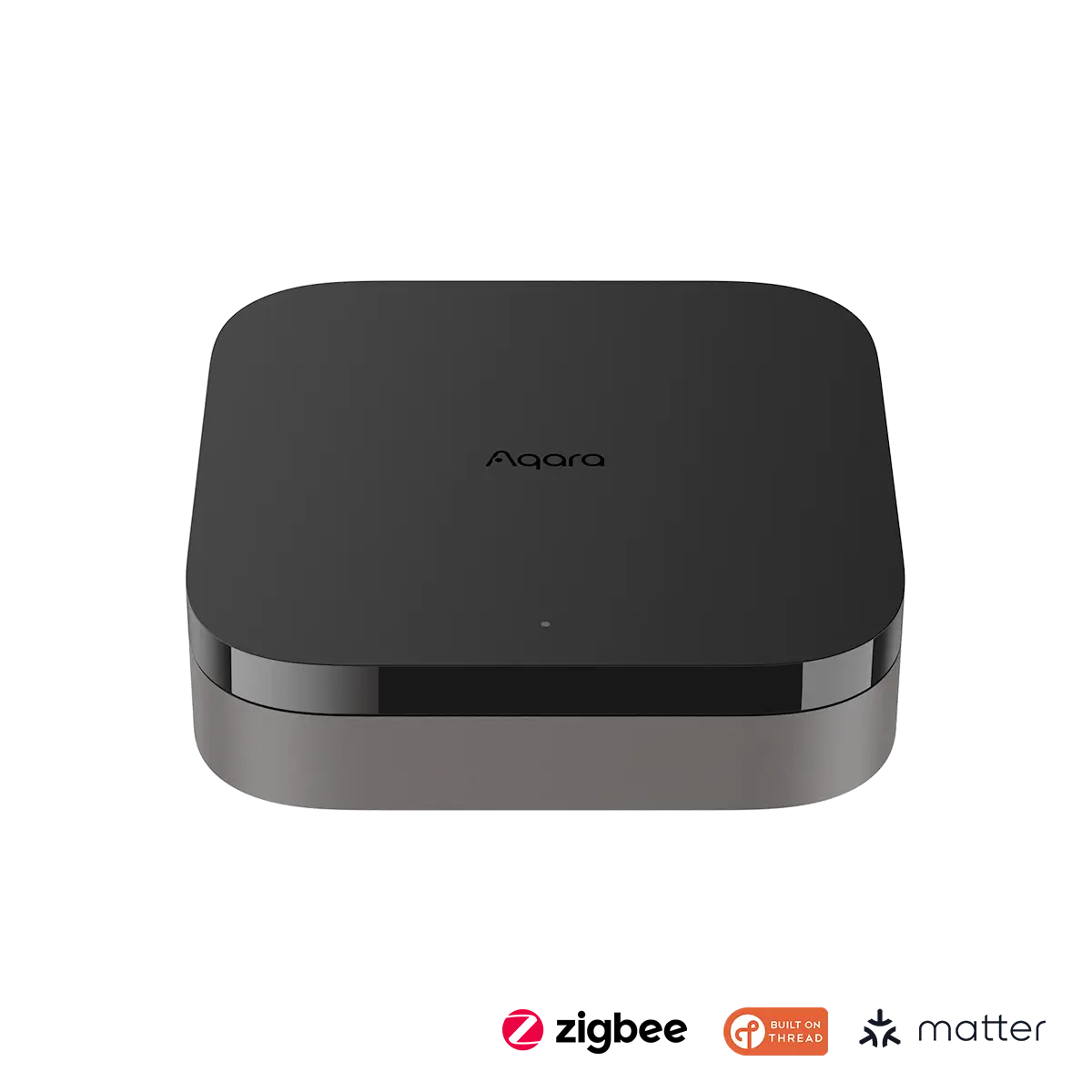
Aqara Hub M3 makes the strongest case in a home already using Aqara accessories that also wants broader platform control or an infrared appliance connection.
Reasons to consider it
- Matter controller and bridge roles
- PoE and dual-band Wi-Fi offer flexible placement
- Infrared appliance integration can retain existing equipment
Go in knowing
- Exact third-party features need verification
- Only one AC is exposed through the documented Matter path
- Migration can require external-platform reconfiguration
The specification sheet.
Published specifications from the linked sources. Configurations and availability can differ by country.
- Roles
- Matter controller and Matter/HomeKit bridge
- Radios
- Zigbee 3.0 and Thread
- Network
- Ethernet/PoE and 2.4/5GHz Wi-Fi
- Power
- PoE or USB-C
- Infrared
- 360-degree blaster with remote-use feedback
- Adapter
- 2A USB power adapter not included
The hub as a translator
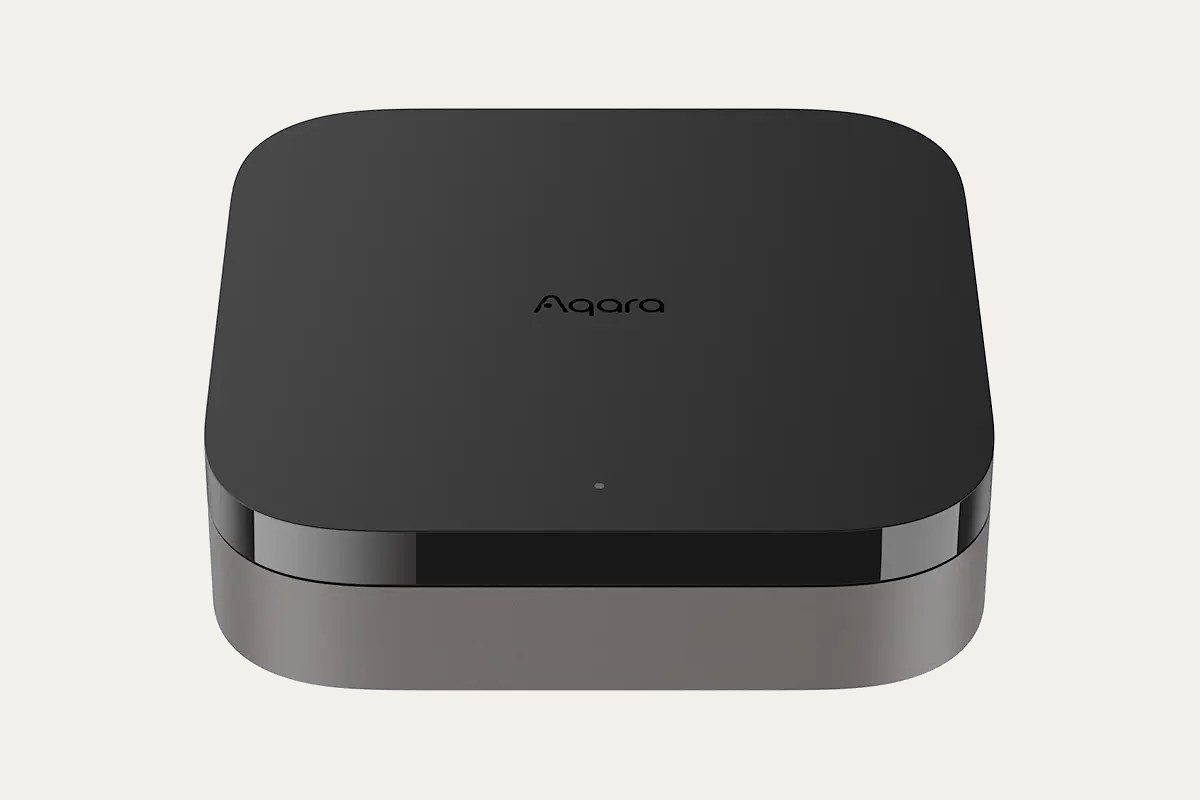
Aqara Hub M3 addresses a very specific household problem: useful sensors and remotes do not necessarily speak the same language as the preferred smart-home app. Its attraction is the combination of Aqara integration, Matter roles and infrared control in one box. That makes it more than a place to pair a few contact sensors, but also raises the importance of understanding what is being translated. A function exposed through another ecosystem may be simpler than the same device's controls in Aqara Home. This research review examines those boundaries and the physical deployment choices. We have not timed its automations, tested every supported device class or measured infrared reliability across a furnished room. Those questions remain central to a future hands-on assessment of the M3.
Three roles that are easy to confuse
Aqara documents Matter controller, Matter bridge and HomeKit bridge functions. The controller role brings compatible third-party Matter devices into Aqara Home; the bridge role exposes supported Aqara Zigbee devices to other platforms. These directions are different. We would make a two-column plan showing where each device is paired and where its automations will run. Without that plan, an owner can create duplicate device entries or expect one ecosystem to expose settings that only another app understands. The supported device category and the exact feature both need checking, not merely the Matter badge. A door sensor might be straightforward while a multifunction accessory presents more decisions. The M3's versatility is useful when those roles solve a known problem, rather than when they simply add another layer of control.
Wires can make the installation simpler
The product offers Ethernet with Power over Ethernet, dual-band Wi-Fi and USB-C power. A compatible PoE installation can therefore place connectivity and power in one cable, a meaningful advantage for a hub mounted away from ordinary outlets. Conversely, a buyer relying on USB power must account for the specified adapter; Aqara says the 2A USB adapter is not included. We would decide the mounting location before selecting the power route. A centrally positioned hub may better serve the devices being controlled than a unit buried beside the router. Backup power also needs a system-level view. Keeping the hub alive while the network equipment or target appliance is off does not preserve every function. Plan the complete path instead of treating a powered indicator as proof that automation remains available.
Infrared is useful within its limits
The M3 includes a 360-degree infrared blaster with remote-use feedback. Aqara describes exposing one supported air conditioner through Matter, with a temperature and humidity sensor involved in thermostat-style use. This is a promising route for adding coordination to an existing appliance without replacing it. Our reservation is architectural: an infrared command and a confirmed physical outcome are not automatically the same thing. Furniture, placement and the appliance's own remote behavior belong in testing. We would verify each important command in the actual room and retain the original remote. Multiple independently controlled air conditioners are another reason to read the one-device limitation carefully. A home with separate rooms should not budget one central M3 on the assumption that infrared control will travel freely throughout the building.
What local automation should mean
Aqara emphasizes local automation while retaining cloud-based notifications. For the owner, the distinction is most valuable during an outage: a light triggered by a nearby sensor can still be useful even if a phone alert cannot leave the house. The useful question is which parts of a particular rule remain local after adding third-party services or remote access. We would classify routines by consequence and start with convenience tasks whose failure is obvious. An arrival light is easier to verify than a complicated sequence depending on occupancy, time, weather and appliance feedback. The M3 does not remove the need for physical controls or independent safety equipment. Its documented local direction is encouraging, but claims about reliability still require testing of the complete configured chain in the intended home.
Migration is a project of its own
An owner upgrading from an older Aqara hub should expect the transition to involve more than placing a new box on the shelf. The product documentation describes migration and notes that Matter and HomeKit reconfiguration may be required. We would first inventory device names, rooms, scenes and external integrations, then choose a quiet period for the change. Photographing or recording a working arrangement is inexpensive insurance against forgotten rules. The most important aftercare is testing triggers from the physical devices rather than tapping every icon in the app. A lamp that responds to an app command may still have a missing switch automation. This is also an opportunity to remove obsolete rules and decide which platform should own each routine, avoiding a confusing system where several controllers compete to set the same state.
Privacy, accounts and household access
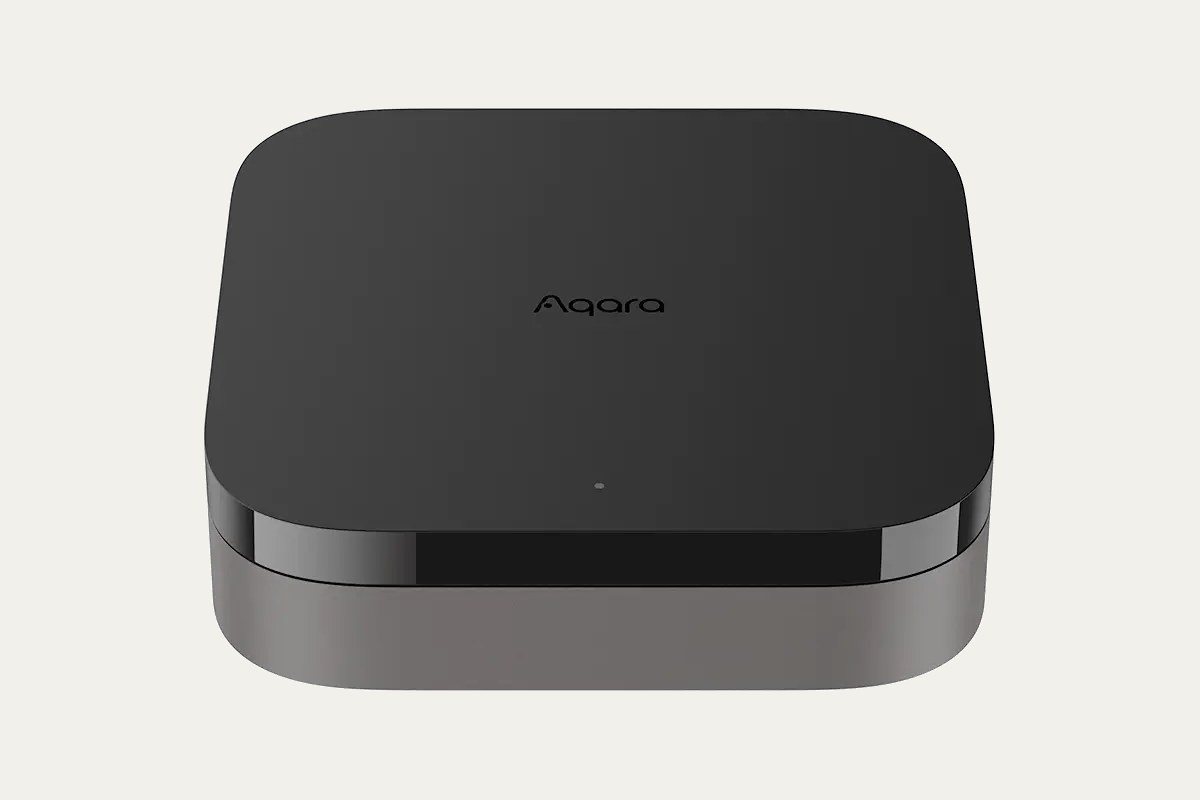
The M3 has no camera or microphone, an appealing distinction for someone who wants a hub without adding audiovisual sensing. That does not make the surrounding smart home anonymous. Device histories, remote access and account permissions still deserve attention, particularly when sensors reveal daily routines. We would provide household members with appropriate access rather than share the administrator's credentials casually, and review integrations that export devices elsewhere. Aqara's encrypted local storage claim is useful context, not a substitute for evaluating the chosen apps and services. Physical access matters too: a hub should not sit where an accidental unplugging regularly interrupts the home. The goal is a system whose data paths and control permissions can be explained clearly to the people actually living with it.
Buying and evaluating it in Canada or the US
North American buyers should match the hub and intended accessories to the supported regional storefront and app arrangement before ordering imported bundles. Compare the complete package, including a suitable power supply or PoE equipment, rather than just the hub's advertised price. Our practical test would include a representative Aqara sensor, a compatible third-party Matter device, an infrared appliance and a second ecosystem receiving bridged devices. We would record setup steps, what settings are exposed, recovery after a network interruption and whether migrating an existing installation preserves expected behavior. That test would reveal far more than a list of radio standards. We would also place the hub where it will actually live, because a successful pairing beside the router does not demonstrate dependable operation across a finished house.
Our research verdict
Aqara Hub M3 makes the strongest case in a home already using Aqara accessories that also wants broader platform control or an infrared appliance connection. Its documented networking and power options support thoughtful permanent installation, while its multiple bridging roles create useful flexibility. A first-time buyer with one lamp and one sensor may not need this much coordination, and a demanding tinkerer may prefer Home Assistant's wider administrative freedom. We would choose the M3 after checking the exact accessories, required automations and external-platform features, then keep the setup simple enough that another resident can understand it. The provisional score reflects that documented capability and the remaining integration work. It should not be read as a measured claim that every Matter device or infrared appliance will behave perfectly.
Sources & further reading.
These are the sources behind this research review. Manufacturer claims are not independent performance measurements. Community accounts, when cited, describe individual experiences.
- Aqara Hub M3 — official product information ↗manufacturer
- Aqara developer documentation: Hub M3 roles ↗support
Documentation reviewed: 9 October 2026. Product software and regional bundles can change. Corrections and editorial disclosures.