An editorial assessment of documented capabilities and ownership trade-offs. This is not a hands-on test result or a measurement of reliability.
Features & capability 30%8.9
High-resolution stills and extensive recording choices support demanding creative work.
Compatibility & connectivity 20%8.2
RF lenses, adapted EF options and multiple outputs offer flexibility with compatibility conditions.
Ownership & upkeep 20%7.0
Mixed media, large files and demanding video modes increase ownership complexity.
Setup & everyday use 15%7.9
A detailed finder and configurable controls help, but advanced modes require rehearsal.
Documentation & support clarity 15%8.7
The manual and dated support advisories document substantial mode-specific qualifications.
Compare scores within the same product category. Small decimal differences should not override your needs or the evidence limits.
How the Standpoint Score works
We score five aspects of the documented product on a 0–10 scale, then calculate a weighted total:
- Features & capability30% of the total
- Compatibility & connectivity20% of the total
- Ownership & upkeep20% of the total
- Setup & everyday use15% of the total
- Documentation & support clarity15% of the total
This product’s 8.2/10 is a provisional research assessment. It does not claim measured performance, tested reliability or a verified customer satisfaction rate. Compare it with products in the same category, and read each criterion’s reasoning above.
Read the full rubric and score bands ↗The ownership case.
A substantial documented stills and hybrid tool for a buyer who can use its resolution. Treat thermal conditions, mixed media and video post-production as central purchase questions.
Reasons to consider it
- High-resolution stills provide useful cropping and print flexibility
- Extensive video formats can support specialist projects
- Detailed electronic finder and articulated screen aid composition
Go in knowing
- Demanding recording modes require careful thermal and media planning
- Mixed card formats add reader and spare-card costs
- Large files increase editing, transfer and archive demands
The specification sheet.
Published specifications from the linked sources. Configurations and availability can differ by country.
- Sensor
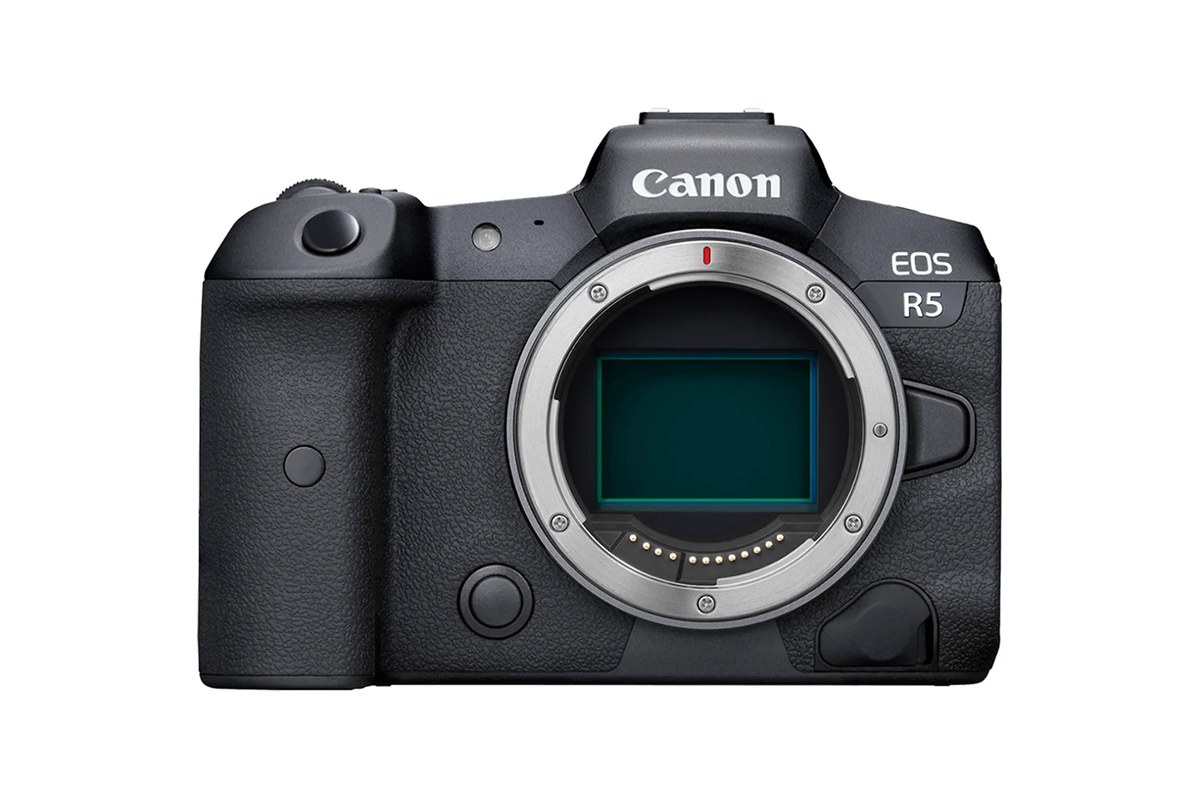
- 45 MP full-frame CMOS
- Mount
- Canon RF; compatible EF/EF-S with adapter
- Media
- CFexpress plus UHS-II SD; mode requirements differ
- Viewfinder
- Approximately 5.76-million-dot OLED
- Video
- 8K up to approximately 30p; 4K high-frame-rate modes
- Stabilization
- In-body image stabilization
- Battery family
- LP-E6NH and documented compatible variants
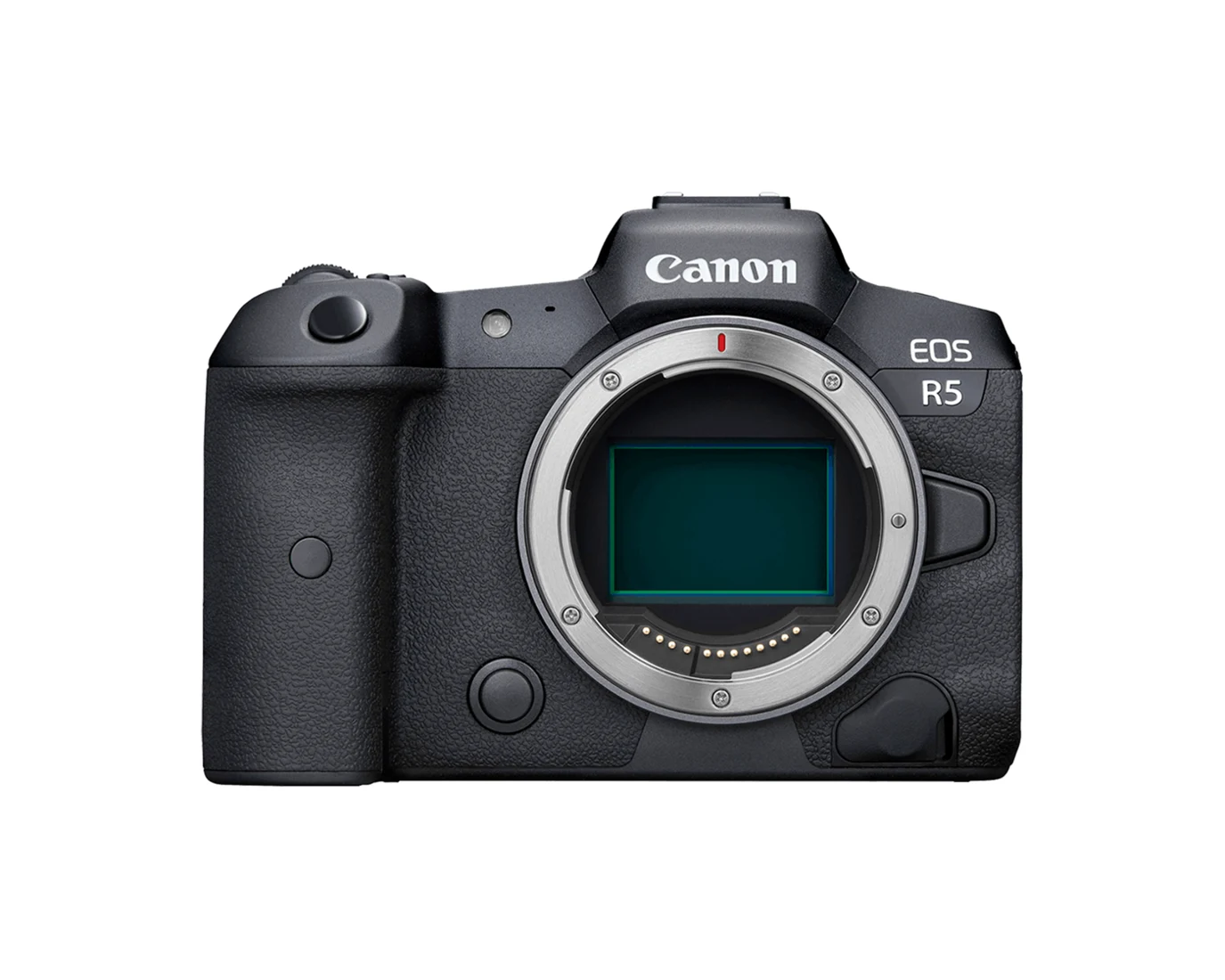
The original R5 is a workflow commitment
The EOS R5 should be chosen because its detailed still files or specialist recording modes solve a real problem. A product photographer needing room for alternative crops, a landscape photographer making substantial prints or a hybrid creator planning a carefully controlled production can give its capabilities a purpose. A buyer making only small web images may inherit the storage and processing burden without using much of the benefit. The original R5 is also distinct from the R5 C and R5 Mark II; their functions should not be silently transferred into a used listing for this body.
The meaningful comparison is the complete kit. Add lenses, cards, readers, batteries and editing requirements to the price before deciding that an older high-end body is an exceptional value. This review analyses Canon's documented functions and their practical implications. It does not claim measured sharpness, dynamic range, autofocus consistency or recording endurance from a hands-on test.
Forty-five megapixels need careful capture
Canon specifies a 45-megapixel full-frame sensor. That can provide useful detail and cropping flexibility, but the file cannot retain information lost to camera movement, poor focus or an unsuitable lens. A high-resolution body can make those errors easier to see at full magnification. For deliberate work, establish a stable support arrangement and a shutter speed appropriate to the subject before chasing the lowest sensitivity or smallest aperture.
In-body stabilization is useful within its operating conditions, especially when camera movement is the limiting factor. It does not stop a moving person or repair a focus error. Consider the intended output when judging images: an imperfection visible in an extreme crop may be irrelevant to an ordinary print, while poor timing remains obvious at any size. The R5's resolution has its strongest value when the photographer knows how the finished image will be used and can capture it with enough care to support that use.
The lens system can dominate cost and handling
RF lenses are the native route, while the appropriate adapter supports compatible EF and EF-S equipment. Identify the complete lens model and the functions you require instead of treating a mount name as a blanket guarantee. EF-S lenses involve a crop-area decision, so they do not offer the same full-frame capture proposition as an appropriate RF or EF lens. An owner reusing a substantial lens collection should evaluate those exact combinations before buying the body.
The physical kit matters too. A large zoom, adapter and support foot can make a compact-looking mirrorless body part of a heavy arrangement. Check balance, access to controls and the way the camera will be carried for several hours. For studio work, consider tethering and power cables at the same time as the lens. The best purchase may be a body that leaves enough budget for the right optics and support, rather than the most impressive body paired with a lens that is poorly matched to the job.
Fast stills operation requires a repeatable setup
The R5 documents mechanical and electronic shutter choices, subject-related autofocus functions and configurable controls. Those tools are valuable when the photographer can select them intentionally. A scene with several possible subjects may need a small focus area rather than broad automatic selection. Fast movement or artificial lighting can also make shutter choice consequential. Practise a reliable fallback and check the resulting files before relying on a quiet electronic mode for an important event.
Published burst maxima are conditional capture specifications, not a guarantee of a particular keeper rate. A used-body trial should include the lens, card and focus settings intended for actual work. Inspect several consecutive frames rather than only the best result. High-resolution bursts also create a selection task afterward. Short deliberate sequences can preserve a useful moment without filling the archive with hundreds of nearly identical photographs. The camera's speed is most valuable when it supports anticipation, not when it substitutes for deciding what matters in the scene.
8K and high-frame-rate video need a complete rehearsal
The manual lists 8K recording and demanding 4K modes alongside detailed data-rate, card and temperature qualifications. Those capabilities should not be collapsed into a promise of unlimited recording. Card capacity tables describe how much material fits under specified settings; thermal restrictions and per-clip behaviour are separate questions. Check the current firmware and Canon's guidance for the exact mode, ambient conditions and duration required by the production.
The editing side can be just as consequential. Large or computationally demanding files may require proxies, more storage and longer transfers. Decide whether the project benefits from a particular format before selecting it by default. A short controlled sequence and an uninterrupted event have different requirements. We have not measured recovery times, heat behaviour or continuous endurance. Rehearse capture, audio, transfer, edit and delivery with the actual accessories. The R5's video breadth is useful, but it belongs inside a production plan with realistic limits and a backup approach.
Mixed media and power add recurring decisions
The R5 combines CFexpress and UHS-II SD recording, with supported modes differing by media. Consult the exact card requirements rather than assuming that both slots can perform every job. Readers and spare cards belong in the budget, especially when moving from an SD-only camera. Configure recording destinations deliberately and verify what each card contains. A second slot provides flexibility but does not automatically create the duplicate required for a particular assignment.
The LP-E6 battery family also carries version-specific qualifications. Identify the supplied pack and charging equipment, then check compatibility for the intended use. An old battery can change the practical experience of a long day even when the camera itself is healthy. External power requires a secure cable arrangement and a tested supply. Avoid treating a collection of unspecified accessories as added value until each item has a useful role. The recurring cost of storage and dependable power can matter more than a small difference between two body prices.
Inspect a used body beyond its cosmetic finish
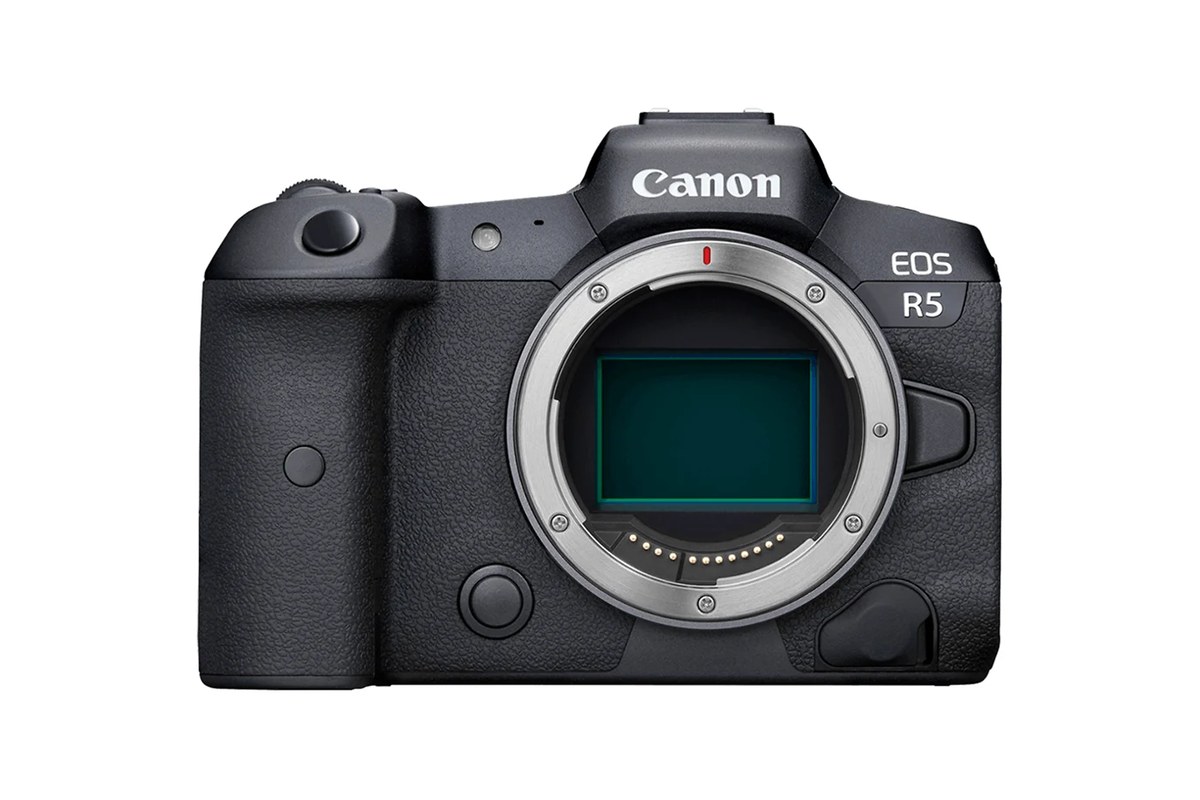
The electronic finder, articulated display, mount, hot shoe, sockets and card doors are all worth testing. A hybrid camera may have spent long periods connected to external equipment, so inspect ports and the tripod socket for wear or damage. Make still photographs and record video, then open the files on another device. Ask about repairs, moisture exposure and the original purchase territory. A shutter count is one piece of context rather than a complete history of how the camera was used.
Care should follow Canon's instructions, particularly around sensor cleaning and the shutter area. Weather-resistant construction is not waterproofing, and the condition of an older body's seals is not established by its original marketing. Store the kit dry and protect it during lens changes. Canadian and US buyers should verify local service eligibility and any remaining coverage before relying on it. The existence of an official US support page does not establish warranty transfer for an imported or secondhand example.
Firmware history helps frame the final decision
Canon's US support page retains manuals and dated advisories, including a firmware 2.2.1 notice from November 2025. Read the installed version and the current update instructions rather than assuming every description written at launch remains the best guide to operation. Equally, do not assume that a firmware update makes the original body equivalent to a later R5 generation. The manual's qualifications and the exact hardware still matter.
The original R5 is a persuasive purchase when the buyer can name the images or recording workflow that require its capabilities and can afford the system around them. It is less persuasive when resolution and 8K are merely attractive labels. Compare realistic storage, power and lens costs, inspect the example carefully and rehearse any production-critical mode. That approach gives the documented strengths a useful place in the work while keeping unmeasured performance and future support promises out of the buying decision.
Sources & further reading.
These are the sources behind this research review. Manufacturer claims are not independent performance measurements. Community accounts, when cited, describe individual experiences.
- Canon EOS R5 manual specifications ↗manual
- Canon EOS R5 US support and advisories ↗manufacturer
- Canon EOS R5 technical reference ↗support
Documentation reviewed: 9 October 2026. Product software and regional bundles can change. Corrections and editorial disclosures.