Not tested. This is a research score for the documented features, compatibility and ownership trade-offs discussed in this review, not a performance measurement.
Features & capability 30%8.7
Detailed APS-C capture, stabilization and dual slots support varied stills work.
Compatibility & connectivity 20%8.0
RF/RF-S and adapted EF options offer breadth, with exact compatibility checks required.
Ownership & upkeep 20%7.4
SD media and documented batteries help, while dense files and fast bursts add workload.
Setup & everyday use 15%7.9
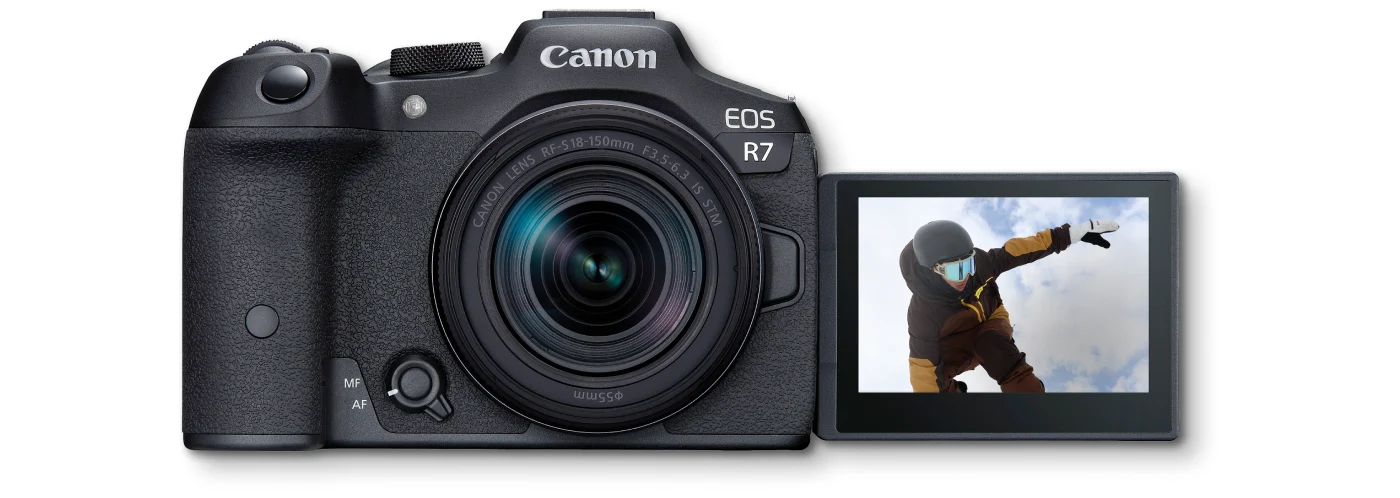
A vari-angle screen and extensive controls are useful once configured for the subject.
Documentation & support clarity 15%8.7
The detailed manual clearly distinguishes modes, media and power requirements.
Compare scores within the same product category. Small decimal differences should not override your needs or the evidence limits.
How the Standpoint Score works
We score five aspects of the documented product on a 0–10 scale, then calculate a weighted total:
- Features & capability30% of the total
- Compatibility & connectivity20% of the total
- Ownership & upkeep20% of the total
- Setup & everyday use15% of the total
- Documentation & support clarity15% of the total
This product’s 8.2/10 is an editorial research assessment. It does not claim measured performance, tested reliability or a verified customer satisfaction rate. Compare it with products in the same category, and read each criterion’s reasoning above.
Read the full rubric and score bands ↗From a tech standpoint.
Buy the R7 if you photograph wildlife, birds or outdoor action, want detailed APS-C files with in-body stabilisation, and like the simplicity of two UHS-II SD slots. Budget for the lens, batteries and storage before the body. Skip it if you'd rarely use the burst modes, if a large full-frame lens would make the kit too heavy to carry, or if you expect the frame rate alone to deliver sharp sequences.
Reasons to consider it
- 32.5 MP APS-C files give carefully framed distant subjects plenty of detail
- Two UHS-II SD slots support duplicate or overflow recording with one card type
- In-body stabilisation plus microphone and headphone sockets widen what it can do
Go in knowing
- Fast bursts create a lot of culling and storage work
- The electronic shutter needs checking with fast motion and artificial light
- Big full-frame lenses can make the whole kit much heavier
Affiliate link. As an Amazon Associate, Tech Standpoint earns from qualifying purchases. It never changes our verdict or score. Disclosure
The specification sheet.
Published specifications from the linked sources. Configurations and availability can differ by country.
- Sensor
- 32.5 MP APS-C CMOS
- Mount
- RF and RF-S; EF/EF-S through compatible adapter
- Card slots
- Two UHS-II SD slots
- Stabilization
- Five-axis in-body image stabilization
- Maximum continuous shooting
- 15 fps mechanical; up to 30 fps electronic, subject to conditions
- Display
- 3-inch vari-angle touchscreen; approximately 1.62 million dots
- Battery
- LP-E6NH family; check version-specific compatibility
Choose APS-C here for the reach
The EOS R7 gets interesting when you want a dense APS-C image without building the whole kit around a bigger sensor. Wildlife and outdoor action are the obvious fits, though detailed travel and close-up work can benefit too. The smaller sensor narrows the angle of view for a given lens. It doesn't physically lengthen the lens or guarantee more usable detail in poor light. Treat reach as a framing advantage to check with your actual subject and lens.
It also makes sense for Canon owners who want a second body with a different field of view, provided the lenses are compatible and each camera has a clear job. An existing full-frame zoom can work well here, though the result may stop feeling small. This assessment rests on documented design and practical analysis. It makes no claim about measured tracking accuracy, image quality or weather resistance from field testing.
32.5 megapixels on a small sensor shows every wobble
Canon specifies a 32.5-megapixel APS-C sensor. That gives the R7 lots of information to work with when the subject fills enough of the frame, and it also makes focus and motion errors obvious when you zoom in. A long lens at the wrong shutter speed can throw away the very detail you bought it for. Set shutter speed for the subject's movement and the handling of the full kit before worrying about base ISO.
In-body stabilisation helps with camera shake in supported setups, but it won't freeze an animal or a flower bending in the wind. For close-ups, depth of field and support may decide the result. For birds, anticipation and a clear view of the subject may count for more than any small spec difference. Look at finished exports as well as pixel-level crops. The resolution matters for the photograph it lets you deliver, not for the hours spent hunting flaws in an enlarged file.
15 fps mechanical, 30 fps electronic: pick on purpose
The published maximums are fifteen frames per second with the mechanical shutter and thirty with the electronic shutter, under specified conditions. Those are different tools, not interchangeable promises. Check electronic capture with fast movement and artificial light, because scene conditions can affect how motion and banding look. Learn when the quieter or faster option helps and when the other shutter is the safer bet for the shot.
High frame rates push work into the edit. One brief encounter can produce a pile of near-identical files, eating card space and culling time. Practise controlled bursts and check a whole sequence for focus consistency rather than holding up one sharp frame as proof. On a used body, try the actual lens and card you'll use. These are recommended checks; this article offers no measured keeper rate and doesn't compare the R7's tracking with a newer processor generation.
When subject detection guesses wrong
Canon's subject-detection tools are a big part of the R7's appeal, but you still need a quick way to overrule the camera. A bird half-covered by branches, an animal turning away or several people crossing the frame can confuse automatic selection. Set up a focus-area method you can reach fast and practise using it without lowering the camera. A fallback you trust is worth more than assuming recognition will always pick the right subject.
Lenses belong in the same trial. Adapted EF or EF-S gear may appeal to existing owners, but check the exact lens and adapter for the functions you need. EF-M lenses are a separate system and shouldn't be confused with the compatible families. Test focus, aperture control and handling together. If the purchase depends on reusing one particular lens, judge that exact pairing, not a shop demo with a different native zoom.
Matching SD slots, separate backup decisions
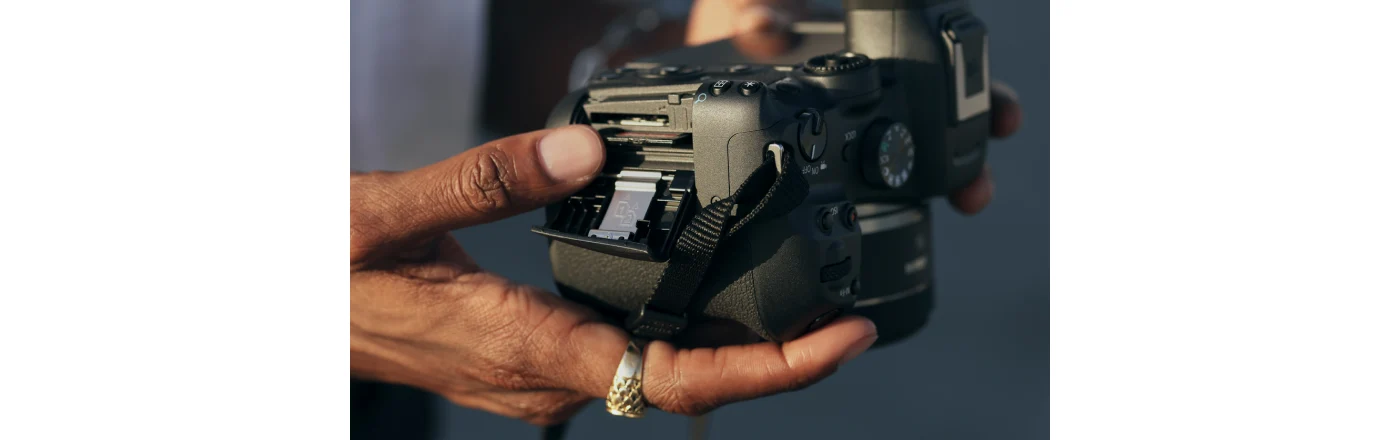
Both slots take UHS-II SD cards. That's convenient if you want one card type and one reader, though you still need to respect each recording mode's speed demands. Choose cards from the manual's requirements, not just a big capacity number. A card that's fine for everyday stills may be wrong for some video settings or sustained shooting, so check the intended use before buying a stack of matching cards.
Set the recording arrangement deliberately, because a second card used for overflow does a very different job from one holding a duplicate. Test it by shooting and then examining both cards outside the camera. On a used body, check the card-door latch and confirm each slot reads and writes reliably. After a job, make independent backups before reusing the media. Two slots give you useful options; they don't replace a proper storage routine.
Wildlife clips without derailing the stills day
The R7 offers several 4K modes, and the manual separates frame rates, compression choices and card requirements. That matters when a stills shooter wants to add a few wildlife clips or a creator plans a mixed job. Compare the exact mode against the framing your lens gives and the editing software you use. A high-quality recording option can produce bigger or heavier files than a simpler mode, and short clips don't always need it.
The vari-angle screen and both microphone and headphone sockets help with deliberate recording setups, but they don't establish sound quality or continuous endurance by themselves. Check cable placement, monitor the audio and rehearse your clip length in realistic conditions. Heat behaviour and walking stabilisation haven't been measured here. Outdoors, the sensible approach is to plan video as its own workflow, with power and card space set aside, instead of assuming it won't cut into the stills day.
LP-E6 batteries and an outdoor body's wear points
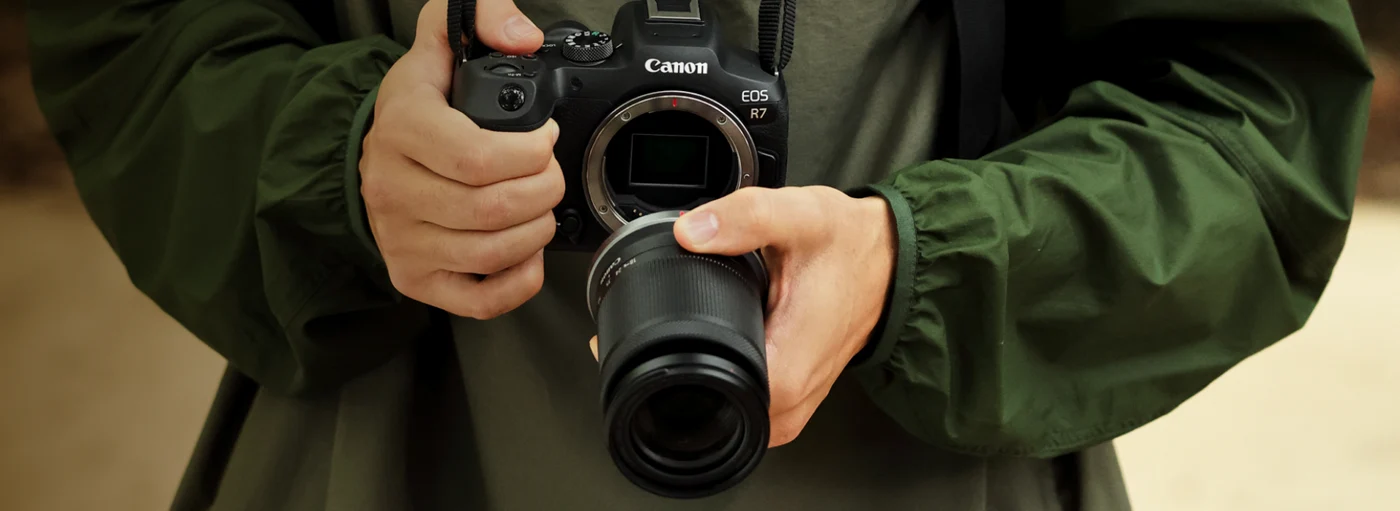
The R7 uses the larger LP-E6 battery family, and compatibility details vary by version and function. Identify the supplied battery and charging method rather than counting a pile of unnamed spares as value. A pack with an uncertain history can undermine confidence on long days. Check the compartment, the contacts and the charge information where available. If you'll share batteries with another Canon body, confirm the exact pairing instead of trusting the familiar shape.
Outdoor use makes the mount, controls, screen hinge, port covers and card door key inspection points. Ask about moisture exposure and repairs, and check the sensor with ordinary test shots. Environmental resistance isn't waterproofing, especially on gear with an unknown past. Store the camera dry and follow Canon's cleaning guidance. Canadian and US buyers should confirm the original sales territory and local service terms; an overseas bargain doesn't automatically come with local authorised support.
Price the long lens before you fall for the body
Canon keeps a detailed online manual covering the R7's recording, power and interface requirements. Use it alongside the current support route when checking firmware. Similar names across EOS R bodies don't make update files or feature descriptions interchangeable. Read the installed version from the camera and follow the official instructions. Today's documentation is useful evidence, but it doesn't promise future firmware will add anything missing from the current design.
The best R7 purchase is a complete kit aimed at subjects that benefit from its APS-C framing and detailed files. Put lenses, a suitable support, healthy batteries and reliable SD cards into the sum. If the body eats the budget those items need, the original appeal fades fast. If the kit holds together and the example checks out, the documented design gives you a substantial toolkit for deliberate outdoor photography. The burst figures are part of that toolkit; good results still depend on technique and on what's in front of the lens.
The closest alternatives.
| Product | Standpoint Score | Best for | Price |
|---|---|---|---|
| Canon EOS R7This review | 8.2Research | Canon photographers who want detailed APS-C files, in-body stabilization and two-card recording. | Amazon.ca ↗ |
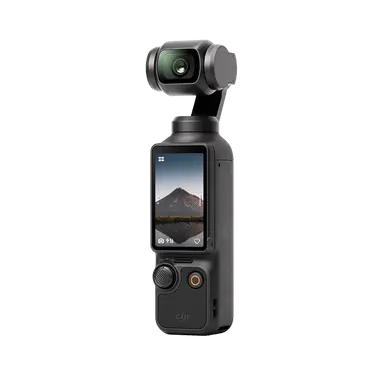
| DJI Osmo Pocket 3 | 8.0Research | A creator filming walking pieces, tabletop demonstrations and short interviews who wants a dedicated camera instead of… | Amazon.ca ↗ |
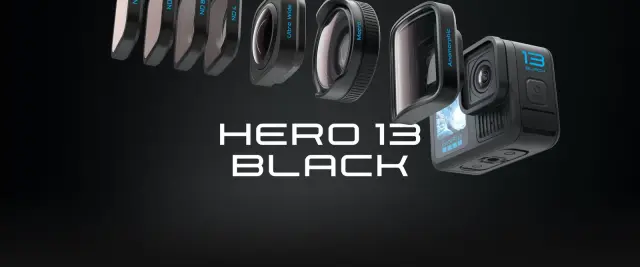
| GoPro HERO13 Black | 8.2Research | Outdoor filming where a compact mounted camera, slow-motion inserts and adaptable framing beat holding a phone up. | Amazon.ca ↗ |
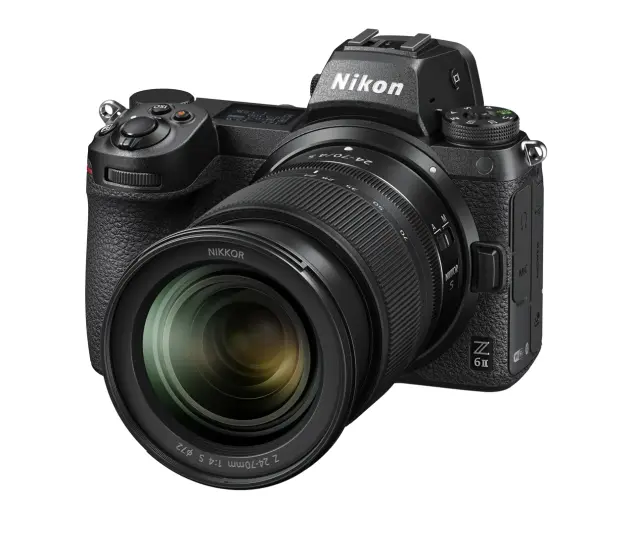
| Nikon Z 6II | 8.0Research | Photographers building a Nikon Z kit, or keeping compatible F-mount lenses, who want full-frame stills with a second… | Amazon.ca ↗ |
Compare scores within a category: Tested means our own use, Research means documentation and attributed outside testing. Price links are affiliate links. As an Amazon Associate, Tech Standpoint earns from qualifying purchases. Disclosure
Sources & further reading.
These are the sources behind this research review. Manufacturer claims are not independent performance measurements. Community accounts, when cited, describe individual experiences.
- Canon EOS R7 official overview ↗manufacturer
- Canon EOS R7 manual specifications ↗manual
- Canon R7 and R10 comparison ↗manufacturer
Product software and regional bundles can change. Corrections and editorial disclosures.
Affiliate link. As an Amazon Associate, Tech Standpoint earns from qualifying purchases. It never changes our verdict or score. Disclosure