An editorial assessment of documented capabilities and ownership trade-offs. This is not a hands-on test result or a measurement of reliability.
Features & capability 30%6.9
Full-frame stills and an articulated screen remain useful, while action and 4K functions are limited.
Compatibility & connectivity 20%7.6
RF and qualified adapted EF lenses provide system flexibility.
Ownership & upkeep 20%6.5
Discontinued sales status and used battery or repair costs narrow the value case.
Setup & everyday use 15%7.9
Compact handling and a vari-angle touchscreen suit deliberate everyday photography.
Documentation & support clarity 15%7.8
Detailed specifications clarify important limits, though promotional copy must be read against them.
Compare scores within the same product category. Small decimal differences should not override your needs or the evidence limits.
How the Standpoint Score works
We score five aspects of the documented product on a 0–10 scale, then calculate a weighted total:
- Features & capability30% of the total
- Compatibility & connectivity20% of the total
- Ownership & upkeep20% of the total
- Setup & everyday use15% of the total
- Documentation & support clarity15% of the total
This product’s 7.2/10 is a provisional research assessment. It does not claim measured performance, tested reliability or a verified customer satisfaction rate. Compare it with products in the same category, and read each criterion’s reasoning above.
Read the full rubric and score bands ↗The ownership case.
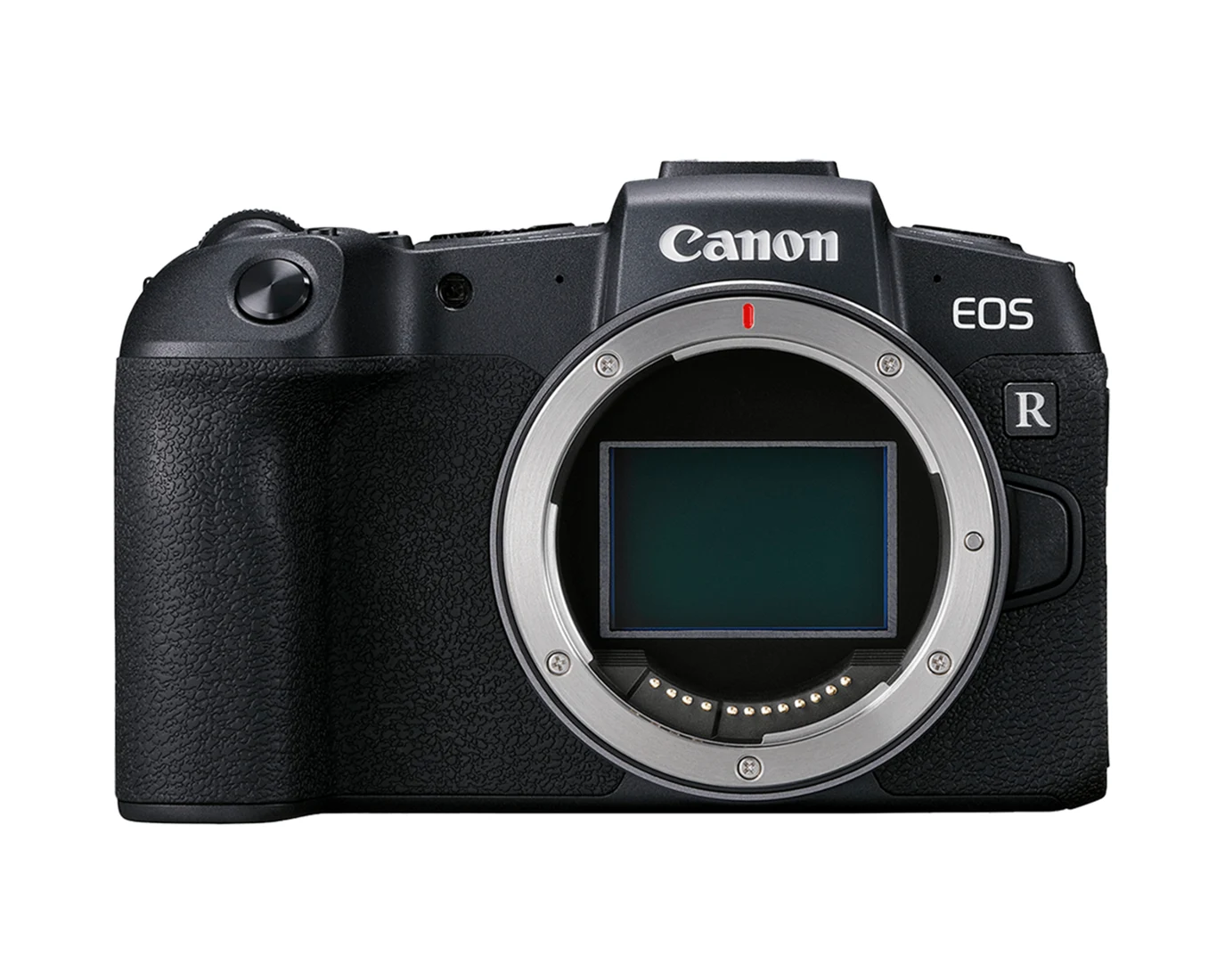
A conditional used buy for modest full-frame stills needs. The discontinued sales status, limited burst ambitions and contrast-detection 4K autofocus deserve explicit acceptance.
Reasons to consider it
- Compact full-frame body can pair well with modest RF lenses
- Vari-angle touchscreen supports deliberate composition
- An adapter route can preserve suitable existing EF equipment
Go in knowing
- Official US listing is marked discontinued
- 4K uses contrast-detection autofocus and has additional recording limits
- A bargain body can be outweighed by lens, battery or repair costs
The specification sheet.
Published specifications from the linked sources. Configurations and availability can differ by country.
- Sensor
- 26.2 MP full-frame CMOS
- Processor
- DIGIC 8
- Mount
- RF; compatible EF/EF-S through adapter
- Screen
- 3-inch vari-angle touchscreen; approximately 1.04 million dots
- Viewfinder
- Approximately 2.36-million-dot OLED
- Maximum published burst
- Approximately 5 fps, with conditions
- 4K focusing
- Contrast-detection AF; differs from Full HD operation
- US sales status
- Official product page marks the body discontinued
Discontinued status changes the way to shop
Canon's US product page marks the EOS RP body discontinued, despite retaining older sales copy and price elements. That is the appropriate starting point for this review. Availability may now depend on remaining stock, refurbished offers or secondhand sellers, and those routes can carry different return and service arrangements. Do not infer current Canadian or US availability from an old promotional description. Establish what the seller is actually offering and which organisation will support that particular purchase.
The camera's useful role is a compact full-frame stills body for someone with modest, well-defined requirements. It can be more appealing with a small lens than in an oversized bundle assembled around the phrase full frame. Our assessment concerns documented capabilities and ownership tradeoffs. It does not claim tested image quality, autofocus performance or the reliability of a specific used unit. A discontinued model can still be useful, but its price needs to leave room for the practical realities of older equipment.
The sensor is only one part of a small stills kit
The RP combines a 26.2-megapixel full-frame sensor with Canon's RF mount. That creates a plausible route to portraits, travel photographs and other deliberate stills, provided the lens and exposure choices suit the subject. Full frame does not guarantee a pleasing picture simply by replacing a smaller camera. It changes the relationships among framing, aperture and depth of field, which can help isolate a subject or make a group photograph harder to keep fully focused.
Choose the lens around the intended use and the weight you want to carry. A compact prime can preserve the body's small-kit appeal, while a large zoom changes it substantially. Budget for the lens before deciding that a low body price makes the whole system affordable. If adapting an existing EF lens, confirm its exact compatibility and handling with the adapter. EF-S use also involves a different framing and image-area decision, so it should not be assumed to deliver the same full-frame proposition as an appropriate RF or EF lens.
Autofocus and modest bursts favour deliberate timing
Canon documents Dual Pixel CMOS autofocus for supported stills operation and a maximum burst figure of approximately five frames per second under specified conditions. That positions the RP differently from bodies built around very high capture rates. It can still photograph movement, but a buyer whose main subject is unpredictable action should evaluate the complete focusing and viewing experience rather than treat all mirrorless cameras as interchangeable. Anticipation and selecting a suitable focus area remain important skills.
For a used purchase trial, focus on the actual work: a portrait at a wide aperture, a person moving toward the camera or a small detail in a busy setting. Inspect the sequence or individual files on a larger screen. Do not use one successful frame to make a claim about consistency. This review has no measured keeper rate. The useful decision is whether the camera gives the buyer a repeatable way to make the intended photographs, not whether its original advertising used enthusiastic language about speed.
The 4K autofocus distinction is too important to omit
The detailed Canon specifications explicitly identify contrast-detection autofocus for 4K recording and warn that focusing can take longer than in Full HD or HD, with difficulties possible for certain lenses. That should take precedence over brief promotional wording that might suggest all video modes use the same focus system. A buyer intending to film an approaching person or rely on unattended focus must evaluate the exact resolution and lens combination, not a demonstration made in another mode.
The specification also describes a per-movie recording limit and different frame-rate options. Card capacity figures are not promises of one uninterrupted clip. For occasional static clips, those constraints may be acceptable; for a recurring video assignment, they may define the purchase. Rehearse a complete recording and editing cycle before committing. We have not measured heat, focus transitions or audio quality. The RP's strongest case remains still photography, with video treated as a carefully checked additional function rather than the main reason to buy it.
The articulated screen is a useful everyday feature
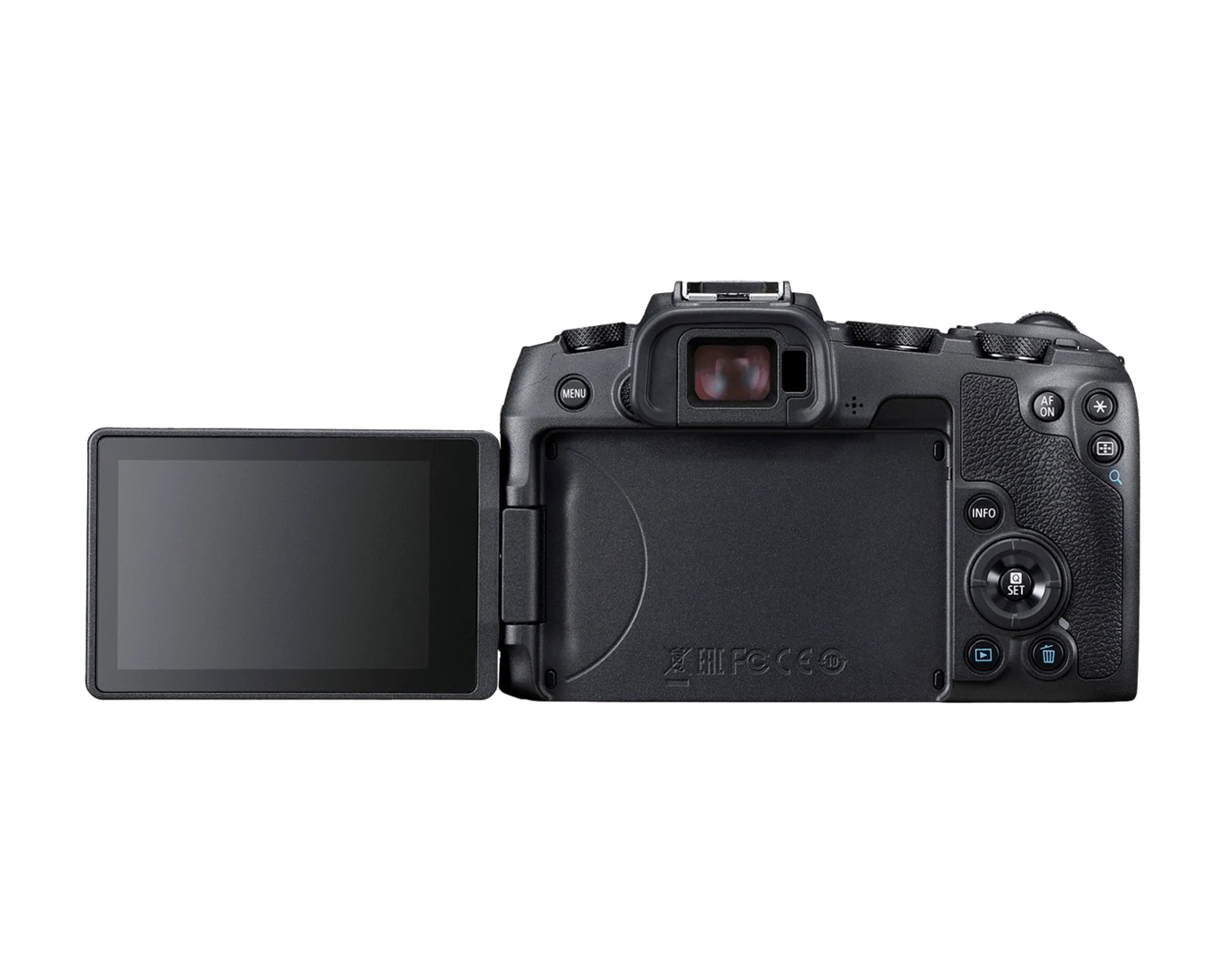
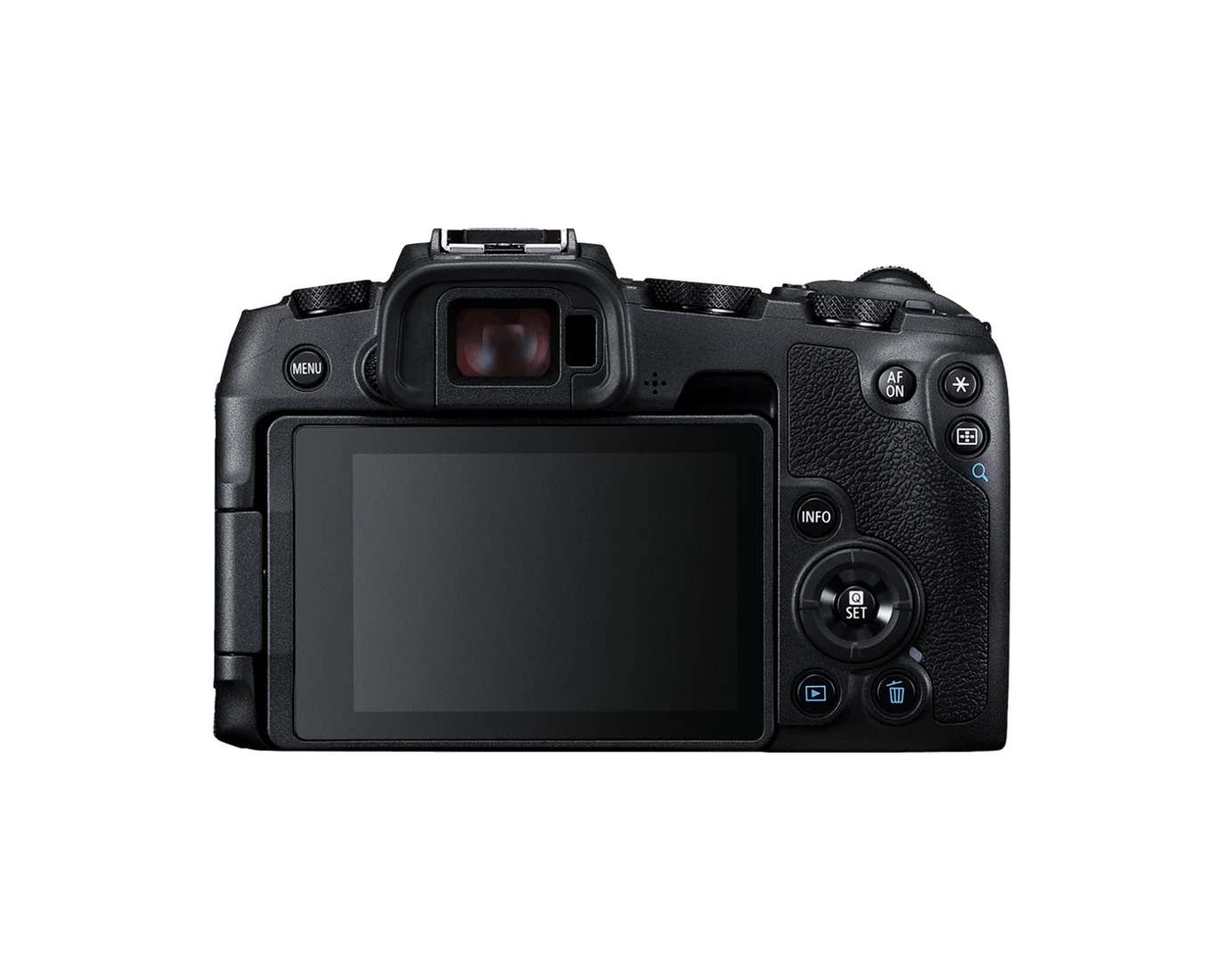
The vari-angle touchscreen can help with low viewpoints, awkward compositions and self-framing. It also folds away, which is convenient when carrying the camera or relying on the electronic finder. Those physical choices can matter more to a casual photographer than an additional technical mode used rarely. Try operating the screen with the lens, strap and support you expect to use, because accessories can change the space available around a hinge and the comfort of holding the camera.
The electronic viewfinder gives another way to compose in conditions where looking at the rear screen is inconvenient. Inspect it for damage and make sure the diopter adjustment fits your vision. For a learner, build a simple starting configuration and understand exposure compensation before filling custom settings with unfamiliar choices. A secondhand camera may retain another owner's preferences. Resetting or deliberately reconfiguring it can help distinguish a confusing menu choice from a genuine operational problem during the early days of ownership.
Storage and power should be priced before purchase
The RP uses SD media, with the official specification describing supported card standards and recording requirements. Choose the card around the actual photo and video modes rather than only its capacity. Test writing, playback and file transfer on the example you plan to buy. Important photographs should leave the card for independent storage after a session. A wireless transfer to a single phone can be convenient without providing a complete archive or a dependable alternative when app compatibility changes.
Power is another area where a cheap used bundle can be misleading. Identify the included battery and charger, inspect the battery compartment and confirm that charging works normally. Several old or unknown packs are not necessarily more valuable than one healthy, identifiable battery. Consider the cost of a dependable power arrangement when comparing the RP with newer alternatives. Published battery figures are conditional tests, not a forecast for a day spent composing on the screen, reviewing photographs and recording clips in changing temperatures.
Condition and regional service determine the real risk
Inspect the mount, sensor, screen hinge, card access, buttons and sockets. Take photographs at different apertures with a known lens and check for contamination or inconsistent operation. Ask about drops, moisture exposure and repairs, and look for records that support the seller's account. A tidy exterior can conceal faults, while moderate cosmetic wear may simply reflect regular use. The purpose of inspection is to establish function and history rather than reward the most carefully polished listing photographs.
Canadian and US buyers should verify the original sales territory and local service route. Discontinued sales status does not by itself prove that repairs are unavailable, but neither does an old support page guarantee every part remains obtainable. Ask about the specific fault or service needed if the camera already has an issue. Maintain a healthy example through dry storage, careful lens changes and Canon's cleaning procedures. Avoid buying a damaged body on the assumption that a simple home repair will restore an otherwise valuable bargain.
A narrow buying case can still be a sensible one
The detailed specifications remain useful because they distinguish functions that broad marketing language can blur. Check the current support page for the exact model, installed firmware and compatible software before relying on an old tutorial. Treat a downloadable manual as a resource for operation, not as evidence of an indefinite update commitment. The camera should be purchased for what is documented now, with no expectation that software will remove its hardware and recording compromises.
The RP is worth considering when the buyer wants deliberate full-frame stills, finds a sound example and can build a useful lens kit at a compelling total cost. It is less persuasive when the savings disappear after batteries, adapters and repairs, or when demanding video is central to the plan. Compare it with alternatives using complete working packages and realistic support terms. A modest camera that fits the task can be satisfying; a discontinued body bought mainly for the full-frame label can become an expensive lesson in overlooked details.
Sources & further reading.
These are the sources behind this research review. Manufacturer claims are not independent performance measurements. Community accounts, when cited, describe individual experiences.
- Canon EOS RP official page and discontinuation notice ↗manufacturer
- Canon EOS RP detailed specifications ↗support
- Canon EOS R system model comparison ↗manufacturer
Documentation reviewed: 9 October 2026. Product software and regional bundles can change. Corrections and editorial disclosures.