An editorial assessment of documented capabilities and ownership trade-offs. This is not a hands-on test result or a measurement of reliability.
Task capability 30%7.6
Compact access addresses panes larger robots may not fit.
Navigation & control 20%7.6
Automatic routes and spot control suit supervised use.
Ownership & upkeep 20%7.2
Pads and small reservoir need attention during a full session.
Setup & usability 15%8.0
Reduced size supports handling and storage, with tether setup still required.
Documentation & support clarity 15%8.2
Detailed dimensions and power-off specifications clarify practical limits.
Compare scores within the same product category. Small decimal differences should not override your needs or the evidence limits.
How the Standpoint Score works
We score five aspects of the documented product on a 0–10 scale, then calculate a weighted total:
- Task capability30% of the total
- Navigation & control20% of the total
- Ownership & upkeep20% of the total
- Setup & usability15% of the total
- Documentation & support clarity15% of the total
This product’s 7.7/10 is a provisional research assessment. It does not claim measured performance, tested reliability or a verified customer satisfaction rate. Compare it with products in the same category, and read each criterion’s reasoning above.
Read the full rubric and score bands ↗The ownership case.
The MINI is a sensible candidate for accessible narrow panes and buyers who prioritise compact storage over a portable power station.
Reasons to consider it
- Compact body
- Ultrasonic spray
- Physical size clearly documented
Go in knowing
- Mains-powered cleaning, backup battery only
- Manual movement between panes
- Do not confuse MINI and MINI 2
The specification sheet.
Published specifications from the linked sources. Configurations and availability can differ by country.
- Dimensions
- 215 × 215 × 55 mm
- Minimum pane
- 22 × 25 cm, published specification
- Reservoir
- 60 mL
- Backup period
- 30 minutes, manufacturer claim
Small glass changes the value equation
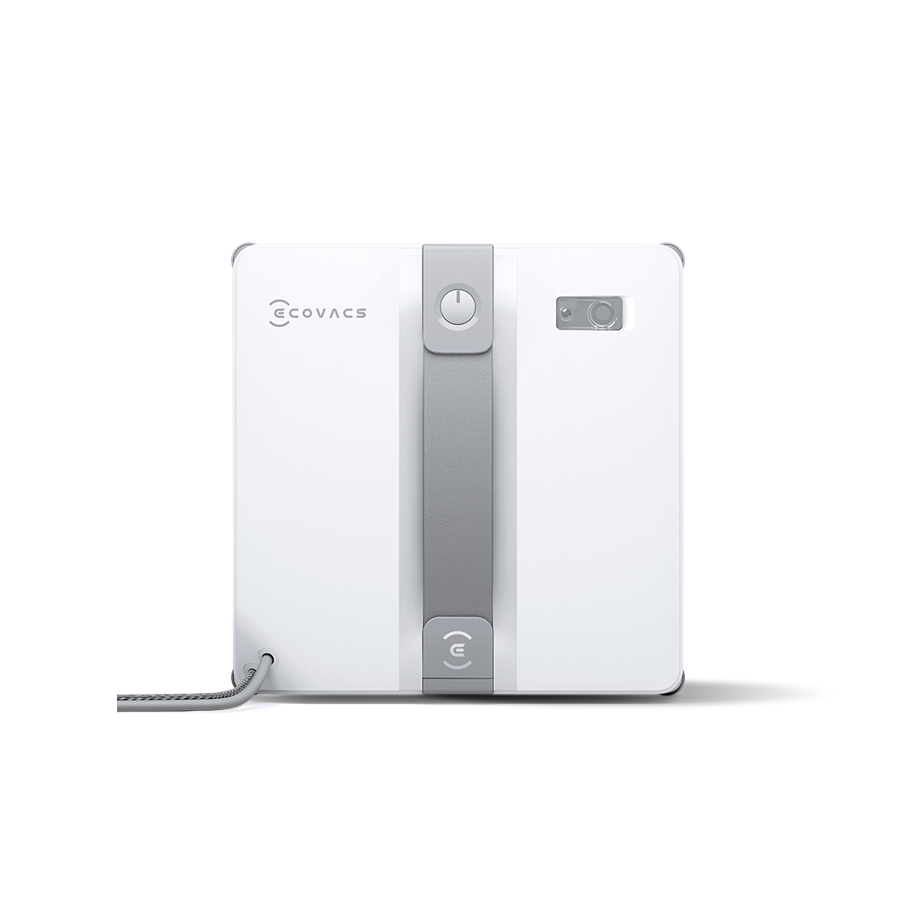
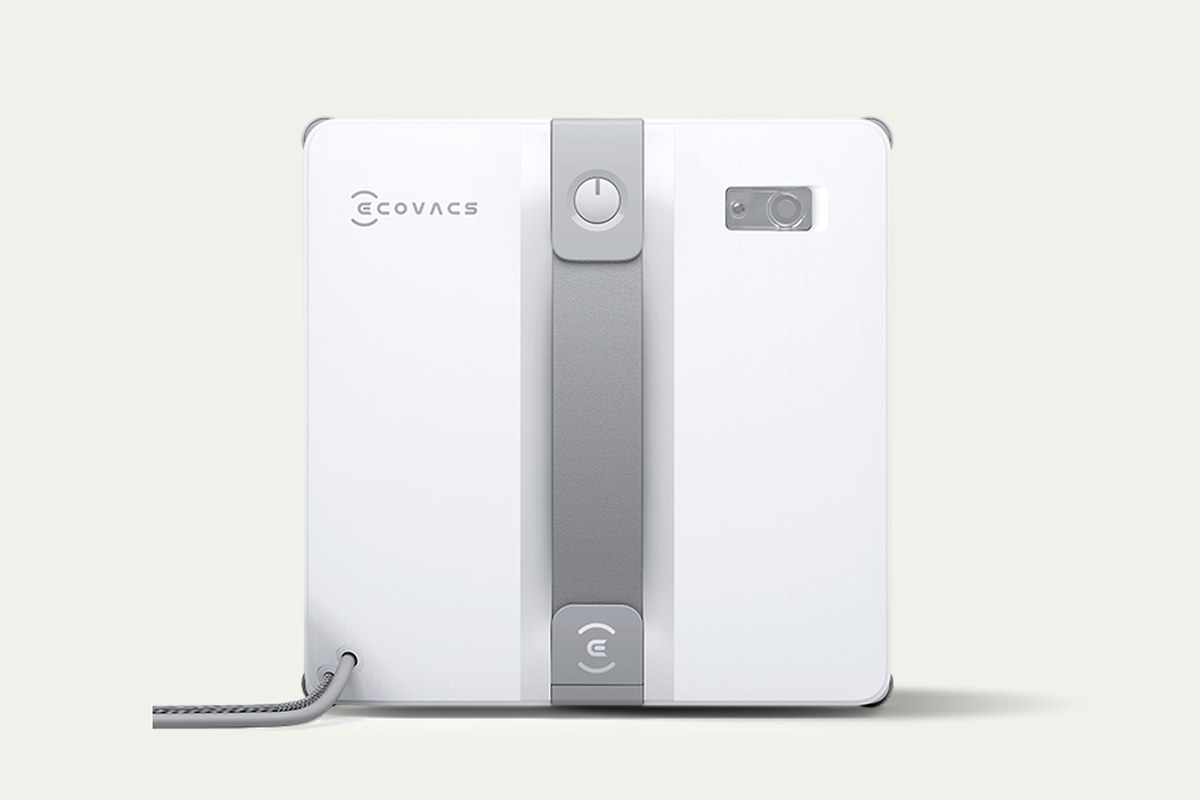
WINBOT MINI addresses a practical limitation of larger window robots: some panes simply leave too little room for the machine to turn. ECOVACS lists a compact body measuring 215 by 215 by 55 millimetres and a minimum window size of 22 by 25 centimetres on the referenced page. That gives buyers something concrete to compare with narrow panes and the clearance around handles. It is still a device that must be placed and retrieved by hand, and the original MINI should not be confused with MINI 2. Its appeal is access to more awkward glass with less bulk to store. Whether that translates into time saved depends heavily on how many separate panes your home contains.
Measure the entire route, not just the pane
A window may satisfy the nominal width and height while still being awkward because a handle, recessed frame or opening mechanism projects into the robot's path. Measure those clearances and check the permitted glass and frame conditions in the manual. A narrow balcony panel might be large enough on paper but difficult to reach safely from the inside. Do not rely on the robot to solve access that a person cannot manage safely. The MINI's reduced thickness can be useful around obstructions, but it does not permit operation on every surface or in every gap. A buyer should map the actual windows that will be cleaned and identify which still require another method before calculating the expected benefit.
The battery is a safety reserve
The MINI has an internal battery, but the published specification describes powered operation through its cable and a limited power-off protection period. That reserve should not be interpreted as ordinary cordless cleaning time. Charge and maintain it as directed so it can perform its intended backup role. The power cable and safety rope still need thoughtful routing. Keep them clear of sharp edges and moving window hardware, using the approved attachment arrangement. This distinction is easy to miss when a shopping page lists battery capacity beside other specifications. Understanding it before purchase prevents the expectation of an untethered robot and encourages the correct operating routine. We have not independently tested the backup duration or any fall-protection feature.
Ultrasonic spray is a delivery mechanism
The MINI uses ultrasonic atomisation to apply cleaning fluid. Fine delivery may help distribute moisture without soaking the glass, but streak-free results also depend on the cloth, solution, initial dirt and the surface's condition. A mist is not a substitute for removing abrasive grit or dealing appropriately with stubborn deposits. Follow the manufacturer's preparation and solution guidance, especially for coated glass. Inspect the result in angled light after the pane dries. A robot can look successful while wet and reveal smears later. Compare a fresh pad with one already used on several dirty panes; that difference may be more important than the advertised spray technology when planning a whole-house cleaning session.
Compactness brings a capacity tradeoff
A smaller machine can fit more places, but it also covers less glass per pass than a larger footprint might. On a broad wall of uninterrupted glass, the space-saving design may not be the fastest choice. On a sequence of narrow panes, it may be the only practical robotic option. Count placement and retrieval time as well as travel time. The source's fast-mode cleaning speed describes motion under a specified condition, not the duration of washing all the windows in a room. Changing cloths, filling the reservoir, moving cables and checking anchors can dominate a fragmented layout. The right question is whether the MINI reduces effort in your particular arrangement, not whether it is universally faster than every larger robot or manual tool.
Route planning and edge quality
WIN-SLAM 3.0 provides an automatic route, with modes for different cleaning intensity and spot attention. That helps organise movement but does not establish the final finish around every frame. Examine corners, the strip beside seals and areas near handles. Also watch whether the robot completes a pane and returns to a genuinely reachable location. A small missed border may be acceptable on a large panel and disproportionately annoying on a small one. Spot mode can be useful, but repeated manual steering would change the expected level of convenience. We have not observed the MINI on glass, so claims of flawless edge cleaning or consistent recovery from every obstacle would be unsupported.
Safety is still a supervised process
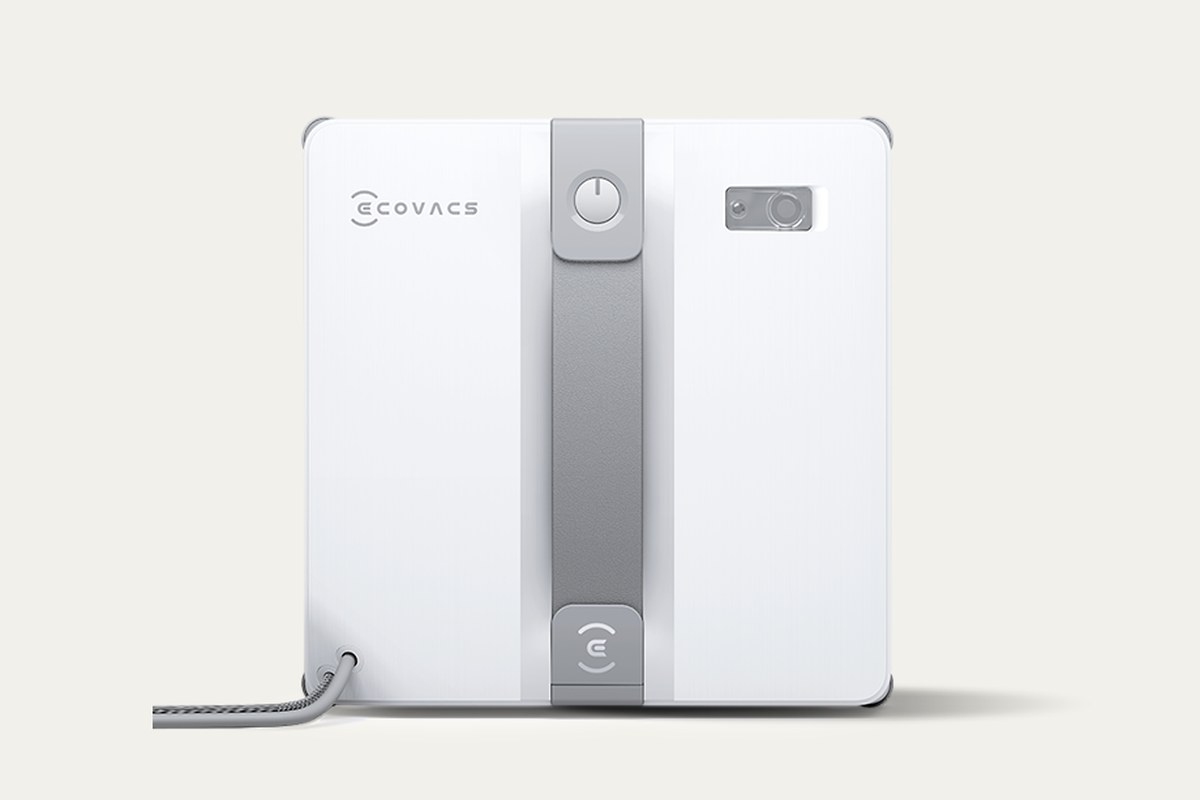
The MINI's suction, edge sensing and backup systems reduce particular risks when the machine is used as directed. They do not make it appropriate to leave a high window unattended or operate above people. Verify that the glass is sound, the surface is permitted and the tether arrangement meets the manual's requirements. Avoid conditions the manufacturer prohibits, including unsuitable wet or windy exterior operation. Keep a safe retrieval route and remain available to respond to an alert. A window robot should not encourage reaching beyond a secure position. The small size can make handling easier, but the consequence of a falling appliance still demands careful placement. This review does not certify the safety system or replace the supplied instructions.
The less visible costs
Replacement pads, approved fluid and the time spent washing and drying cloths belong in the ownership calculation. Keep spare pads ready if exterior windows are dusty; otherwise the robot may merely move the same dirt across several panes. Inspect the cable, rope, pad attachment and accessible drive surfaces before use. Ask how the internal backup battery is serviced and whether accessories are shared with later MINI models or require exact part numbers. App compatibility also matters for a device that may be used only occasionally: confirm updates and connectivity before starting a long cleaning session. A compact machine stored in a drawer for months still needs preparation, and its convenience should be evaluated over that complete cycle.
Who should choose the MINI
The MINI is a sensible candidate for accessible narrow panes and buyers who prioritise compact storage over a portable power station. It is less attractive when almost all the glass is expansive and an outlet-free station would simplify the job. The best trial would include your narrowest pane, the most obstructed handle area and one genuinely dirty exterior surface, followed by inspection after drying. Time the full setup and cleanup, not only the robot's movement. We have not measured those outcomes. The documented dimensions and straightforward purpose support consideration, while the actual finish, manual border work and supervised handling determine whether it becomes a useful appliance or an interesting device used only occasionally.
Sources & further reading.
These are the sources behind this research review. Manufacturer claims are not independent performance measurements. Community accounts, when cited, describe individual experiences.
Documentation reviewed: 9 October 2026. Product software and regional bundles can change. Corrections and editorial disclosures.