An editorial assessment of documented capabilities and ownership trade-offs. This is not a hands-on test result or a measurement of reliability.
Task capability 30%7.7
Activity logging, GPS and compatible exercise-machine connectivity cover everyday fitness use.
Control & connectivity 20%7.3
Google utilities are useful, with material phone and service dependencies.
Ownership & upkeep 20%8.0
The up-to-seven-day claim and simple physical format are promising, subject to display and sensor settings.
Setup & usability 15%8.2
Included band sizes and focused controls reduce initial hardware decisions; accounts and app permissions remain necessary.
Documentation & support clarity 15%8.6
Google documents setup, phone compatibility and the limits of music and navigation clearly.
Compare scores within the same product category. Small decimal differences should not override your needs or the evidence limits.
How the Standpoint Score works
We score five aspects of the documented product on a 0–10 scale, then calculate a weighted total:
- Task capability30% of the total
- Control & connectivity20% of the total
- Ownership & upkeep20% of the total
- Setup & usability15% of the total
- Documentation & support clarity15% of the total
This product’s 7.9/10 is a provisional research assessment. It does not claim measured performance, tested reliability or a verified customer satisfaction rate. Compare it with products in the same category, and read each criterion’s reasoning above.
Read the full rubric and score bands ↗The ownership case.
Charge 6 is a sensible documented option for daily activity records in a smaller form, but navigation and music controls do not make it a phone-free smartwatch.
Reasons to consider it
- Narrow body and included small and large bands
- Built-in positioning and exercise-machine heart-rate connection
- Clear support guides for music and navigation dependencies
Go in knowing
- Music controls require a nearby phone; no offline playback
- Google Maps directions depend on the phone
- Small display limits on-wrist information density
The specification sheet.
Published specifications from the linked sources. Configurations and availability can differ by country.
- Body
- 36.73 × 23.09 × 11.20 mm; 30 g listed
- Display
- AMOLED with Gorilla Glass 3
- Positioning
- Built-in GPS and GLONASS
- Advertised battery
- Up to 7 days; settings affect endurance
- Companion requirement
- Current Google Health app; compatible iOS or Android phone
A fitness band can be the right amount of wearable
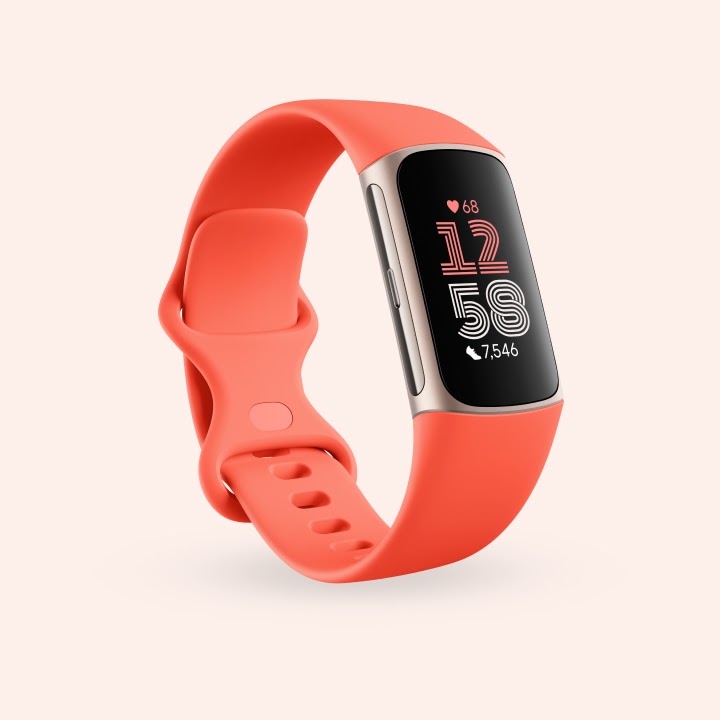
Charge 6 occupies a useful space between a basic step counter and a full smartwatch. Its narrow shape is the main reason to consider it before comparing individual sensor names. Someone who dislikes a large watch at work or in bed may wear this format more consistently. That consistency could be more useful to a personal activity record than purchasing a more capable device that spends much of the week on a desk.
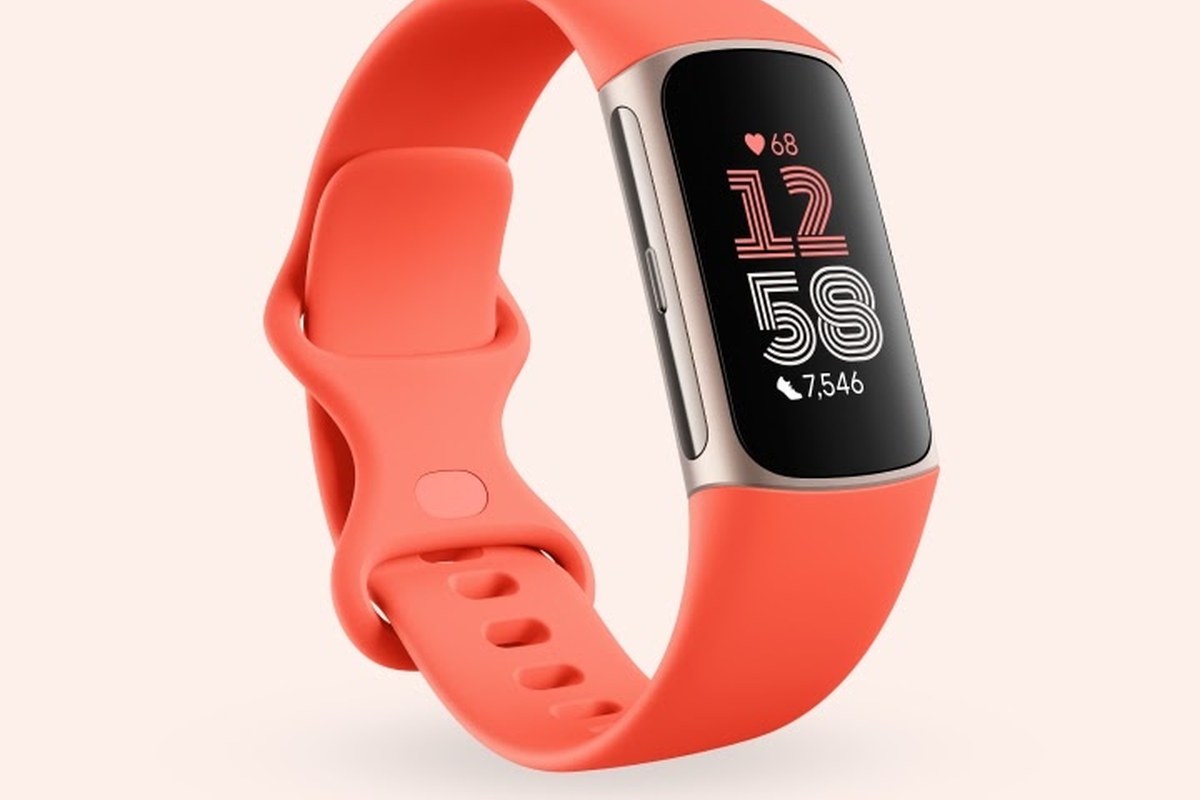
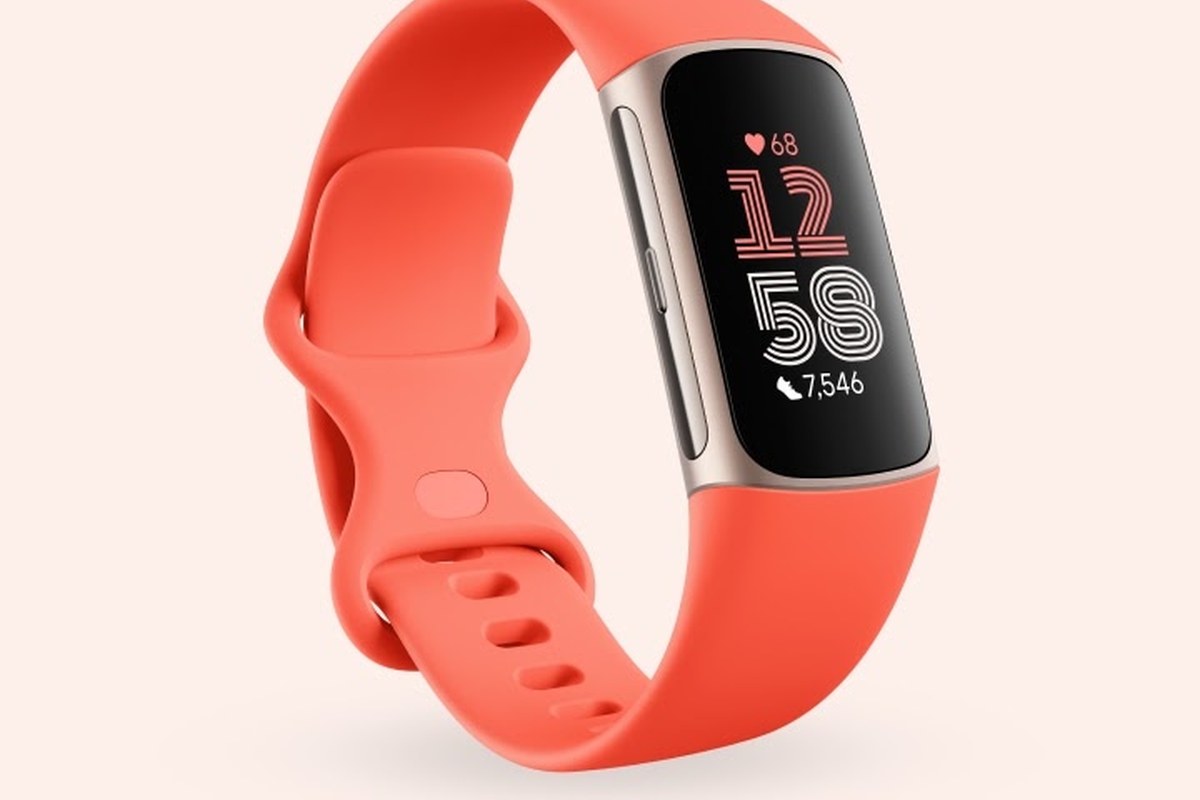
Google lists a 30 g device with an AMOLED display and includes two band sizes. The physical fit should still be tried with the intended daily routine. A smaller screen asks more of layout, eyesight and finger precision than a larger watch. Before buying, decide how much information needs to be read during movement and how much can comfortably wait until the phone is opened afterwards.
Current app requirements deserve a fresh check
The current official pages use the Google Health app name for setup and syncing. Older reviews and packaging may refer to earlier Fitbit app arrangements, so follow the linked current instructions for the exact phone being used. The specifications list compatible iOS and Android versions and require Bluetooth and an internet connection for syncing. Those requirements are a more reliable purchase check than assuming a phone is suitable simply because it is relatively recent.
Account setup is also part of the product experience. Confirm which account will hold the activity history, particularly if the tracker is a gift or replaces an older device. Review notification and location permissions during installation rather than accepting every option without knowing its role. Once paired, verify that a short recorded activity appears in the app before treating the tracker as the primary record of a longer outing.
Built-in GPS does not eliminate every phone dependency
Charge 6 includes GPS and GLONASS, giving it a documented positioning capability beyond counting movement at the wrist. That matters for outdoor activity recording. It does not mean every connected feature operates independently of the phone. Separating activity recording from navigation, music and notifications prevents a common misunderstanding about what a compact tracker can do when the phone stays at home.
A useful field test would record a familiar route and inspect the resulting track for obvious gaps, alongside the battery consumed. Repeat under the owner's normal wearing conditions rather than making assumptions from one attractive map. We have not performed that test and cannot rank Charge 6's location accuracy against a dedicated running watch. A buyer planning structured sessions should also consider whether the small exercise display presents the information they need at a quick glance.
Gym connectivity is useful only with the actual machine
The product page describes sending live heart-rate information to compatible exercise equipment. For a person who repeatedly uses a supported treadmill, rower or bike, that could reduce the need to consult two different screens. Compatibility needs to be checked against the actual equipment, including its connection procedure. A generic claim that a gym has Bluetooth is not enough to establish that every machine accepts the tracker in the desired way.
Try the pairing and display behaviour before making this the central reason for the purchase. Determine whether the connection must be initiated each session and whether the data appears where the user expects. This review assesses the documented connection option, not agreement with a reference sensor. The practical benefit is simpler access to a reading during a workout; any claim about physiological accuracy would require a different test with suitable reference equipment.
Music controls are a remote for the phone
Google's support guide is explicit that the YouTube Music controls do not provide offline music playback on the tracker. A paired phone must remain nearby, with the relevant app and connection requirements satisfied. Subscription conditions can vary by location, so US and Canadian readers should check the current local terms instead of applying a blanket rule from an older review.
That limitation is not necessarily a problem. If the phone is already in a gym bag or jacket pocket, controlling playback from the band can be convenient. It matters much more to a runner who hoped to leave the phone behind and listen through the tracker alone. Assess the feature against the actual carrying habit. The presence of a music icon is not evidence of onboard music storage or an independent streaming connection.
Directions are prompts, not a self-contained map system
Google Maps support brings turn instructions to Charge 6, with setup and navigation linked to the phone. It is best understood as another view of a journey being managed through that phone. A discreet instruction on the wrist may be useful while walking through an unfamiliar neighbourhood, especially when repeatedly pulling out a phone would be inconvenient.
The small screen also encourages a narrow interpretation of a prompt. At a complicated crossing, pause somewhere suitable and consult the fuller route when necessary. Before travelling, rehearse starting, pausing and ending directions on a familiar short walk. Check that permissions and background operation behave as expected on the chosen phone. A successful demonstration on a different handset cannot establish that the owner's configuration will remain connected through their entire trip.
Battery and comfort determine whether the record stays complete
The official claim is up to seven days, with features such as the always-on display and oxygen-saturation functions increasing charging demand. Google lists approximately two hours for a full charge. This should be evaluated against the intended settings, especially for someone planning to wear the band overnight. A long headline duration is less important than a predictable charging habit that avoids missing the same nights each week.
Band care is another everyday factor. Follow the manufacturer's advice about keeping the band clean and dry, and check comfort after both exercise and ordinary desk work. The listed water-resistance rating is not a promise that every hot-water or high-speed water activity is appropriate. A used tracker deserves additional scrutiny because its battery and water-exposure history may differ from a new unit's documented condition.
The service package should match the intended use
The current storefront promotes Google Health Premium alongside Charge 6. Assess the current included period, renewal terms and which desired functions depend on a paid service. Do not assume an old review's promotional bundle remains attached to a new purchase. For someone who mainly wants a consistent personal log, the important comparison is the useful everyday experience after any promotion expires.
Charge 6 is most convincing for an owner seeking a small, approachable tracker who already carries a compatible phone. It is less suitable as a substitute for a large-screen navigation watch or independent music player. Our follow-up testing would focus on wrist comfort, GPS recording continuity, exercise-machine pairing and the reliability of phone-dependent controls. The provisional score recognises the documented utility while leaving sensor accuracy and long-term battery behaviour unclaimed.
Sources & further reading.
These are the sources behind this research review. Manufacturer claims are not independent performance measurements. Community accounts, when cited, describe individual experiences.
- Charge 6 — official US product page ↗manufacturer
- Charge 6 — current technical specifications ↗manufacturer
- Charge 6 — official setup guide ↗support
- Google Maps on Fitbit — setup and phone requirements ↗support
- Fitbit music controls — playback limitations ↗support
Documentation reviewed: 9 October 2026. Product software and regional bundles can change. Corrections and editorial disclosures.