Not tested. This is a research score for the documented features, compatibility and ownership trade-offs discussed in this review, not a performance measurement.
Features & capability 30%6.9
GPS, altimeter, ECG and 100 auto-detected activities are good, but distance read short in Android Authority's run and the OS is bare-bones.
Compatibility & connectivity 20%6.8
Android and iPhone both work, but no NFC, no Wi-Fi, iPhone owners can't reply to texts and HRV doesn't sync to Apple Health.
Ownership & upkeep 20%7.8
A replaceable battery and a week-plus of battery life help, but the clasp needs force, replacement parts and warranty terms weren't confirmed, and Premium costs extra.
Setup & everyday use 15%7.2
It's light and comfortable, but MobileSyrup lost notifications for a week and Droid Life's first unit had a band connector fault.
Documentation & support clarity 15%7.0
Google lists specs and repairability clearly, but Canadian warranty, replacement battery and Premium pricing were not findable and reviewers disagree on always-on battery life.
Compare scores within the same product category. Small decimal differences should not override your needs or the evidence limits.
How the Standpoint Score works
We score five aspects of the documented product on a 0–10 scale, then calculate a weighted total:
- Features & capability30% of the total
- Compatibility & connectivity20% of the total
- Ownership & upkeep20% of the total
- Setup & everyday use15% of the total
- Documentation & support clarity15% of the total
This product’s 7.1/10 is an editorial research assessment. It does not claim measured performance, tested reliability or a verified customer satisfaction rate. Compare it with products in the same category, and read each criterion’s reasoning above.
Read the full rubric and score bands ↗From a tech standpoint.
Buy the Fitbit Edge if you're coming off a Charge 4, 5 or 6, you want a small tracker with a real screen and a battery that lasts a week or more, and you can live without tap-to-pay. Reviewers agree on the battery, the comfort and the good heart-rate readings, and the replaceable battery is a first for Fitbit. Skip it if you want accurate distance on runs, because Android Authority saw it log about 3% short, or if you can't live without NFC, replies to texts on an iPhone or a smoother app. If you don't need a screen, the Fitbit Air at $129.99 gets you a lot of the same tracking for $100 less. This is a research review built from Google's pages and outside reviews; Cameron hasn't used the Edge.
Reasons to consider it
- The battery lasts about a week or better: Android Authority had a little over 10% left on day seven, and iPhone in Canada got roughly 10 days on an iPhone, which saves you from the nightly-charge routine of a Pixel Watch
- It's the first Fitbit with a user-replaceable battery, which matters because a 65 mAh cell will wear out and most trackers are thrown away when it does
- Heart-rate tracking tested well: Netzwelt compared it with a Polar chest strap and liked it, especially in interval workouts, and Android Authority called its readings right on point
- It's light and comfortable enough to wear overnight (17.7 g), and the screen gives you time, weather and live workout numbers that the screenless Fitbit Air can't
Go in knowing
- GPS distance read short in Android Authority's run: 6.25 miles against 6.42 on both Strava and an Amazfit watch, which is not what you want if you train to pace
- No NFC, so no Google Wallet, and it dropped the Charge 6's EDA stress scan, plus there's no speaker, microphone or Wi-Fi
- The band attachment is fussy: MobileSyrup, Droid Life and Android Authority each had trouble with the clasp or connector, the bands aren't compatible with the Charge 6, and Droid Life's first review unit had to be replaced
- At $229.99 it's $100 more than the Fitbit Air, and software bugs showed up, with MobileSyrup's notifications not working for about a week until a reset
Affiliate link. As an Amazon Associate, Tech Standpoint earns from qualifying purchases. It never changes our verdict or score. Disclosure
The specification sheet.
Published specifications from the linked sources. Configurations and availability can differ by country.
- Canadian price (Oct 31, 2026)
- $229.99 for the standard model and $279.99 for the Stephen Curry Special Edition, per MobileSyrup and iPhone in Canada; Google's Canadian blog lists the same $229.99. Retailer pages (Best Buy Canada, Amazon.ca) could not be opened on the check date, so shelf prices at those stores are unconfirmed
- US price
- US$179.99 standard, US$219.99 Stephen Curry Edition, per Google's launch coverage at 9to5Google and Droid Life
- Release
- Announced October 12, 2026; on shelves October 27, 2026
- Display
- About 1.3-inch always-on AMOLED (Google calls it hybrid OLED) with Gorilla Glass 3, 46% more display area than the Charge 6 per Google; no automatic brightness per Android Authority
- Size and weight
- About 39.2 x 25.6 x 11.5 mm, 17.7 g without the band, 100% recycled aluminum case per the5krunner
- Battery
- 65 mAh, user-replaceable; Google rates up to 7 days with the always-on display off and about 2 days with it on; 5-minute charge for about a day, about 90 minutes for a full charge
- Sensors and tracking
- Built-in GPS (multi-system GNSS), altimeter, optical heart rate, ECG app, SpO2, skin temperature, accelerometer and gyroscope; 50+ exercise modes and automatic recognition of up to 100 activities
- Durability
- 5 ATM and IP68; Google notes it is not fully waterproof or dustproof
- Connectivity and phones
- Bluetooth 5.4, no Wi-Fi and no NFC; Android 11 or newer and iOS 16.4 or newer
- Subscription
- Three months of Google Health Premium included; the Gemini-based Health Coach and Health Guardian need Premium afterward; Canadian Premium price not confirmed (US$9.99 a month per the5krunner)
A $229.99 Fitbit with a battery you can swap, and one trap with the price
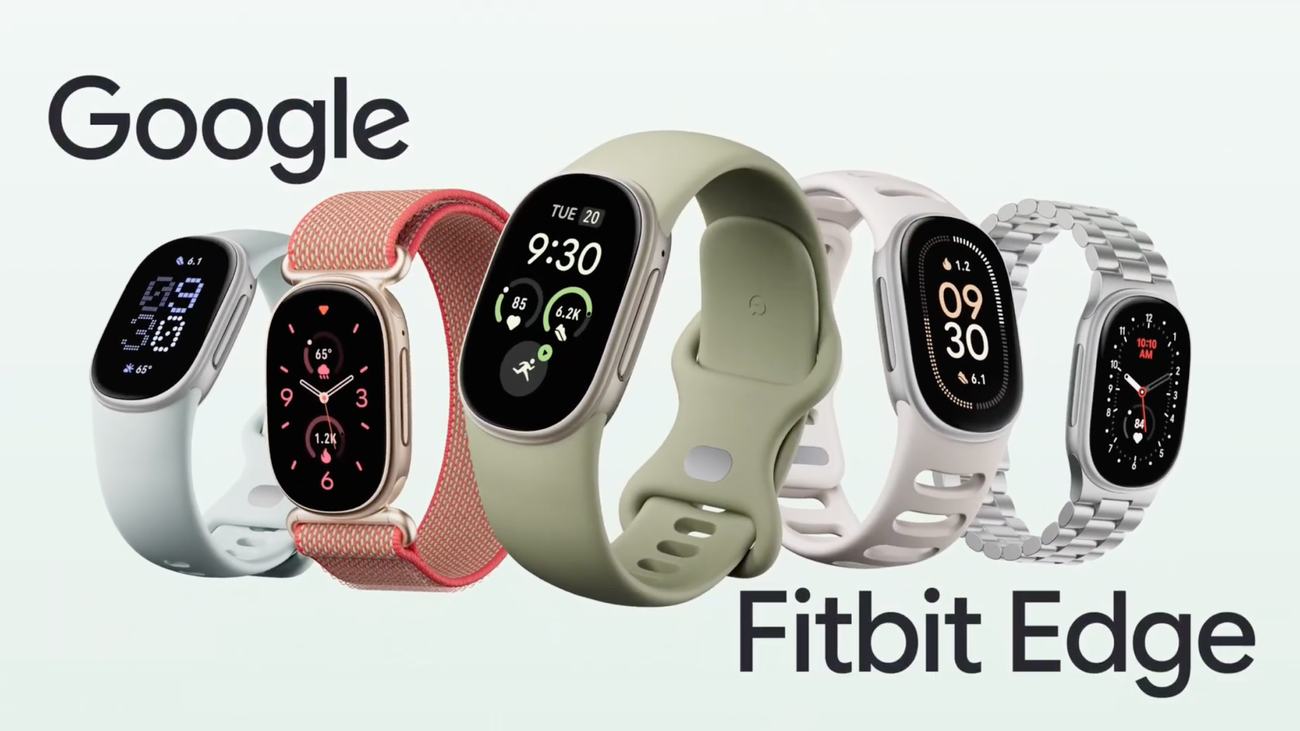
The most useful fact about the Fitbit Edge is the one Google put on the box: it's the first Fitbit tracker with a battery you can replace yourself. In Canada it costs $229.99 for the standard model and $279.99 for the Stephen Curry Special Edition. It went on sale October 27, 2026. In the US it's US$179.99. The trap is the screenless Fitbit Air, which Google sells for $129.99 in Canada. That's $100 less for a lot of the same tracking.
This is a research review. Cameron hasn't used the Edge, so everything below comes from Google's pages and from outside reviews at Android Authority, Netzwelt, MobileSyrup, iPhone in Canada and Droid Life. The Best Buy Canada and Amazon.ca pages wouldn't load when checked on October 31. The Canadian price here comes from Google's Canadian blog and two Canadian outlets, so check the shelf tag before you buy.
The question this answers: is a screen, a replaceable battery and built-in GPS worth $100 over the Air, and is it a fair successor if you're coming from a Charge 6?
What Google changed from the Charge 6, and what quietly went missing
The body is new: a pill-shaped aluminum case with a physical side button instead of the Charge's touch button. The display gets 46% more area, according to Google, and the 11.5 mm case is about the same footprint as before. Inside, it gains an altimeter and a new GPS chip and antenna that Google says make route tracking up to 40% more accurate than the Charge 6. Droid Life and Android Authority both point out that the ECG app is back too. The Charge 6 lacked it in some regions and the Air doesn't have it at all.
Now the losses. The Edge has no NFC, so Google Wallet is out, and the Charge 6 had it. The5krunner adds that the EDA stress scan is gone, there's no Wi-Fi, and heart rate is stored every two seconds during exercise instead of every second. Android Authority found no microphone or speaker either, so no voice replies and no audible alarms. Bands from older Charge models won't fit.
If you own a Charge 6 that still holds a charge, don't upgrade just for the screen. The replaceable battery is the real new idea, and it only pays off if you plan to keep this tracker for years.
Google says seven days. Two reviewers got seven to ten, and one unit fell apart
Battery is where the Edge looks best. Android Authority wore it for a little over a week with six tracked workouts, automatic workout detection and nightly sleep tracking, and ended day seven with just over 10% left. iPhone in Canada charged it to 100% and wore it day and night with eight tennis sessions, and it lasted about 10 days, or roughly 241 hours. That reviewer measured drain at about 9 to 10% a day, and about 1% an hour during GPS tennis.
Droid Life's replacement unit went from October 16 to October 24 on one charge, with 14% left, through four one-hour treadmill runs and seven hours of pickleball. Its first unit dropped from 89% to 17% in three days, though the reviewer blamed that on a hardware fault. MobileSyrup describes about a week with lift-to-wake, and a noticeable drop with the always-on display on.
Google's own number is about two days with the always-on display on. Netzwelt says it lasted seven days even with it on, and that the Charge 6 managed about five. Those don't agree, so assume the always-on screen costs you real days and treat Google's figure as the safe one. Charging is slow. Google, Droid Life and iPhone in Canada all put a full charge near 90 minutes, though a five-minute top-up gets you about a day.
The GPS is the weak spot: 6.25 miles recorded on a run that two other devices measured at 6.42
Google promises up to 40% better GPS than the Charge 6, but that's Google's own comparison, not a measured result. Android Authority ran the Edge on a six-mile route it knows well and got 6.25 miles. Strava and an Amazfit watch both logged 6.42. That's about 3% short, and the reviewer says past runs on the same route suggest the Edge undercounts. For a casual jogger that's fine. If you train to a pace or race a half-marathon, it isn't.
Heart rate looks better. Netzwelt tested it against a Polar chest strap and said the pulse readings were good, particularly in intervals, though accuracy slipped when a workout wasn't started manually. Android Authority said heart rate appears to be right on point. Droid Life saw resting heart rate 3 to 4 beats higher than its other devices, but the trend lined up with an Oura Ring.
One caution comes from the5krunner's launch coverage. It expects the Edge to be weaker than the Charge 6 for hard intervals, because the heart-rate sampling interval is longer. That was a prediction before reviews landed, and Netzwelt's chest-strap test didn't back it up, so treat it as a minor risk.
Android gets the full tracker, iPhone gets a read-only one, and Premium adds the AI
Phone choice matters here. Quick replies to notifications work on Android only. iPhone in Canada could read texts on an iPhone but couldn't reply, found no unread-message complication, and couldn't find a bedtime schedule for sleep mode. Heart-rate variability also doesn't sync to Apple Health. That reviewer went back to the screenless Air and says an Apple Watch is still the better choice for iPhone owners who want to reply.
Software got mixed reviews. MobileSyrup's notifications didn't work for about a week and needed a reset, and watch-face and tile tools in the Health app often failed to load. Android Authority found the OS bare-bones, with no calendar app and no customizable workout screens, and called the Health coach hit-or-miss. Netzwelt said the coach often over-reads data and can't be corrected.
Google includes three months of Google Health Premium. The coach and Health Guardian, which watches blood pressure and insulin-resistance trends, need it afterward. The5krunner says the Edge works fully without a subscription, and Premium is US$9.99 a month in the US. A Canadian price wasn't confirmed, so check it before you rely on the coach.
The battery swaps out, but the band clasp is where reviewers kept getting stuck
Google calls the Edge its first repairable Fitbit, with a modular design and a replaceable battery. Netzwelt adds a catch: the manufacturer's wording on self-repair was contradictory, and repair by owners is discouraged. No price or seller turned up for a replacement battery, so the repair promise is real on paper but not yet proven at a counter in Canada.
The band is the more immediate problem. Droid Life's first unit had a connector fault, so the Curry band popped off with a tug. The replacement works, but still needs a lot of force to click shut, and that reviewer doesn't fully trust it. MobileSyrup says bands can pop open unless pushed until they click. Android Authority struggled with the olive band and disliked the fit of the black one.
The bands are proprietary and don't fit Charge models. Google's launch coverage puts replacements at US$39.99 to US$149.99, and Android Authority says US$40 to US$160. Soft silicone also attracts lint, per iPhone in Canada, which shows on the light colours. If you're picky about bands, plan on handling one in a store first.
Edge, Air or Pixel Watch: where the $100 and the $320 steps actually go
The Fitbit Air is the obvious rival, at $129.99. Droid Life says the Edge's automatic workout detection is much better and the screen is a real plus, but the Air disappears on the wrist. MobileSyrup says the Air has a similar fitness experience with no screen, no ECG, no built-in GPS and no live workout guidance. If you check stats on your phone anyway, the Air is the smart buy.
The Pixel Watch 5 starts at $550 in Canada according to MobileSyrup, so it's $320 more. It gets Wear OS, voice control, custom replies and wallet payments. If you want any of that, skip the Edge entirely. Apple Watch Series 12 starts at $549 and suits iPhone owners better. For battery over features, our existing Amazfit Balance 2 review covers a big-screen watch with a long battery life.
Against the older Fitbit Charge 6, Netzwelt's verdict is that the Edge is a successful successor, with a 1.9 on the German grading scale where 1 is best. It also says the price is steep, since Huawei, Xiaomi and Samsung sell similar trackers for much less. That's the fairest criticism. The Edge isn't cheap for what it is.
Owning it: Premium costs, warranty questions and the stress features that left
Your running costs are mostly Premium. The three months included will run out, and after that the coach and Health Guardian cost money. The tracker itself keeps working with the basics. Add a band if you want a second colour, and a 30 W adapter if you want the fast five-minute charge, since Google says that adapter is sold separately. The Edge shares a charger with the Fitbit Air.
No Canadian warranty page could be opened for the Edge, so its terms aren't stated here or how Google handles battery replacement under warranty. Ask before you buy, because Samsung Canada, for example, treats batteries as consumables. Updates are another unknown: Google hasn't published a software-support period that I could find, and reviewers reported the Health app as the shakiest part.
Owner talk is thin this early. Reddit wasn't reachable, and the other results were launch coverage, so there's no owner pattern to report. Based on the review units, the things to watch in your first month are the band clasp, notification reliability and whether the screen turns off too quickly, which iPhone in Canada said needed frequent wrist raises.
Who should buy the Edge, who should buy the Air, and who needs a watch
Buy the Edge if you're an Android user or a former Charge owner who wants a week of battery, a small screen, GPS and the option to replace the battery later. It's also a good fit if you wear a tracker to bed and don't want to charge it nightly.
Buy the Fitbit Air instead if you rarely look at the screen, and save $100. Buy a Pixel Watch 5 or an Apple Watch if you want payments, voice replies and apps. Skip the Edge if you run to a pace and care about distance, since the GPS read short in Android Authority's run, and look at a Garmin or an Amazfit.
The call: it's a good tracker with a fair battery story, held back by a clumsy band, young software and a price that's hard to defend against the Air. If Google fixes the band and a retailer drops it to $199, it gets much easier to recommend.
The closest alternatives.
| Product | Standpoint Score | Best for | Price |
|---|---|---|---|
| Google Fitbit EdgeThis review | 7.1Research | Former Fitbit Charge owners and Android phone users who want a light, screen-equipped tracker that lasts about a week… | Amazon.ca ↗ |
| Fitbit Charge 6 | 7.5Research | Someone who wants a compact band for daily activity and occasional workouts with a compatible phone nearby. | Amazon.ca ↗ |
| Amazfit Balance 2 | 8.2Research | An iOS or Android user seeking a large-screen fitness watch with offline maps and a less frequent charging routine. | Amazon.ca ↗ |
| Apple Watch Series 12 | 8.5Research | iPhone owners on a Series 8 or older, or anyone without a watch, who want closer heart tracking, a daily Readiness score… | Amazon.ca ↗ |
Compare scores within a category: Tested means our own use, Research means documentation and attributed outside testing. Price links are affiliate links. As an Amazon Associate, Tech Standpoint earns from qualifying purchases. Disclosure
Questions before checkout.
How much does the Fitbit Edge cost in Canada?
The standard Fitbit Edge is $229.99 in Canada and the Stephen Curry Special Edition is $279.99, according to MobileSyrup, iPhone in Canada and Google's Canadian blog. It went on sale October 27, 2026. Retailer pages couldn't be opened on October 31, so check the shelf price.
Does the Fitbit Edge work with an iPhone?
Yes, it needs iOS 16.4 or newer and syncs to Apple Health, but iPhone in Canada found you can read texts and can't reply, there's no unread-message complication, and heart-rate variability doesn't sync. Quick replies only work on Android, so an iPhone owner gets a more limited experience.
How long does the Fitbit Edge battery really last?
Google rates it at up to seven days with the always-on display off and about two days with it on. Android Authority had just over 10% left after seven days, iPhone in Canada got about 10 days, and Droid Life's replacement unit went more than a week. Slow charging takes about 90 minutes.
Does the Fitbit Edge have NFC or Google Wallet?
No. The Edge has no NFC chip, so it can't make contactless payments, and Android Authority points out that the Charge 6 had one. It also has no speaker or microphone, so there are no calls, voice replies or audible alarms. If you tap to pay, look at a Pixel Watch or Apple Watch.
Do I need a subscription to use the Fitbit Edge?
No, the basic tracking works without one, according to the5krunner. Google includes three months of Google Health Premium, which unlocks the Gemini-based coach and Health Guardian trend alerts. After that, Premium is US$9.99 a month in the US; a Canadian price wasn't confirmed, so check Google's page.
Sources & further reading.
These are the sources behind this research review. Manufacturer claims are not independent performance measurements. Community accounts, when cited, describe individual experiences.
- Google Canada blog: Fitbit Edge (Google, French-Canadian page) ↗manufacturer
- Android Authority: Fitbit Edge review ↗independent review
- Netzwelt: Fitbit Edge Testbericht ↗independent testing
- MobileSyrup: Google Fitbit Edge review ↗independent review
- iPhone in Canada: Fitbit Edge hands-on review with an iPhone ↗independent testing
- Droid Life: Fitbit Edge review ↗independent review
- MobileSyrup: Canadian pricing for the Fitbit Edge ↗pricing report
- 9to5Google: Google Fitbit Edge launch details ↗launch coverage
- the5krunner: Fitbit Edge, all you need to know ↗launch coverage
Product software and regional bundles can change. Corrections and editorial disclosures.
Affiliate link. As an Amazon Associate, Tech Standpoint earns from qualifying purchases. It never changes our verdict or score. Disclosure