Not tested. This is a research score for the documented features, compatibility and ownership trade-offs discussed in this review, not a performance measurement.
Task capability 30%8.3
Automatic sifting addresses daily scooping, with litter and cycle-delay conditions and attributed long-term use.
Navigation & control 20%8.0
Adjustable delay and visit logs offer useful control; weight-based identity cannot reliably separate similar-weight cats.
Ownership & upkeep 20%7.0
Globe washing, sensor care, consumables and return shipping remain material costs and work.
Setup & usability 15%7.1
A large assembly, minimum cat weight, placement restrictions and gradual adoption limit an effortless setup.
Documentation & support clarity 15%8.5
Detailed manuals and current support explain limits; some older FAQ wording differs from current product guidance.
Compare scores within the same product category. Small decimal differences should not override your needs or the evidence limits.
How the Standpoint Score works
We score five aspects of the documented product on a 0–10 scale, then calculate a weighted total:
- Task capability30% of the total
- Navigation & control20% of the total
- Ownership & upkeep20% of the total
- Setup & usability15% of the total
- Documentation & support clarity15% of the total
This product’s 7.8/10 is an editorial research assessment. It does not claim measured performance, tested reliability or a verified customer satisfaction rate. Compare it with products in the same category, and read each criterion’s reasoning above.
Read the full rubric and score bands ↗From a tech standpoint.
Buy the Litter-Robot 4 if scooping is the chore nobody wants, every cat using it weighs at least 3 lb (1.36 kg), and you have floor space beside an outlet plus somewhere to wash a large globe. Think again if your cat dislikes enclosed boxes, if telling similar-weight cats apart is the main reason you're buying, or if you're expecting refilling and cleaning to vanish. It reshapes the litter job rather than eliminating it. It hasn't been trialled with cats by Tech Standpoint.
Reasons to consider it
- Automatic clump separation with a cycle delay you can tune to your litter, from 3 to 30 minutes
- Weight and visit records, with Whisker openly documenting where cat identification falls short
- A removable globe and drawer backed by unusually detailed maintenance guidance
Go in knowing
- Automatic mode requires every cat using it to weigh at least 3 lb / 1.36 kg
- Cats within a pound of each other can be logged under the wrong profile
- Its bulk, the deep clean and Canadian return shipping all need planning in advance
Affiliate link. As an Amazon Associate, Tech Standpoint earns from qualifying purchases. It never changes our verdict or score. Disclosure
The specification sheet.
Published specifications from the linked sources. Configurations and availability can differ by country.
- Size / empty weight
- 22 × 27-inch footprint; 29.5 inches high; 24 lb / 10.9 kg
- Entry
- 15.75 × 15.75 inches / approximately 40 × 40 cm
- Automatic-mode minimum
- 3 lb / 1.36 kg for every cat using the unit
- Cycle delay
- 7 minutes default; 3, 7, 15, 25 or 30 minutes on the panel; 3–30 minutes through the app
- Network / power
- 2.4 GHz Wi-Fi for connection; supplied 15 V DC adapter
- Litter
- Standard-weight clumping clay recommended; fill just below the raised MAX line
The scoop goes, the chores reshuffle
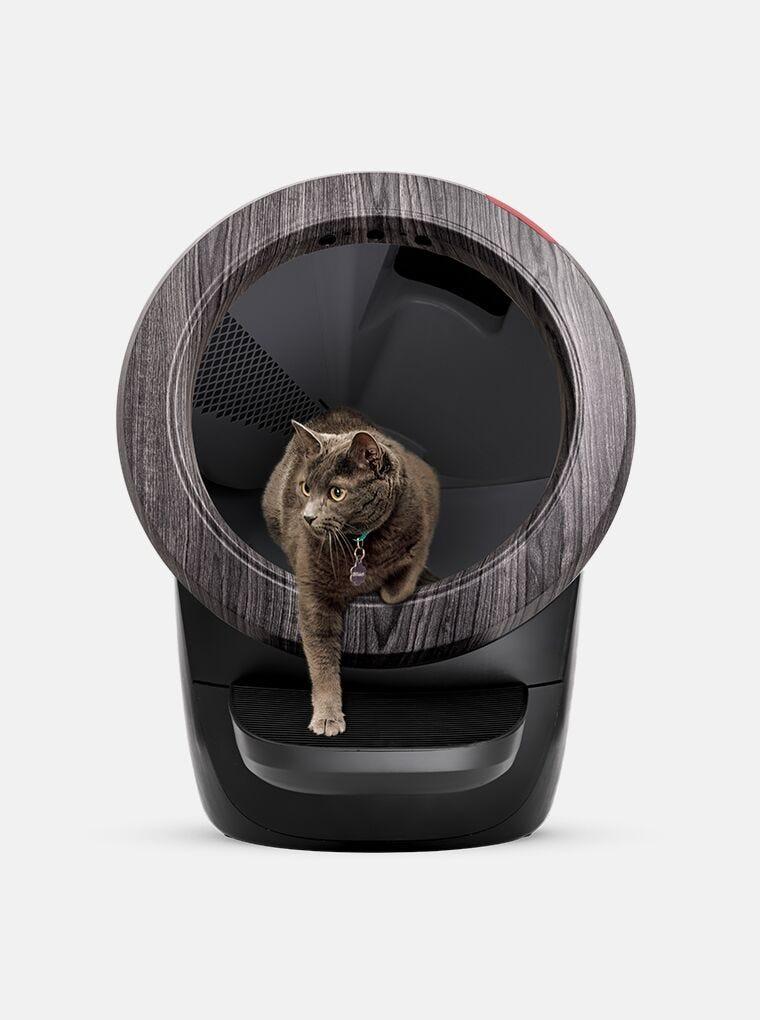
Litter-Robot 4 puts a rotating globe between you and the daily scoop. Once the cat leaves and the delay you've chosen runs out, it sifts clumps from the reusable litter and drops the waste into a drawer underneath. If scooping is the job everyone in the house dodges, that's a real convenience. It also reshapes the work rather than ending it: the drawer still needs emptying, the litter needs topping up and the whole assembly needs proper cleaning. It's worth buying when those remaining jobs are easier to live with than the endless scoop-and-bag routine.
This assessment draws on matching Whisker documentation and identified independent accounts; it is not a Tech Standpoint trial with cats. So the recommendation depends on your household, not on a claim that every cat and every litter will behave the same way. Decide who will empty the drawer, where the globe can be washed and how you'll keep another box available while the cat gets used to it. The app and the mechanism are genuinely useful parts of the package, but neither can persuade a reluctant cat to accept a new toilet. That's the first real limit on the whole idea.
It needs more floor than the tray did
The dimensions in the spec list describe a substantial object, not a small accessory that slots into the cabinet where your old tray lived. Leave room in front for the cat to walk in and turn around, and room for you to slide the waste drawer out. The empty weight matters too when you carry it to another room. Picture the actual journey to wherever its removable parts will get cleaned, narrow doorways and stairs included, before deciding the footprint works.
Whisker's placement guidance calls for firm, level flooring, no contact with walls and feet that can move freely. A litter mat goes in front, not partly underneath. These details affect weighing, so jamming the robot into a corner is more than an awkward layout choice. An optional Carpet Tray can improve weight readings on carpet or uneven floors. The right spot works for the cat and leaves you access to the parts. A tucked-away installation without enough clearance makes every drawer change and inspection more of a chore.
Introductions take weeks, not a weekend
Whisker recommends starting with the robot switched off, placing it beside the familiar box and bringing in the automatic movement gradually. A little used litter can add a familiar scent, provided the litter is compatible. The manual also says not to force a cat inside. That guidance is more useful than treating day one as a deadline. Keep an acceptable toilet option available while you watch whether the cat goes in normally, turns comfortably and comes back without hesitating.
Jessica Hartshorn's Good Housekeeping account, updated in August 2026, describes one cat taking about six weeks to adopt the robot, and another cat still using it daily after four years. That's a useful illustration of how acceptance can vary within a single home, not a promise about your cats. One successful visit should lead to more watching, not the instant removal of every alternative. Track the return window from the day it arrives, especially if more than one animal needs time to settle. Your enthusiasm for an automated box doesn't replace your cat's ordinary willingness to use it.
The 3 lb rule applies to every cat
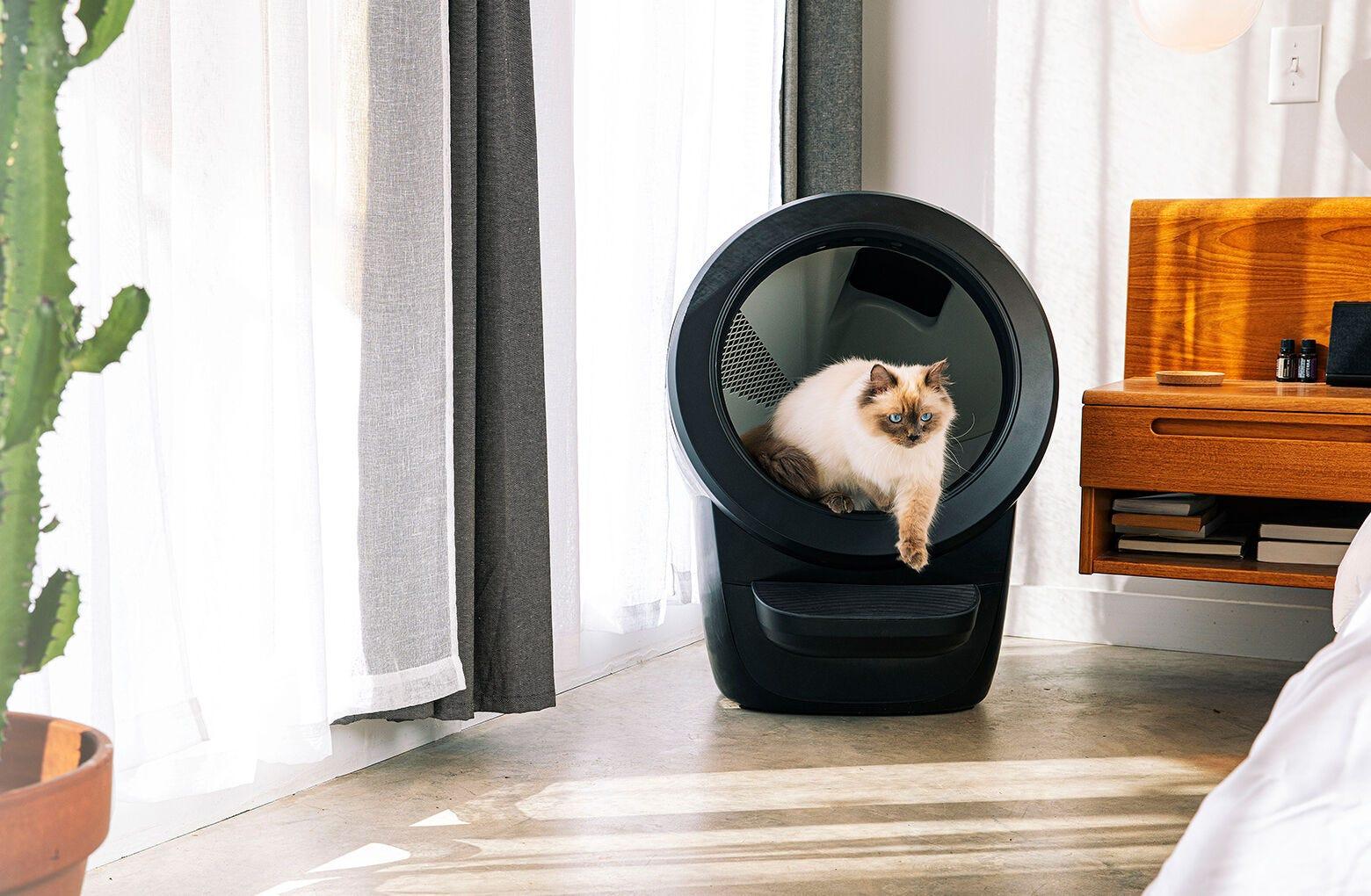
Every cat that uses Litter-Robot 4 must weigh at least 3 lb, roughly 1.36 kg, before automatic mode is appropriate. A household with one big cat and one small kitten still has to follow the rule for the kitten. For smaller animals, Whisker describes a supervised approach with the robot switched off between manually run cleaning cycles. Don't assume an average household weight, or having a larger cat around, makes unattended cycling safe for both.
At the top end, current US and Canadian product pages describe suitability up to 25 lb, or 11.33 kg, while an older support FAQ uses broader wording. A very large cat needs confirmation from Whisker and an honest look at how it sits inside the globe, because the size of the round entrance alone doesn't settle that. The step and optional ramp deserve attention too for a cat that finds getting in difficult. This is an appliance meant to serve the animal's existing needs, and brilliant automation is worth little if getting in or using it becomes uncomfortable.
Seven minutes exists for a reason
The seven-minute default gives waste time to clump before the globe turns. Whisker offers the other panel and app settings listed above, but its delay guidance warns explicitly that a shorter wait can make cleaning less effective when clumps haven't set. Faster isn't automatically cleaner. If the liner gets smeared, lengthening the wait may help more than running the same quick sequence more often.
Start with the recommended standard-weight clumping clay and keep the bed just below the raised MAX mark. Current guidance rules out newspaper-based litter, absorbent wood pellets and non-clumping or loose-clumping types. Some small silica beads can slip through the screen, and translucent or white material can confuse the level readings. The litter your cat likes in a conventional box isn't necessarily compatible. What you want is a bed the cat accepts and clumps that separate cleanly, not the shortest possible gap between a visit and a spinning globe. Top up to the line rather than overfilling to put off the next refill.
When the globe stops mid-turn
Whisker describes three curtain sensors around the top of the opening and a weight scale in the base. Tripping a curtain sensor or adding weight during a cycle stops the globe, and the documented sequence resumes after 15 seconds without another trigger. That explains how it's meant to work; it doesn't prove every unit and installation is immune to faults. The minimum weight, correct floor placement and ongoing inspection all stay part of the setup.
Dust and fur can cause false detections or bad level readings. The sensor-cleaning guide calls for a dry cloth around the bezel, a brush attachment for the openings and careful dry-swab cleaning when needed, all kept separate from washing the globe. A red light can mean a detected cat and a running delay, so it isn't always a motor failure. If the robot keeps stopping, follow the guide for the actual light pattern and check litter level, placement and cleanliness. Never bypass sensors to make an unresolved fault go away. A conventional box kept on hand is a practical fallback while you sort out the cause.
Two cats, one pound apart
SmartScale uses recorded weight and pet profiles to guess which cat visited. Whisker says it can't accurately tell apart cats within one pound of each other. Its support guide also allows up to seven days to learn profiles, notes some multi-cat homes need longer, and offers a way to reassign wrong entries. Hartshorn's similar-weight cats weren't reliably separated in her account. Put together, that's a clear reason to temper expectations if individual records are central to why you're buying.
Treat a named visit as something to cross-check against what you see, especially when cats are close in weight or one only half enters. Adding litter, emptying the drawer or moving the unit shifts its weight baseline, so the documented Reset step belongs in that routine. Keep pet profiles up to date and don't lean a hand or your weight on the unit while resetting. These records can help you spot patterns, but a graph is not a diagnosis. If you're worried about an animal, act on it directly rather than waiting for the software to log the visit under the expected name.
What the free app does, and Whisker+
Litter-Robot 4 connects over 2.4 GHz Wi-Fi; the product page rules out the 5 GHz band. Check coverage at the spot where it will actually sit, then make sure your phone gets useful notifications. The physical buttons handle cycling, resetting, emptying and connection settings, so learn them instead of making every everyday task depend on finding the right app screen. Set up the account and check the QR code on the back while the machine is still easy to move.
The current US product page describes seven days of visit and weight history, while Whisker+ offers a longer history and extra summaries. Whisker's membership FAQ says the SmartScale identification and weight tracking that were previously included remain free. It also reserves visual identification and video for camera-equipped models, so a subscription won't add a camera to Litter-Robot 4. Decide whether longer records are worth an ongoing payment only after you've seen whether basic identification works for your household. Months of paid history full of misassigned visits aren't more useful just because they go back further.
Out of sight isn't out of the room
Moving waste into the drawer clears the visible litter bed, but the waste is still in your home until someone takes it out. Check the drawer often at first and settle on an interval that suits the cats using it. Notifications should prompt action, not become an excuse to stop looking. Carbon filtration and optional OdorTrap products deal with smell; they don't replace removing waste or cleaning a soiled surface.
The supplied fence and step affect the entrance, not the waste drawer. Hartshorn found the fence useful for a cat that urinated toward the opening, a reminder that posture can matter as much as the cycle. Keep an eye on the floor around the unit, not just the freshly sifted bed. This assessment contains no measured Tech Standpoint figure for odour or litter savings. For your own maths, track what you actually spend on litter and filters and how much cleanup it takes. Advertised savings are a weaker reason to commit than a routine that visibly gets easier.
Soap for the globe, never the base
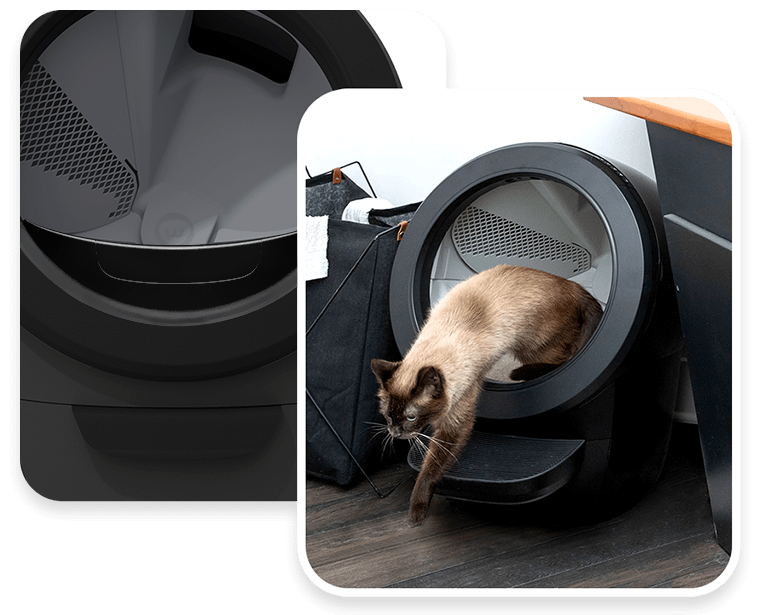
The manual's detailed cleaning procedure allows mild soap and water on the removable globe once you've emptied it, switched off, unplugged and taken out the carbon filter, and everything must be completely dry before reassembly. The base and control panel must never be sprayed, soaked or submerged, and bleach is ruled out for cleaning the base. Keep the bonnet dry as the safety instructions require. Different parts, different rules: a hose that's fine for a detached globe is no way to wash the whole robot.
There's another restriction around the Empty cycle: supervise it and keep the cat out, because detection can be affected when there's no litter in the globe. Set up a separate box during cleaning and drying instead of rushing damp parts back into service. Before you buy, work out where you'll handle a globe this size and how you'll dispose of the used litter. If cleaning a small tray already feels like a struggle, ask honestly whether this bigger assembly will be easier. Cutting down frequent scooping and doing an occasional deep clean are physically different jobs.
LitterHopper adds convenience and caveats
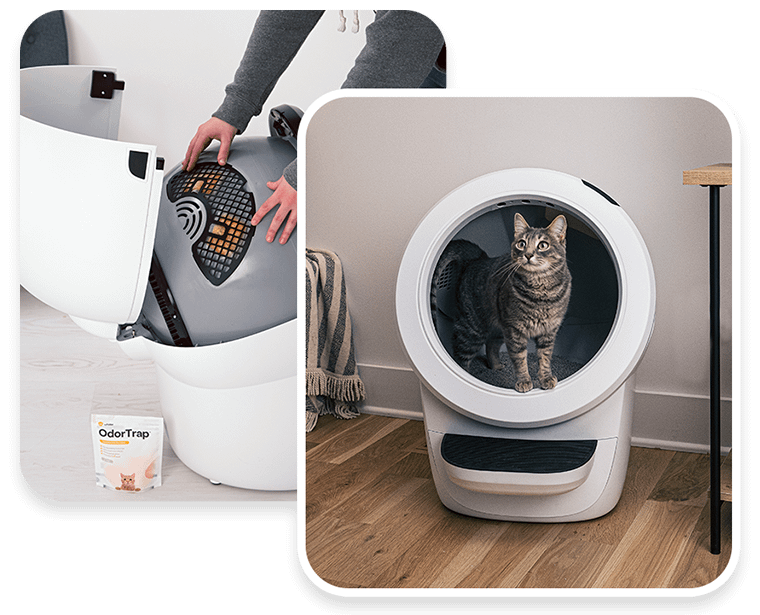
The LitterHopper is a separate refill accessory, not something the robot's automatic cleaning includes as standard. Whisker lists a 3.25-litre supply, an included replacement bonnet and a firmware update that's required before installation. It adds litter on a later clean cycle once the bed has dropped below the set level. That can cut down on topping up, but the hopper itself still needs filling and its dispensing area needs looking after.
Its restrictions deserve their own check. The current Canadian accessory page says it can't be used with the backup battery, and that weight-based identification doesn't work above 11.3 kg with the hopper fitted. Its one-year warranty is separate from the robot's extended plan. Compare the whole configuration rather than assuming every optional extra combines without a trade-off. Someone who prioritises backup power during outages faces a different decision from someone who mainly wants less manual refilling. Start with the basic machine and your household's real annoyance before paying for another mechanism.
Dated prices and a strict return policy
On 10 October 2026, the official stores listed starting prices of US$699 and CA$1,249, with one year of protection included; the three-year option added US$129 or CA$189 respectively. Those are dated listings, not currency conversions or a guarantee of what you'll pay later. Compare the included accessories and local terms when a retailer offers a bundle. A refill attachment, ramp, carpet tray or longer app history can push the total well past the headline price.
Whisker's Canadian return policy requires an authorisation, the original packaging, paid return shipping and a clean unit; direct-store returns go to the US, and a cleaning fee may apply. Third-party purchases follow the seller's own process. Keep the box during the trial and judge adoption early enough to act within the stated window. Litter-Robot 4 is most convincing when it takes a frequent, hated job off the list for cats that use it comfortably and an owner who can maintain it. It's less convincing when the household needs effortless individual identification, has nowhere practical to clean it or expects all litter care to become automatic.
The closest alternatives.
| Product | Standpoint Score | Best for | Price |
|---|---|---|---|
| Litter-Robot 4This review | 7.8Research | Homes with suitable adult cats, room beside a power outlet and a realistic deep-cleaning plan, where the goal is less… | Amazon.ca ↗ |
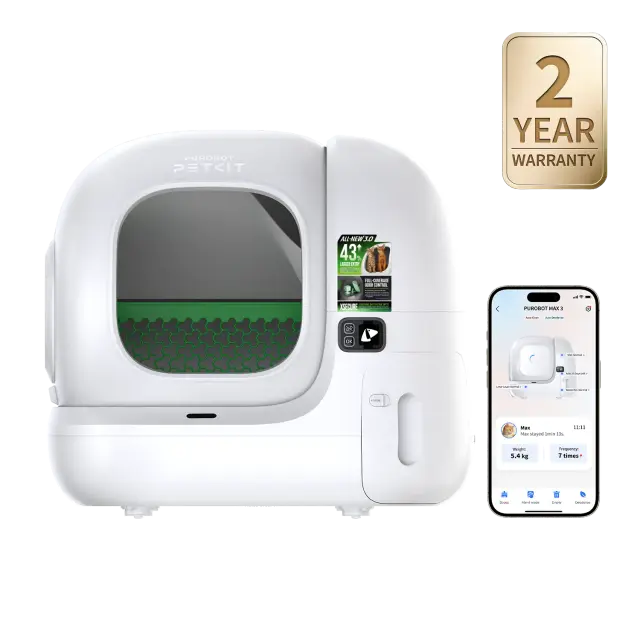
| PETKIT Purobot Max 3 | 7.6Research | Cats within the documented age and weight limits, in homes where a low entry and side waste bin fit the space. | Amazon.ca ↗ |
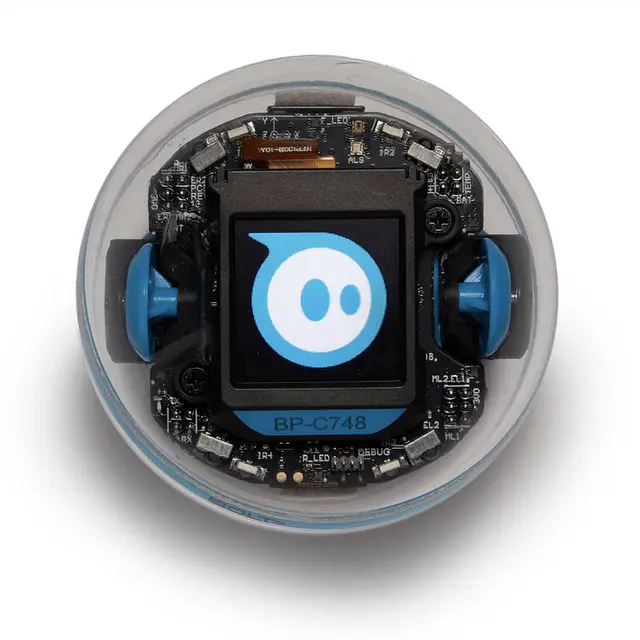
| Sphero BOLT+ | 8.2Research | Guided programming and sensor lessons where an on-robot display helps learners see and explain what their code is doing. | Amazon.ca ↗ |
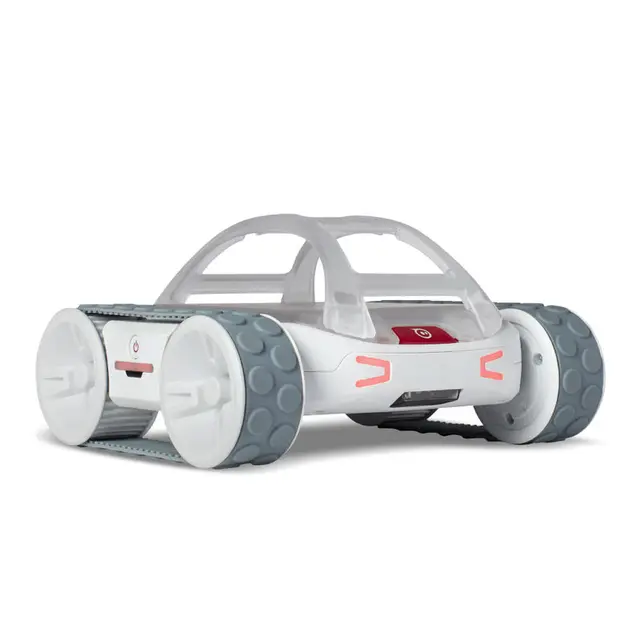
| Sphero RVR+ | 8.2Research | Makers and classrooms that want a ready-made, expandable chassis for sensor-driven mobile projects. | Amazon.ca ↗ |
Compare scores within a category: Tested means our own use, Research means documentation and attributed outside testing. Price links are affiliate links. As an Amazon Associate, Tech Standpoint earns from qualifying purchases. Disclosure
Sources & further reading.
These are the sources behind this research review. Manufacturer claims are not independent performance measurements. Community accounts, when cited, describe individual experiences.
- Litter-Robot 4 — current US specifications, contents and pricing ↗manufacturer
- Litter-Robot 4 — Canadian product and pricing ↗manufacturer
- Litter-Robot 4 — international user manual ↗manufacturer manual
- Acclimating cats — manufacturer introduction guidance ↗manufacturer
- Cycle delay — clumping trade-offs and settings ↗support
- Sensors — intended interruption behaviour ↗support
- SmartScale — identification limits and placement ↗support
- Laser sensors — cleaning instructions ↗support
- Red light — detection and troubleshooting ↗support
- Whisker+ — included features and paid history ↗manufacturer
- LitterHopper — installation and compatibility restrictions ↗manufacturer
- Canadian returns — authorization, shipping and condition ↗manufacturer
- Jessica Hartshorn — long-term Litter-Robot 4 review, updated August 2026 ↗independent hands-on review
Product software and regional bundles can change. Corrections and editorial disclosures.
Affiliate link. As an Amazon Associate, Tech Standpoint earns from qualifying purchases. It never changes our verdict or score. Disclosure