Not tested. This is a research score for the documented features, compatibility and ownership trade-offs discussed in this review, not a performance measurement.
Task capability 30%8.5
AWD and standard/high-cut variants address a broad range of lawns.
Navigation & control 20%8.4
Rich sensing concept, with navigation differences between variants.
Ownership & upkeep 20%7.1
Several sensors and version-specific parts increase maintenance and support complexity.
Setup & usability 15%7.5
Local sensing can ease setup, but exact model selection matters.
Documentation & support clarity 15%6.5
Variant footnotes and future software timing complicate the family claims.
Compare scores within the same product category. Small decimal differences should not override your needs or the evidence limits.
How the Standpoint Score works
We score five aspects of the documented product on a 0–10 scale, then calculate a weighted total:
- Task capability30% of the total
- Navigation & control20% of the total
- Ownership & upkeep20% of the total
- Setup & usability15% of the total
- Documentation & support clarity15% of the total
This product’s 7.8/10 is an editorial research assessment. It does not claim measured performance, tested reliability or a verified customer satisfaction rate. Compare it with products in the same category, and read each criterion’s reasoning above.
Read the full rubric and score bands ↗From a tech standpoint.
Buy a LUBA 3 AWD if your lawn has slopes, tree cover and narrow passages that justify all-wheel drive and multi-sensor navigation, and you have confirmed which positioning systems and which cutting-height range the exact variant in your cart actually has. Skip it for a small flat rectangle, where a simpler mower does the job for less, and never buy on the strength of a software feature the product page dates for later.
Reasons to consider it
- LiDAR, vision and NetRTK sensing across the range, with the 1500 footnoted as LiDAR and vision only
- Separate H variants cutting 2.2 to 4.0 inches against 1.0 to 2.7 on the standard models
- All-wheel drive for terrain, with IPX6 water resistance
Go in knowing
- The 1500's navigation differs from the 3000 and 5000; Tri-Fusion marketing covers the family, not every model
- Straight-line boundary adjustment is labelled a late-2026 feature, and other software carries rollout timing
- No traction, cut-consistency or reliability result exists here; it is documentation only
Affiliate link. As an Amazon Associate, Tech Standpoint earns from qualifying purchases. It never changes our verdict or score. Disclosure
The specification sheet.
Published specifications from the linked sources. Configurations and availability can differ by country.
- Drive
- All-wheel drive
- Navigation
- LiDAR and vision; NetRTK depends on version
- US variants shown
- 1500, 3000 and 5000; standard and H versions
- High-cut range advertised
- 2.2–4.0 in
- Standard range advertised
- 1.0–2.7 in
- Water resistance
- IPX6
One family name, two navigation packages
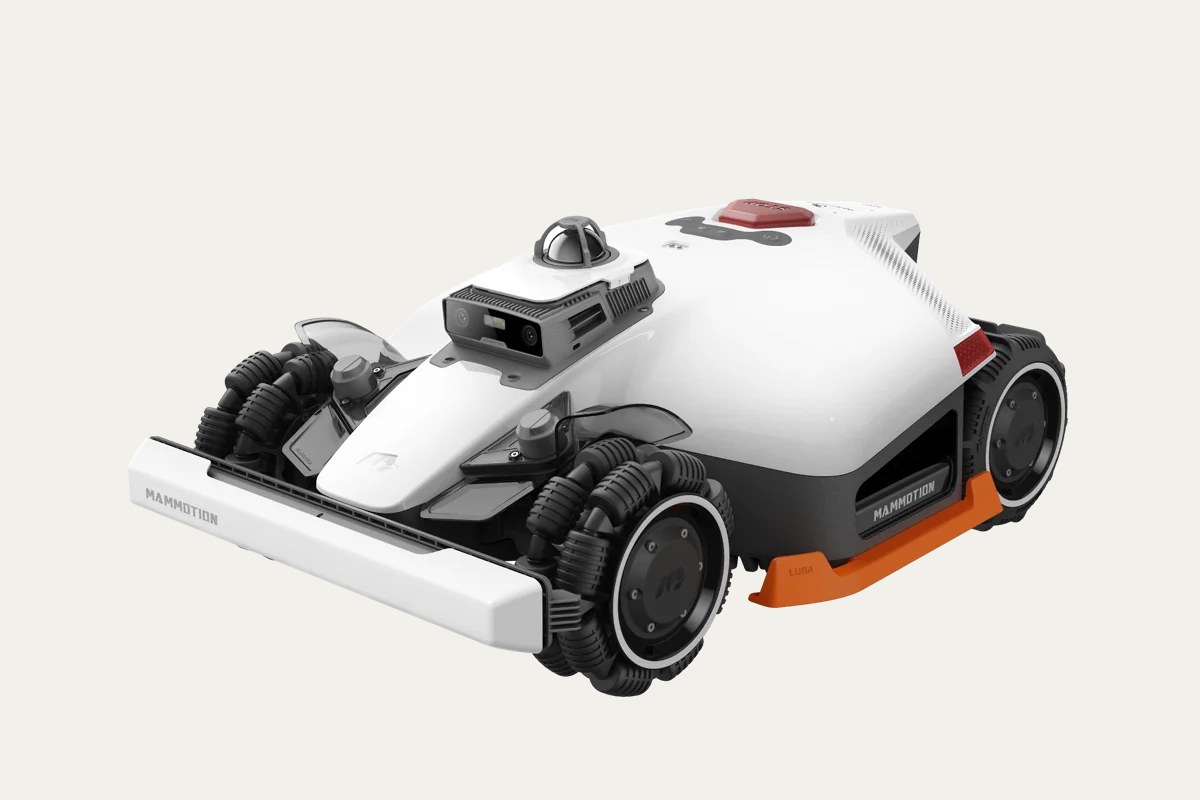
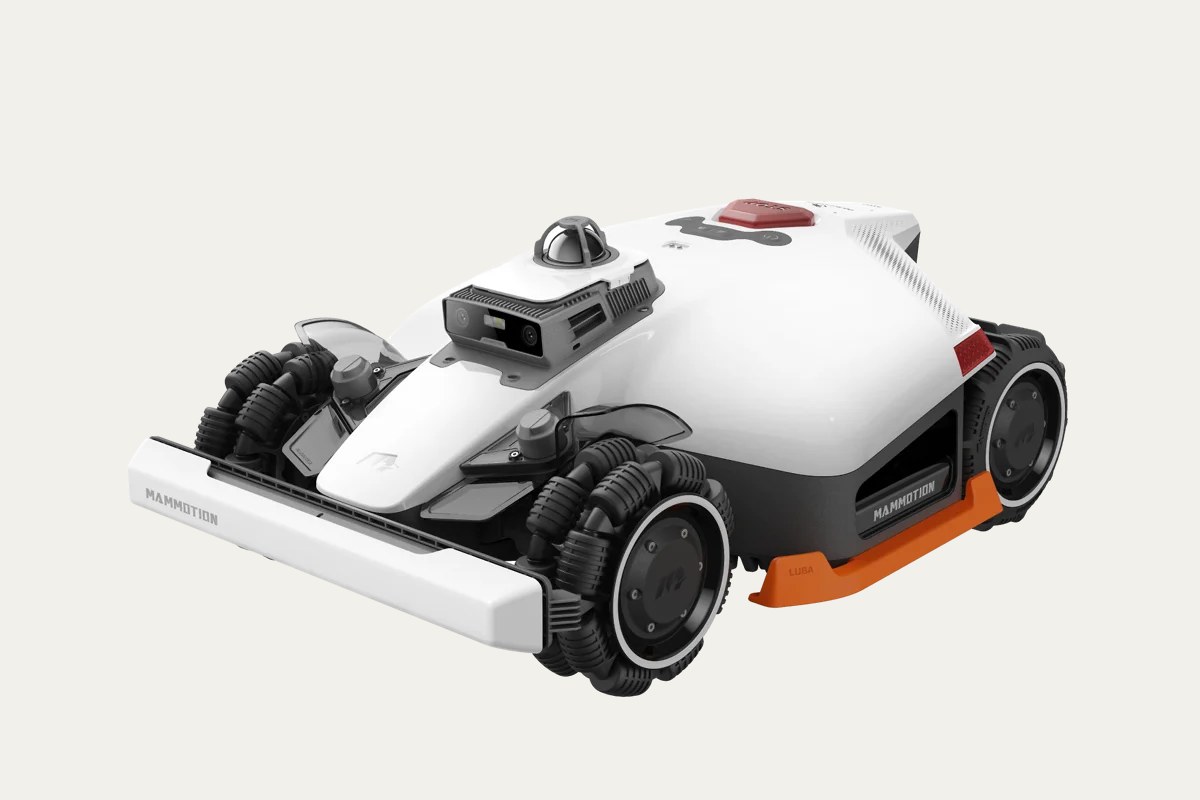
LUBA 3 AWD is not one specification. Mammotion's page promotes a Tri-Fusion combination of LiDAR, vision and NetRTK, then footnotes the 1500 as a LiDAR-and-vision model. That makes picking the version unusually important. Identify which positioning systems are actually in your cart before comparing the price with another mower. The smallest version is not a cheaper route to every flagship feature.
Cutting height needs the same care. Standard and H variants serve different lawn preferences, with published ranges of 1.0 to 2.7 inches and 2.2 to 4.0 inches. For North American owners who keep their grass taller, that distinction can matter more than any processing spec. An app setting cannot necessarily turn standard hardware into the high-cut version, so get the right machine at purchase.
More sensors need a reason
Combining local sensing with satellite correction is attractive because one property can hold several awkward environments: open grass, tree cover, narrow passages and the strip beside the house. The useful test is whether the mower moves between them without needing attention. Counting sensors does not prove recovery is smooth. The route that matters is from an open section into the least distinctive shaded section and back to the dock, and that is what a buyer should watch for during the return window.
AWD gives this LUBA its terrain identity, but grip and navigation are separate questions. A machine can know exactly where it is while spinning on soft turf, or climb confidently while needing a map correction. Both need checking. Tight turns beside beds and the stretches crossed repeatedly on the way to charge are where regular robotic traffic exposes weaknesses that a single demonstration pass hides.
Separate delivered software from the roadmap
The source page describes partial remapping and cloud map storage, and it labels straight-line boundary adjustment as a late-2026 feature. Other software text carries rollout timing too. Those promises should not be treated as present on a delivered machine. Save a copy of the feature list at purchase and ask support which firmware enables each function you need. The app you have today matters more than a diagram of the one you might get.
Live yard viewing and remote connectivity bring convenience and account responsibilities. Establish the included service periods and what survives when they end. The strongest reason to choose LUBA 3 over a simpler mini or YUKA is a lawn that actually uses its terrain and navigation capability. On a small flat rectangle, the extra systems add cost without saving proportionate time. A long-term verdict waits on cut consistency, intervention logs and service experience from the exact version.
An acceptance test before you trust it
A proper LUBA 3 check begins by recording the exact model and firmware, then confirming whether that unit uses NetRTK alongside local sensing. Run the same transition between open and shaded ground several times and note any pauses or boundary deviations. That keeps the judgement tied to the delivered variant rather than the family headline. Save the map before making a small boundary correction and see what recovery path the current app offers. That is more useful than assuming a promised editing tool will solve a present problem. The result you want combines consistent coverage with an understandable way to fix mistakes.
Setup, upkeep and the ownership decision
LUBA 3 ownership starts with a specification record. Photograph the model label, save the order's capacity and height variant, and note whether the delivered unit uses NetRTK. The 1500's footnoted LiDAR-and-vision arrangement should not be lost under the broader Tri-Fusion advertising. It matters during troubleshooting, because a network-correction question is different from a local-sensing problem. Record the firmware alongside any mapping error. With several variants and advertised software rollouts, a precise description gives support more to work with than a vague complaint that a LUBA 3 is misbehaving.
The map tools should make small garden changes cheap. Learn the current process for correcting one boundary and restoring an earlier configuration before making large edits. The page advertises cloud map storage, which also makes account access important: keep recovery details secure and decide how family members get permission. Do not assume the late-2026 editing promises are present until the delivered app shows them. A mower bought for a difficult landscape needs dependable existing controls; a roadmap does not protect a newly planted bed today.
Several sensors mean several surfaces and components to inspect. Follow the manual for cleaning the LiDAR window, cameras and body rather than reading IPX6 as permission for aggressive washing. On an AWD mower, wheel debris and material caught near the cutting system affect both traction and finish. Check the correct blades and fasteners after contact with rough ground. Sensor cleaning and underside maintenance deserve timing during an evaluation, because a capable navigation system can still demand regular attention on a dusty or sticky lawn. The maintenance burden cannot be read off the sensor list.
Set up remote live viewing deliberately. Decide whether the household wants camera access at all, who can use it and whether the view takes in neighbouring property. Confirm the service periods for remote connectivity and keep them separate from any positioning-service offer. The product's data handling has not been audited here. Before letting it work unattended, test local stopping, notifications and the response to an ordinary blocked route. Object-recognition claims are not permission to mow around people or pets; the working area still needs the separation the instructions require.
The ownership comparison should include the exact battery, wheel and disc replacement route. Mammotion's similarly named generations make vague accessory listings risky. Ask the local seller how repairs are handled and where the mower has to be shipped, especially for a Canadian purchase sourced from US advertising. A full-size LUBA is easiest to justify when its sensors, drive and area capacity all answer real needs. On an uncomplicated property, money spent on a clear repair arrangement and adequate scheduling margin may be worth more than the most elaborate specification in the family.
Putting it away and bringing it back
Before storing LUBA 3, record the exact firmware and map configuration and follow the battery guidance for the delivered variant. When it comes back out, verify current app functions rather than assuming a promised roadmap feature has arrived. Inspect the LiDAR and camera surfaces and recheck boundaries changed by seasonal growth or landscaping. If a remote-service offer changes during storage, separate its effect on monitoring from any positioning requirement. That keeps spring troubleshooting tied to the actual unit and its current services.
The closest alternatives.
| Product | Standpoint Score | Best for | Price |
|---|---|---|---|
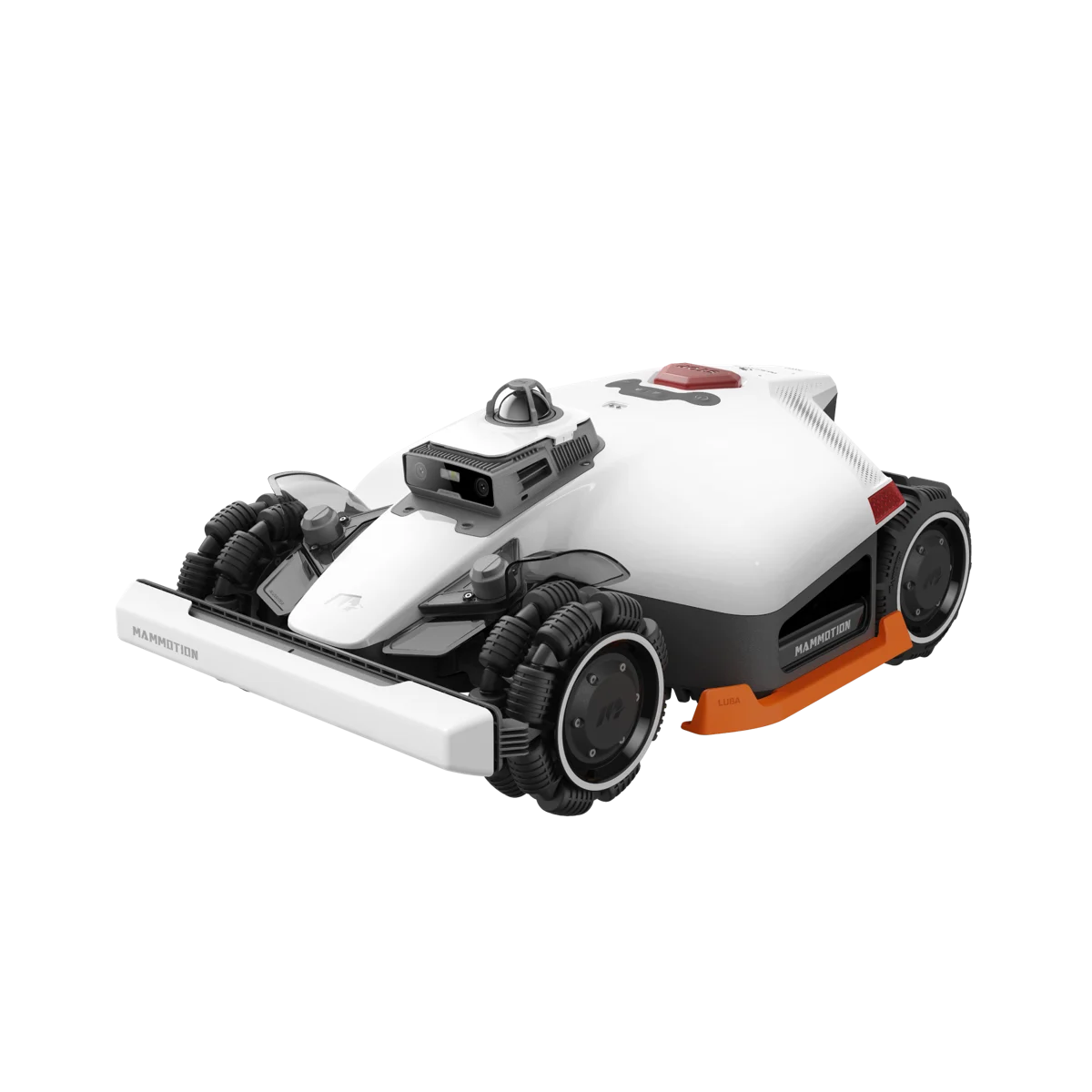
| Mammotion LUBA 3 AWDThis review | 7.8Research | A complex lawn where AWD is useful and the buyer is prepared to verify the navigation and height specification of the… | Amazon.ca ↗ |
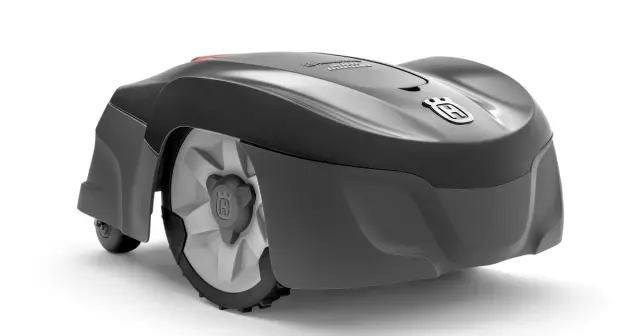
| Husqvarna Automower 115H Bluetooth | 6.1Research | A modest, settled lawn where a supported used mower costs substantially less than a new installation. | Amazon.ca ↗ |
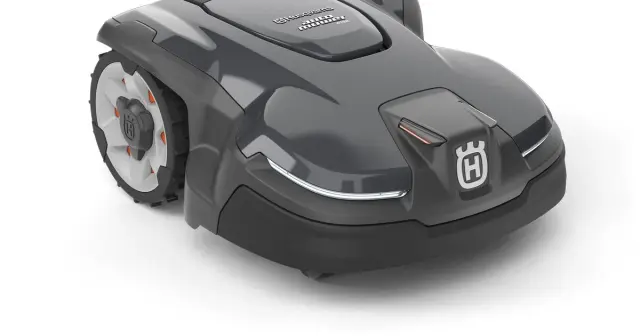
| Husqvarna Automower 415X | 6.6Research | Owners of a small or medium established wired lawn who want connected control and a documented support path. | Amazon.ca ↗ |
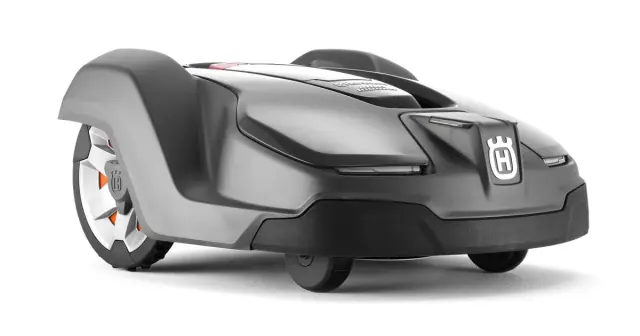
| Husqvarna Automower 430X | 6.7Research | A larger established wired garden whose owner has access to a competent Automower service dealer. | Amazon.ca ↗ |
Compare scores within a category: Tested means our own use, Research means documentation and attributed outside testing. Price links are affiliate links. As an Amazon Associate, Tech Standpoint earns from qualifying purchases. Disclosure
Sources & further reading.
These are the sources behind this research review. Manufacturer claims are not independent performance measurements. Community accounts, when cited, describe individual experiences.
Product software and regional bundles can change. Corrections and editorial disclosures.
Affiliate link. As an Amazon Associate, Tech Standpoint earns from qualifying purchases. It never changes our verdict or score. Disclosure