An editorial assessment of documented capabilities and ownership trade-offs. This is not a hands-on test result or a measurement of reliability.
Features & capability 30%8.8
High-resolution stills, 10-bit video and flexible control modes support genuine hybrid work.
Compatibility & connectivity 20%8.7
E mount, dual SD support, optional Type A media and several connection routes offer breadth.
Ownership & upkeep 20%7.6
Documented support and shared batteries help, but demanding formats add storage and media costs.
Setup & everyday use 15%8.2
A rotating screen and separate mode selector improve mixed-workflow usability.
Documentation & support clarity 15%8.9
Detailed mode specifications and a 2026 firmware listing support informed setup.
Compare scores within the same product category. Small decimal differences should not override your needs or the evidence limits.
How the Standpoint Score works
We score five aspects of the documented product on a 0–10 scale, then calculate a weighted total:
- Features & capability30% of the total
- Compatibility & connectivity20% of the total
- Ownership & upkeep20% of the total
- Setup & everyday use15% of the total
- Documentation & support clarity15% of the total
This product’s 8.5/10 is a provisional research assessment. It does not claim measured performance, tested reliability or a verified customer satisfaction rate. Compare it with products in the same category, and read each criterion’s reasoning above.
Read the full rubric and score bands ↗The ownership case.
A well-rounded documented platform for photographers who genuinely alternate stills and video. The best purchase includes compatible cards, editing software and a clear understanding of recording modes.
Reasons to consider it
- Separate still/movie/S&Q control supports mixed assignments
- 10-bit recording options offer a more flexible grading workflow
- Two UHS-II slots and optional Type A media allow tailored storage
Go in knowing
- Recording modes have different crop, card and processing requirements
- CFexpress Type A is not interchangeable with Type B
- Higher-resolution stills and demanding codecs increase computer and storage needs
The specification sheet.
Published specifications from the linked sources. Configurations and availability can differ by country.
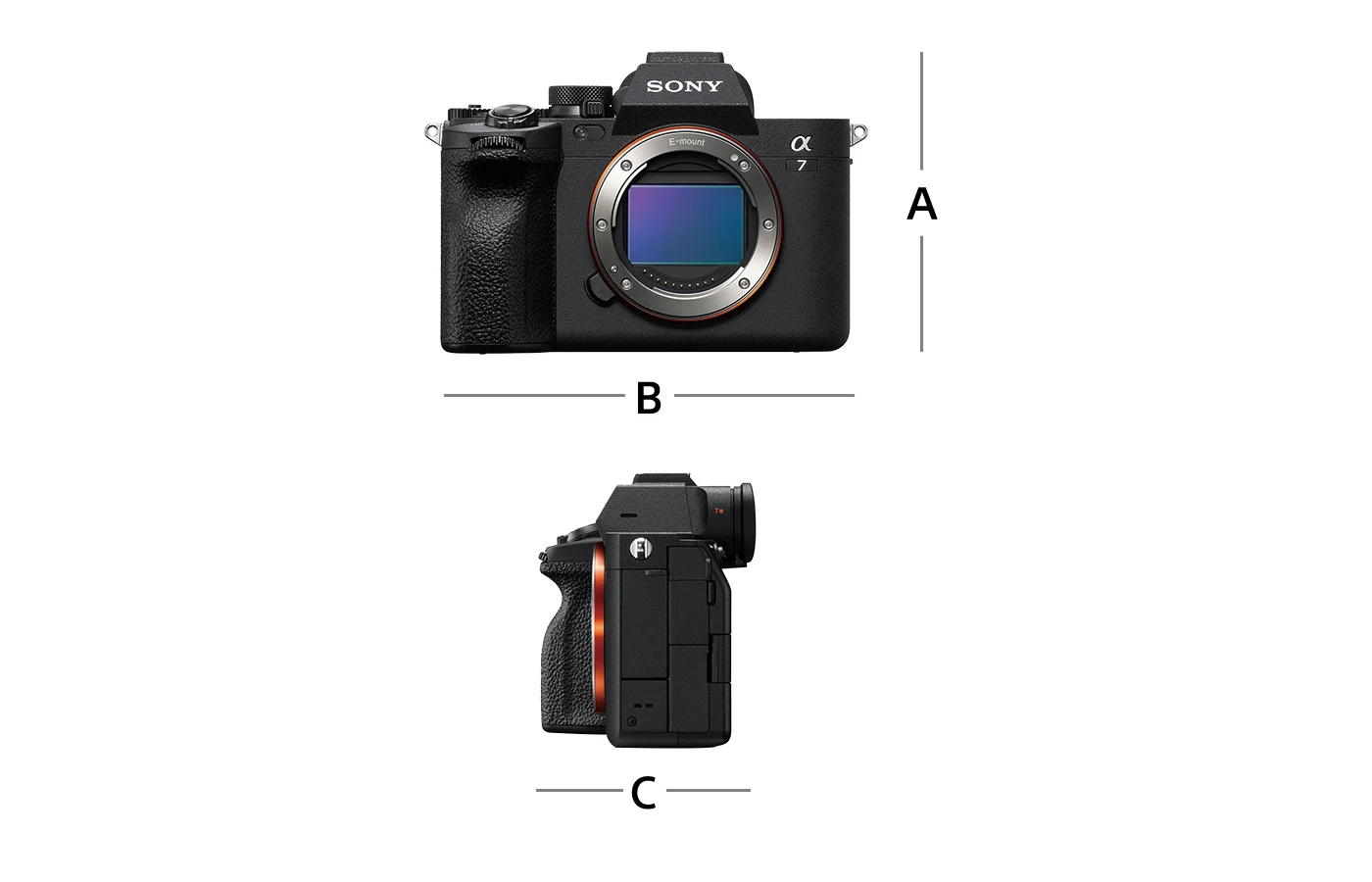
- Sensor
- 33 MP full-frame Exmor R CMOS
- Processor
- BIONZ XR
- Video capability
- 4K up to 60p; 10-bit 4:2:2 modes, with mode-specific conditions
- Stabilization
- Five-axis sensor-shift system
- Media
- Two UHS-II SD slots; slot 1 also accepts CFexpress Type A
- Screen
- Side-opening, rotating 3-inch touchscreen
- Battery
- NP-FZ100 with USB-C Power Delivery support
The reason to choose this hybrid is the change of jobs
The Alpha 7 IV is most convincing when the same camera genuinely needs to move between still photography and video. A business owner making product photographs and demonstrations, or a creator delivering both portraits and interviews, can benefit from a shared lens system and familiar controls. Someone who almost never records video should decide whether those capabilities justify their cost. The body is not automatically a better purchase simply because its specification sheet covers more kinds of production.
The separate still, movie and S&Q selector is a useful expression of that mixed role. It encourages the owner to think about different operating setups rather than repeatedly rebuilding one configuration. Before buying used, try switching through the tasks you actually perform. Check where exposure, focus and audio settings live and whether the layout feels clear. This review evaluates documented functionality and ownership considerations; it does not present measured autofocus, noise, stabilization or thermal results.
Thirty-three megapixels require a useful destination
Sony's 33-megapixel full-frame sensor offers more cropping and output flexibility than a modest-resolution body, while remaining below the company's most resolution-focused cameras. The benefit depends on the photograph. Detailed product work, portraits with alternative crops and larger prints can give the extra information a purpose. Casual images sent at small sizes may benefit less. Compare complete exports rather than assuming a higher-resolution capture will be visibly superior in every setting.
The files also need a comfortable place to go. Try representative RAW files in the editor and computer you plan to use, then consider backup space over several years. The lens, shutter speed and focusing technique still influence how much useful detail reaches the file. In-body stabilization can help with camera movement, but it cannot prevent a person from moving during an exposure. A disciplined working setup may improve results more than using the largest file option indiscriminately for every photograph.
Subject recognition still needs deliberate selection
The documented autofocus system includes recognition options for people, animals and birds in both stills and movies. That breadth is useful for a photographer whose work changes frequently, but it is not a measured success rate. Choosing the intended subject, arranging the focus area and selecting appropriate transition behaviour remain important. A crowd with several faces or a bird partly hidden by branches can require more intervention than a clean demonstration scene.
For video, smooth-looking focus movement can be more desirable than the fastest possible change. Sony provides controls that allow the user to shape that behaviour, so rehearse the intended shot instead of leaving every setting at a default. For stills, test a sequence with the exact lens you will use. The maximum ten-frame-per-second specification has qualifications and should not be confused with unlimited performance in every RAW format. An informed buyer checks the settings that produce the advertised behaviour and decides whether those settings fit the work.
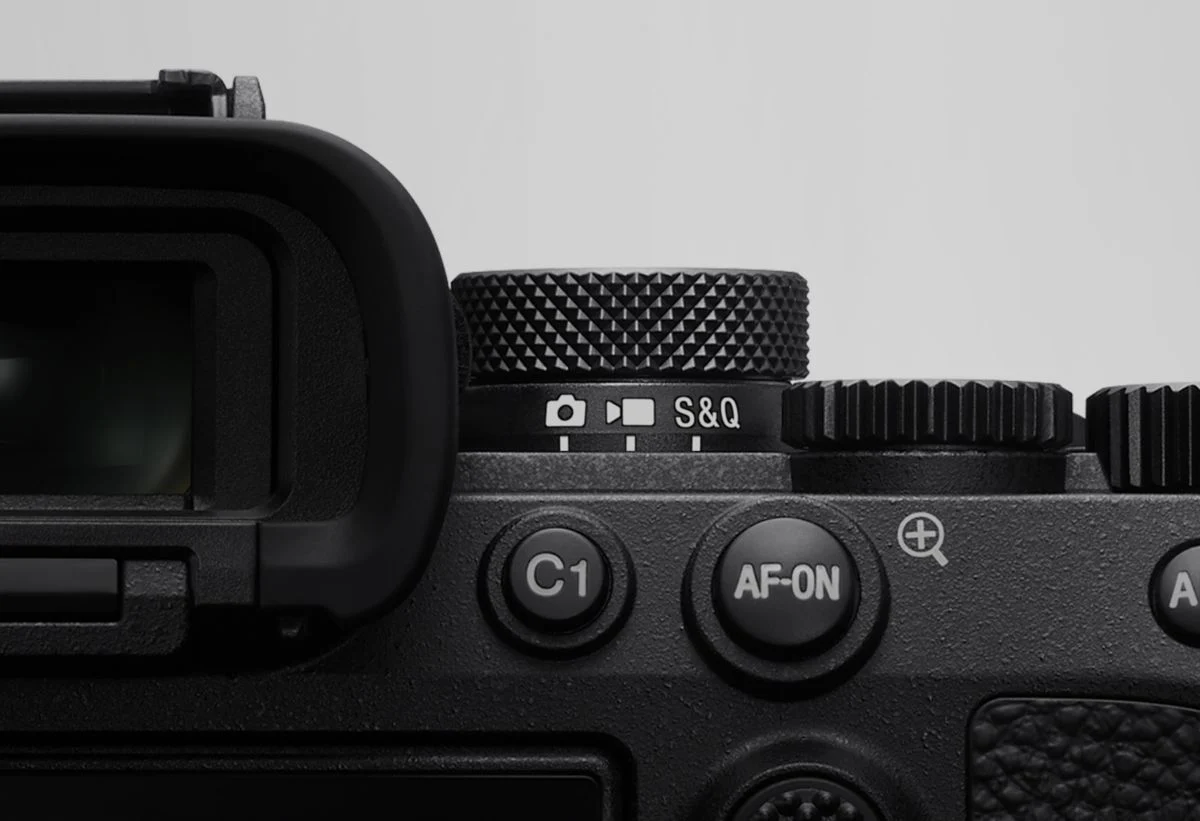
Ten-bit video is valuable only in a compatible workflow
The A7 IV documents 10-bit 4:2:2 recording modes and 4K frame rates up to 60p, with conditions attached to each combination. Resolution, frame rate, crop, compression and recording destination must be considered together. Do not assume that a lens giving the desired view in one mode will frame identically in another. A creator working in a small room should verify the intended mode before buying a lens that only just fits the scene.
More flexible files can also be harder for an older computer to play smoothly. Check codec support and whether proxies or transcoding will be part of the routine. Colour profiles should match the delivery plan: choosing a log profile adds exposure and grading decisions, while a simpler profile can reduce turnaround for straightforward material. We have not established real-world recording endurance or heat behaviour. A complete trial should include the planned clip duration, audio, transfer and export rather than stopping when the red recording indicator appears.
The card system rewards reading the small print
Both slots support UHS-II SD, and the first can also accept CFexpress Type A. That provides options, but the similarly named Type B card is a different format. Buying the wrong CFexpress family is an avoidable and potentially expensive mistake. Match the exact recording mode to Sony's media requirements before purchasing cards. An owner shooting ordinary stills may not need the same storage investment as someone selecting a demanding video format or pursuing maximum burst behaviour.
The recording arrangement should be just as deliberate. Simultaneous recording, sorting and automatic switching serve different goals. Verify that the chosen setup actually creates the copies expected for an important assignment. Inspect both slots on a used body and transfer test files from each. After a shoot, move the material into independent storage before reusing cards. The A7 IV's flexibility is useful because it lets the owner choose a workflow; it does not choose or validate a backup policy on the owner's behalf.
Screen, sound and power change the physical rig
The side-opening rotating screen is more adaptable for self-framing than a simple rear tilt mechanism. It can also interact with cables and mounting accessories, so test it with the intended microphone, monitor or cage rather than in isolation. The camera includes microphone and headphone connections and a Multi Interface Shoe with documented digital-audio compatibility. Check the exact accessory pairing; a shared shoe shape does not prove that every audio function is available with every microphone.
The NP-FZ100 battery and USB-C Power Delivery support create several power options. For longer sessions, consider cable strain and where a supply will be secured. A dangling power bank can make a compact rig awkward or threaten a connector if it is pulled. A used purchase should include a healthy, identifiable battery and a charging arrangement appropriate to the region. Test the actual ports and cables before relying on external power at an event. A published power feature does not establish the health of a particular socket.
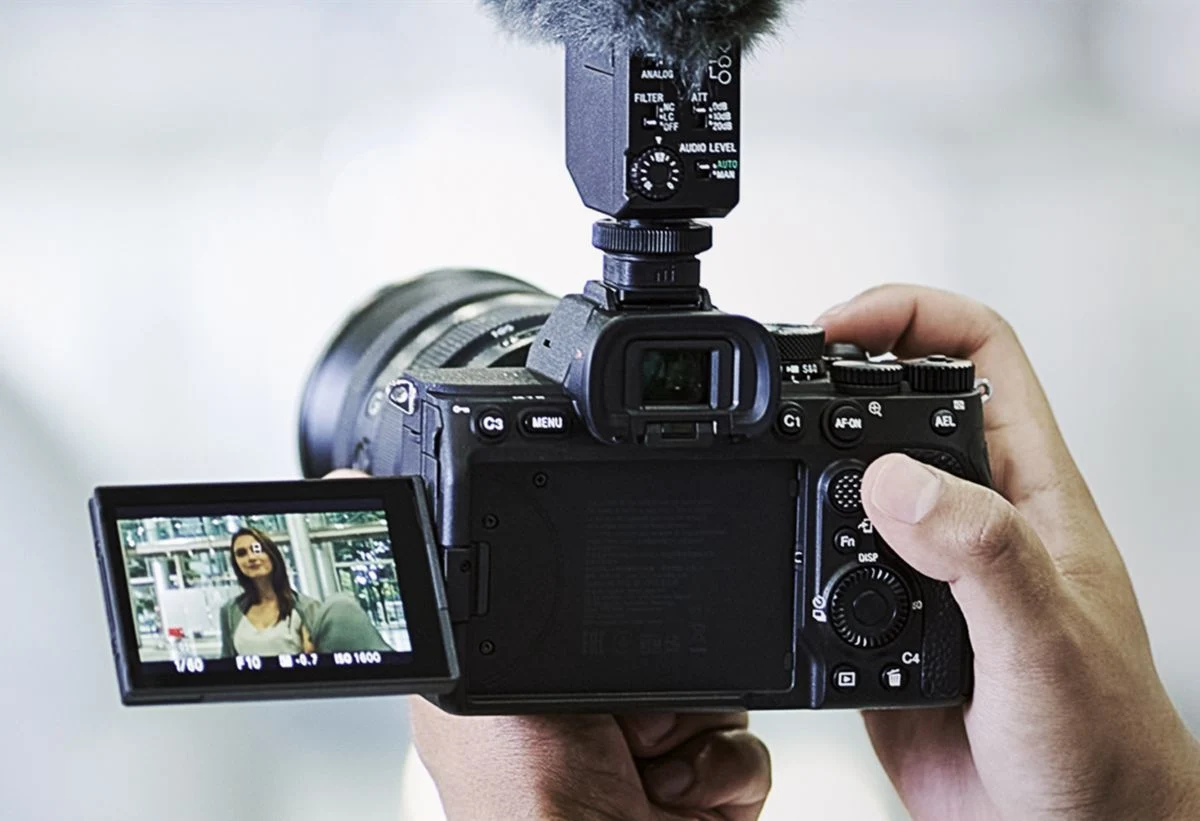
A used hybrid needs more than a shutter-count check
A camera that has spent much of its life recording video may show a different pattern of wear from one used mainly for stills. Inspect the screen hinge, ports, hot shoe, tripod socket and controls as carefully as the shutter history. Look for damaged covers and evidence that cables have been stressed. Ask about repairs and the original purchase territory. Take stills and record video during inspection, then verify that files open normally on another device.
Maintenance should focus on protecting the system rather than attempting unnecessary intervention. Keep the mount clean during lens changes, protect the camera from moisture and follow Sony's guidance for sensor cleaning. Dust and moisture resistance is not permission to treat an older body as waterproof. For Canadian and US buyers, confirm local service eligibility and any warranty terms for the exact example. An attractive overseas listing does not establish that the camera has local coverage or that a secondhand sale transfers the original rights.
Current support and the final ownership calculation
Sony's download page lists firmware 6.02 dated May 28, 2026, alongside current applications and product alerts. Check the installed version and the required update path instead of assuming that any older firmware can be replaced in one step. App compatibility can also depend on camera firmware and the phone's operating system. A current support listing is useful evidence, but it should not be interpreted as a guarantee of future features or indefinite service availability.
The A7 IV deserves consideration when its hybrid controls and recording options remove a real workflow limitation. Add up lenses, cards, power, storage and editing requirements before comparing it with a less expensive body. If video is occasional and simple, a smaller investment may leave more room for lighting or sound equipment. If switching between detailed stills and graded video is routine, the documented design has a coherent purpose. Buy the complete working setup, and judge the particular used unit by evidence rather than by the reputation of the model alone.
Sources & further reading.
These are the sources behind this research review. Manufacturer claims are not independent performance measurements. Community accounts, when cited, describe individual experiences.
- Sony Alpha 7 IV specifications ↗manufacturer
- Sony Alpha 7 IV feature overview ↗manufacturer
- Sony ILCE-7M4 current downloads ↗support
Documentation reviewed: 9 October 2026. Product software and regional bundles can change. Corrections and editorial disclosures.