An editorial assessment of documented capabilities and ownership trade-offs. This is not a hands-on test result or a measurement of reliability.
Task capability 30%8.0
The focused design makes sequencing and cause-and-effect approachable.
Navigation & control 20%7.7
Tile instructions and optional blocks provide a clear progression.
Ownership & upkeep 20%8.0
Simple hardware helps, with tiles and charging still to manage.
Setup & usability 15%8.7
Screen-free entry removes much initial software friction.
Documentation & support clarity 15%8.5
Official guides and compatibility material match the stated audience.
Compare scores within the same product category. Small decimal differences should not override your needs or the evidence limits.
How the Standpoint Score works
We score five aspects of the documented product on a 0–10 scale, then calculate a weighted total:
- Task capability30% of the total
- Navigation & control20% of the total
- Ownership & upkeep20% of the total
- Setup & usability15% of the total
- Documentation & support clarity15% of the total
This product’s 8.1/10 is a provisional research assessment. It does not claim measured performance, tested reliability or a verified customer satisfaction rate. Compare it with products in the same category, and read each criterion’s reasoning above.
Read the full rubric and score bands ↗The ownership case.
Indi is a well-defined candidate for guided early learning through physical sequences and visible cause and effect.
Reasons to consider it
- Screen-free starting point
- Visible physical instructions
- Optional block-programming progression
Go in knowing
- Limited mechanical-building scope
- Tiles and accessories need organisation
- Learning depends on activity design
The specification sheet.
Published specifications from the linked sources. Configurations and availability can differ by country.
- Instruction medium
- Colour tiles
- Optional app
- Sphero Edu Jr
- Charging
- USB
- Published audience
- Early learners / PK–3
Colour tiles put the programme on the floor
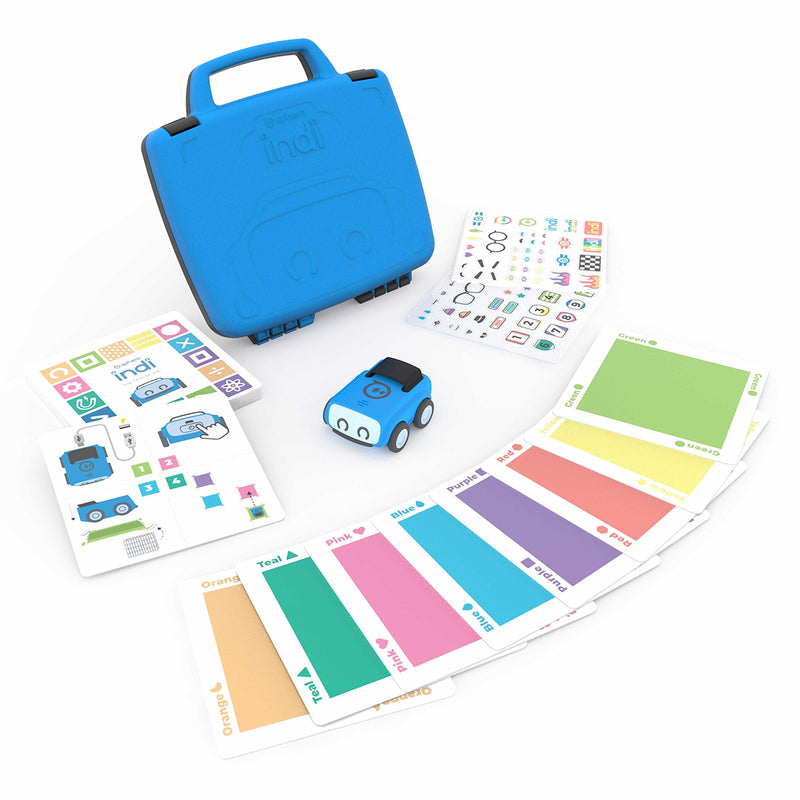
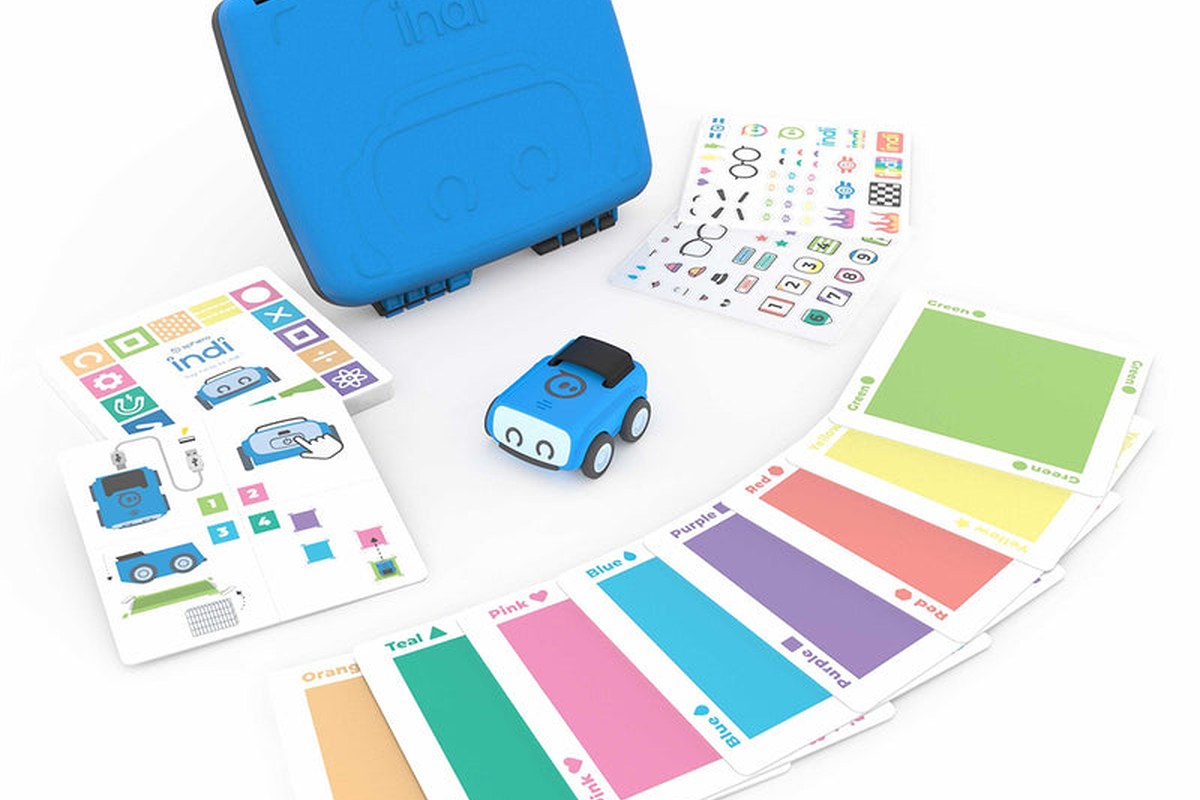
Indi turns a simple idea into a physical learning tool: coloured tiles act as instructions that change the robot's behaviour as it passes over them. Sphero positions it for early learners, with screen-free play first and an optional transition to simplified block programming in Sphero Edu Jr. That is a distinctive educational proposition because the programme is visible in the room rather than hidden on a tablet. Learners can move an instruction, predict the result and watch what changes. The robot does not independently teach computational thinking; an adult or a thoughtfully designed challenge gives the activity purpose. We have not tested indi with children. This review considers the documented mechanism and what a useful learning experience would require.
The strongest lesson is cause and effect
A beginner can see that changing the order or placement of tiles changes the route. That provides a concrete way to discuss sequence, prediction and debugging without requiring reading fluency or typing. The most useful activity asks the child to explain what will happen before pressing ahead, then compare that prediction with the robot's movement. Simply building a colourful track can be enjoyable, but it may not develop the same reasoning. An adult can vary one instruction at a time and invite the learner to identify the difference. Indi's appeal lies in making that experiment approachable. A successful purchase should be judged by the quality of repeated interaction, not by whether a child smiles during the first demonstration.
A course is a physical programme
The floor layout introduces useful practical constraints. Tiles need to be placed where the sensor can read them and where the robot can travel predictably. Gaps, uneven surfaces, lighting and accidental movement of the course can change results. Rather than treating every unexpected turn as a failure, use it to distinguish a programme error from a physical setup problem. That is an early version of an important robotics lesson: correct logic still interacts with imperfect conditions. Keep the activity area clear and use surfaces permitted by the instructions. We have not measured colour recognition or motion consistency. The adult should be ready to simplify a course when the environment creates more confusion than useful challenge.
Screen-free does not mean structure-free
One of indi's advantages is that a learner can begin without an app. That reduces account setup, screen management and the temptation to turn the activity into passive viewing. It does not remove the need for a sequence of challenges. Start with a short predictable route, then introduce a turn, a choice or a repair to a broken course. Ask the learner to describe the route in ordinary language before building it. The robot can also support storytelling or a classroom routine, provided the coding relationship remains visible. Avoid assuming that every game involving an educational robot automatically teaches a transferable skill. The value comes from connecting the physical play to a clear idea the learner can explain and reuse.
The app should extend a familiar idea
Sphero Edu Jr allows learners to change responses through simplified blocks. That can be a useful next step when the child already understands the relationship between tile and action. Introducing the screen too early may obscure the very simplicity that makes indi appealing. Confirm current device compatibility and the exact features available before promising a particular activity. A shared classroom tablet may work well if pairing and permissions are prepared in advance. We would evaluate whether the transition helps learners express something they could not do with the default behaviours, rather than merely adding a screen because it exists. The app is an extension of the physical learning model, not necessarily the starting point or the reason every family should buy the robot.
Age fit is more than the label on a box
Sphero places indi in an early-learning range, but children's motor skills, attention, interests and experience vary. Some may enjoy arranging tiles repeatedly; others may prefer building mechanisms or more open-ended coding. An adult should observe whether the challenge is engaging without becoming either trivial or overwhelming. Small accessories and charging equipment require the supervision specified by the manufacturer. A robot marketed for young learners is still an electronic device, not something to throw, immerse or leave in unsuitable play conditions. We have not assessed developmental outcomes. The appropriate question is whether this particular interaction format helps the intended learner explore sequencing and problem solving with support, rather than whether the product guarantees an educational advantage.
Class kits and single kits are different purchases
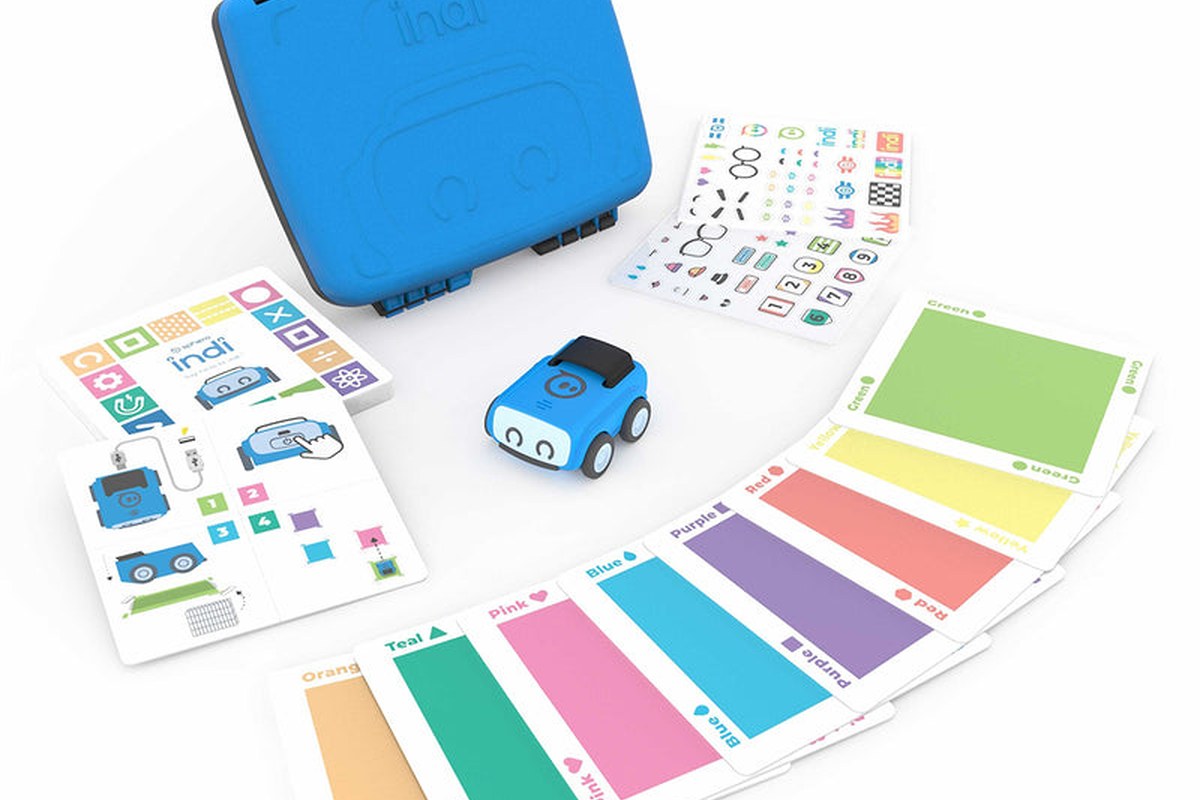
Indi is offered in individual and classroom configurations with different quantities of robots, tiles, mats, cards and storage. Those bundles should not be mistaken for different robot models. Check the actual contents against the intended group size. Two learners sharing one robot can collaborate if roles rotate, but a larger group may spend much of the lesson waiting. Plan how tiles are counted and stored so the next session begins with a complete set. Verify charging capacity for the number of robots, not just whether each individual unit includes a cable. The official page's stock or backorder status should also be checked at purchase; a curriculum plan should not depend on an assumed delivery date.
Maintenance and the cost of missing pieces
Indi's ownership routine is relatively modest, but the learning system includes more than the robot. Tiles, challenge cards and charging equipment can be misplaced or damaged. Ask whether replacements are available individually and how the robot is serviced if its battery no longer supports a full session. Clean the sensing and drive surfaces only as directed. In a classroom, a simple check-in routine can prevent one missing component from undermining the next lesson. Compare indi with BOLT+ or mBot2 if the learner is already ready for broader programming or construction. Indi's deliberately limited starting language is an advantage for some users and a ceiling for others. Buying beyond that fit does not automatically create a longer-lasting learning experience.
Our research verdict
Indi is a well-defined candidate for guided early learning through physical sequences and visible cause and effect. It is less suitable when the primary goal is mechanical construction or advanced programming from the outset. We have not observed real learners using it or verified recognition and battery performance. A useful trial would ask a child to predict a route, repair an intentional mistake and invent a small variation without simply copying an adult. Record how much help and setup are required. Those observations reveal more than a catalogue of activities. The product's value is strongest when its simple interaction becomes a repeatable way to think, explain and experiment, rather than a colourful track that is assembled once and stored away.
Sources & further reading.
These are the sources behind this research review. Manufacturer claims are not independent performance measurements. Community accounts, when cited, describe individual experiences.
- Sphero indi — official product information ↗manufacturer
Documentation reviewed: 9 October 2026. Product software and regional bundles can change. Corrections and editorial disclosures.