Not tested. This is a research score for the documented features, compatibility and ownership trade-offs discussed in this review, not a performance measurement.
Features & capability 30%8.7
Fastest base MacBook Pro yet, with about 18 per cent more multi-core speed than the M5 in Tom's Guide and TechRadar tables, a bright XDR display and the longest measured battery time among the laptops compared.
Compatibility & connectivity 20%8.5
Three Thunderbolt 4 ports, HDMI, SD slot, MagSafe and Wi-Fi 7, though Thunderbolt 5 and the OLED touchscreen stay on the pricier M5 Pro and M5 Max models.
Ownership & upkeep 20%7.4
Memory and storage are soldered, upgrades cost more than ever per Tom's Hardware, and the C$2,799 base price sits C$1,000 above the MacBook Air. Warranty and AppleCare terms for Canada couldn't be confirmed.
Setup & everyday use 15%8.6
Familiar macOS 27 body with a comfortable keyboard, large trackpad and sharp webcam praised across reviews; the notch and dated design are the only repeated complaints.
Documentation & support clarity 15%8.2
Apple's Canadian spec page is complete and clear, and four outlets published numbers, but battery claims come from preproduction units and several outlets share one lab.
Compare scores within the same product category. Small decimal differences should not override your needs or the evidence limits.
How the Standpoint Score works
We score five aspects of the documented product on a 0–10 scale, then calculate a weighted total:
- Features & capability30% of the total
- Compatibility & connectivity20% of the total
- Ownership & upkeep20% of the total
- Setup & everyday use15% of the total
- Documentation & support clarity15% of the total
This product’s 8.3/10 is an editorial research assessment. It does not claim measured performance, tested reliability or a verified customer satisfaction rate. Compare it with products in the same category, and read each criterion’s reasoning above.
Read the full rubric and score bands ↗From a tech standpoint.
Buy the M6 14-inch if you're replacing an Intel Mac or an M1 or M2 laptop and you want a screen, ports and battery that the MacBook Air can't match. Skip it if you already own an M4 or M5 Pro, because every outlet we read called this a modest update. Spend the extra C$300 on 24GB of memory if you plan to run local AI models or keep the laptop beyond four years. If you don't need HDMI, an SD slot and a fan, the C$1,799 MacBook Air is the better value. This verdict rests on Apple's own pages and on outside testing; nobody at Tech Standpoint has used the laptop.
Reasons to consider it
- Tom's Guide and Tom's Hardware both measured 19 hours 5 minutes on their web battery test, an hour more than the M5 model, so the charger can stay in the bag on most working days
- Unlike the MacBook Air, it has HDMI, an SD card slot and three Thunderbolt ports built in, so photographers and video editors can skip the dongle bag
- The M6 chip beat the M5 by roughly 18 per cent in multi-core Geekbench 6 at both Tom's Guide and TechRadar, and finished a 4K to 1080p transcode in 2:50 against 3:31
- Apple.ca and Best Buy Canada both list the same C$2,799 starting price, so there's no pricing premium for buying the new chip
Go in knowing
- 16GB is the base memory and it can't be upgraded later; Geek Culture could only load models up to 7 billion parameters in a local AI test on this configuration
- The body, notch and display are unchanged from the M5 and earlier; Tom's Hardware and Tom's Guide both call the design dated next to the new OLED Pro
- Thunderbolt 4 only; Thunderbolt 5 is limited to the M5 Pro and M5 Max models, and the nano-texture screen adds C$225
- The price now sits C$1,000 above the 13-inch MacBook Air, and Tom's Guide calls it the odd one out in Apple's lineup
Affiliate link. As an Amazon Associate, Tech Standpoint earns from qualifying purchases. It never changes our verdict or score. Disclosure
The specification sheet.
Published specifications from the linked sources. Configurations and availability can differ by country.
- Chip
- Apple M6, 12-core CPU (2 super, 4 performance, 6 efficiency cores), 12-core GPU, 16-core Neural Engine pair
- Memory
- 16GB base (153GB/s); 24GB or 32GB options (170GB/s), soldered
- Storage
- 1TB base; 2TB or 4TB options
- Display
- 14.2-inch Liquid Retina XDR, 3024 x 1964, 120Hz ProMotion, 1,000 nits sustained, 1,600 nits HDR peak; nano-texture optional
- Ports
- 3 x Thunderbolt 4, HDMI, SDXC card slot, 3.5 mm headphone jack, MagSafe 3
- Battery (Apple claim)
- 72.4 Wh; up to 24 hours video streaming, up to 16 hours wireless web (preproduction units)
- Wireless
- Wi-Fi 7 and Bluetooth 6 (Apple lists Wi-Fi 7 availability as varying by country)
- Weight
- 1.55 kg (3.4 lb); 70W adapter in the box
- Canadian price (Nov 15, 2026)
- From C$2,799 at Apple.ca and C$2,799.99 at Best Buy Canada (16GB/1TB); nano-texture C$3,024 at Apple.ca; 24GB C$3,099.99 and 32GB C$3,399.99 at Best Buy Canada
- Availability
- Pre-orders opened Oct 28, 2026; on sale Nov 6, 2026
The base price held at C$2,799. Is that a bargain or a ceiling?
Apple.ca lists the 14-inch MacBook Pro with the M6 chip from C$2,799 before tax. That gets you 16GB of memory and a 1TB drive in either Silver or Space Black. Best Buy Canada lists the same configuration at C$2,799.99, so there's no retailer discount to hunt for yet, and the nano-texture screen adds C$225 at Apple.ca. iPhone in Canada reports that C$2,799 matches what the M5 version sold for after Apple's June price increases in Canada, so the new chip arrives without another bump.
The US picture explains why the number feels high. Tom's Guide notes that the M5 14-inch started at US$1,599 a year ago and the M6 now starts at US$1,999, which they pin on memory and storage costs. TechRadar adds that the M5 model had already been raised earlier in 2026, and treats holding at US$1,999 as good news. Tom's Hardware blames industry-wide memory and storage price hikes.
This review has one question. Is a 2021-style laptop with a new chip worth C$2,799 when the MacBook Air starts at C$1,799 and the new OLED touchscreen Pro starts at C$3,999? The answer depends on whether the screen, ports, fan and battery are the things you pay for.
Two extra cores and Wi-Fi 7: what the M6 model really changes
The M6 has a 12-core CPU with two super cores, four performance cores and six efficiency cores. Geek Culture notes the M5 had 10 CPU cores, and iPhone in Canada says the M6 adds two cores each to the CPU and GPU. Tom's Guide says it's built on TSMC's 2-nanometer process, and PetaPixel calls it Apple's first 2-nanometer chip. Apple's spec page adds a pair of 16-core Neural Engines and says the base memory runs at 153GB/s, rising to 170GB/s on the 24GB and 32GB options.
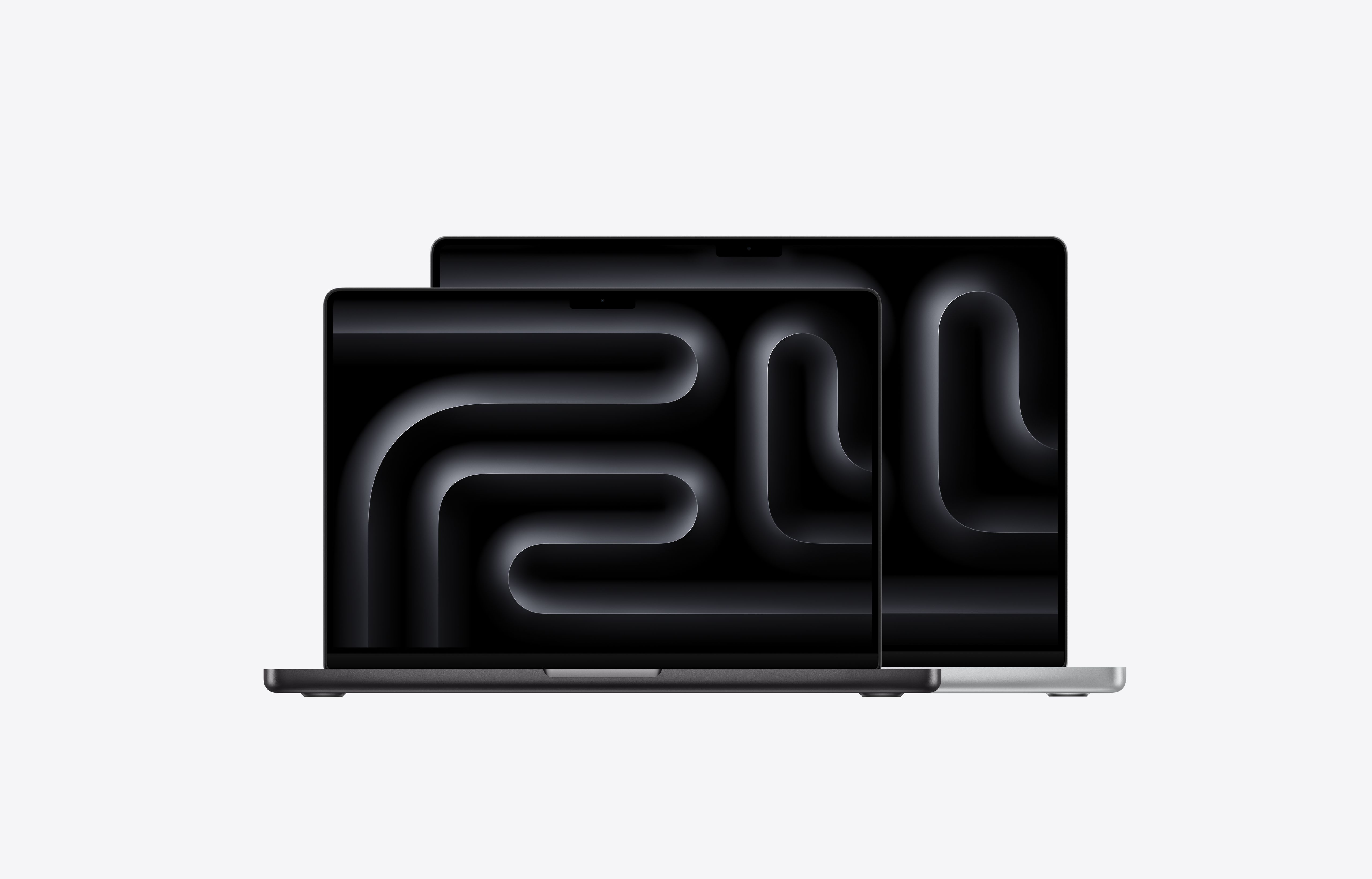
Everything else is carried over. Tom's Hardware lists the same dimensions and the same 1.55 kg weight as last year's model. The display, the 12MP Center Stage camera, the six-speaker system and the port selection are unchanged. The one visible addition is wireless: Apple's N1 chip brings Wi-Fi 7 and Bluetooth 6, according to Tom's Guide and Tom's Hardware. Nothing was removed, though Tom's Hardware stresses that Thunderbolt 5 stays off the M6 model.
That makes the buying rule simple. Tom's Guide says anyone happy with a current MacBook Pro doesn't need to upgrade, and that owners of anything older than an M3 should look seriously. TechRadar says it isn't essential for recent M-series owners but is an easy pick from an Intel Mac or older Air. Geek Culture is blunter: if you own an M4 or M5 14-inch, there's very little reason to spend the money.
The M6 is about 18 per cent quicker in multi-core work, and less in single-core
Tom's Guide recorded Geekbench 6 scores of 4,752 single-core and 21,184 multi-core for the M6, against 4,288 and 17,926 for the M5 and 2,867 and 16,927 for a Dell XPS 14. TechRadar printed identical Geekbench 6 numbers and added Geekbench 7 results of 4,027 and 22,305. Geek Culture ran its own copy and got 4,542 and 20,615 against 4,231 and 17,782 for the M5, a gain of roughly 7 per cent single-core and 16 per cent multi-core. Tom's Guide, Tom's Hardware and TechRadar share a parent company and a lab, so their matching figures are one measurement, not three.
Real tasks track the benchmarks. Tom's Hardware reports the M6 turned a 4K file into 1080p in 2 minutes 50 seconds, against 3 minutes 31 seconds for the M5. Tom's Guide's PugetBench Photoshop score was 15,622 against 13,755, and 3DMark Wild Life Extreme rose from 12,187 to 15,635. In Cyberpunk 2077, Tom's Hardware measured 53.7 frames per second at 1800 x 1125 on the M6 and 47.65 on the M5.
Storage didn't move. Tom's Hardware measured 1,914 MB/s in a file copy against 1,917 MB/s on the M5, and Tom's Guide's Blackmagic read speeds were 6,684 and 6,619 MB/s. If you edit video from the internal drive, expect last year's speed. The gain is in processing, which is why the upgrade matters most for exports and renders.
19 hours in a lab, 16 on Apple's box: which battery number to trust
Apple rates the 72.4 Wh battery at up to 24 hours of video streaming and up to 16 hours of wireless web browsing, and its spec page says those figures came from preproduction units. PetaPixel reports that Apple calls 24 hours the longest battery life in a Mac. Those are Apple's claims for Apple's test conditions, not a measurement by any outlet we read.
The independent number is better than the claim. Tom's Guide ran continuous Wi-Fi web browsing at 150 nits and recorded 19 hours 5 minutes, an hour more than the M5 model at 18:00 and well ahead of the Dell XPS 14 at 12:19. Tom's Hardware's test mixes browsing, OpenGL runs and video streaming at 150 nits and also landed on 19 hours 5 minutes. They share a lab, so treat it as one result. Geek Culture didn't print a number and said the Apple ratings matched everyday use.
At 150 nits the screen is dim by office standards, so brighter work will drain it faster. HDR video, an external display and heavy exports will cut it further. Even so, a result close to 19 hours means the charger can stay home for most working days, which is the clearest everyday advantage over a Windows laptop at this price. Apple's fast-charge claim needs a 96W adapter, and the box ships with a 70W one.
The 16GB base model is where Apple's AI pitch runs out
Apple's pitch for the M6 leans on on-device AI, with up to 25 per cent faster AI workloads than the M5 according to iPhone in Canada. Geek Culture tested that claim on the 16GB base unit using LM Studio, a local model runner. On a 128GB Mac Studio they'd had more than two dozen models to choose from. On this laptop the list shrank to eight, and nothing larger than 7 billion parameters would load.
Geek Culture's conclusion was that the chip isn't the limit, memory is. The small model they did run, a 4-billion-parameter one, produced usable research and writing results with a slightly longer wait than cloud tools. Their view was that pairing an AI-focused chip with 16GB isn't the best way to push on-device AI. They also noted Apple didn't make 24GB the new base.
Memory can't be changed after purchase, so the choice at checkout is permanent. Best Buy Canada lists the M6 with 24GB at C$3,099.99 and with 32GB at C$3,399.99, which is C$300 and C$600 above the base price. For ordinary browser, photo and office work, 16GB was fine in every review we read. For local models, large projects or a laptop you'd keep five years, 24GB is the sensible add.
A five-year-old body: the notch, the ports and the heat
Every outlet agrees the chassis hasn't changed since 2021. Tom's Hardware says it looks the same as the M5 and is starting to look stale, and Tom's Guide calls it a winning design while admitting the thinner OLED Pro models spoil you. TechRadar's cons are no changes to the design or colours and the notch. The panel itself is fine. Tom's Guide measured 571 nits SDR brightness and a Delta-E of 0.19, and Tom's Hardware saw 571.4 nits, ahead of the OLED panels in the Windows laptops it compared.
The ports are the reason to choose this body. Apple lists three Thunderbolt 4 ports, HDMI, an SDXC card slot, a headphone jack and MagSafe 3, with support for two external displays. Tom's Guide lists the supported setups, including two 6K screens at 60Hz. That's more connectivity than the MacBook Air, and none of the reviews we read flagged a missing port. The only complaint is Thunderbolt 4 where the M5 Pro and M5 Max get Thunderbolt 5.
Heat is a trade-off the fanless Air doesn't have. Tom's Hardware says the two fans spin up quickly and measured a hottest surface of 106 F near the left exhaust vent, with a cool 78 F touchpad. The SoC peaked at 80 degrees C in their Cinebench stress run, and scores held around 5,440 across ten back-to-back runs, rising slightly from 5,026 on the first. Those figures show no sign of heavy throttling, but Tom's Hardware gave no noise reading, so how loud the fans get is unconfirmed.
Against the Air, the Neo, the XPS and the OLED Pro, at Canadian prices
The MacBook Air M5 is the real alternative. Apple.ca lists the 13-inch from C$1,799 and the 15-inch from C$2,099, and Best Buy Canada lists the 13-inch with 16GB and 512GB at C$1,789.99. That's C$1,000 below the Pro, at the cost of fewer ports, no fan and half the base storage. Tom's Guide's own verdict says price-focused buyers will look at the Air or the MacBook Neo, which Best Buy Canada lists from C$939.99 with 8GB and 256GB.
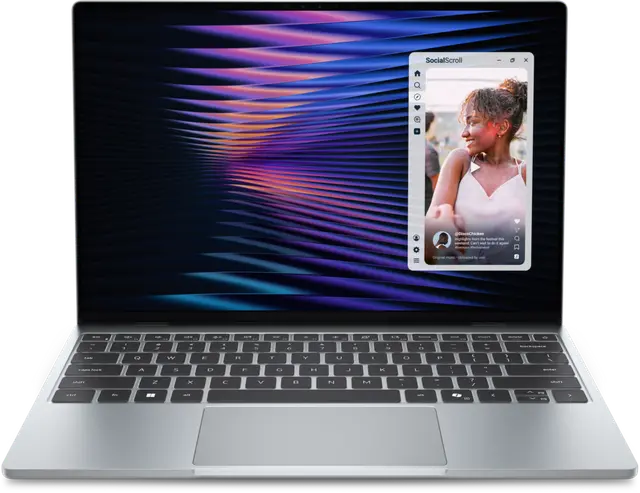
On the Windows side, Tom's Guide compared the Dell XPS 14 (2026), and the M6 beat it in Geekbench multi-core (21,184 against 16,927) and battery (19:05 against 12:19). Tom's Guide lists the XPS 14 at US$1,699, but a Canadian price for that exact model couldn't be confirmed. The cheaper XPS 13 started at C$949.99 on Dell.ca for 8GB and 256GB when we last recorded it on October 13, and outlets called that 8GB base too thin.
Above the M6 sits the OLED model. Apple.ca lists the 14-inch PROLED XDR with an M5 Pro at C$3,999, which is C$1,200 more than the M6 base and C$500 more than a standard-display M5 Pro 14-inch at C$3,499. Tom's Guide says the M6 suits people who don't want to spend that much and that the OLED laptops are stronger. Best Buy Canada also lists the earlier M4 14-inch with 16GB and 512GB at C$2,099.95, a C$700 saving if you don't need the new chip.
Owning it: soldered parts, upgrade prices and returns
Nothing inside can be upgraded. Tom's Hardware opened the bottom panel, found four pentalobe screws and reported nothing of note to replace, with memory and the SSD soldered to the board. Their cons list adds that memory and storage upgrades cost more than ever. The configuration you buy is the one you keep, which is why the 16GB versus 24GB question matters on day one.
Apple.ca's returns page says Mac purchases can be returned within 15 days of receiving them, in original condition with all parts, accessories and packaging, and with a receipt. The refund or exchange is issued within 10 business days after approval. The warranty length and AppleCare+ prices for Canada couldn't be confirmed from the pages we read, so check them at checkout before budgeting.
Software support is a fair strength. The laptop ships with macOS 27 Golden Gate, which Tom's Hardware describes as a reliability and speed release. Long-term owner reports barely exist, since the model went on sale on November 6, so claims about keyboards, hinges or battery wear after a year can't be made yet. The same chassis has been sold since 2021, which counts as a track record for the design if not for this chip.
Who should buy it, who should skip it, and what to buy instead
Buy it if you're moving from an Intel Mac, an M1 or an M2, and you want a bright screen, an SD slot, HDMI, a fan and a battery that outlasts a workday. Geek Culture scored it 8.8 out of 10 and calls it the definitive upgrade from an M1 or M2, and TechRadar gave it 4 out of 5. Buy 24GB if you'll run local AI or edit large projects, and consider the nano-texture screen if you work near windows.
Skip it if you own an M4 or M5 machine, because every outlet we read said the gains don't justify the cost for recent owners. Skip it too if your work is writing, browsing and light photo edits. The C$1,799 MacBook Air M5 handles that with more portability and C$1,000 left over. If you can stretch to C$3,999, the OLED touchscreen M5 Pro gives you a better display and chip.
The M6 is the middle child of Apple's lineup, as Tom's Guide put it, and that's a fine place to be. It's the laptop for people who want the Pro ports and battery without the Pro price tag. The caveats are real. Memory is fixed at purchase, the design is old, and the base C$2,799 only makes sense if you'd use the extra ports and cooling every week.
The closest alternatives.
| Product | Standpoint Score | Best for | Price |
|---|---|---|---|
| Apple MacBook Pro 14-inch (M6, 2026)This review | 8.3Research | Photo, video and code work on a Mac where long battery life and real ports matter, and where the buyer is coming from an… | Amazon.ca ↗ |
| Apple MacBook Air 13-inch (M5) | 8.4Research | A mobile writer, student or mixed-workload Mac user who values portability and can plan the configuration up front. | Amazon.ca ↗ |
| Dell XPS 13 (2026) | 7.6Research | Windows users who want a light, well-built laptop with all-day battery for school, travel and office work, and who'll… | Amazon.ca ↗ |
| Apple iPad Air (M4) | 8.1Research | Someone who needs a tablet for drawing, documents and travel, not someone assuming every laptop task will transfer. | Amazon.ca ↗ |
Compare scores within a category: Tested means our own use, Research means documentation and attributed outside testing. Price links are affiliate links. As an Amazon Associate, Tech Standpoint earns from qualifying purchases. Disclosure
Questions before checkout.
Should I upgrade from an M5 MacBook Pro to the M6?
Almost certainly not. Tom's Guide, TechRadar and Geek Culture all say owners of an M4 or M5 14-inch have little reason to upgrade. The M6 measured about 18 per cent faster in multi-core Geekbench 6 and around an hour longer on the battery test, but the display, ports and design are the same.
How much does the 14-inch MacBook Pro M6 cost in Canada?
Apple.ca lists it from C$2,799 before tax for 16GB of memory and 1TB of storage, and Best Buy Canada lists C$2,799.99. The nano-texture display adds C$225 at Apple.ca. Best Buy Canada shows 24GB at C$3,099.99 and 32GB at C$3,399.99 with the same 1TB drive. Prices were checked on November 15, 2026.
Is 16GB of memory enough on the M6 MacBook Pro?
For browsing, photo editing and office work, the reviewers we read had no complaints. For local AI models it's tight. Geek Culture could load only eight models, none above 7 billion parameters, on the 16GB unit. Memory is soldered and can't be added later, so choose 24GB at checkout if you expect to keep the laptop for years.
Does the M6 MacBook Pro have an OLED screen or Thunderbolt 5?
No. It uses the same mini-LED Liquid Retina XDR panel as the M5 model, with a notch, and Thunderbolt 4 ports. OLED touchscreens and Thunderbolt 5 are on the separate PROLED models, which Apple.ca lists from C$3,999 with an M5 Pro chip, C$1,200 above the M6 base price.
Is the MacBook Pro M6 better than the MacBook Air M5?
It's faster in sustained work, has a brighter display, more ports, a fan and a longer measured battery life. The Air M5 starts at C$1,799 on Apple.ca, which is C$1,000 less, and it's lighter and fanless. For writing, study and light editing the Air is the better value; for heavy exports or many external devices the Pro makes sense.
Can I return a MacBook Pro bought from Apple in Canada?
Apple.ca's returns page says you have 15 days from receiving the product, with a receipt and everything in original condition including packaging and accessories. Refunds or exchanges are issued within 10 business days after approval. We couldn't confirm the warranty length or AppleCare+ pricing for Canada, so check those on Apple.ca before you pay.
Sources & further reading.
These are the sources behind this research review. Manufacturer claims are not independent performance measurements. Community accounts, when cited, describe individual experiences.
- MacBook Pro technical specifications (Apple Canada) ↗manufacturer
- Buy MacBook Pro 14-inch (Apple Canada store) ↗manufacturer
- Buy MacBook Pro with PROLED XDR Display (Apple Canada store) ↗manufacturer
- Returns and refunds (Apple Canada) ↗manufacturer
- Tom's Guide: Apple MacBook Pro M6 review ↗independent testing
- Tom's Hardware: Apple MacBook Pro (14-inch, M6) review ↗independent testing
- TechRadar: The new M6 MacBook Pro review ↗independent review
- Geek Culture: Apple MacBook Pro 14 (M6) review ↗independent review
- PetaPixel: 14-inch MacBook Pro with M6 announcement ↗news report
- iPhone in Canada: MacBook Pro 14 M6 Canadian pricing ↗news report
- Best Buy Canada: MacBook Pro 14.2 M6 16GB/1TB listing ↗retailer listing
Product software and regional bundles can change. Corrections and editorial disclosures.
Affiliate link. As an Amazon Associate, Tech Standpoint earns from qualifying purchases. It never changes our verdict or score. Disclosure