Not tested. This is a research score for the documented features, compatibility and ownership trade-offs discussed in this review, not a performance measurement.
Task capability 30%8.0
Generous everyday print volume, constrained by an open frame and material guidance.
Control & connectivity 20%8.2
Cloud and documented LAN-only options; monitoring camera has limited frame rate.
Ownership & upkeep 20%7.6
Accessible nozzle changes, but recall verification matters for older used units.
Setup & usability 15%8.8
Automatic calibration removes several novice adjustments; moving-bed clearance still needs planning.
Documentation & support clarity 15%8.6
Detailed product FAQ, quick-start documentation and explicit recall record support informed ownership.
Compare scores within the same product category. Small decimal differences should not override your needs or the evidence limits.
How the Standpoint Score works
We score five aspects of the documented product on a 0–10 scale, then calculate a weighted total:
- Task capability30% of the total
- Control & connectivity20% of the total
- Ownership & upkeep20% of the total
- Setup & usability15% of the total
- Documentation & support clarity15% of the total
This product’s 8.2/10 is an editorial research assessment. It does not claim measured performance, tested reliability or a verified customer satisfaction rate. Compare it with products in the same category, and read each criterion’s reasoning above.
Read the full rubric and score bands ↗From a tech standpoint.
Buy it, new, if your projects are organisers, brackets and decorative PLA or PETG parts and you have a dedicated space with clearance for the bed to travel. Buy an enclosed printer instead if high-temperature materials are central. Buy a used A1 only with the recall remedy and power-board revision confirmed through Bambu for that serial number.
Reasons to consider it
- Automatic Z-offset, bed levelling, vibration compensation and nozzle-pressure calibration cut the manual tuning
- A 256 mm build cube and a quick-change nozzle
- Current documentation covers LAN-only operation and compatibility with other AMS units via the A1-series hub
Go in knowing
- Open frame; Bambu explicitly advises against enclosing it, so ABS ambitions belong on another machine
- Original 2024 units were recalled for a heatbed cable issue, and a later AC power-board redesign is a separate question
- AMS lite is Combo-only, and Tom's Hardware's three-colour panda took 6 hours 46 minutes against 2 hours 40 in one colour
Affiliate link. As an Amazon Associate, Tech Standpoint earns from qualifying purchases. It never changes our verdict or score. Disclosure
The specification sheet.
Published specifications from the linked sources. Configurations and availability can differ by country.
- Build volume
- 256 × 256 × 256 mm
- Nozzle / bed limits
- 300°C / 100°C
- Motion specification
- Up to 500 mm/s; 10,000 mm/s² acceleration
- Included nozzle
- 0.4 mm stainless steel
- Best documented materials
- PLA, PETG, TPU and PVA; feed-system restrictions apply
- Multicolor
- AMS lite in Combo; other AMS types require the specified hub
- Local display
- 3.5-inch, 320 × 240 IPS touchscreen
- Chassis / working depth
- 465 × 410 × 430 mm chassis; quick-start diagram calls for 545 mm bed-motion depth
A capable starting point with a defined job
The A1 is most persuasive when the goal is turning useful designs into objects without first learning every mechanical adjustment. A drawer organiser, a camera-bracket prototype and a replacement board-game insert describe its purpose far better than a claim that it prints anything. Its automatic setup removes several of the frustrating early steps, and the open layout lets you see what the machine is doing. This is an assessment of that design and its published limits; print quality, failure rate and noise have not been measured on an A1 here.
Bambu specifies a 256 mm cube, a 300°C hotend and a 100°C bed. Those numbers describe different constraints. A model can fit the cube and still need supports, clearance or a different orientation, and a filament's extrusion temperature says nothing about whether the room is warm enough for a large part. The A1's practical appeal is that most everyday PLA and PETG projects sit comfortably inside its intended workload. Buying it for ambitious engineering materials because the nozzle temperature sounds high misreads the platform.
The moving bed changes the workspace
Unlike an enclosed CoreXY printer, the A1 shoves the build plate back and forth during a job, so the object becomes part of the moving load. A tall narrow model asks more of adhesion and motion settings than a squat storage tray with the same amount of plastic. Be conservative with orientation and acceleration on tall decorative prints until the exact filament and model have been proven. The published 500 mm/s maximum is a motion ceiling, not a promise that every visible wall prints that fast.
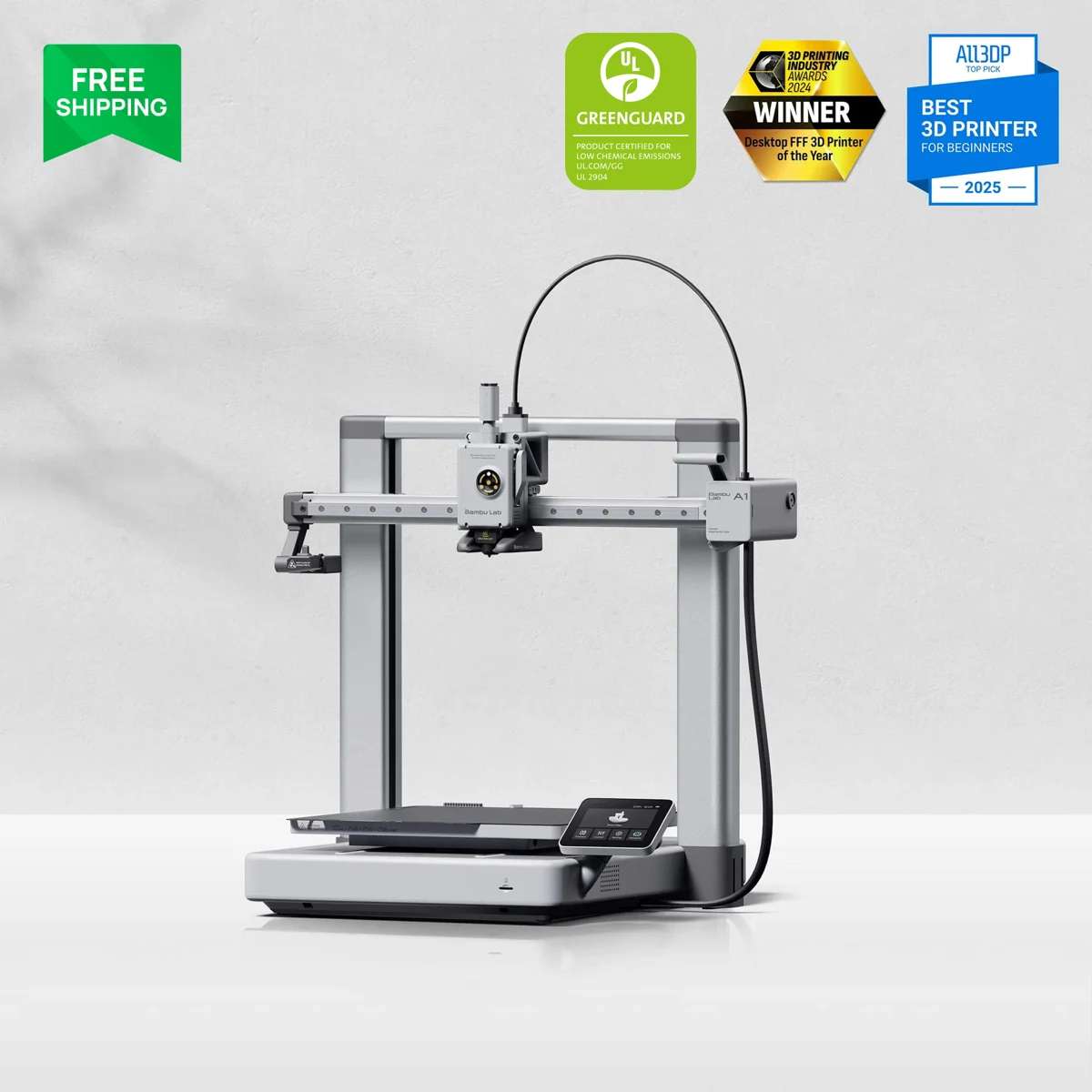
Allow space for the full travel of the bed, the cable and the spool path. A shelf that fits the static machine is a poor installation if the plate approaches its edge or the cable presses against a wall; the quick-start diagram calls for 545 mm of bed-motion depth against a 465 × 410 × 430 mm chassis. The open frame also leaves hot and moving parts exposed. In a family workspace, placement should prevent casual contact during printing and keep a clear view of the first layer. The bed's travel and the optional AMS lite are reasons to measure before choosing a desk.
Calibration is automatic; material prep is not
Bambu describes automatic Z-offset, bed levelling, vibration compensation and nozzle-pressure calibration. The practical result is a shorter list of manual adjustments before an ordinary print. It does not mean a contaminated build surface or damp filament stops mattering. If the first layer deteriorates after a few jobs, start with the plate and the material before escalating to motion settings. Keep an example print and its saved profile from initial setup; changing the model, spool and settings all at once makes it impossible to tell why a later result differs.
The official material guidance favours PLA, PETG, TPU and PVA and warns about high-temperature polymers on this open machine. Bambu also explicitly advises against enclosing the A1. That matters to anyone imagining a cheap cabinet upgrade into an ABS production tool. A high-temperature trial on a small part is not evidence that a broad, dense enclosure will stay flat or bond well. Filled and abrasive filaments bring nozzle requirements too: the stock stainless nozzle is not a wear-resistant solution just because the extruder can push the material.
Colour is an accessory workflow
The A1 Combo includes AMS lite; the standalone printer does not. Four-colour jobs through one AMS lite open creative options without giving the machine four nozzles. Every transition still means managing a material change through a shared extrusion path. A simple coloured logo near the top of a model is therefore a far more efficient project than a small object with many changes on every layer. Before a long decorative job, read the sliced estimate, transition count and waste as carefully as the rendered preview.
Current Bambu documentation also lists compatibility with other AMS systems through its specified A1-series hub, which updates older advice that described the A1 as AMS-lite-only. Still check the exact hub, feeder, firmware and material combination before buying accessories, and do not assume a filament suited to external feeding suits every automated feeder. For someone mostly printing single-colour workshop parts, learning the base printer first is a sound way to find out whether automated changes solve a recurring task at all.
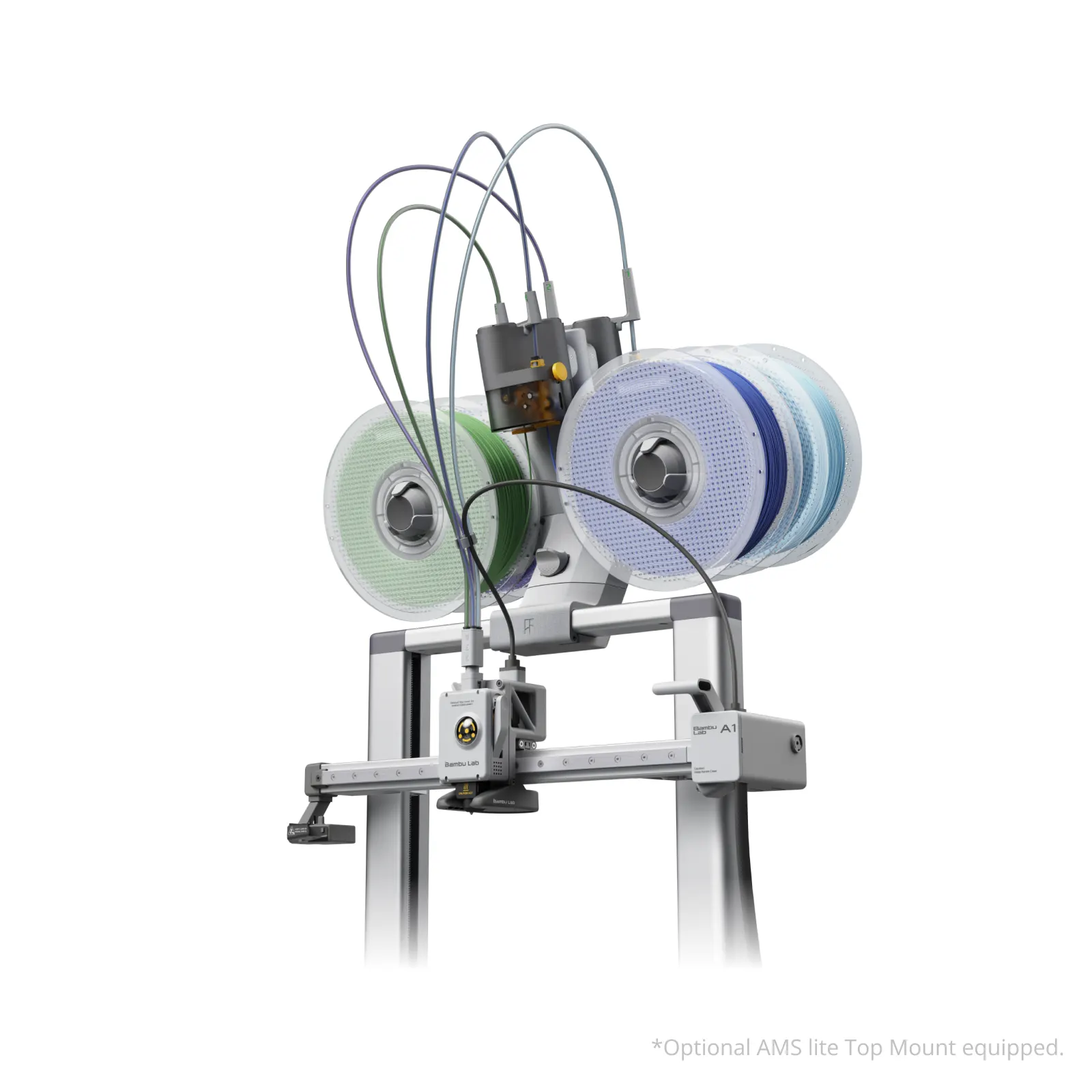
Tom's Hardware put a clock on three colours
Tom's Hardware tested the A1 Combo and reported that a panda model took 2 hours 40 minutes in one colour against 6 hours 46 minutes in three colours at its stated default settings. Its TPU vase test also came out worse around the lower overhangs than elsewhere on the model. Those are the reviewer's files, materials and settings, not Tech Standpoint benchmarks, and not a prediction for every print.
The colour example is a concrete reason to inspect a sliced job before committing to the Combo. The added time is significant even when the model fits the plate easily. A design with colour changes clustered near the top is a different proposition from one that changes repeatedly through its height. For a practical label or logo, compare an inserted component or a separately printed piece with the shared-nozzle version. The TPU result is also a reminder that a supported material category does not guarantee a clean overhang at an unexamined default.
Controls, monitoring and the ownership bill
The A1's current product information describes cloud access and a LAN-only mode, which gives privacy-conscious owners a concrete local-network option rather than forcing every project through a cloud upload. The mobile and remote workflow can differ when local-only operation is selected, so decide which features matter before configuring the machine. The low-frame-rate camera is a progress view. It cannot establish dimensional accuracy, check the hidden underside of a print or replace watching the first few layers of an unfamiliar job.
The quick-change nozzle is a welcome ownership feature because it makes the detail-versus-speed decision less intimidating. A small nozzle resolves finer features and takes longer, and it is a poor pairing with particle-filled materials. A larger nozzle changes the sliced geometry as well as throughput. Keep nozzle size, selected profile and installed hardware in sync. Budget for build-plate care, replacement wipers and cutters where used, filament storage and occasional troubleshooting, not just spools. The accessible mechanism makes inspection easy; it does not excuse skipping the maintenance instructions.
The recall history and the purchase decision
The original A1 heatbed-cable recall is material to any used purchase. Bambu's February 2024 notice expanded the recall to the A1 units then in the market; the current product page says current sales include the necessary cable fixes and describes the reinforced cable. A clean-looking machine is not evidence that an older unit received the remedy. Match its history to the official recall information and get confirmation before using an affected printer. That history should be stated accurately, not quietly applied to every later A1 or waved away because a printer powers on.
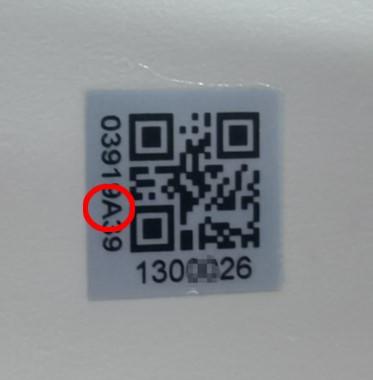
The June 2024 US CPSC notice identifies affected serial numbers with A in the sixth position and tells owners to stop using recalled units and arrange the official remedy. It specifically warns against attempting the recall repair yourself. Match a used printer's identifier and repair history to that notice. A working display and one successful short print do not prove the prescribed remedy was done.
The product request for this assessment resolved to Bambu's Canadian store, which provided regional ordering and warranty information. A US buyer should use the US storefront, and promotional windows and coverage should be checked for the actual country and seller. The A1 earns its place for accessible, ordinary filament work; an enclosed alternative is the logical start when demanding thermal conditions are central. The questions still unanswered by documentation are tall-part stability, first-layer consistency after nozzle changes, real workspace noise and recovery from filament problems, and those decide whether the convenience lasts beyond the first successful print.
The power-board reports are a separate issue
In January 2026, Tom's Hardware published a direct Bambu response to reports of heat damage around the A1's AC power board. Bambu said it redesigned that board in Q3 2025 and repaired or replaced reported affected units. Later reporting described another disputed incident. This is separate from the 2024 heatbed-cable recall; completing that recall does not identify the power-board revision in an older machine.
Those reports do not establish a failure rate measured by this publication, and they do not justify guessing the cause of any individual damaged printer. They do make revision history and manufacturer support relevant to a used purchase. Get confirmation through Bambu for the actual serial number and service history instead of inspecting mains components yourself. The A1 still offers an accessible, well-documented workflow for ordinary PLA and PETG projects, but a strong feature list should not obscure unresolved condition or safety questions about the specific unit on offer.
The closest alternatives.
| Product | Standpoint Score | Best for | Price |
|---|---|---|---|
| Bambu Lab A1This review | 8.2Research | Home makers printing organisers, prototypes and decorative PLA or PETG models who can give an open printer a dedicated… | Amazon.ca ↗ |
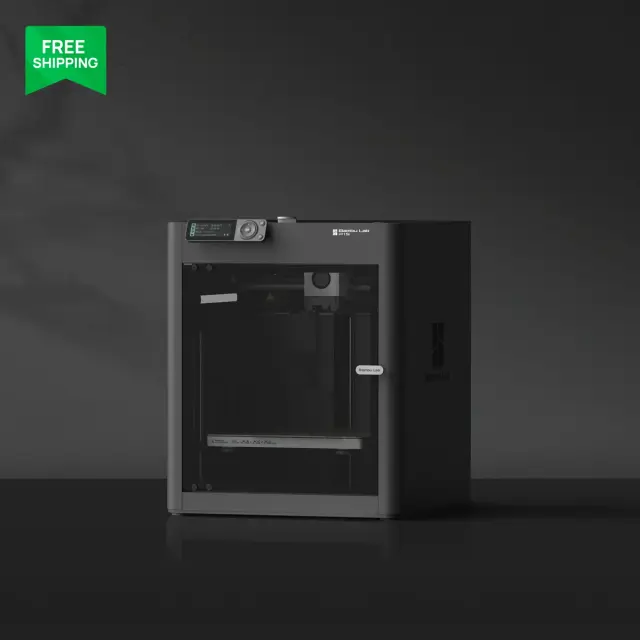
| Bambu Lab P1S | 8.3Research | Makers who want enclosed CoreXY printing, Bambu workflow integration and optional multicolour feeding without needing… | Amazon.ca ↗ |
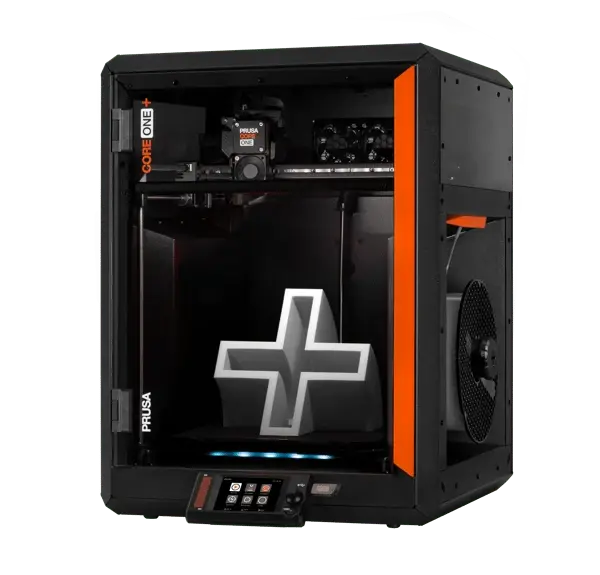
| Prusa CORE One+ (Gen 2) | 8.7Research | Frequent makers and small workshops seeking a serviceable enclosed printer with a well-documented local-network… | Amazon.ca ↗ |
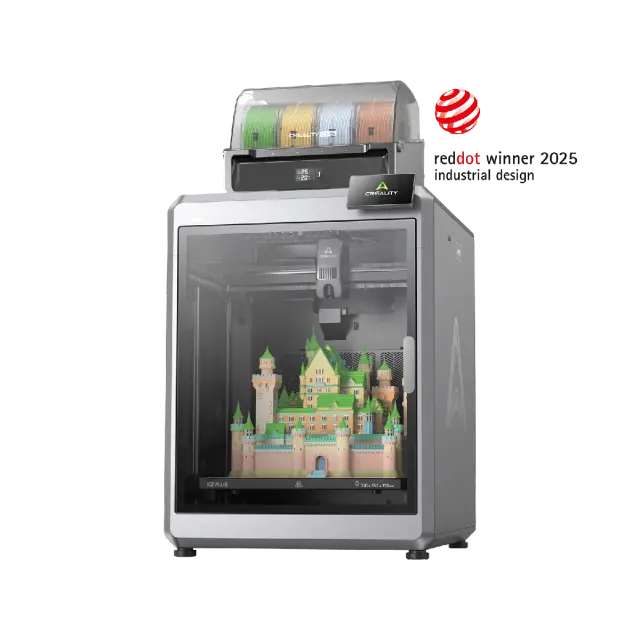
| Creality K2 Plus | 8.1Research | Workshop users whose parts actually need a 350 mm build cube and who can accommodate a heavy enclosed printer. | Amazon.ca ↗ |
Compare scores within a category: Tested means our own use, Research means documentation and attributed outside testing. Price links are affiliate links. As an Amazon Associate, Tech Standpoint earns from qualifying purchases. Disclosure
Sources & further reading.
These are the sources behind this research review. Manufacturer claims are not independent performance measurements. Community accounts, when cited, describe individual experiences.
- Bambu A1 — current Canadian product specifications and FAQ ↗manufacturer
- Bambu A1 quick-start guide ↗manual
- Bambu A1 recall update, February 2024 ↗support
- US CPSC A1 recall notice ↗support
- Tom’s Hardware: independently conducted A1 Combo review ↗independent review
- Tom’s Hardware: direct Bambu response on A1 power-board reports, January 2026 ↗manufacturer response
- Tom’s Hardware: later disputed A1 damage report, June 2026 ↗reported incident
Product software and regional bundles can change. Corrections and editorial disclosures.
Affiliate link. As an Amazon Associate, Tech Standpoint earns from qualifying purchases. It never changes our verdict or score. Disclosure