An editorial assessment of documented capabilities and ownership trade-offs. This is not a hands-on test result or a measurement of reliability.
Task capability 30%7.1
Defined cut width and height suit routine maintenance in its supported markets.
Navigation & control 20%7.9
3D LiDAR avoids wire and RTK-station infrastructure.
Ownership & upkeep 20%6.7
Quick blade changes are attractive; regional service remains a threshold question.
Setup & usability 15%8.0
Local mapping simplifies the external hardware proposition.
Documentation & support clarity 15%7.0
Global specifications are clear but do not establish North American support.
Compare scores within the same product category. Small decimal differences should not override your needs or the evidence limits.
How the Standpoint Score works
We score five aspects of the documented product on a 0–10 scale, then calculate a weighted total:
- Task capability30% of the total
- Navigation & control20% of the total
- Ownership & upkeep20% of the total
- Setup & usability15% of the total
- Documentation & support clarity15% of the total
This product’s 7.3/10 is a provisional research assessment. It does not claim measured performance, tested reliability or a verified customer satisfaction rate. Compare it with products in the same category, and read each criterion’s reasoning above.
Read the full rubric and score bands ↗The ownership case.
A1 makes a clear case for local LiDAR navigation without a boundary wire or RTK station. Its narrower cutting system and regional service requirements should be weighed carefully against that installation convenience.
Reasons to consider it
- No RTK station or boundary wire required
- App-controlled cutting height
- Quick-detach blade system advertised
Go in knowing
- Global source does not prove local support
- Seven-centimetre maximum cut
- Edge and recovery performance untested
The specification sheet.
Published specifications from the linked sources. Configurations and availability can differ by country.
- Navigation
- OmniSense 3D LiDAR
- Published maximum area
- 2,000 m²
- Cutting width
- 22 cm
- Cutting-height range
- 3–7 cm
- Internal slope claim
- 45% / 24°
- Published charging time
- 65 minutes
A clean installation idea with a practical limit
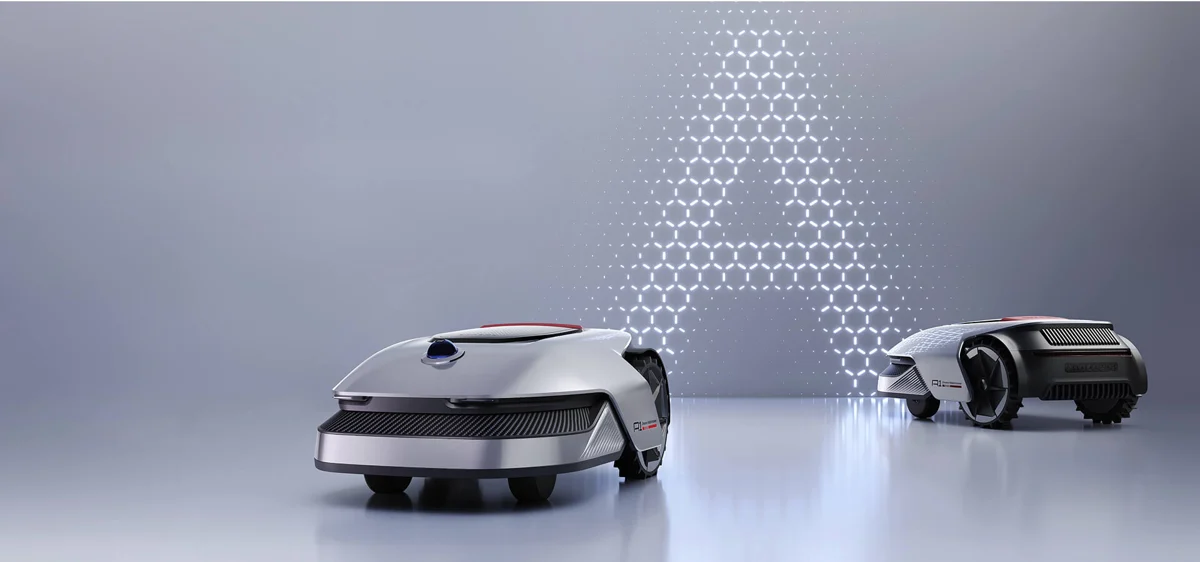
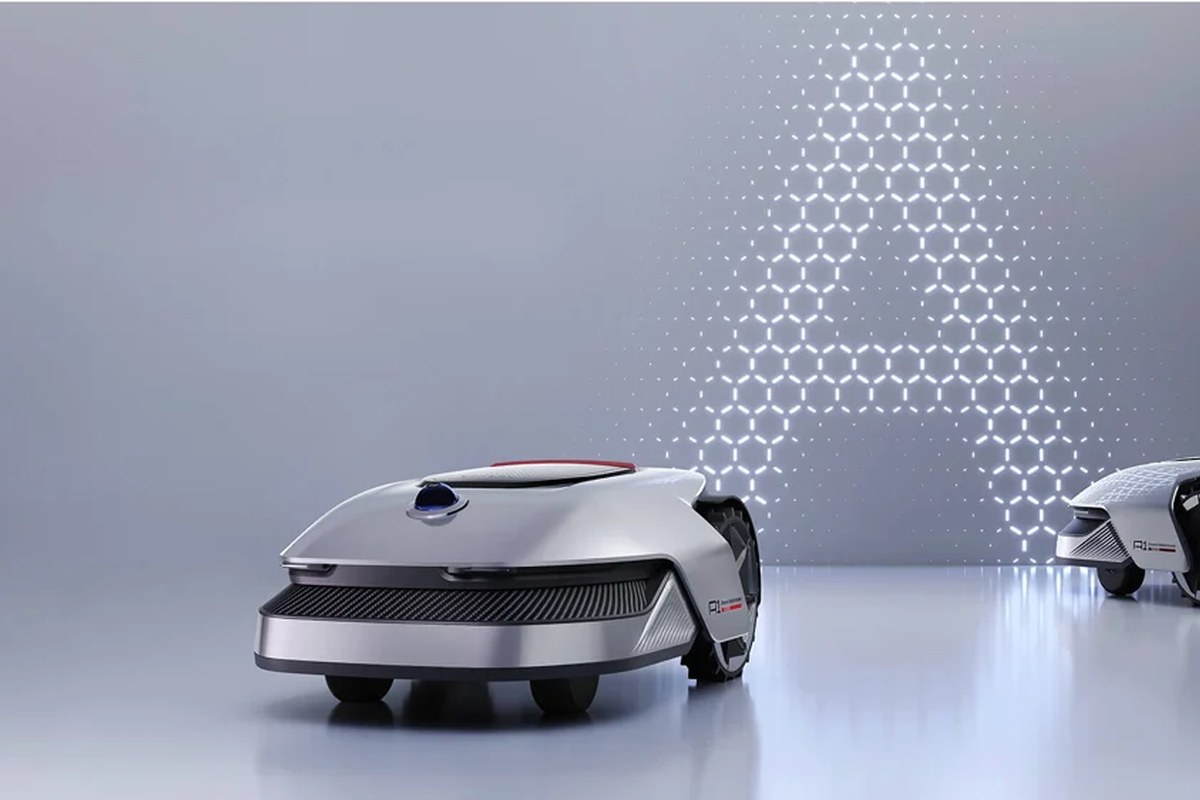
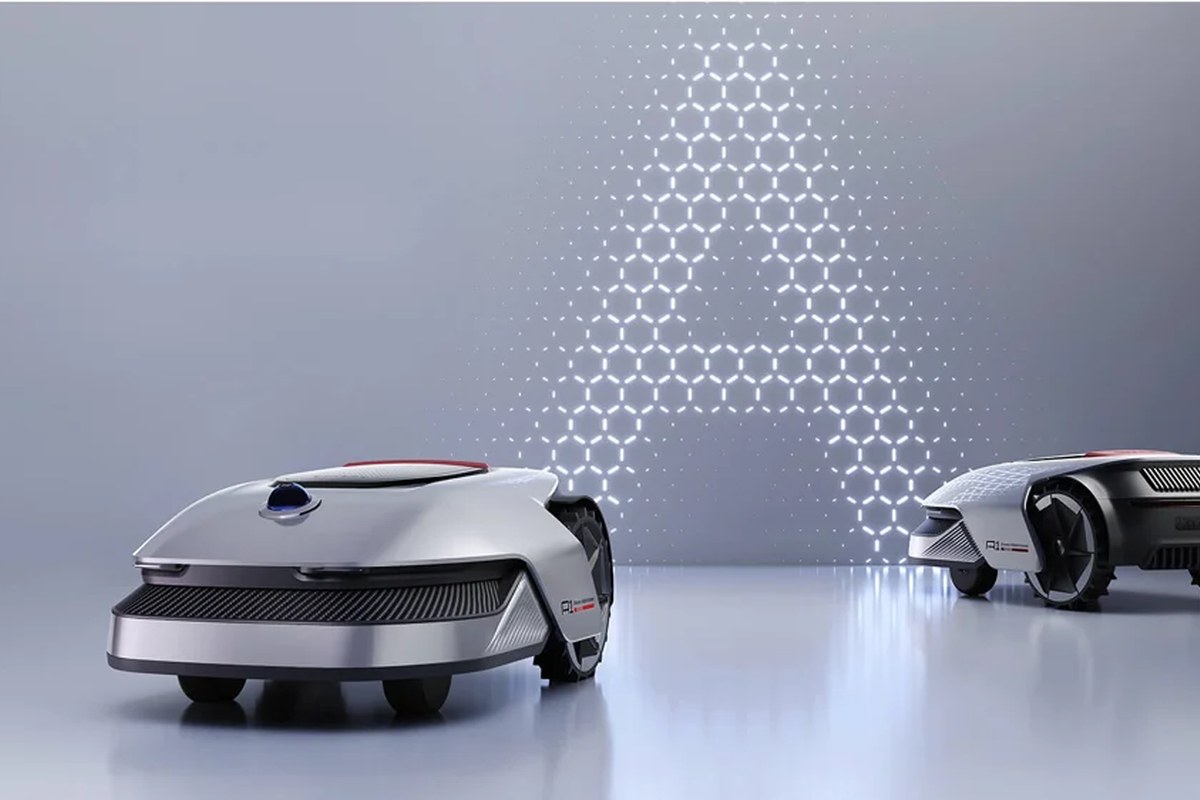
Dreame A1's central appeal is easy to understand: use a three-dimensional LiDAR view of the garden to navigate without a buried wire or RTK reference station. That can remove an awkward mounting decision from the installation. It does not remove the need to map the lawn, keep sensing surfaces clean and confirm that the mower can reliably find home from every working area.
The global specification lists a 22-centimetre cutting width, three-to-seven-centimetre height range and maximum area of 2,000 square metres. It also separates standard and efficient daily output references. That distinction should discourage treating the largest area figure as a universal result. A buyer needs to know which operating mode produces an acceptable finish on the actual grass and whether the desired schedule leaves time for it.
The sensor should be judged by recovery
The advertised scanning range and field of view describe the LiDAR component, but the complete robot's behaviour matters more. We would assess mapping near hedges, along featureless open edges and through passages beside buildings. Then we would move ordinary garden furniture and observe whether the machine adapts without losing its map. A garden is a changing environment, not a static scan target.
A1 uses U-shaped planned mowing, which can produce orderly coverage when positioning is stable. That does not establish the quality of the grass cut or eliminate repeated turns at the edge. We would examine missed strips and wheel marks as well as the visual pattern. The published 45% slope claim is a working-limit reference, not a guarantee on wet banks or at abrupt changes in grade.
A useful design to compare with its successor
The original A1 differs from A2's camera-enhanced system and extended edge-cutting arrangement. The decision should be whether those additions address an observed property problem, rather than automatically treating the newer model as necessary. If A1 navigates a simple lawn reliably and the remaining edging is modest, the earlier machine may be sufficient at an appropriate supported price.
Dreame advertises quick-detach blade replacement, rain sensing and automatic return to charge. These are useful ownership features whose execution still needs verification. We would time routine blade care, inspect debris buildup and test task resumption after a charging interruption. Global documentation does not establish North American warranty handling, so local support is a threshold question. A1 is a promising navigation concept with a clear operating envelope; it is not yet a measured answer to how many interventions an owner will face over a season.
A practical acceptance test before relying on it
A1 should be tested where LiDAR offers an actual installation benefit. Start with the shaded or building-adjacent area that makes an RTK station unattractive, then confirm a dependable journey back to charge. We would also inspect how the U-shaped route handles an irregular boundary and several fixed obstacles, recording missed strips rather than merely praising straight lines. Finally, perform one manual-approved blade change and cleaning cycle. The quick-detach design should make upkeep straightforward for the actual owner. Those observations give a tangible basis for choosing A1 over a more elaborate successor: sufficient navigation, an acceptable finish and a maintenance routine that stays simple.
Setup, maintenance and the ownership decision
A1 removes the separate RTK-station decision, but its charging placement still affects the whole routine. Choose a location where the mower has an uncomplicated approach and where the owner can clean and service it comfortably. The LiDAR needs a usable view of the surrounding environment, so examine the route from open grass to shaded or enclosed areas. The first mapping session should be followed by observation at every unusual edge. A quick map is only the starting point; a dependable map should remain useful after ordinary furniture movement and seasonal growth around the garden.
The U-shaped coverage approach makes it relatively easy to look for missed strips and inconsistent overlap. Photograph representative areas after a full task and distinguish route gaps from poor cutting. A dull blade can leave a rough finish even when the mower follows its path accurately. Dreame advertises quick-detach blades, which could reduce maintenance friction, but owners still need the approved replacement and fastening process. Isolate power before touching the cutting system. A tool-free or quick-release design is a convenience, not permission to inspect a live machine casually.
The global specification's three-to-seven-centimetre height range should be checked against the owner's preferred grass height before purchase. Its standard and efficient output modes also warrant a practical comparison. A more aggressive schedule or route may cover ground sooner while changing the finish, noise or frequency of turns. We would use the mode that produces acceptable turf rather than the one that gives the largest daily number. The advertised automatic charging and rain response should be tested as a complete cycle, including how the robot resumes and whether the owner must intervene.
Water resistance and easy-clean language should lead to a maintenance demonstration, not an assumption that every surface can be blasted with a hose. Follow the instructions for the LiDAR window, charging contacts and underside. Check whether cut grass builds up where the sensor view or blade movement could be affected. The app should make ordinary faults understandable enough that an owner can distinguish dirt, an obstruction and a mapping error. Review account access, notification permissions and any remote connectivity options locally. The absence of an RTK station does not make the product independent of software and support.
North American ownership needs a confirmed service route because the source used here is global. Obtain the regional manual and verify the power supply, app region and warranty before importing. Ask for prices and availability of the correct battery, blade holders, cleaning brush and charging equipment. Compare the resulting complete offer with A2 and locally supported competitors. A1 can be the sufficient choice if its local navigation works and edge finishing is modest. It becomes less attractive if a low purchase price is offset by uncertain repairs or if the required lawn height lies outside its range.
Seasonal storage and return to work
A1's seasonal routine should preserve the map and preferred operating mode, then follow the model's battery-storage requirements. Clean the LiDAR surface only as instructed and inspect quick-detach blades and holders before returning to work. After winter, observe the narrowest passage and the charging approach, particularly where frost has shifted paving. Confirm the same app region and account remain available. The absence of a reference station simplifies storage, but it does not remove the need to validate the garden and the machine together when mowing resumes.
Sources & further reading.
These are the sources behind this research review. Manufacturer claims are not independent performance measurements. Community accounts, when cited, describe individual experiences.
Documentation reviewed: 9 October 2026. Product software and regional bundles can change. Corrections and editorial disclosures.