An editorial assessment of documented capabilities and ownership trade-offs. This is not a hands-on test result or a measurement of reliability.
Task capability 30%7.3
Compact quarter-acre capacity and narrow-path focus have a clear role.
Navigation & control 20%7.6
RTK, camera and ToF combine positioning with obstacle information.
Ownership & upkeep 20%7.0
Manual height and repeated charging affect the routine.
Setup & usability 15%7.0
Reference-station and narrow-boundary planning remain necessary.
Documentation & support clarity 15%6.5
Broad app language conflicts with the explicit non-electronic height specification.
Compare scores within the same product category. Small decimal differences should not override your needs or the evidence limits.
How the Standpoint Score works
We score five aspects of the documented product on a 0–10 scale, then calculate a weighted total:
- Task capability30% of the total
- Navigation & control20% of the total
- Ownership & upkeep20% of the total
- Setup & usability15% of the total
- Documentation & support clarity15% of the total
This product’s 7.1/10 is a provisional research assessment. It does not claim measured performance, tested reliability or a verified customer satisfaction rate. Compare it with products in the same category, and read each criterion’s reasoning above.
Read the full rubric and score bands ↗The ownership case.
O1000 RTK is a compact, relatively focused GOAT option. Its navigation and passability claims are worth examining, but the specification explicitly says height adjustment is not electronic despite broader app-control language on the page.
Reasons to consider it
- Compact quarter-acre format
- Narrow-passage focus
- RTK plus local obstacle sensing
Go in knowing
- Manual height adjustment
- Boundary slope lower than internal limit
- Care Kit is an accessory bundle
The specification sheet.
Published specifications from the linked sources. Configurations and availability can differ by country.
- Rated area
- 1/4 acre
- Navigation
- RTK, camera and 3D ToF
- Cutting width
- 8.66 in / 22 cm
- Cutting-height range
- 1.2–3.2 in / 3–8 cm
- Electronic height adjustment
- No, per specification table
- Slope limits
- 45% internal; 17% boundary
A useful mower hidden inside a bundle page
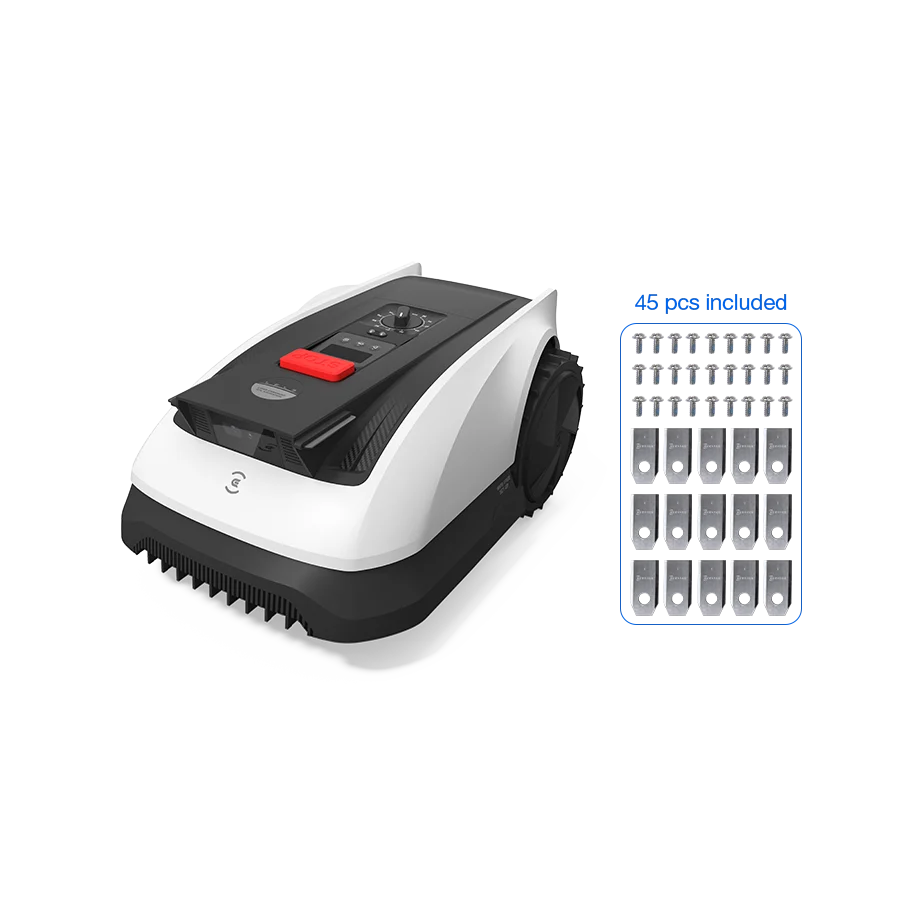
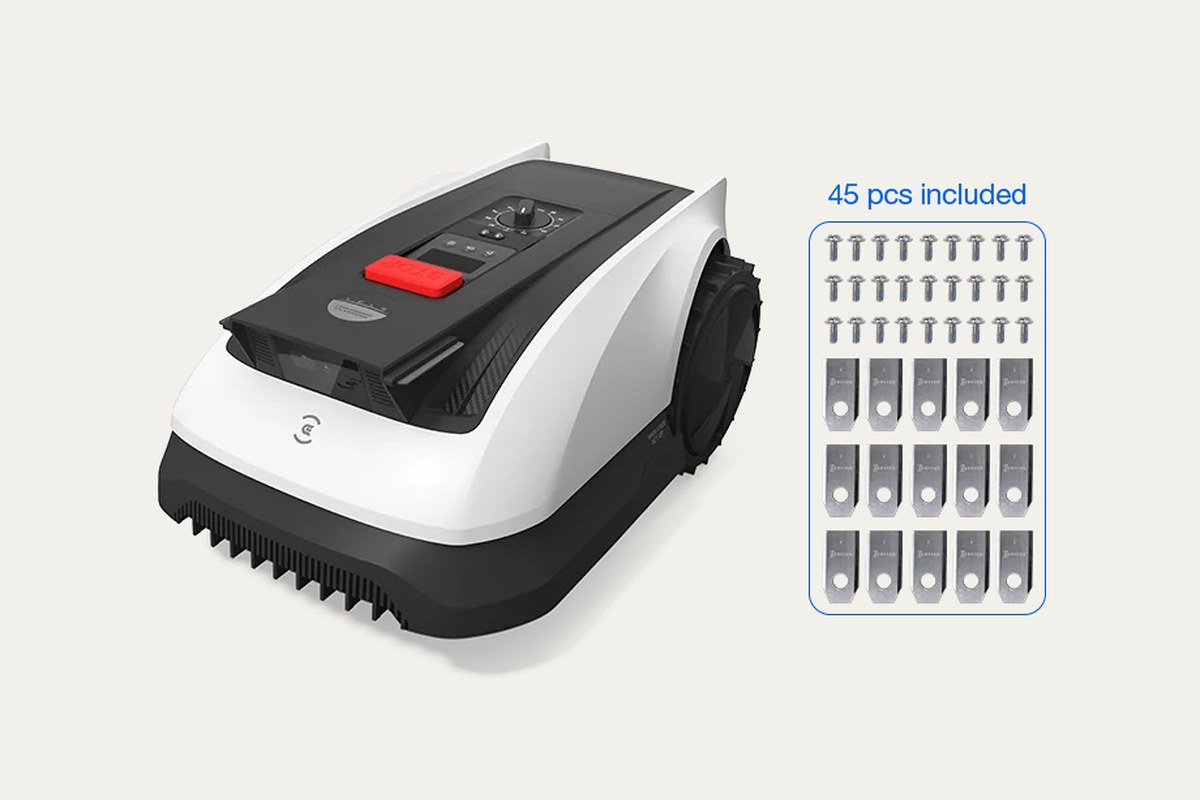
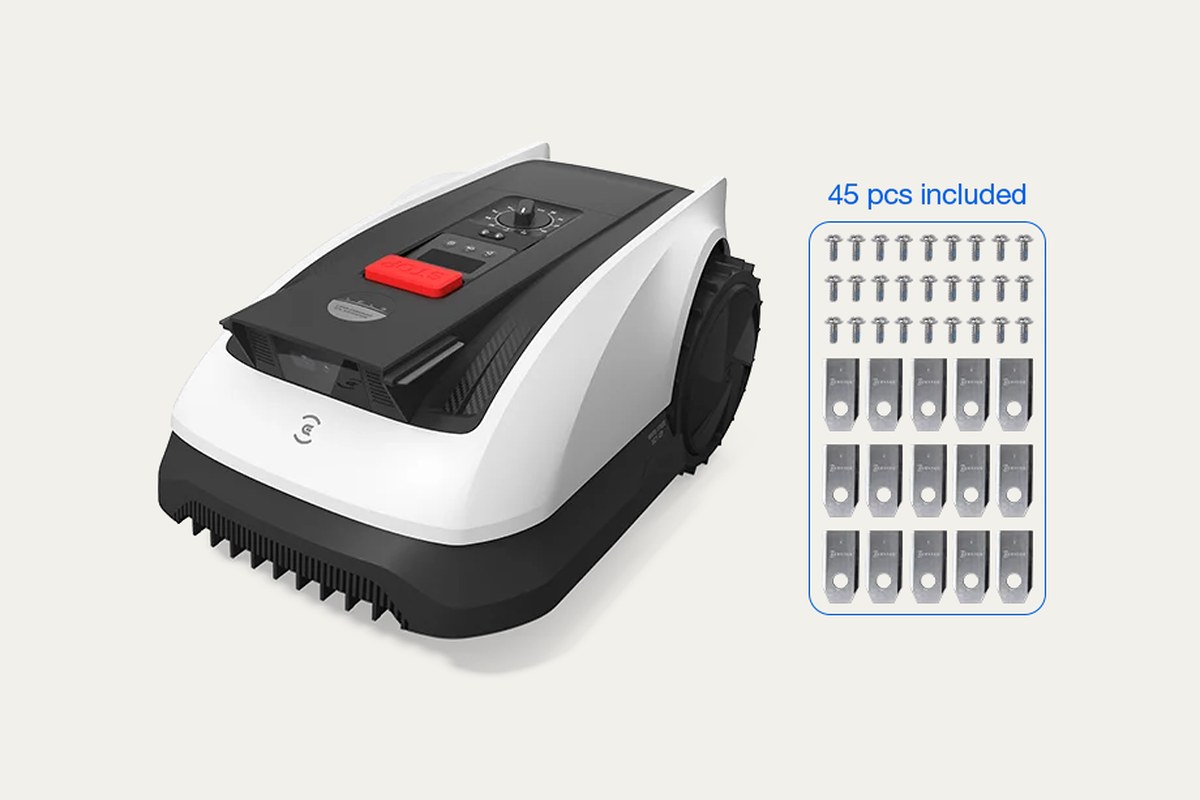
The current US source presents O1000 RTK as a Care Kit including extra blades. This review concerns the underlying mower, not a separate machine created by the accessory bundle. Ecovacs rates it for a quarter acre and lists a 22-centimetre cut. That places it in a different working class from the wider A3000 LiDAR, with a more compact proposition for an ordinary residential garden.
The page's broad app-control language needs to be read beside the specification table, which says electronic height adjustment is not provided. We would therefore not promise remote height changes. The documented range is three to eight centimetres. This small distinction affects daily use and is a good example of why a review should examine the technical table rather than repeat a sales summary.
Narrow access is a meaningful selling point
Ecovacs advertises passage capability around 2.3 feet, but that should be checked against the manual and the particular boundary geometry. A narrow strip with flat paving on both sides is not equivalent to a corridor between walls. We would test entry, turning and return travel rather than only watch the mower pass through once. A single difficult connection can determine whether the front and back lawns can share one robot.
Navigation combines RTK with camera and 3D ToF information. Those components can complement one another, but do not remove the need to place and validate the reference station. The published internal slope limit is 45%, whereas the virtual boundary limit is 17%. Buyers with a bank ending near a path should pay particular attention to that difference. The robot needs an acceptable edge condition, not merely sufficient climbing power.
A realistic week matters more than an hourly rate
The source gives about 65 minutes of continuous mowing and about 100 minutes of charging. Actual useful coverage will depend on how much of each cycle is spent cutting rather than travelling or avoiding objects. We would run the complete weekly schedule, including less favourable growth conditions, before deciding whether the area rating leaves sufficient margin. A mower that just keeps up in an ideal week can become frustrating after several weather interruptions.
The attraction against A3000 is a smaller, potentially more economical system when a reference station is easy to install. The trade includes a narrower cut and manual height adjustment. Compare the exact included blades and hardware without mistaking accessories for improved mower capability. Our outstanding questions are edge consistency, small-object responses and how clearly the app explains interrupted tasks. The research supports a conditional shortlist position, not an independently verified claim of zero trimming or uninterrupted operation beneath every tree.
A practical acceptance test before relying on it
The O1000's narrow-passage proposition deserves an acceptance test with the actual boundary clearances and obstacles in place. Observe repeated passes through the connection and the way the mower turns at either end. Then check the height adjustment physically, because the specification table contradicts an easy assumption that all settings are controlled electronically. We would also verify the extra blades included in the Care Kit while treating them as consumables rather than a performance upgrade. These checks establish a concrete quarter-acre ownership package. They are more useful than accepting an estimated five-minute setup as evidence that the entire lawn will require no refinement.
Setup, maintenance and the ownership decision
O1000 RTK should be unpacked as a complete positioning and cutting system. Check that the reference station, its supply, charging equipment and any promised Care Kit blades are present. Locate the RTK hardware before spending time refining the mowing map. A convenient-looking location close to the dock may not be the best place for positioning. The LiDAR-enhanced terminology does not mean this model uses the same antenna-free arrangement as A3000 LiDAR. Keep that distinction clear when troubleshooting or comparing installation effort. The exact RTK model and bundle contents belong on the invoice.
Its small width and advertised passage capability can help a divided garden, but physical clearances remain essential. Allow the manual's margins beside walls and hazards rather than treating 2.3 feet as a universal guaranteed opening. Observe the turn into a passage as well as travel through its straight section. A narrow connector with a sharp entrance can be harder than a wider-looking route. The 17% virtual-boundary slope limit is also distinct from the 45% internal figure. A compact mower does not automatically suit every small bank beside a path or drainage feature.
The height-control ambiguity on the page should be resolved in the owner's favour through a physical demonstration. The technical table says electronic adjustment is absent, so learn the actual adjustment process and confirm the delivered range. Mark the preferred setting in the maintenance record and inspect the result after changes. Blade care on the 22-centimetre system is straightforward in concept but still requires correct screws, approved parts and safe isolation. Keep a realistic supply of consumables rather than allowing a large accessory bundle to distract from the mower's suitability.
Charging deserves attention because the published continuous mowing and charging references are about 65 and 100 minutes respectively. A schedule for a quarter-acre-class lawn may therefore include several visits to the dock. Count those visits and the travel involved instead of estimating output from an hourly cutting claim alone. Inspect charging contacts and the route for accumulated debris or ground wear. The IPX6 classification should be used with the cleaning instructions, not as a reason to wash components indiscriminately. The owner should be able to recognise whether a stopped task is caused by charging, positioning or an obstruction.
Review account access, optional cellular equipment and alert delivery before expecting useful remote supervision. Cameras and avoidance sensors do not remove the obligation to keep the working area clear of people and animals. For support, identify the exact O1000 RTK rather than the later LiDAR PRO, and obtain local terms for battery and antenna replacement. A Canadian purchase needs a Canadian service route or an explicitly understood cross-border arrangement. The model's value lies in completing a modest real lawn with manageable installation and upkeep, not in claiming that every advertised edge or obstacle feature eliminates all manual work.
Seasonal storage and return to work
For O1000 RTK, seasonal records should cover the reference station as well as the mower and dock. Label supplies and preserve the final mounting arrangement. On restart, verify the manual height setting and the narrow connections that define the installation's usefulness. Follow the exact battery instructions rather than guidance for a later LiDAR PRO. Extra Care Kit blades are useful only when stored and installed correctly. A cautious first full return cycle can reveal changes in ground level or charging access before the regular quarter-acre schedule resumes.
Sources & further reading.
These are the sources behind this research review. Manufacturer claims are not independent performance measurements. Community accounts, when cited, describe individual experiences.
Documentation reviewed: 9 October 2026. Product software and regional bundles can change. Corrections and editorial disclosures.