Not tested. This is a research score for the documented features, compatibility and ownership trade-offs discussed in this review, not a performance measurement.
Features & capability 30%7.6
Core Series 3 brings a 1.26x gain per Phoronix, Thunderbolt 4, Wi-Fi 7 and 64GB support, but the 60 Hz panel measured 64.9 percent sRGB at Tom's Hardware, memory is single channel and the webcam is weak.
Compatibility & connectivity 20%8.3
Four swappable Expansion Cards, two Thunderbolt 4 ports, USI 2.0 pen support and out-of-box Fedora support per Tom's Guide; held back by Ubuntu LTS needing a kernel 7.1 upgrade and a US-English-only backlit keyboard.
Ownership & upkeep 20%7.3
Best-in-class repairability and a drop-in mainboard upgrade path, but Canadian pricing lands above the MacBook Neo and XPS 13, the warranty is one year, and owners still reported cracked replacement covers in September 2026.
Setup & everyday use 15%7.5
Tom's Hardware built the DIY kit in under five minutes, the keyboard is praised everywhere and battery hit 9 hours 16 minutes, but Engadget found the underside too hot for lap gaming and the glossy screen is hard to use in bright rooms.
Documentation & support clarity 15%8.0
Framework publishes repair guides, torque specs, a parts marketplace and a candid cracking post-mortem, though the Canadian store never labels its currency and warranty terms aren't stated for Canada specifically.
Compare scores within the same product category. Small decimal differences should not override your needs or the evidence limits.
How the Standpoint Score works
We score five aspects of the documented product on a 0–10 scale, then calculate a weighted total:
- Features & capability30% of the total
- Compatibility & connectivity20% of the total
- Ownership & upkeep20% of the total
- Setup & everyday use15% of the total
- Documentation & support clarity15% of the total
This product’s 7.7/10 is an editorial research assessment. It does not claim measured performance, tested reliability or a verified customer satisfaction rate. Compare it with products in the same category, and read each criterion’s reasoning above.
Read the full rubric and score bands ↗From a tech standpoint.
Buy the 2026 Framework Laptop 12 if repairability and Linux support matter more to you than screen quality, and buy the DIY Edition with the Core 5 320 if you can source your own memory and storage. Outside reviewers agree the new Intel chip removes the old model's main weakness and roughly doubles the usable battery life. Skip it if you edit photos, work outdoors or just want the most laptop for $950, because the MacBook Neo and the Dell XPS 13 both have far better displays for the same money in Canada. And don't expect it soon: as of October 24, every configuration on the Canadian store is a December pre-order.
Reasons to consider it
- The new chip is a real fix, not a bump: Phoronix measured the Core 7 350 at 1.26 times the original Core i5-1334U's performance while drawing 16.7 W on average instead of 18.6 W
- Battery life finally matches the size: Tom's Hardware and Tom's Guide both logged 9 hours 16 minutes of web browsing at 150 nits on Fedora 44, where Engadget's gaming on the old model drained it fast
- It stays the most fixable 12-inch laptop you can buy in Canada, with one SO-DIMM slot up to 64GB, a swappable M.2 2230 SSD, a replaceable Wi-Fi card and a mainboard that drops into the 2025 chassis
- Thunderbolt 4 on the two rear slots means an eGPU or two 4K 60 Hz monitors, which no other laptop at this size and price offers
Go in knowing
- The screen is the same 12.2-inch 60 Hz panel as before: Tom's Hardware measured 64.9 percent sRGB and Tom's Guide 48.3 percent DCI-P3, and it is glossy enough that Tom's Guide found it hard to use near a window
- In Canada the $979 base model costs more than a MacBook Neo ($949) and a Dell XPS 13 ($949.99), both of which have far better displays and more speed per dollar
- The 2025 chassis had a documented bottom-cover cracking problem; Framework changed the plastic and tooling in late 2025, but r/framework owners were still reporting cracked replacement covers in September 2026
- Nothing ships before December, the backlit keyboard is US English only, the Core 3 304 has no fingerprint reader, and the 8GB base model struggles on Windows per Engadget
Affiliate link. As an Amazon Associate, Tech Standpoint earns from qualifying purchases. It never changes our verdict or score. Disclosure
The specification sheet.
Published specifications from the linked sources. Configurations and availability can differ by country.
- Canadian price (Oct 24, 2026)
- frame.work (Canada store, CAD): Pre-built Core 3 304 8GB/512GB $979; Core 5 320 16GB/512GB $1,539; Core 7 350 32GB/512GB $1,959. DIY Edition from $769 / $1,089 / $1,399 before memory, storage, OS and Expansion Cards. All Batch 5 pre-orders shipping in December; excludes taxes and duties
- Processor options
- Intel Core Series 3 (Wildcat Lake): Core 3 304 (1 P-core + 4 LP E-cores, up to 4.3 GHz, 1 Xe3 core), Core 5 320 (2 + 4, 4.6 GHz, 2 Xe3), Core 7 350 (2 + 4, 4.8 GHz, 2 Xe3)
- Memory and storage
- One DDR5 SO-DIMM slot, single channel, up to 64GB at 6400 MT/s; one M.2 2230 NVMe slot up to 2TB
- Display
- 12.2-inch 1920 x 1200 IPS touchscreen, 60 Hz, 16:10, rated above 400 nits, glossy soda-lime glass, USI 2.0 stylus support
- Ports
- Four Expansion Card slots (rear two are Thunderbolt 4, front two USB 3.2 Gen 2), all four accept USB-C charging; 3.5 mm jack
- Wireless
- Wi-Fi 7 (Intel BE213 on a replaceable M.2 module), Bluetooth 6.0
- Battery and charging
- 50 Wh; 60 W USB-C GaN charger sold separately; Framework claims about 70 percent longer 4K Netflix streaming than the Core i5-1334U model
- Size and weight
- 287 x 213.9 x 18.45 mm; 1.3 kg
- Webcam and biometrics
- 2MP 1080p30 webcam with hardware camera and mic cut-off switches; fingerprint reader in the power button on Core 5 and Core 7 only; backlit keyboard in US English only
- Add-ons (CAD)
- Framework Stylus $79; Core Series 3 mainboard alone $429 / $649 / $939 for owners of the 2025 model
$979 in Canada, and nothing ships before December
Start with the two numbers that matter. On Framework's Canadian store the cheapest pre-built Laptop 12 with the new Intel Core Series 3 chip is $979, and on October 24, 2026 every configuration, pre-built or DIY, is listed as Batch 5 with shipping in December. Batches 1 through 4 are sold out. That $979 buys a Core 3 304, 8GB of memory, a 512GB SSD and Fedora Linux. The Core 5 320 with 16GB is $1,539 and the Core 7 350 with 32GB is $1,959. The DIY Edition starts at $769, $1,089 and $1,399, with no memory, storage or operating system.
Those Canadian prices sit about 40 percent above the US stickers of $699, $1,099 and $1,399, which is roughly the exchange rate rather than a Canada tax. The store shows prices before sales tax and duties, though Canadian owners on Framework's forum report being charged only HST at checkout, with duties handled by Framework.
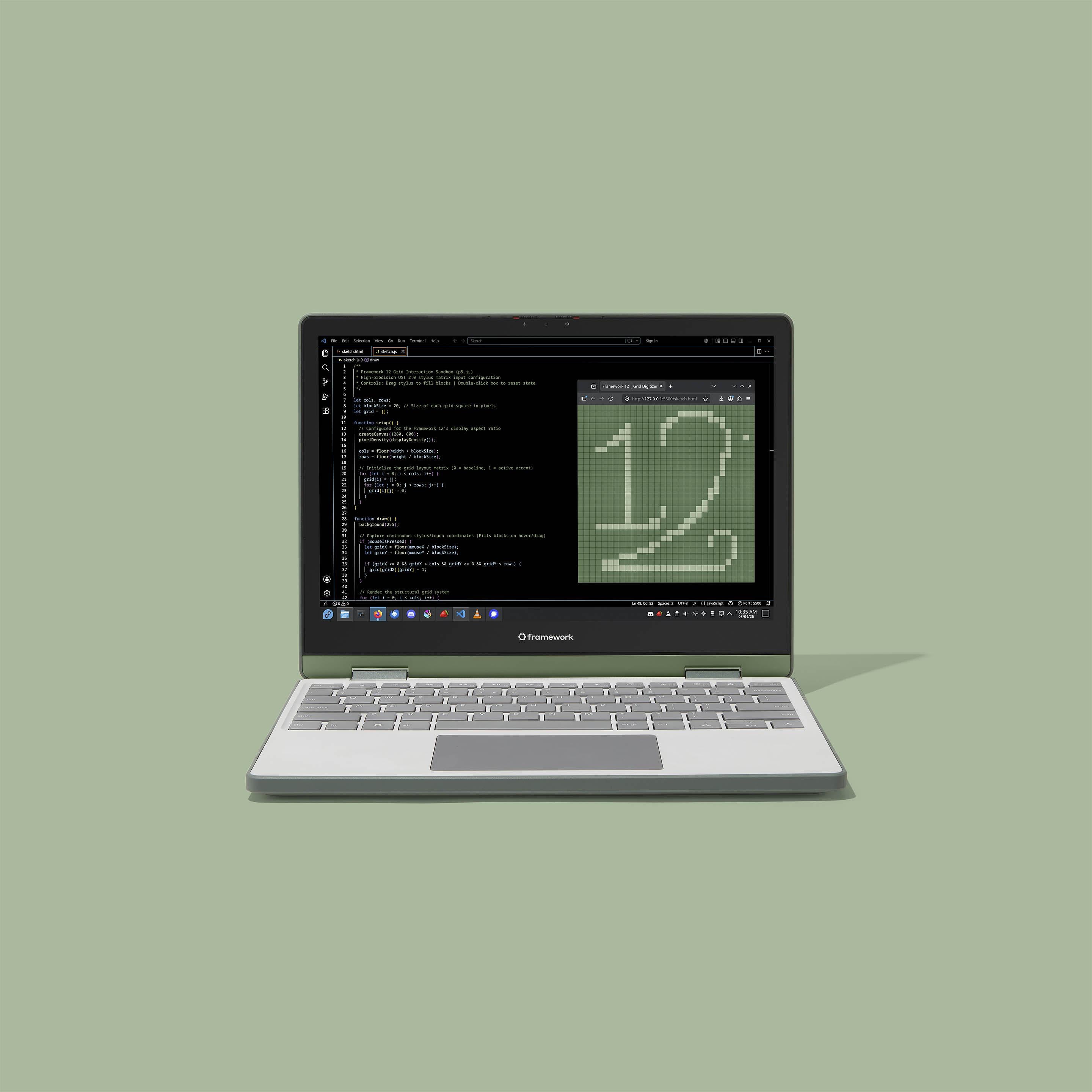
The Laptop 12 is Framework's smallest machine: a 12.2-inch touchscreen 2-in-1 with a 360-degree hinge, four swappable Expansion Card ports and a plastic shell in five colours. This is a research review, built from Framework's documentation, four outside reviews and owner threads, because Cameron hasn't used one. The question it answers: in Canada, is this worth paying more than a MacBook Neo or a Dell XPS 13 for a laptop you can open with the included screwdriver?
What the Core Series 3 refresh changes, and what Framework left alone
The new mainboard is the whole story. Framework swapped the 13th-gen Core i3 and i5 for Intel's Core Series 3 chips, codenamed Wildcat Lake: a Core 3 304 with one performance core and four low-power efficiency cores, and a Core 5 320 and Core 7 350 with two performance cores and four efficiency cores. The two rear Expansion Card slots gain Thunderbolt 4, Wi-Fi moves to an Intel BE213 Wi-Fi 7 module, memory tops out at 64GB of DDR5-6400 instead of 48GB, and the Core 5 and Core 7 boards put a fingerprint reader in the power button.
There is also a backlit keyboard, running open-source ZMK firmware, but only in US English. Several people in the r/framework announcement thread were annoyed by that, since Framework's non-US keyboards usually miss the new options. Pre-builts now come with Fedora 44 KDE Plasma by default; Windows 11 adds roughly $100 US. Framework says the new parts fit the 2025 chassis, and the Canadian store sells the mainboard alone for $429, $649 or $939.
What didn't change matters just as much. The 12.2-inch 1920 x 1200 60 Hz display, the 50 Wh battery, the speakers, the 2MP webcam and the plastic chassis all carry over. Phoronix's view is that owners of the original Core i5 model don't necessarily need the upgrade, and the old Core i5-1334U actually had eight efficiency cores against the new boards' four. If your 2025 unit feels fast enough, keep it. If it wheezes under a dozen Chrome tabs, read on.
The chip that fixes the wheeze, and the lap you can't use
Every reviewer tested the Core 7 350, so that's where the hard numbers are. Phoronix ran its Linux benchmark suite on the new board against the original Core i5-1334U model and reported a geometric mean of 1.26 times the performance, at 16.69 W average power draw versus 18.6 W, with a lower 34 W peak against 41 W. In plain terms: about a quarter faster while using a tenth less power. Engadget, which found the old model struggled with Fortnite, says the new one runs Fortnite at high settings and Cyberpunk 2077 on the lowest settings without stutter.
There are limits. Wildcat Lake only supports single-channel memory, so that one SO-DIMM slot is also a speed ceiling. Tom's Hardware found the Core 7 350 slightly ahead of the Dell XPS 13's Core 5 320 in single-core work and roughly even in multi-core, but behind the MacBook Neo's A18 Pro in both. Civilization VI managed about 30 fps at 1080p. Phoronix called the integrated graphics fine for browsing and office work and not useful for anything demanding.
Heat is the trade-off. Engadget reported the underside got roasting hot within ten minutes of Cyberpunk on a table and wouldn't game with it on a lap. Tom's Hardware measured a tamer 38 degrees Celsius on the underside during its load test, with the keyboard at 34. For writing, lectures and video calls, none of this will bother you. For a student who wants to play Minecraft on the GO train, plan on a desk. Which chip should you pick? That comes down to the fingerprint reader and the second performance core, covered below.
Nine hours on Linux, five hours the way Engadget used it
Framework's headline claim is about 70 percent longer battery life than the Core i5-1334U model, based on early 4K Netflix streaming tests with the Core 5 320. The 50 Wh battery is unchanged, so all of that gain comes from the chip. Outside numbers back it up but add context. Tom's Hardware ran a web-browsing loop on live sites at 150 nits with Wi-Fi on, under Fedora 44, and averaged 9 hours 16 minutes across three runs. Tom's Guide logged the same 9 hours 16 minutes, slightly behind a Lenovo Chromebook Plus 2-in-1 at 10 hours 34 minutes.
Engadget's experience was rougher: about five hours of writing with Spotify streaming on a full charge, and a need to plug in around three hours when gaming. The gap between nine and five is the gap between a controlled test at 150 nits and real use with a brighter screen, music and background apps. Both are fair, and both beat the original.
What this means for you: a full day of university lectures with the brightness turned down is realistic, and a long cross-country flight is not without the charger. The charger is a separate purchase; Framework sells a 60 W USB-C GaN brick, but all four Expansion Card slots accept USB-C power, so any USB-C PD charger you already own will do, slowly if it's a low-watt phone brick. The screen you'll be staring at for those nine hours is the next problem.
The 65 percent sRGB screen that reviewers and owners won't forgive
Framework kept the same 12.2-inch 1920 x 1200 panel, and every outlet made it the biggest complaint. Tom's Hardware measured 451 nits of peak brightness, which is good and about equal to a MacBook Neo, but only 64.9 percent sRGB colour coverage. Tom's Guide measured 451.2 nits, 68.2 percent sRGB and 48.3 percent DCI-P3, against 105 percent sRGB for the Dell XPS 13 and 110 percent for the MacBook Neo. Digital Trends called the display the weakest link. Colours look flat and a little washed out, and there is no higher-resolution or 120 Hz option.
It's also glossy. Tom's Guide found it mirrored the room when off and was hard to use in bright light or outdoors, despite the brightness. In the r/framework thread about the reviews, the most-upvoted comment was someone refusing to buy any laptop below 100 percent sRGB in 2026, and several others in the announcement thread said a better screen was the one thing they'd hoped for. That is a clear pattern, not a lone grumble.
The rest of the input hardware is mixed. The keyboard gets praise everywhere: 1.5 mm travel, 19 mm spacing, and Tom's Guide called it very comfortable. The trackpad is small and, per Tom's Hardware, unresponsive near the top. The 2MP webcam looked like a watercolour to Tom's Hardware and blew out highlights for Tom's Guide, though the hardware camera and mic cut-off switches are a genuine plus. Stylus support is USI 2.0, and Framework's own pen is $79 in Canada with 4,096 pressure levels and a removable 80 mAh battery. The price is where it gets harder.
The Canadian price math: DIY is the only way it's a bargain
Framework is upfront that memory and SSD shortages pushed prices higher than planned, and Tom's Hardware titled its review around that shortage. Its verdict was that configured like a Dell XPS 13 with 8GB and 500GB, the Framework came to about $1,074 US before the charger and Expansion Cards, nearly $300 more than the Dell, and that fully configured it runs $200 to $300 above rivals. In Canada the same logic holds: the $1,539 Core 5 pre-built is $140 more than Dell's 16GB/512GB XPS 13 at $1,399.99.
The DIY Edition changes the equation if you already have parts. The $769 Core 3 DIY and $1,089 Core 5 DIY need a DDR5 SO-DIMM, an M.2 2230 SSD and an OS, but a 16GB stick and a 500GB drive bought on sale or pulled from an old machine can bring a Core 5 build in well under the $1,539 pre-built. One r/framework commenter argued the SO-DIMM slot is exactly why the Laptop 12 is now price-competitive with the XPS 13, where Dell charges $250 for 8GB more of soldered memory. That's a fair point, with the caveat that DDR5 is not cheap this autumn either.
Which chip? Tom's Hardware notes the Core 3 304 lacks the fingerprint reader and has one performance core and one graphics core; the Core 5 320 doubles both for $560 more pre-built, or $320 more as a DIY board. The Core 7 350 adds only 200 MHz of CPU clock and 100 MHz of graphics clock over the Core 5 for another $420, and Redditors in the announcement thread questioned that jump. The Core 5 320 DIY at $1,089 is the one to configure. Now the rivals, at Canadian prices.
MacBook Neo, Dell XPS 13 or Framework: what $950 to $1,550 buys in Canada
The Apple MacBook Neo is the laptop every reviewer put next to this one. iPhone in Canada's September price check has it at $949 with an A18 Pro, 8GB and 256GB, up from a $799 launch price. Tom's Hardware's Geekbench results put the Neo ahead of the Core 7 350, and Tom's Guide measured 110 percent sRGB on its screen. When Framework's founder posted a teardown comparing the two, the r/framework discussion kept returning to one line: repairable isn't the same as upgradable. The Neo's memory and storage are soldered. If you'll never open a laptop, it's the better buy.
The Dell XPS 13 (2026), which Tech Standpoint reviewed at 7.6, starts at $949.99 on Dell.ca with 8GB and 256GB and reaches $1,399.99 with 16GB and 512GB. It weighs 1 kg against Framework's 1.3 kg, has a 2.5K 120 Hz touchscreen and runs the same Core 5 320. One r/framework commenter put it bluntly: unless you need the pen and the 360 hinge, the XPS 13 is the better value in the same footprint. The XPS can't be upgraded later, though, and 8GB on Windows is tight.
Above that sits the 13-inch MacBook Air M5, scored 8.4 here, which iPhone in Canada lists from $1,799. It's the pick if you want a premium screen, 16GB standard and all-day battery and don't care about Windows or Linux. Framework's own Laptop 13 is the step up for anyone who wants Framework's repairability with a better display and dual-channel memory; the Canadian store didn't show its starting price during this check. The Laptop 12 wins exactly one race: a touchscreen 2-in-1 with a pen that you can rebuild part by part. Here's what living with that looks like.
Living with it: the cracking cover, a one-year warranty and 30-day returns
The 2025 Laptop 12 had a bottom-cover cracking problem, and it's the main long-term risk owners raise. Framework's official forum post, first published September 15, 2025 and updated April 30, 2026, blames the plastic material, moulding parameters and the cover's internal geometry, says tooling and material were changed, and later admitted a sorting error shipped older covers as replacements. Covers with a moulded date of December 2025 or later use the new material. Framework replaces cracked covers under warranty if you send photos to support, and tells owners to finger-tighten the screws only.
The pattern on r/framework is that support does ship replacements, sometimes a whole laptop, and owners describe the cover swap as quick. But as of August and September 2026 several separate owners in the 1,200-post tracking thread were reporting replacement covers cracking again, at least one described a refused warranty claim on an older replacement, and nobody could say the issue was closed. New Core Series 3 units should get the revised plastic, but ask support for the moulded date if a cover cracks, and treat the plastic shell as the price of a laptop this cheap to fix.
Warranty in Canada is Framework's standard one year from delivery against defects, and Tom's Hardware quotes an optional three-year extension at US$89. Returns are 30 days from the ship date per Framework's knowledge base, updated February 2026: the laptop must come back with the memory and storage you ordered, a reprocessing fee can be deducted for damage, and the terms of sale make you pay return shipping unless the unit is defective. Linux buyers need kernel 7.1 or newer for the Wi-Fi card; Fedora 44 has it, Ubuntu 26.04 LTS needs a manual kernel update. Framework publishes repair guides, torque specs and a parts marketplace, which is more than Dell or Apple give you. So who is this for?
Who should buy the 2026 Laptop 12, who should skip it, and what to buy instead
Buy it if you want a small touchscreen laptop that will still be alive in six years because you can swap the board, battery, screen and ports yourself, and you run Linux or don't mind a Windows licence on top. The DIY Core 5 320 at $1,089 plus your own 16GB stick and 2230 SSD is the smart configuration. It's also the right pick for a student who takes notes with a pen in tablet mode and has a desk for anything heavier than a browser.
Skip it if colour accuracy, outdoor use or value per dollar leads your list. A MacBook Neo at $949 or an XPS 13 at $949.99 is faster, lighter and has a far better screen, and the Neo's 110 percent sRGB against Framework's 65 is not close. Skip the 8GB pre-built if you plan to run Windows, and skip it entirely if you need a laptop before December.
Buy instead: the XPS 13 with 16GB at $1,199.99 if you want Windows and a great display; the MacBook Neo if you'll never open a laptop; a Framework Laptop 13 if you want Framework's upgrade path with a better panel. Our score reflects a chip that finally delivers, a repair story nobody else matches, and a screen, a price and a plastic shell that haven't caught up.
The closest alternatives.
| Product | Standpoint Score | Best for | Price |
|---|---|---|---|
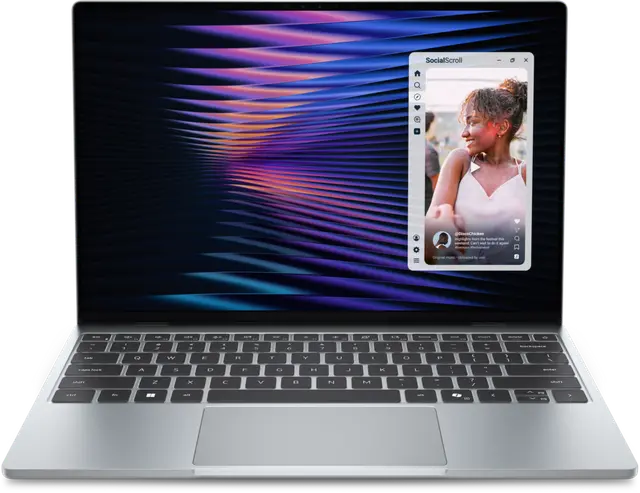
| Framework Laptop 12 (2026)This review | 7.7Research | Students and Linux users who want a small touchscreen 2-in-1 they can open, upgrade and fix themselves, and who already… | Amazon.ca ↗ |
| Dell XPS 13 (2026) | 7.6Research | Windows users who want a light, well-built laptop with all-day battery for school, travel and office work, and who'll… | Amazon.ca ↗ |
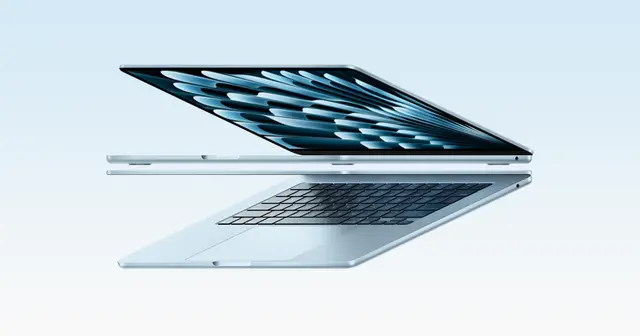
| Apple MacBook Air 13-inch (M5) | 8.4Research | A mobile writer, student or mixed-workload Mac user who values portability and can plan the configuration up front. | Amazon.ca ↗ |
| Apple iPad Air (M4) | 8.1Research | Someone who needs a tablet for drawing, documents and travel, not someone assuming every laptop task will transfer. | Amazon.ca ↗ |
Compare scores within a category: Tested means our own use, Research means documentation and attributed outside testing. Price links are affiliate links. As an Amazon Associate, Tech Standpoint earns from qualifying purchases. Disclosure
Questions before checkout.
How much does the 2026 Framework Laptop 12 cost in Canada, and when does it ship?
On October 24, 2026, Framework's Canadian store lists the pre-built at $979 (Core 3 304, 8GB, 512GB, Fedora), $1,539 (Core 5 320, 16GB) and $1,959 (Core 7 350, 32GB), and the DIY Edition from $769, $1,089 and $1,399 without memory, storage or OS. Every configuration is a Batch 5 pre-order shipping in December, with a refundable $100 deposit.
Is the Core Series 3 upgrade worth it for a 2025 Framework Laptop 12 owner?
Phoronix measured the Core 7 350 at about 26 percent faster than the original Core i5-1334U while using about 10 percent less power, and Framework claims up to 70 percent longer video battery life. The Canadian mainboard price is $429, $649 or $939, so it only makes sense if the old board feels slow or you want Thunderbolt 4 and Wi-Fi 7.
How long does the battery last on the 2026 Framework Laptop 12?
Tom's Hardware averaged 9 hours 16 minutes over three web-browsing runs at 150 nits on Fedora 44, and Tom's Guide reported the same figure. Engadget got closer to five hours with writing and Spotify, and about three hours while gaming. The 50 Wh battery is unchanged; the gain comes from the more efficient chip.
Does the Framework Laptop 12 run Linux well?
Yes, with one catch. Pre-builts ship with Fedora 44 KDE Plasma, and Tom's Guide found Wi-Fi, Bluetooth, touchscreen and fingerprint reader all worked out of the box. The Intel BE213 Wi-Fi 7 card needs Linux kernel 7.1 or newer, so Phoronix notes Ubuntu 26.04 LTS requires a manual kernel upgrade until the next release.
Did Framework fix the Laptop 12 bottom cover cracking?
Framework says it changed the plastic material, moulding settings and cover geometry, and covers moulded from December 2025 onward use the new design. Replacements are covered under warranty with photos. As of September 2026, owners on r/framework and Framework's forum were still reporting some cracked replacement covers, so the fix isn't confirmed closed.
Framework Laptop 12 or MacBook Neo in Canada?
The MacBook Neo at $949 is faster in Tom's Hardware's Geekbench tests, lighter, and has a far better screen at 110 percent sRGB. The Framework at $979 has upgradeable memory and storage, four swappable ports, a touchscreen with pen support and full repair guides. Pick the Neo for value and display, the Framework if you want to keep it alive for years.
Sources & further reading.
These are the sources behind this research review. Manufacturer claims are not independent performance measurements. Community accounts, when cited, describe individual experiences.
- Framework Laptop 12 (Intel Core Series 3) pre-built comparison, Canadian store ↗manufacturer
- Framework Laptop 12 DIY Edition (Intel Core Series 3) comparison, Canadian store ↗manufacturer
- Framework Laptop 12 product page, Canadian store ↗manufacturer
- Framework Laptop 12 Mainboard (Intel Core Series 3), Canadian store ↗manufacturer
- Framework blog: Framework Laptop 12, now with Core Series 3 ↗manufacturer
- Framework Limited Warranty ↗support
- Framework knowledge base: What is the Framework return policy? ↗support
- Framework Community: Important Update: Framework Laptop 12 (bottom cover cracking) ↗manufacturer
- Engadget: Framework Laptop 12 (2026 upgrade) review ↗independent review
- Tom's Hardware: Framework Laptop 12 (Wildcat Lake) review ↗independent testing
- Tom's Guide: Framework Laptop 12 review (2026) ↗independent testing
- Phoronix: Framework Laptop 12 offers improved performance and efficiency with Intel Core 3 Wildcat Lake ↗independent testing
- Digital Trends: Framework's cheapest laptop just got serious about taking on the MacBook Neo ↗independent review
- iPhone in Canada: Best MacBook to buy in Canada (price check September 30, 2026) ↗retailer listing
- Dell Canada: XPS 13 search results ↗retailer listing
- r/framework: Framework 12 Wildcat Lake reviews ↗Community discussion
- r/framework: Framework 12 with Intel Core Series 3 coming now ↗Community discussion
- r/framework: Framework laptop 12 cracks ↗Community discussion
- r/framework: Framework founder reviews Apple Neo vs Framework Laptop 12 ↗Community discussion
- Framework Community: [TRACKING] FW12 cracking issue ↗Community discussion
Product software and regional bundles can change. Corrections and editorial disclosures.
Affiliate link. As an Amazon Associate, Tech Standpoint earns from qualifying purchases. It never changes our verdict or score. Disclosure