Not tested. This is a research score for the documented features, compatibility and ownership trade-offs discussed in this review, not a performance measurement.
Features & capability 30%9.0
Titanium build, 3,000-nit AMOLED, faster maps, Epic and stamina tools, plus optional LTE and inReach make it the most capable watch in the group.
Compatibility & connectivity 20%8.3
Works with Garmin Connect and adds LTE and satellite, though Bettertrail reported slow satellite locks and RunMorph noted Mac map installs failing.
Ownership & upkeep 20%6.6
Sport GPS battery is down 13 to 16 percent from the Fenix 8 Pro, inReach needs a paid plan, and $1,540 to $1,890 at MEC is a lot to own.
Setup & everyday use 15%7.2
Early owners report crashes and reboots, though Bettertrail found the watch comfortable and the 43 mm size helps smaller wrists.
Documentation & support clarity 15%7.6
Garmin's release lists features clearly and the warranty terms are published, but update promises and Canadian plan prices are hard to find.
Compare scores within the same product category. Small decimal differences should not override your needs or the evidence limits.
How the Standpoint Score works
We score five aspects of the documented product on a 0–10 scale, then calculate a weighted total:
- Features & capability30% of the total
- Compatibility & connectivity20% of the total
- Ownership & upkeep20% of the total
- Setup & everyday use15% of the total
- Documentation & support clarity15% of the total
This product’s 7.9/10 is an editorial research assessment. It does not claim measured performance, tested reliability or a verified customer satisfaction rate. Compare it with products in the same category, and read each criterion’s reasoning above.
Read the full rubric and score bands ↗From a tech standpoint.
Buy the Fenix 9 Pro if you go where there is no cell signal and want SOS and messaging on your wrist, or if you're coming from a Fenix 7 or older. Fenix 8 Pro owners should stay put, because outside reviewers see small gains and a lower GPS battery rating. If you don't need LTE or inReach, the regular Fenix 9 is the smarter buy, and a leftover Fenix 8 Pro may be better again. Wait for another software update or two before paying full price, since early owners are reporting crashes and inReach battery drain.
Reasons to consider it
- Titanium case and sapphire lens give the Pro a sturdier, more premium build than the polymer-case Fenix 9, and the Pro adds a 43 mm size that the Fenix 8 Pro never had
- Map panning is up to 30 percent faster by Garmin's claim, and Bettertrail noticed the difference straight away, which matters on a watch you navigate with
- LTE and inReach put SOS, messaging and live location on the wrist, and RunMorph scored the satellite features 9 out of 10
- Smartwatch battery improved: 18 days at 47 mm against 15 for the Fenix 8 Pro, and up to 57 days on solar models
Go in knowing
- Sport GPS battery fell about 16 percent against the Fenix 8 Pro at 47 mm, and Bettertrail called the 43 mm model's endurance poor for a flagship
- inReach needs a paid plan, and Bettertrail reported slow satellite locks and a failed LTE message that kept retrying for about three hours and drained the battery
- At $1,539.99 to $1,889.99 at MEC.ca, RunMorph's 4.5 out of 10 value score is easy to understand unless you need the satellite features
- A tracker of owner reports counted 123 bugs by October 9, including crashes, with only eight fixed so far
Affiliate link. As an Amazon Associate, Tech Standpoint earns from qualifying purchases. It never changes our verdict or score. Disclosure
The specification sheet.
Published specifications from the linked sources. Configurations and availability can differ by country.
- Canadian price (Oct 23, 2026)
- MEC.ca: Pro 43 and 47 mm $1,539.99, 51 mm $1,679.99; Pro with inReach 43 and 47 mm $1,679.99 (Carbon Gray DLC $1,749.99), 51 mm $1,889.99. Search listings showed Amazon.ca at $1,539.99 (47 mm) and Best Buy Canada at $1,819.99 (51 mm, configuration unconfirmed). Garmin.ca price not confirmed.
- Sizes and weight
- 43 mm (61 g), 47 mm (78 g), 51 mm (99 g)
- Case and lens
- Titanium case (first for the Fenix line), sapphire lens
- Display
- AMOLED up to 3,000 nits: 1.4 inch at 47 mm (454 x 454), 1.5 inch at 51 mm; solar models use Memory-in-Pixel
- Smartwatch battery (Garmin)
- Up to 10 days (43 mm), 18 days (47 mm), 31 days (51 mm AMOLED); up to 57 days on solar models
- GPS battery (47 mm)
- 32 hours normal, 26 hours multi-band, per RunMorph (Fenix 8 Pro 47 mm: 38 and 30 hours)
- Connectivity
- Bluetooth, Wi-Fi, ANT+; optional LTE and inReach satellite on inReach models, plan required
- Storage and memory
- 64 GB (double the Fenix 8 Pro), 50% more RAM than the Fenix 8
- Durability
- 10 ATM water rating and MIL-STD-810H, per RunMorph
- Warranty
- Garmin consumer limited warranty: one year for defects; battery wear and accidental damage excluded
The Pro costs $80 to $140 more than the plain Fenix 9 in Canada. Is titanium worth that?
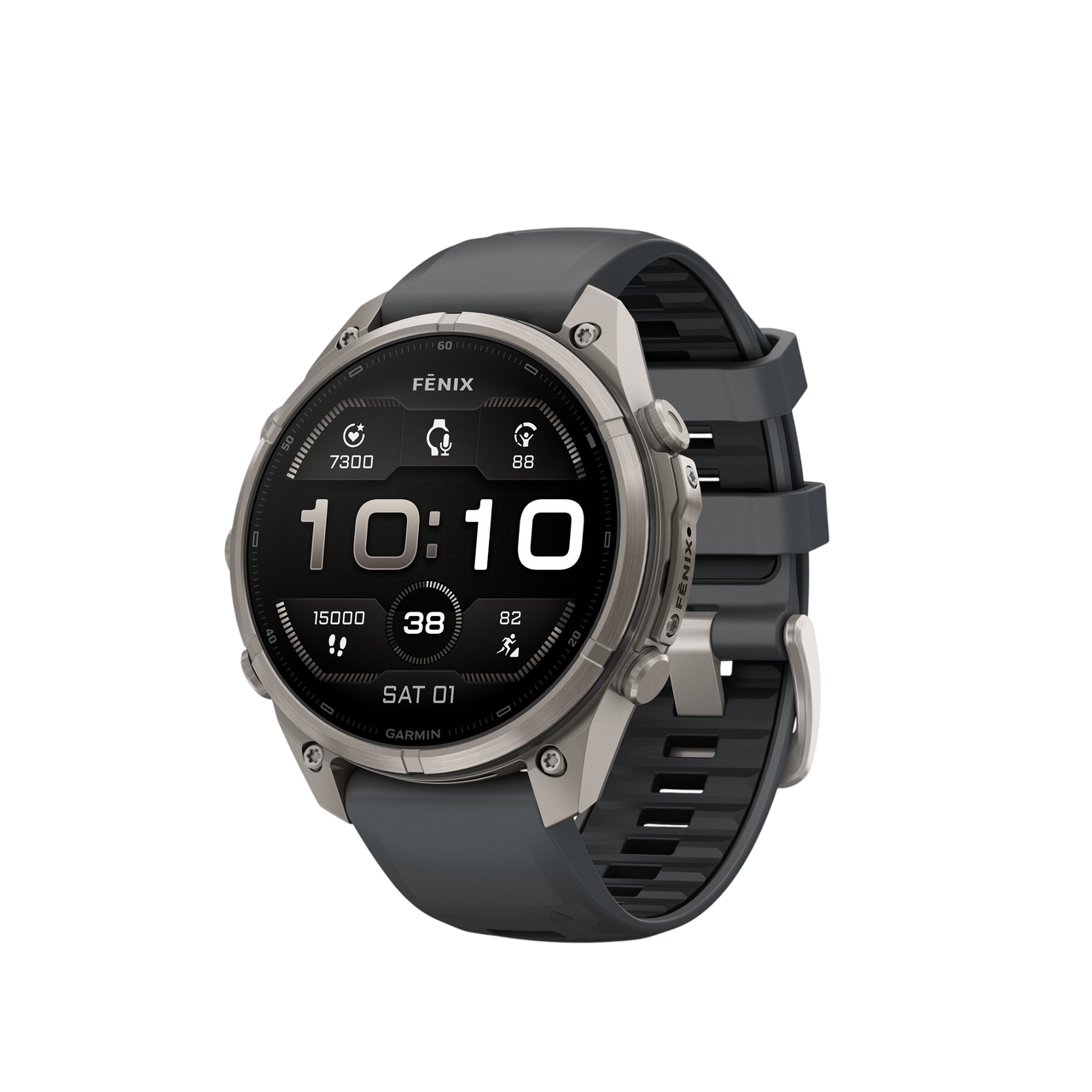
Think of the Fenix 9 Pro as a Fenix 9 with a titanium case, a brighter screen and a satellite option. On MEC.ca the Pro is listed at $1,539.99 for the 43 mm and 47 mm and $1,679.99 for the 51 mm. The regular Fenix 9 is $1,399.99, $1,469.99 and $1,599.99 in the same three sizes. That's a gap of $80 to $140. MEC doesn't print the currency, but it's a Canadian retailer and the prices run about 40 percent above the US launch prices of $999.99 and $1,099.99, so CAD is the safe reading.
Garmin announced both watches on August 25, 2026. The Pro is the first Fenix with a titanium case, and it's the only one that can carry LTE and inReach satellite messaging. The inReach versions run $1,679.99 for the 43 mm and 47 mm and $1,889.99 for the 51 mm at MEC, before plan fees. Amazon.ca and Best Buy Canada showed similar numbers in search listings, though those pages wouldn't open for confirmation, and no Garmin.ca price turned up.
This is a research review built from Garmin's documents, retailer listings and outside testing, not a hands-on one. The question it answers is who actually needs the Pro. The next section shows what the extra money buys.
What the Pro adds over the Fenix 9, and the surprise that it isn't lighter
Both watches share the big software and hardware changes: 64 GB of storage, 50 percent more RAM, faster map panning, Garmin Epic for stitching multi-day trips into one story, and the new stamina zones and curve. Both are sold in 43, 47 and 51 mm. Everything above that line is Pro only: the titanium case, AMOLED screens up to 3,000 nits, a 1.5 inch display on the 51 mm, solar versions in 47 and 51 mm, a green flashlight mode for night vision, and the LTE and satellite hardware.
The shorter list is the honest one. Bettertrail points out that the Pro uses the same fifth-generation heart rate sensor as the Fenix 8 Pro, so health tracking isn't why you'd pay more. The Run Testers put the 51 mm Pro at 99 g, while Canadian Running lists the 51 mm Fenix 9 at 91 g. Titanium here is about feel and toughness, not weight. RunMorph gives the Pro a 9 out of 10 for durability and finish, but a 4.5 for value.
If the satellite part matters to you, the next question is how well it actually works.
inReach on your wrist: a good backup, but a clumsy lifeline
Garmin says inReach is available on all three Pro sizes for the first time, with SOS to a staffed response centre, messaging, Garmin Locate and weather over satellite or LTE. RunMorph scored the satellite features 9 out of 10. Garmin itself warns that satellite and SOS on the watch have limitations compared with a standalone inReach device, and points to a requirements page for the details.
Bettertrail's reviewer, an experienced inReach user, had a rougher time. The watch often struggled to find satellites, and sending a message on the move wasn't practical, because the watch had to come off and be held at an angle. A failed LTE message kept retrying for about three hours after a summit and drained the battery. The reviewer would use it for backup SOS and LiveTrack, not as the main way to talk to anyone.
A plan is required for all of it. RunMorph lists European plans from 9.99 to 59.99 euros a month plus a 49.99 euro activation fee, and Canadian Running says Garmin includes 12 months of emergency SOS messaging after a trial. No Canadian dollar plan prices turned up, so check them before you buy. Next up is what all that radio use does to the battery.
The battery got better on the couch and worse on the trail
Garmin rates smartwatch mode at 10 days on the 43 mm, 18 days on the 47 mm and 31 days on the 51 mm, with up to 57 days on solar models assuming three hours a day outdoors at 50,000 lux. Those are real gains. RunMorph notes the 47 mm moves from 15 to 18 days against the Fenix 8 Pro. The Run Testers saw a two-hour run at full brightness with max-accuracy GPS cost the 9 Pro 4 percent, against 5 percent for the Fenix 8 and 8 Pro.
The trade-off is GPS endurance. RunMorph calculates the 47 mm drops from 38 to 32 hours in standard GPS, and from 30 to 26 hours in multi-band, roughly 13 to 16 percent. The Run Testers see the same on the 51 mm: about 45 hours against 53 for the Fenix 8 Pro AMOLED without the always-on display. Bettertrail's 43 mm gave about 18 hours of GPS and 9 hours of LiveTrack.
On a three-day trip in Washington's Sawtooth range, Bettertrail's reviewer was in the teens by midday on day two, with two inReach messages sent and no music or always-on display. The watch did recharge to full in under an hour. If you go multi-day, buy the 51 mm or a solar model. Battery isn't the only thing that decides daily use, though. Maps do too.
Faster maps are the upgrade you'll notice, not the bigger screen
Garmin claims map panning is up to 30 percent faster on both new Fenix watches, helped by the extra RAM, and adds a perspective view that tilts the map to show terrain ahead. Bettertrail noticed the speed immediately and compared the tilted view to the Gaia GPS phone app. The Run Testers called the maps quick and snappier than the Fenix 8 Pro, but saw some lag on early software and said the perspective view alone might not justify upgrading.
Accuracy looks unchanged. Bettertrail described tracking as very reliable. The Run Testers' two-hour run near Chamonix showed the 9 Pro matching the 8 Pro on GPS and almost matching it on heart rate. RunMorph rates GPS and mapping 8.5 out of 10, though it notes that the manual dual-frequency mode is gone. Only the automatic SatIQ mode remains, so experienced trail runners lose a battery-versus-accuracy switch.
One catch: Bettertrail says off-course alerts were annoying until the setting was found and turned off. If maps are your main reason to upgrade, the real question is how stable the software is right now.
123 bugs in six weeks: what early Fenix 9 owners are reporting
The5KRunner keeps a running list of Fenix 9 faults gathered from Garmin's forum, Reddit and reviews. As of October 9 it counted 123 reports, about 30 of them widely repeated and roughly 60 from single owners. Only eight were fixed, mostly inReach, call and volume issues in the mid-September 6.48 update. The early October 6.49 build, for AMOLED models only, fixed one language-related shutdown.
The widely reported problems are crashes and reboots during navigation and activities, pool swims missing 10 to 34 percent of lengths, and maps that won't install from a Mac. Garmin staff have asked owners for crash logs, say they can't reproduce many reports, and haven't given fix dates. There is no way back to the old 6.38 software.
The inReach battery drain fix in 6.48 helped some owners but not all. Treat any single report with caution, because the tracker's counts are minimums that mix serious faults with one-off complaints. Still, a flagship that costs this much shouldn't be crashing. Next, how it compares with rivals on price.
Is $1,540 for a Pro really better than a $1,100 Forerunner 970?
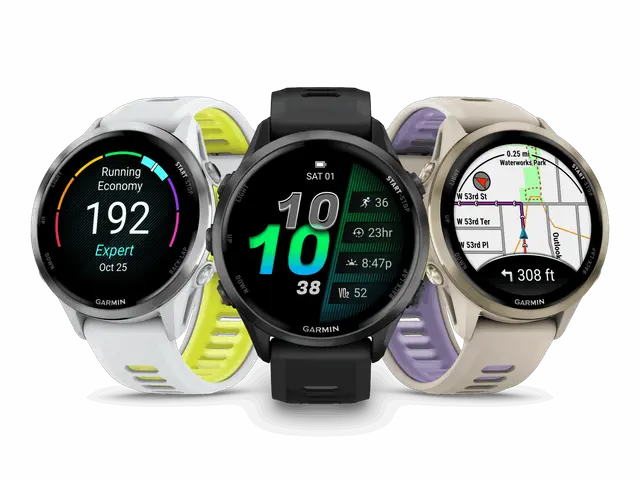
The closest Garmin is the Forerunner 970, listed at about $1,099.99 at Canadian retailers such as Canex and Nomad Frontiers in search listings, with discounts to roughly $910 to $950 at Walmart.ca and The Brick. It has a 47 mm titanium bezel, sapphire lens, built-in maps, up to 15 days of smartwatch battery and 26 hours of GPS. It has no inReach. For road and track runners, that's the better deal by $440 or more.
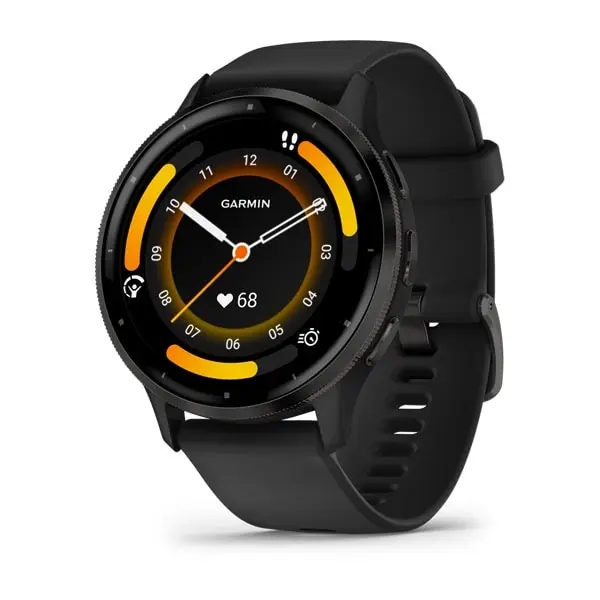
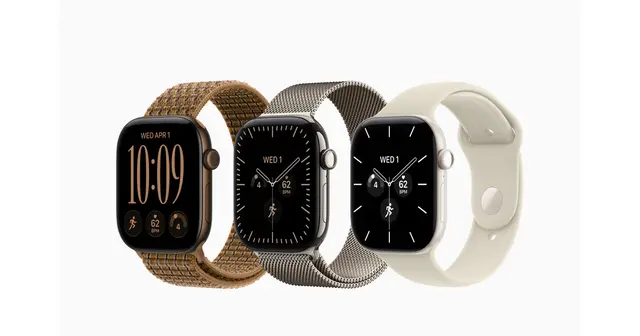
Further down: the Garmin Venu 3 was $659.99 on Tech Standpoint's October 13 price check, with 14 days of smartwatch battery. The Apple Watch Series 12 starts at $549 for a 42 mm GPS and works only with iPhone, and the Galaxy Watch8 was $369.99 and $399.99 at Best Buy Canada. The Amazfit Balance 2 offers up to 21 days typical battery and 33 hours of GPS, but no current Canadian price was checked.
None of these has satellite messaging. RunMorph also names the Suunto Vertical 2 and Coros Vertix 2S, which beat the Garmin on multi-band battery at roughly 40 and 60 hours, again without satellite. If you want a mapped watch that can call for help, the Fenix 9 Pro is the only one on this list. Then there's the cost of keeping it.
What owning one costs after the checkout: plans, warranty and updates
The watch is the smaller part of the running costs if you use inReach. The plan is monthly, with seasonal hibernation options listed on the MEC inReach page, and you also need coverage for LTE. Garmin Epic is described as a free feature, and the LTE-M plan isn't region locked, covering North America and Western Europe. Bands are extra, though the new ComfortFit fabric bands are compatible with both Fenix 9 models.
Garmin's consumer limited warranty covers defects in materials or workmanship for one year from purchase. Repaired or replaced devices get 90 days, or the rest of the original year if that's longer. Batteries count as consumables unless a defect caused the damage, and accidents and water damage are excluded. You pay shipping for service, need your original receipt, and units bought in Canada can be serviced at a Garmin centre in Canada.
Garmin's launch material publishes no software-update promise, and MEC's page doesn't state a return window beyond a satisfaction guarantee. Ask the retailer for the return period in writing, especially given the bug reports. That leads to the verdict.
Who should buy the Fenix 9 Pro, who should skip it, and what to buy instead
Buy it if you're on a Fenix 7 or older, if you want the 43 mm size in a Pro with satellite, or if you go beyond cell coverage often enough to value SOS on the wrist. Choose the 51 mm or a solar version for multi-day trips. Wait a month or two if you can, since the software is still being patched, and check the return window before you commit.
Skip it if you own a Fenix 8 Pro. The Run Testers say owners probably don't need to upgrade, and RunMorph suggests upgrading only for 43 mm inReach or for storage beyond 32 GB. Skip the Pro too if you won't pay for a satellite plan or you mostly run on roads.
Buy instead: the regular Fenix 9 at $80 to $140 less if you want the new maps and Epic without the extras, the Forerunner 970 at about $1,100 if you mostly run, or a leftover Fenix 8 Pro if you find one at a real discount. If battery life is your first priority, look at Coros or Suunto and give up the satellite messaging.
The closest alternatives.
| Product | Standpoint Score | Best for | Price |
|---|---|---|---|
| Garmin Fenix 9 ProThis review | 7.9Research | Trail runners, hikers and mountaineers who want satellite SOS on the wrist, or Fenix 7 and older owners ready to… | Amazon.ca ↗ |
| Garmin Forerunner 970 | 8.6Research | Runners and multisport athletes who want route guidance, detailed training history and physical workout controls. | Amazon.ca ↗ |
| Garmin Venu 3 | 8.3Research | People who want everyday activity and sleep tracking with a longer charging interval, and who can keep a compatible… | Amazon.ca ↗ |
| Apple Watch Series 12 | 8.5Research | iPhone owners on a Series 8 or older, or anyone without a watch, who want closer heart tracking, a daily Readiness score… | Amazon.ca ↗ |
Compare scores within a category: Tested means our own use, Research means documentation and attributed outside testing. Price links are affiliate links. As an Amazon Associate, Tech Standpoint earns from qualifying purchases. Disclosure
Questions before checkout.
What is the difference between the Garmin Fenix 9 and Fenix 9 Pro?
Both share 64 GB of storage, faster maps and the new Epic and stamina features. The Pro adds a titanium case, a brighter AMOLED up to 3,000 nits, solar versions, a green flashlight mode and the option of LTE and inReach satellite messaging. At MEC.ca it costs $80 to $140 more.
Do I need a subscription to use LTE and satellite on the Fenix 9 Pro?
Yes. Garmin says LTE and satellite features, including SOS messaging, LiveTrack notifications, Garmin Locate and satellite weather, need an active plan. RunMorph says the watch works without one but those features don't. No Canadian dollar plan prices turned up, so check Garmin before buying.
Should I upgrade from a Fenix 8 Pro to the Fenix 9 Pro?
Probably not. The Run Testers say Fenix 8 Pro owners likely don't need to upgrade, and RunMorph suggests it only if you want inReach in the 43 mm size or have run out of 32 GB of storage. The new watch also has lower GPS battery ratings.
How long does the Garmin Fenix 9 Pro battery last?
Garmin rates smartwatch mode at up to 10 days on the 43 mm, 18 days on the 47 mm and 31 days on the 51 mm AMOLED, with up to 57 days on solar models. GPS endurance is lower: RunMorph lists 32 hours for the 47 mm in standard GPS, and Bettertrail reported about 9 hours of LiveTrack on the 43 mm.
Which Fenix 9 Pro size should I buy?
The Run Testers say the 51 mm is thinner than the Fenix 8 Pro but still large, better for bigger wrists, and the 43 mm suits smaller wrists. Bettertrail found the 43 mm's battery disappointing, so pick the 47 or 51 mm if endurance matters more than fit.
Sources & further reading.
These are the sources behind this research review. Manufacturer claims are not independent performance measurements. Community accounts, when cited, describe individual experiences.
- Garmin announces the fenix 9 and fenix 9 Pro (press release) ↗manufacturer
- Garmin Consumer Limited Warranty ↗manufacturer support
- Bettertrail: Garmin Fenix 9 Pro review ↗independent review
- RunMorph: Garmin Fenix 9 Pro full review ↗independent review
- The Run Testers: Garmin Fenix 9 Pro first impressions ↗independent review
- BikeRadar: Garmin Fenix 9 and Fenix 9 Pro launch coverage ↗independent news report
- Canadian Running: First look at the Garmin fenix 9 and fenix 9 Pro ↗independent first look
- The5KRunner: Garmin Fenix 9 bug tracker compiled from forum, Reddit and review reports ↗Community discussion
- MEC: Garmin Fenix 9 Pro 47 mm listing (CAD) ↗retailer listing
- MEC: Garmin Fenix 9 Pro with inReach 47 mm listing (CAD) ↗retailer listing
- MEC: Garmin new arrivals with Fenix 9 and 9 Pro prices (CAD) ↗retailer listing
Product software and regional bundles can change. Corrections and editorial disclosures.
Affiliate link. As an Amazon Associate, Tech Standpoint earns from qualifying purchases. It never changes our verdict or score. Disclosure