Not tested. This is a research score for the documented features, compatibility and ownership trade-offs discussed in this review, not a performance measurement.
Task capability 30%7.8
Suitable residential capacity, explicitly dependent on mowing pattern.
Navigation & control 20%8.1
Physical and virtual boundary options provide useful installation flexibility.
Ownership & upkeep 20%7.5
Accessible cleaning and a dealer route strengthen the ownership proposition.
Setup & usability 15%7.2
Included reference hardware helps, though the property still needs assessment.
Documentation & support clarity 15%7.8
Separate area ratings and regional kit details are usefully documented.
Compare scores within the same product category. Small decimal differences should not override your needs or the evidence limits.
How the Standpoint Score works
We score five aspects of the documented product on a 0–10 scale, then calculate a weighted total:
- Task capability30% of the total
- Navigation & control20% of the total
- Ownership & upkeep20% of the total
- Setup & usability15% of the total
- Documentation & support clarity15% of the total
This product’s 7.7/10 is an editorial research assessment. It does not claim measured performance, tested reliability or a verified customer satisfaction rate. Compare it with products in the same category, and read each criterion’s reasoning above.
Read the full rubric and score bands ↗From a tech standpoint.
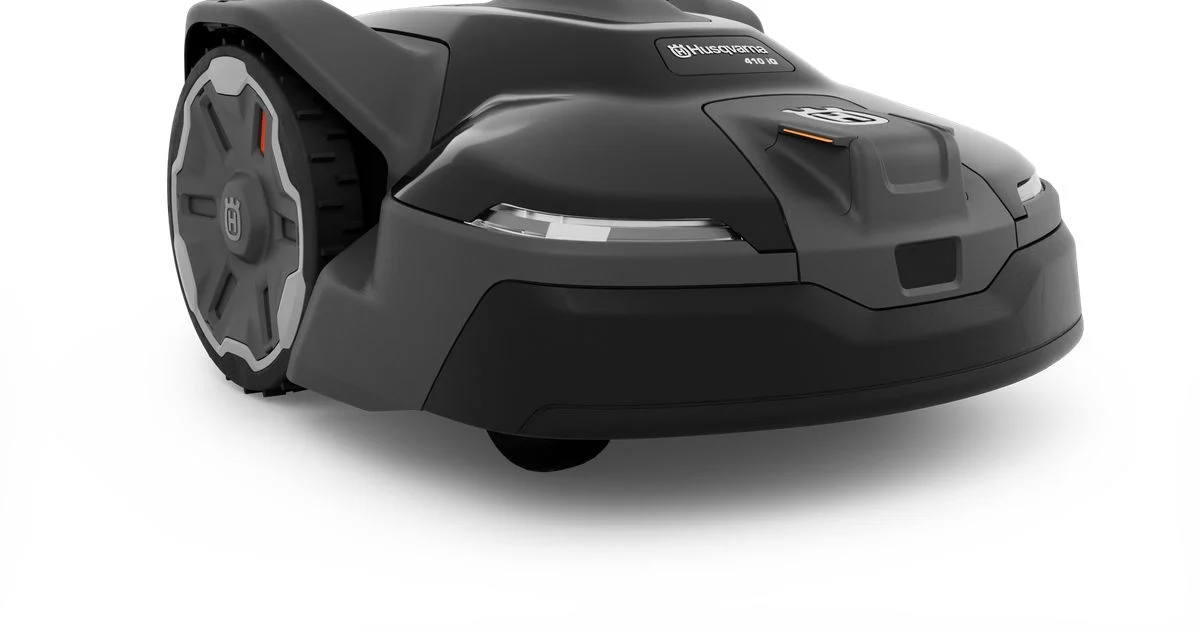
Buy the 410 iQ if your lawn sits comfortably under a quarter to half an acre depending on the pattern you'll use, has decent sky for satellite positioning and isn't constantly occupied, so long recharge pauses don't matter. The 1–4-inch cut and choice of virtual or wired boundaries are genuinely useful. Skip it, and pay for the 420 iQ, if family use squeezes the schedule or you need random-pattern coverage near half an acre. Its cutting performance and intervention rate haven't been tested by Tech Standpoint.
Reasons to consider it
- The documented US/Canada package includes a reference station, so EPOS works without relying on cloud coverage
- A wide 1–4-inch electrically adjusted cutting height covers short and high-cut lawns alike
- Choose a virtual boundary or a physical wire, whichever suits the site
Go in knowing
- A 108-minute stated recharge, double the 420 iQ's 54 minutes
- Random-pattern capacity drops to 0.25 acre from 0.5 acre systematic
- Radar doesn't excuse you from clearing low obstacles and debris
Affiliate link. As an Amazon Associate, Tech Standpoint earns from qualifying purchases. It never changes our verdict or score. Disclosure
The specification sheet.
Published specifications from the linked sources. Configurations and availability can differ by country.
- Region / article number
- US/Canada, 970 72 74-01
- Systematic capacity
- 0.5 acre
- Irregular capacity
- 0.25 acre
- Typical mowing / charging
- 84 / 108 minutes
- Cutting width / height
- 9.4 inches / approximately 1–4 inches
- Slope inside / at boundary
- 45% / 15%
- Boundary methods
- Physical wire or virtual boundary
- Connectivity
- Cellular, Wi-Fi, Bluetooth
- Controls
- Automower Connect; jog wheel and colour display
- Object detection
- Radar
- Published weight
- 38 lb (current product page)
- Security
- PIN, alarm, geofence, GPS theft tracking
Half an acre, or a quarter
Husqvarna rates the 410 iQ at 0.5 acre for systematic mowing and 0.25 acre for an irregular pattern. Those are two different operating modes, not two ways of describing the same coverage. If your lawn is getting close to half an acre, decide which pattern you'll actually run before assuming the smaller iQ is big enough. Choose random movement for its look or because of how the site is laid out, and you've halved the capacity you're working with.
Measure the grass, not the lot. A house, driveway and planted beds can make a half-acre parcel a much smaller mowing job, while long strips and separate work areas can make less grass awkward to reach. Headroom matters when people also use the garden. A robot that only keeps up by running in nearly every available window is a bad match for a household that's always pausing it. Pick the model around the hours the lawn is actually free, then use the area rating as a sanity check.
The real difference from the 420 iQ is the charger
Husqvarna gives the 410 iQ a typical 84-minute mowing period and a 108-minute charge. The 420 iQ mows for the same 84 minutes but recharges in 54. Stepping up doesn't double a single outing. It shortens the wait between outings, and that becomes important when the lawn is only free at certain times.
Some quick arithmetic makes it concrete. Ignoring travel and every other delay, an 84-minute cut followed by 108 minutes on the charger keeps the 410 on the grass for about 44% of the cycle. With the 420's 54-minute charge, that rises to about 61%. That's roughly 39% more theoretical mowing time per hour, not twice the real-world output. These are sums based on published typical times, not measured coverage, and grass load, docking travel and your schedule all shift the result. But it's the clearest reason to compare these two on more than their names.
Wire-free still needs open sky
EPOS combines satellite positioning with correction data. Husqvarna's current US page lists a reference station in the box and offers cloud corrections in selected areas. If you're planning to skip the local station, confirm coverage for your exact address. Cloud corrections don't let the mower see through a roof or past every obstruction overhead.
The April 2025 operator manual calls for clear sky visibility and a suitable docking approach for the reference-station installation. Think through the whole route home, especially along the side of the house or under a heavy canopy of branches. The tucked-away corner that looks tidiest from the patio may be a poor spot for navigation. If your lawn has a lot of tree cover or several enclosed strips, a site visit is worth it. Ask the installer to prove the hard route, not just map the open middle.
Wire is still on the menu
The spec supports physical as well as virtual boundaries, though the product page notes that loop wire isn't included. That gives you a choice of installation, but extra materials and labour have to be in the quote. It doesn't mean the mower switches automatically between navigation methods when reception gets patchy.
Virtual stay-out zones are handy when a patch of lawn becomes a flower bed or a temporary obstacle needs a margin. What matters is how each change affects access to the rest of the lawn. A narrow opening can stop working once you add an otherwise sensible exclusion. Keep the map in step with gates, parked cars and the paths your household actually walks. A connection drawn on a screen needs a real passage that's open when the mower is due out.
One to four inches is the quiet selling point
The 410 iQ cuts a 9.4-inch swath at an electrically adjusted height of about 1 to 4 inches, using three pivoting blades. That's a maintenance-cutting setup: it earns its keep through frequent small trims, not by doing everything a big conventional mower does. For anyone who already keeps grass tall, being able to dial up a high cut matters far more than whether the app can draw stripes.
Set the height for your lawn, not for the lowest number on offer. A mower that can't reach the height you want is the wrong mower however good its mapping. Equally, a wide range doesn't prove a clean finish in every grass condition. Clipping distribution, missed strips and leftover edging on a 410 iQ haven't been examined here, and blade count and height settings can't answer those questions.
What radar will and won't do
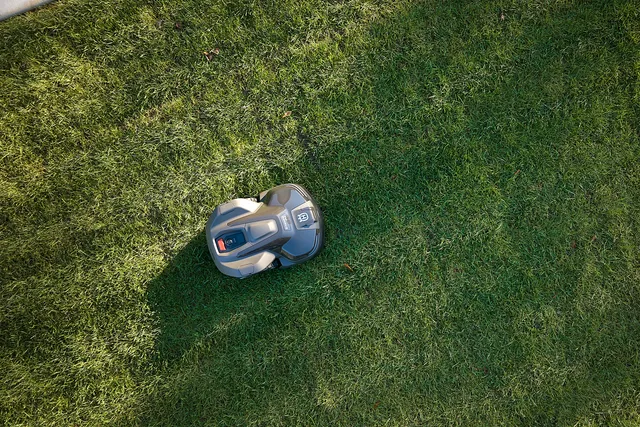
Radar object detection plus lift and tilt sensors are listed. The shared iQ manual says object avoidance can respond to things taller than the grass and may leave uncut grass around them. Think of it as something that changes the mowing route, not a promise that every object gets correctly identified. Low roots and loose toys still belong on your lawn-prep checklist.
Read the slope figures carefully: 45% inside the installation, 15% at the boundary. Percent gradient is rise over horizontal distance, so 45% is about 24 degrees, not 45. Where a bank runs down to a path, that lower boundary limit can dictate the layout. Keep children and animals out of the working area as the manual requires. A sensor list is not permission to run cutting equipment while the garden is in use.
App access and positioning aren't the same signal
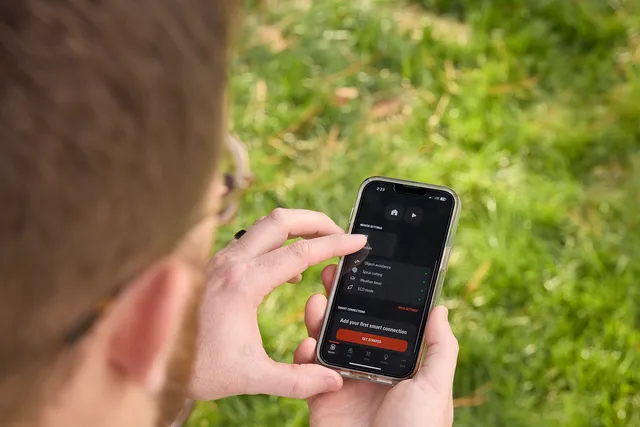
Cellular, Wi-Fi and Bluetooth are all listed, along with Automower Connect and over-the-air firmware. On the mower itself you get a jog wheel and colour display. Be clear about which link handles app access and which provides positioning corrections, because weak home Wi-Fi at the far end of the garden tells you nothing about either. Husqvarna's current product FAQ says Wi-Fi isn't needed for mowing on the installation it describes.
Have the local controls shown to you at handover. Anyone using the garden should be able to pause or park the mower without borrowing the main account holder's phone. The PIN, alarm, geofence and GPS theft tracking give you several security tools, but an alert arriving isn't the same as getting the mower back. Keep the account accessible and learn what its notifications mean. Location reporting, network dropouts and recovery haven't been tested on this model.
Hose-friendly, frost-shy
Hose washing is spelled out in the product FAQ. The operator manual allows low-pressure hose cleaning, bans pressure washers and solvents, and says to switch the mower off for maintenance. Don't stretch a convenient cleaning permission into the idea that every sealed part shrugs off aggressive washing. The blades and moving parts still need regular checks.
For seasonal storage, the manual calls for a fully charged, switched-off mower kept somewhere dry and frost-free. That's a real issue for Canadian owners whose only winter storage is an unheated shed, so sort the space out before installing a mower that will spend months away from its dock. Husqvarna advertises a four-year warranty for US and Canadian buyers on the current page; get the written terms and the service arrangement. Warranty length won't tell you who collects the mower or how long a repair takes.
When the cheaper iQ is the smarter one
The 410 makes sense when your measured lawn and installation leave comfortable room under the relevant rating. The 420's faster charge is harder to justify if the smaller model has time to spare and the grass area is modest. It earns its premium when family life squeezes the schedule or several distant work areas eat up travel time. Compare the full installed system, wire materials, mounting work and servicing included, not a mower-only price.
So the verdict is conditional. The documents show what the 410 is built to deliver, including flexible installation and a useful high-cut option. They don't show how it performs on finish, traction, obstacle avoidance or reliability through the seasons. A local demonstration on the trickiest part of your property would tell you more than another feature list.
The closest alternatives.
| Product | Standpoint Score | Best for | Price |
|---|---|---|---|
| Husqvarna Automower 410 iQThis review | 7.7Research | A modest residential lawn with clear installation routes, suitable sky visibility and a schedule that accommodates… | Amazon.ca ↗ |
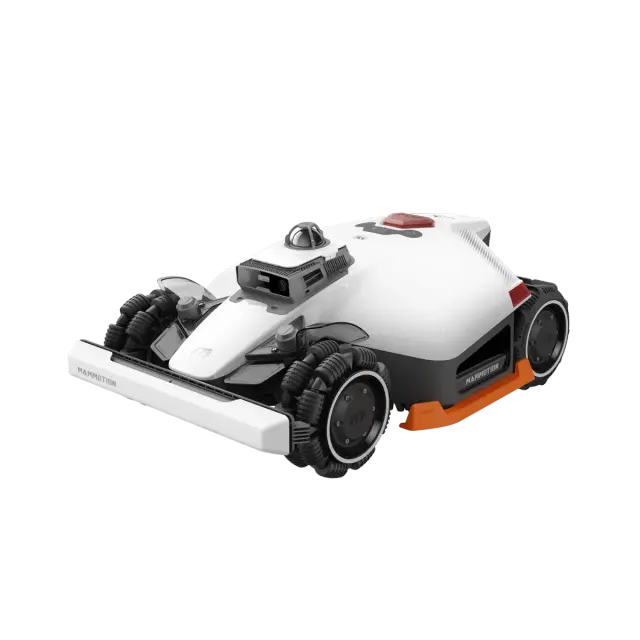
| Mammotion LUBA 3 AWD | 7.8Research | A complex lawn where AWD is useful and the buyer is prepared to verify the navigation and height specification of the… | Amazon.ca ↗ |
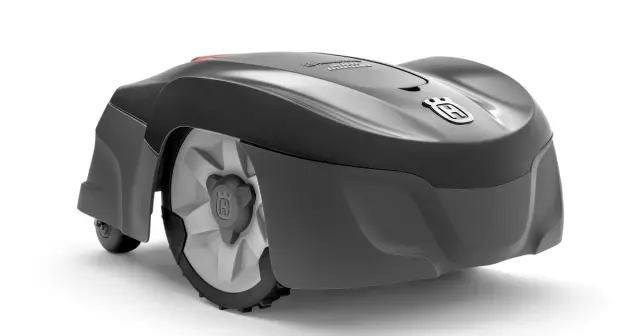
| Husqvarna Automower 115H Bluetooth | 6.1Research | A modest, settled lawn where a supported used mower costs substantially less than a new installation. | Amazon.ca ↗ |
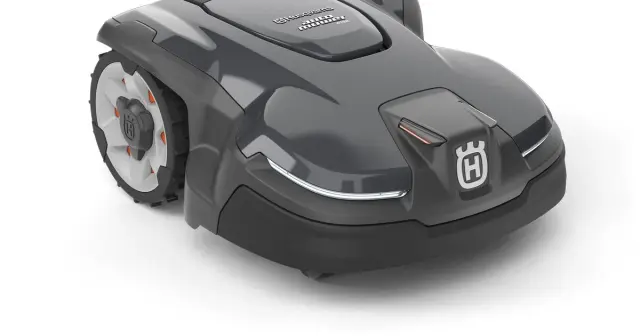
| Husqvarna Automower 415X | 6.6Research | Owners of a small or medium established wired lawn who want connected control and a documented support path. | Amazon.ca ↗ |
Compare scores within a category: Tested means our own use, Research means documentation and attributed outside testing. Price links are affiliate links. As an Amazon Associate, Tech Standpoint earns from qualifying purchases. Disclosure
Sources & further reading.
These are the sources behind this research review. Manufacturer claims are not independent performance measurements. Community accounts, when cited, describe individual experiences.
- Husqvarna: Husqvarna Automower 410 iQ US/Canada product specifications ↗manufacturer
- Husqvarna: 410iQ / 420iQ / 440iQ operator manual, April 2025 ↗manual
Product software and regional bundles can change. Corrections and editorial disclosures.
Affiliate link. As an Amazon Associate, Tech Standpoint earns from qualifying purchases. It never changes our verdict or score. Disclosure