An editorial assessment of documented capabilities and ownership trade-offs. This is not a hands-on test result or a measurement of reliability.
Task capability 30%8.0
Large-area specification and virtual paths support estate use.
Navigation & control 20%7.8
EPOS and connected control provide flexible positioning and management.
Ownership & upkeep 20%6.1
Discontinued specialist hardware makes complete-kit condition and service critical.
Setup & usability 15%6.3
Reference-station and large-property survey requirements are substantial.
Documentation & support clarity 15%5.9
Documented legacy SKU; future parts and local service remain purchase questions.
Compare scores within the same product category. Small decimal differences should not override your needs or the evidence limits.
How the Standpoint Score works
We score five aspects of the documented product on a 0–10 scale, then calculate a weighted total:
- Task capability30% of the total
- Navigation & control20% of the total
- Ownership & upkeep20% of the total
- Setup & usability15% of the total
- Documentation & support clarity15% of the total
This product’s 7.0/10 is a provisional research assessment. It does not claim measured performance, tested reliability or a verified customer satisfaction rate. Compare it with products in the same category, and read each criterion’s reasoning above.
Read the full rubric and score bands ↗The ownership case.
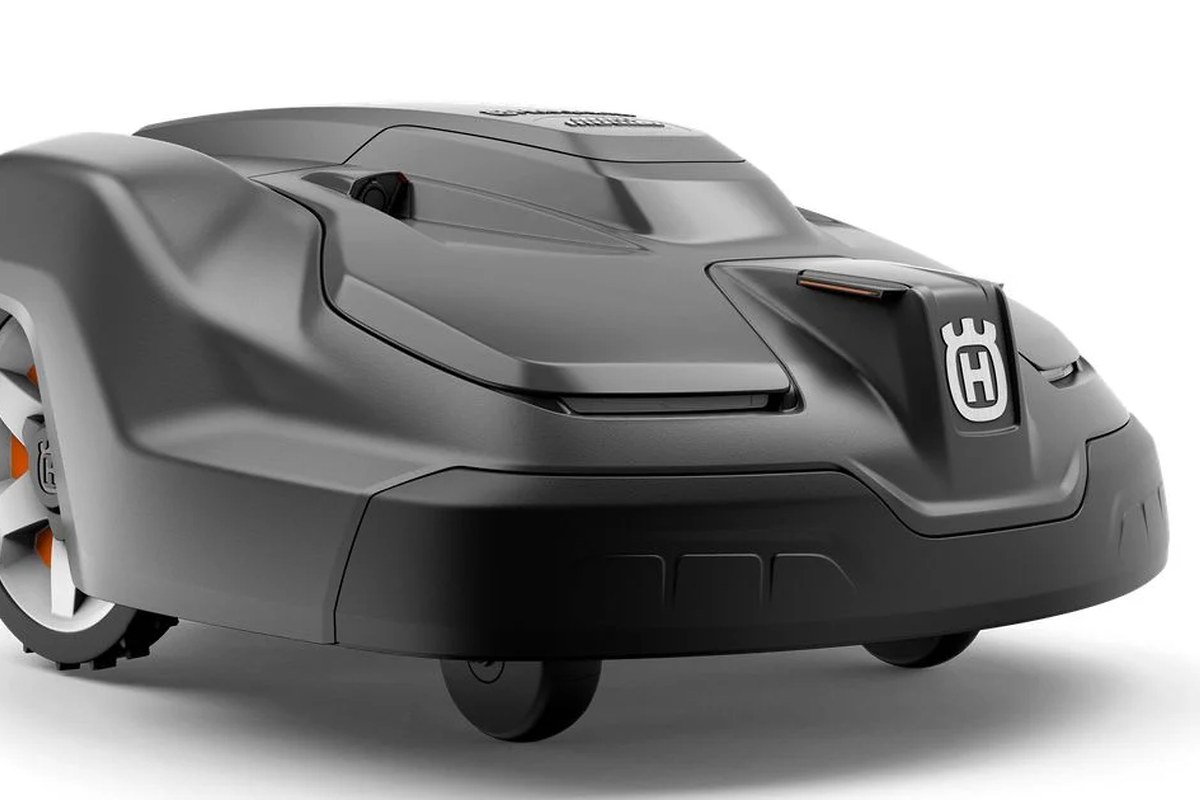
The 450XH EPOS offers a substantial large-property platform, but its discontinued status makes a site survey and service agreement essential. It should be judged as a specific installed system, not simply as a cheap route to a 2.5-acre claim.
Reasons to consider it
- Large published area capacity
- Virtual transport paths
- EPOS kit documented with reference station
Go in knowing
- Discontinued US model
- Verify all positioning hardware
- Large-property uptime and repair support matter
The specification sheet.
Published specifications from the linked sources. Configurations and availability can differ by country.
- Status
- Discontinued on US support page
- Published capacity
- 2.5 acres, ±20%
- Cutting width
- 9.45 in
- Typical mowing time
- 200 minutes per charge
- Internal slope limit
- 45%
- Transport guidance
- Virtual transport path
An estate-scale mower with a legacy buying question
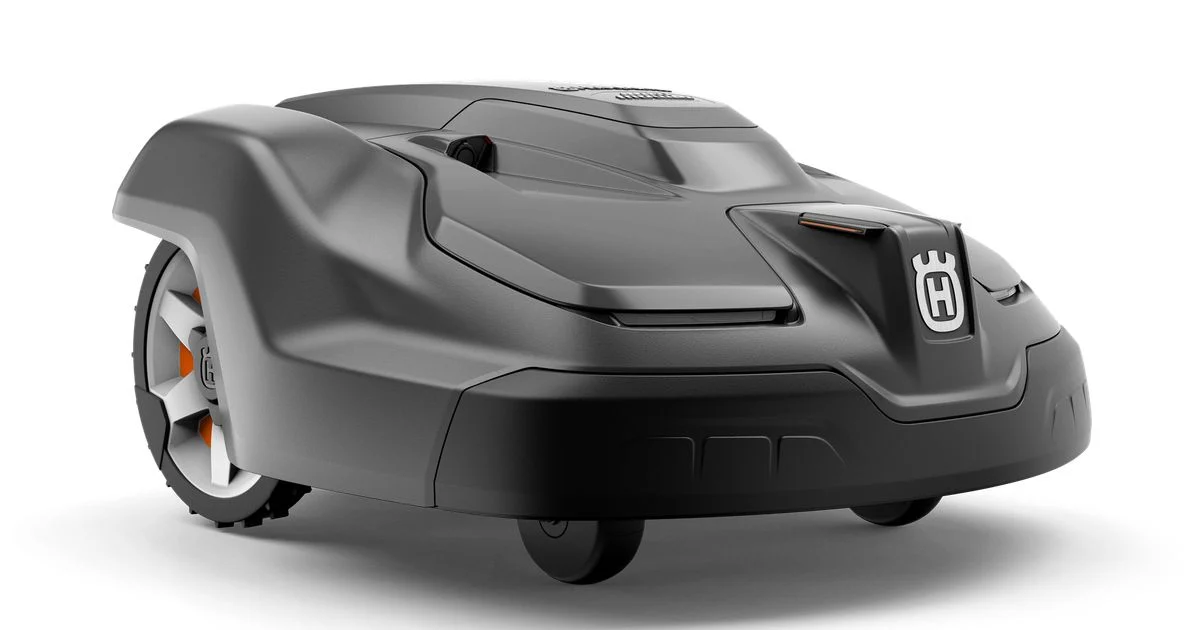
The 450XH EPOS demonstrates why robotic mower acreage is only the beginning of a purchase decision. Husqvarna's support specification lists a 2.5-acre capacity and virtual transport paths, while the current US page marks the model discontinued. A large lawn may suit its operating concept, but a buyer should establish exactly which reference station, software features and service arrangements come with the machine.
The reviewed SKU is described as a kit including a reference station. That detail should not be generalized to every used listing. Missing positioning hardware can turn an apparently complete mower into an expensive parts search. Similarly, this is the 450XH EPOS, not an ordinary wired 450X or every high-cut Automower sold internationally. The model suffix belongs on the purchase invoice and on every parts enquiry.
What a large property actually asks of it
A 9.45-inch cutting width and published 200-minute typical cycle indicate a machine intended to work repeatedly over extended periods. They do not prove that every 2.5-acre property can be kept tidy within the owner's preferred schedule. Fragmented lawns, transport distance and charging approaches all consume useful time. An orchard, a house surrounded by narrow turf strips, and an open rectangle can have the same area with very different demands.
We would insist on checking the least favourable satellite locations before mapping the easy open spaces. The manufacturer lists a 45% internal slope limit but 15% at the boundary, so the design of turning margins remains important. A long slope beside a pond deserves a conservative installation, regardless of how impressive a large-area coverage number looks. Transport paths also need a real-world plan for gates, pedestrians and vehicles.
The questions a dealer should answer
The support table lists over-the-air firmware, GPS theft tracking and a professional-style interface. Those tools may simplify management, but they do not establish cloud longevity or every future software feature. Ask what functions remain available without optional services and whether the local dealer can recover the machine if an account or positioning configuration fails. A property that depends on one mower needs a fallback during repairs.
The IPX4 listing is another reminder not to copy maintenance practices from newer hose-washable models. Evaluate the battery, disc, charging equipment and wheel drives as parts of one ageing system. Compared with a current 440 iQ, the 450XH EPOS is a question of installed value and exact cutting requirements, not merely advertised acreage. We would reserve a performance verdict until it completes representative work areas over several weeks with interventions recorded.
A practical acceptance test before relying on it
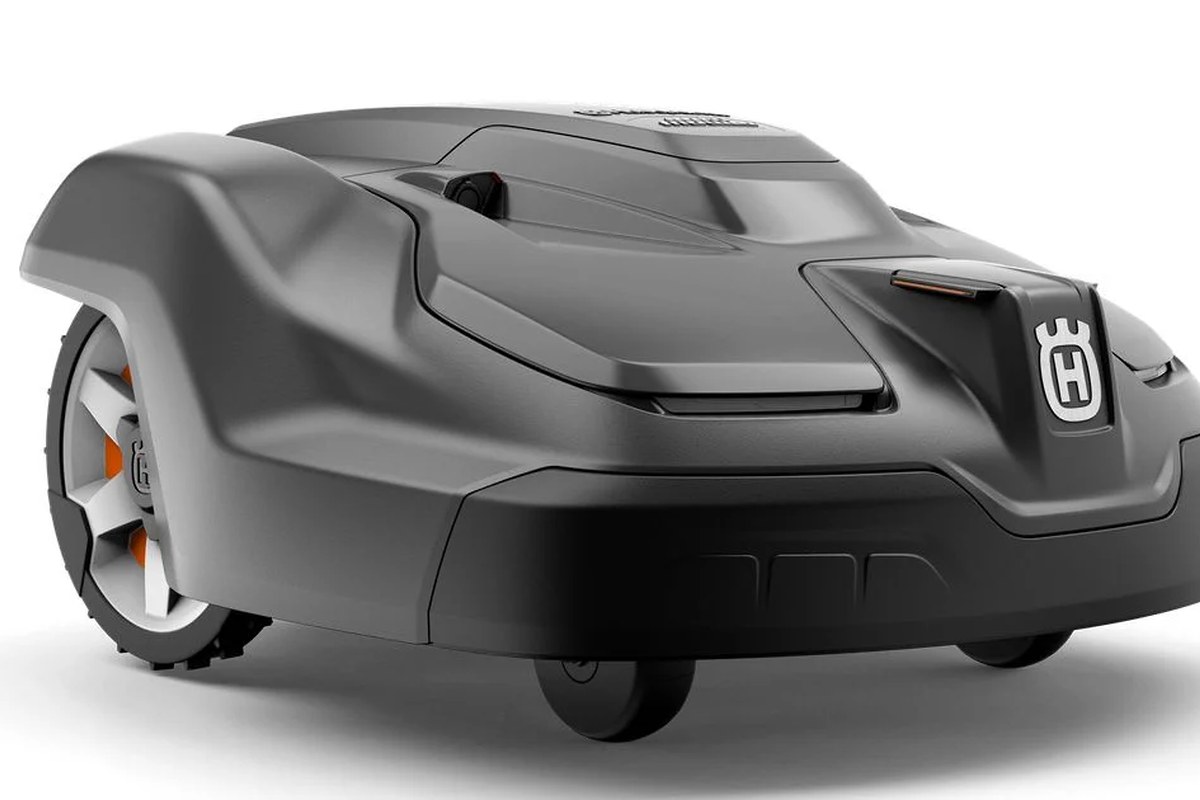
An acceptance plan for a 450XH EPOS should divide the property into an open reference area and its hardest real working area. Compare completion and interventions in both, then repeat after normal vehicles and furniture return to their usual places. This avoids letting an easy field dominate the verdict on a complicated estate. Confirm that the reference station supplied with the kit is the one used in the demonstration and that its mounting arrangement can remain permanent. Finally, establish who will restore the map and account if control is lost. On a discontinued large-property machine, that recovery plan is a material part of purchase confidence.
Setup, maintenance and the ownership decision
The reference station is a central asset in a 450XH EPOS purchase. Confirm its identity, mounting requirements and condition rather than treating it as a generic accessory. A used kit that lacks its positioning equipment may be far less attractive once replacement and installation are priced. The permanent location also needs approval from whoever maintains the building or grounds. A temporary mount used for a sales demonstration should not quietly become the long-term arrangement. On a large property, the positioning survey should include every necessary transport route, not merely the wide open mowing areas where reception is easiest.
Virtual transport paths are powerful only when real access exists. Document which paths cross driveways, where gates must remain open and what happens during deliveries or gatherings. The owner should know how to suspend a work area without accidentally altering the rest of the map. A large garden may contain zones with different growth and occupancy patterns, so schedules deserve more thought than a single daily start time. We would also make a written recovery plan for a stopped machine at the far end of the property. Retrieving it safely should not depend on improvising around a steep bank or inaccessible corner.
The published 200-minute typical cycle makes battery health consequential on a used unit. Ask for a demonstration across more than one charge, including the return and charging process, and obtain a local replacement quote. The IPX4 listing requires model-specific cleaning care. Do not apply the hose-washing advice associated with newer iQ products to this mower. Inspect the 9.45-inch cutting assembly, pivoting blades and skid plate while safely isolated. Debris collected across a large area can create substantial maintenance even when the machine is small beside a conventional estate mower.
The professional-style interface and over-the-air firmware entry suggest a capable management system, but the exact service and account terms should be established locally. Confirm who owns the installation map and what a new homeowner or second operator needs to take control. Review retained user access and location permissions, particularly if a contractor originally installed the mower. We did not assess the security of the cloud platform. Operational safety remains a separate duty: keep cutting routes away from people, animals and traffic according to the manual, and maintain suitable physical protection around dangerous edges.
Discontinued status makes a dealer relationship especially valuable. Ask which key parts remain available and how a major repair would be handled during the growing season. An estate may need a backup mower or a service contractor while the robot is away. Compare those costs with a current platform before treating a discounted 450XH EPOS as an obvious bargain. Its large-area specification can be useful, but ownership success depends on complete hardware, a sound survey and enough support to keep the system operating. None of those conditions can be inferred merely from the model's original position in the range.
Seasonal storage and return to work
For seasonal recommissioning, inspect the reference-station mounting as well as the mower. A moved or damaged positioning component can affect a large mapped property even when the robot itself was stored carefully. Follow the model's battery and station guidance and retain the approved transport-path plan. After winter, recheck routes affected by frost, vehicle use or landscaping before resuming the complete estate schedule. A deliberate restart is preferable to discovering that one remote area has remained uncut because a familiar path is no longer physically usable.
Sources & further reading.
These are the sources behind this research review. Manufacturer claims are not independent performance measurements. Community accounts, when cited, describe individual experiences.
Documentation reviewed: 9 October 2026. Product software and regional bundles can change. Corrections and editorial disclosures.