Not tested. This is a research score for the documented features, compatibility and ownership trade-offs discussed in this review, not a performance measurement.
Task capability 30%7.8
Recommended area and OAS add capability over KR172.
Navigation & control 20%8.0
Network positioning plus obstacle avoidance form a useful control package.
Ownership & upkeep 20%7.1
Dealer and correction-network dependencies remain part of ownership.
Setup & usability 15%6.9
Coverage and full-route validation should precede installation acceptance.
Documentation & support clarity 15%7.5
Separate 48-hour and 72-hour figures make capacity more interpretable.
Compare scores within the same product category. Small decimal differences should not override your needs or the evidence limits.
How the Standpoint Score works
We score five aspects of the documented product on a 0–10 scale, then calculate a weighted total:
- Task capability30% of the total
- Navigation & control20% of the total
- Ownership & upkeep20% of the total
- Setup & usability15% of the total
- Documentation & support clarity15% of the total
This product’s 7.5/10 is an editorial research assessment. It does not claim measured performance, tested reliability or a verified customer satisfaction rate. Compare it with products in the same category, and read each criterion’s reasoning above.
Read the full rubric and score bands ↗From a tech standpoint.
Buy the KR173 if your lawn is medium to large, around 0.7 acre on a 48-hour cycle, network coverage is confirmed, your dealer is strong, and the garden has enough moving furniture, toys and clutter to make OAS earn its keep. Skip it if your lawn is open with fixed, mapped obstacles, where the KR172 does the job for less, if you're tempted to size it from the 1.2-acre maximum, or if your schedule can't spare the hours a sub-eight-inch deck needs.
Reasons to consider it
- OAS obstacle avoidance, the headline addition over the KR172
- Explicit capacity figures by mowing interval: 0.7 acre at 48 hours, 1.2 acres at 72
- Electronic height adjustment plus a floating three-blade disc
Go in knowing
- The 1.2-acre maximum only applies to less frequent cutting
- Positioning depends on Kress's correction network
- A cut just under eight inches wide needs plenty of scheduled time
Affiliate link. As an Amazon Associate, Tech Standpoint earns from qualifying purchases. It never changes our verdict or score. Disclosure
The specification sheet.
Published specifications from the linked sources. Configurations and availability can differ by country.
- Recommended area, 48-hour cycle
- 0.7 acre
- Maximum area, 72-hour cycle
- 1.2 acres
- Battery
- 20 V, 4 Ah
- Cutting width
- 7 7/8 in
- Maximum slope
- 40%
- Obstacle system
- OAS
Three-quarter acre on the box, 0.7 in the table
Kress markets the KR173 as a three-quarter-acre mower, yet the Canadian technical table lists 0.7 acre for a 48-hour cutting cycle and 1.2 acres for a 72-hour cycle. Those numbers aren't interchangeable. Pick the interval that suits your growth rate and the look you want, then check the mower has spare time for interruptions. A bigger maximum can be handy without being the right number to size around.
What sets it apart from the KR172 is the listed OAS obstacle-avoidance system. That can be valuable around furniture and other things that move, but it doesn't replace clearing small hazards or keeping people away from mowing. Judge both the avoidance and the grass left standing around avoided objects. A system that never touches anything can still leave you an annoying amount of trimming.
Your positioning comes from someone else's network
Kress's shared correction infrastructure cuts out the need for a stationary antenna installed on your property. That's appealing where roof or pole mounting would be awkward. It also means the dealer should give you a clear coverage assessment and explain the ongoing service arrangement. Antenna-free describes the installation; it doesn't mean positioning has no outside dependency.
Dead reckoning is described as keeping the mower on route when satellite conditions are weak. What matters is how well it copes with your particular route behind the house or under mature trees. Watch it go in, come out and return to the dock over several days. One successful pass proves little while foliage and satellite geometry keep shifting.
Under eight inches wide, so time is the fuel
The published cut is just under eight inches, with three blades on a floating disc. So the daily result will depend on planned routes and enough operating time, not sheer width. Electronic height adjustment is useful for tuning the finish, but the actual cut needs checking over uneven ground. And don't mistake the 40% slope limit for a specialist AWD climbing claim.
Compare the KR173 with the KR174 on the output you actually need and the differences in cutting system. The bigger model can make sense for schedule margin, while a well-matched KR173 avoids paying for capacity you won't use. The first real check is a complete 48-hour routine with obstacles where they normally sit, followed by a controlled change to the layout. Track interventions, missed strips and battery cycles. The network-and-dealer model can be a strength when it's well supported, but the quality of your local setup has to be proven, not assumed from the brand.
Put a chair in its path and measure the tuft
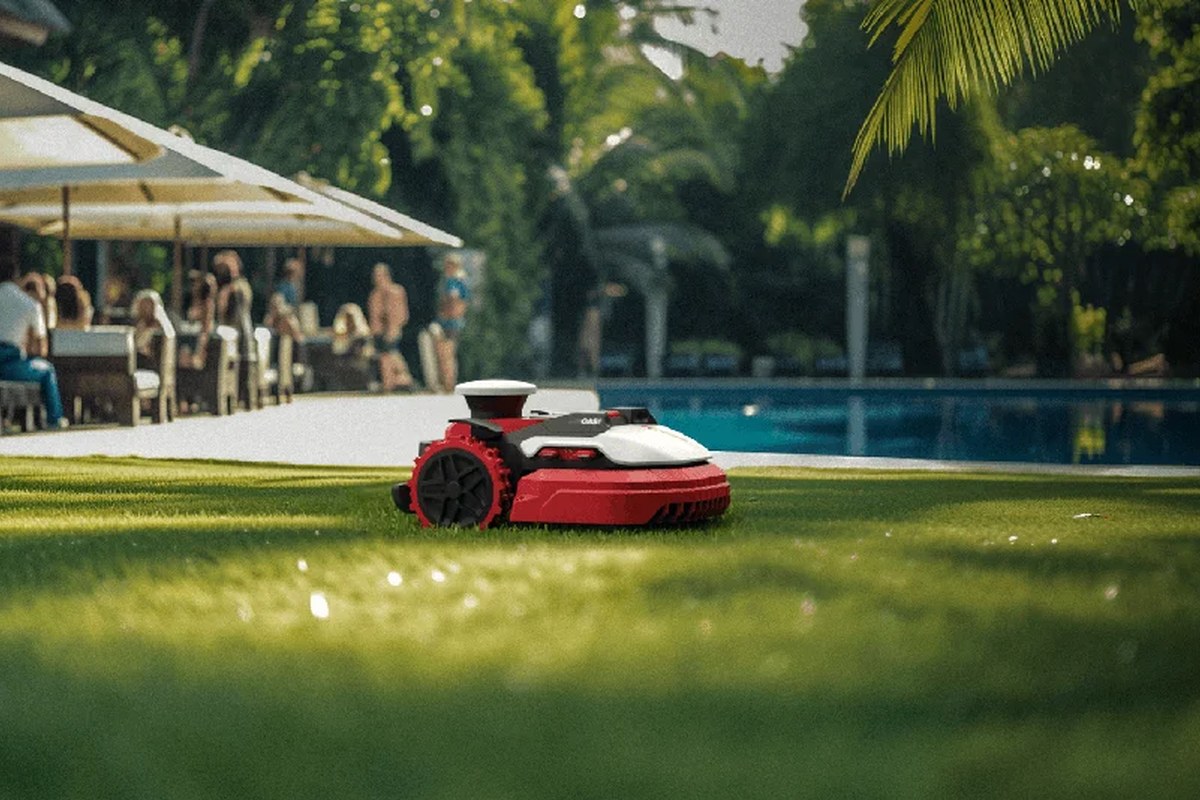
For the KR173, compare normal coverage in a representative area with and without a safe movable obstacle. Measure both the avoidance margin and the grass left behind, rather than treating not hitting things as the only result. Then confirm the whole lawn finishes within your chosen 48-hour schedule. That makes both the OAS system and the area guidance testable in practical terms. Ask the dealer to demonstrate recovery after a connecting route is blocked, and note which interventions remain your job. The mower should earn its premium by cutting your management work on this property, not just by having more features than the KR172.
Paying for OAS, living with the network
Build the KR173's OAS system into the site demonstration. Ask the dealer to show how ordinary obstacles change the route and how much grass is left around them. Don't treat contact-free navigation as proof that every low object gets recognised. You still need a clear lawn and a safe schedule. If the property is mostly open and permanent obstacles are already mapped, the extra system may be worth less than on a garden that gets rearranged all the time. So the choice over the KR172 should rest on the workload you actually see, not a general preference for more sensors.
The correction network stays central even with obstacle sensing. Check coverage at your actual address and through the worst parts of the route. Dead reckoning is described as bridging weak satellite conditions, which isn't the same as running indefinitely under any canopy. Watch repeated transitions and returns to the dock once the final installation is in place. Keep the mapping and coverage assessment with the service record. A dealer's early confidence is useful, but a documented plan makes later troubleshooting, and who's responsible for it, much clearer if one section keeps causing interruptions.
When frequent mowing is the goal, start from the 0.7-acre recommended 48-hour scenario. The 1.2-acre maximum assumes a different interval and shouldn't quietly replace it in a sales comparison. A narrow cutting width makes working time and efficient routes precious. Electronic height control makes changes easy, while the floating disc still needs checking for debris and blade wear. A poor cut can come from the cutting assembly even when positioning is spot on. Keep a log of maintenance and settings so support can tell those causes apart.
Look after the listed hose-cleanable IPX5 body using the exact procedure, including safe isolation before working underneath. Charging contacts, wheels and the station approach need routine attention as well as the blades. Ask for the correct battery and charger replacements instead of assuming parts from another Mission model will fit. Review app permissions, 4G terms and account transfer during setup. Monitoring and anti-theft tools only help if their alerts reach the right person, and no remote feature removes the need to prevent unsafe encounters with people, pets or vehicles along the mowing route.
Service quality is a big part of what you're buying with the KR173. Get installation, seasonal maintenance, transport and diagnostic costs listed separately so the full ownership budget is visible. Ask how the dealer handles a mower that loses useful network coverage or needs remapping after landscaping. Compare that offer against a self-installed rival and against the KR174's bigger battery and cutting system. A smaller machine with good support can be a better buy than a larger one with an unclear repair route. The goal is dependable coverage within your intended interval, with OAS cutting real interventions rather than sitting there as a rarely used feature.
Clean the sensors before you trust them again
For the KR173, include the OAS sensing surfaces and the floating cutting disc in the manual-approved seasonal inspection. Keep the dealer's map and coverage notes, then compare the garden with that plan after any winter landscaping. Follow the battery-storage procedure and check that app access and service terms are still current before restarting a multi-area schedule. The first runs you watch should cover both everyday obstacles and the hardest route home. That tests whether the whole supported system still fits your property, not just whether the mower switches on.
The closest alternatives.
| Product | Standpoint Score | Best for | Price |
|---|---|---|---|
| Kress Mission RTKⁿ KR173This review | 7.5Research | A medium-to-large lawn with confirmed network coverage, a supportive dealer and enough moving obstacles to justify OAS. | Amazon.ca ↗ |
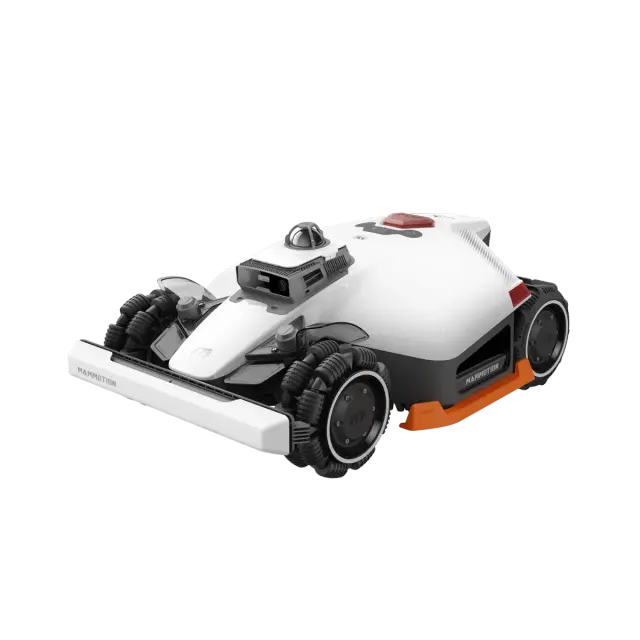
| Mammotion LUBA 3 AWD | 7.8Research | A complex lawn where AWD is useful and the buyer is prepared to verify the navigation and height specification of the… | Amazon.ca ↗ |
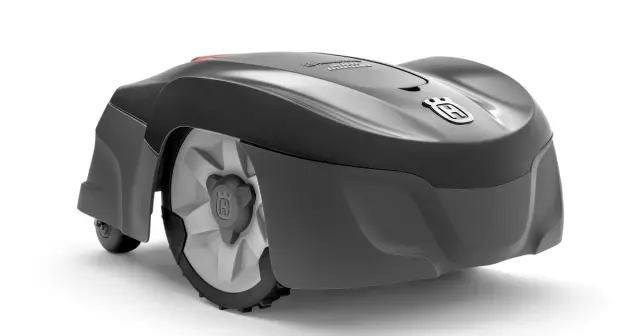
| Husqvarna Automower 115H Bluetooth | 6.1Research | A modest, settled lawn where a supported used mower costs substantially less than a new installation. | Amazon.ca ↗ |
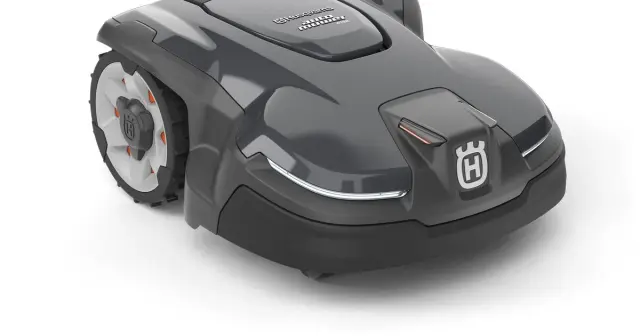
| Husqvarna Automower 415X | 6.6Research | Owners of a small or medium established wired lawn who want connected control and a documented support path. | Amazon.ca ↗ |
Compare scores within a category: Tested means our own use, Research means documentation and attributed outside testing. Price links are affiliate links. As an Amazon Associate, Tech Standpoint earns from qualifying purchases. Disclosure
Sources & further reading.
These are the sources behind this research review. Manufacturer claims are not independent performance measurements. Community accounts, when cited, describe individual experiences.
Product software and regional bundles can change. Corrections and editorial disclosures.
Affiliate link. As an Amazon Associate, Tech Standpoint earns from qualifying purchases. It never changes our verdict or score. Disclosure