An editorial assessment of documented capabilities and ownership trade-offs. This is not a hands-on test result or a measurement of reliability.
Task capability 30%8.0
AWD and suspension target rough smaller lawns.
Navigation & control 20%7.8
RTK with vision assistance provides a capable documented navigation concept.
Ownership & upkeep 20%6.9
Terrain use and similarly named generations complicate upkeep and parts selection.
Setup & usability 15%6.8
A permanent reference-station arrangement still needs assessment.
Documentation & support clarity 15%6.8
Specific generation is documented, but family naming invites confusion.
Compare scores within the same product category. Small decimal differences should not override your needs or the evidence limits.
How the Standpoint Score works
We score five aspects of the documented product on a 0–10 scale, then calculate a weighted total:
- Task capability30% of the total
- Navigation & control20% of the total
- Ownership & upkeep20% of the total
- Setup & usability15% of the total
- Documentation & support clarity15% of the total
This product’s 7.4/10 is a provisional research assessment. It does not claim measured performance, tested reliability or a verified customer satisfaction rate. Compare it with products in the same category, and read each criterion’s reasoning above.
Read the full rubric and score bands ↗The ownership case.
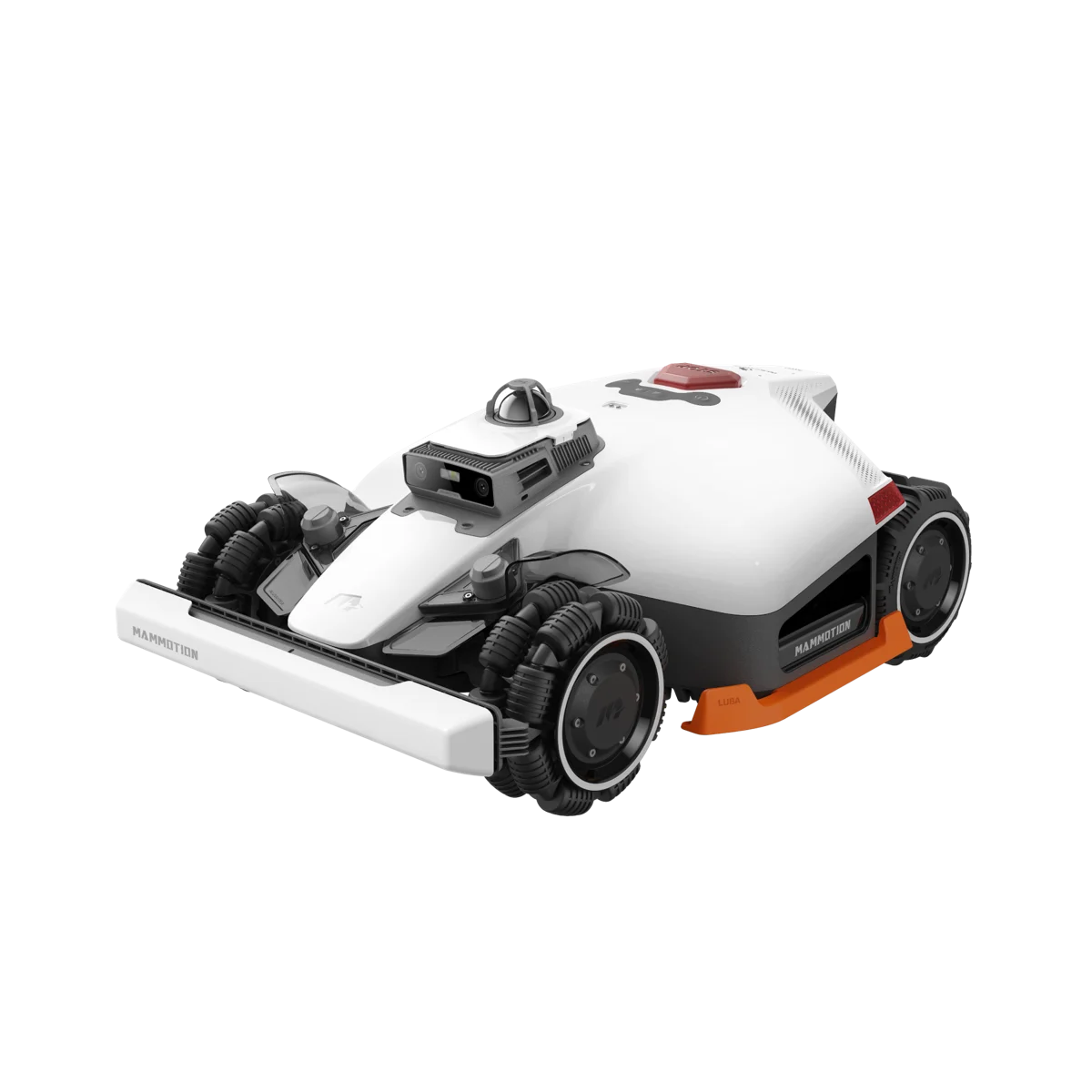
Original LUBA mini AWD is a terrain-oriented small-lawn candidate with a more involved positioning installation than the mini 2. Its value comes from solving difficult ground conditions, provided the exact version and support terms are understood.
Reasons to consider it
- AWD and suspension for awkward terrain
- Smaller-area alternative to full-size LUBA
- Replaceable battery advertised
Go in knowing
- RTK installation still needs assessment
- Several similarly named generations
- Slope ability is not a turf-care guarantee
The specification sheet.
Published specifications from the linked sources. Configurations and availability can differ by country.
- Reviewed generation
- Original LUBA mini AWD
- Drive
- All-wheel drive
- Slope claim
- 80%
- Maximum area option
- 0.37 acre
- Zone management
- Up to 20 areas advertised
- Included positioning kit
- RTK reference station and antenna
The original mini is not merely a smaller YUKA
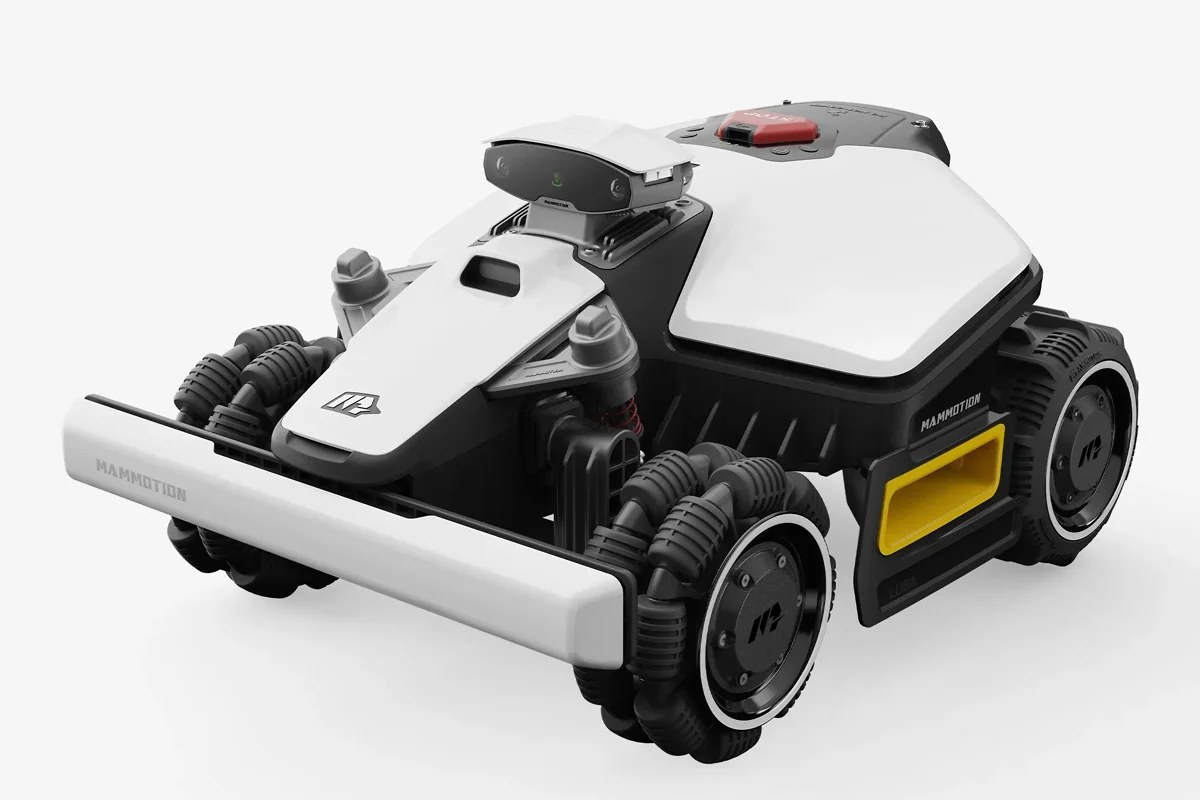
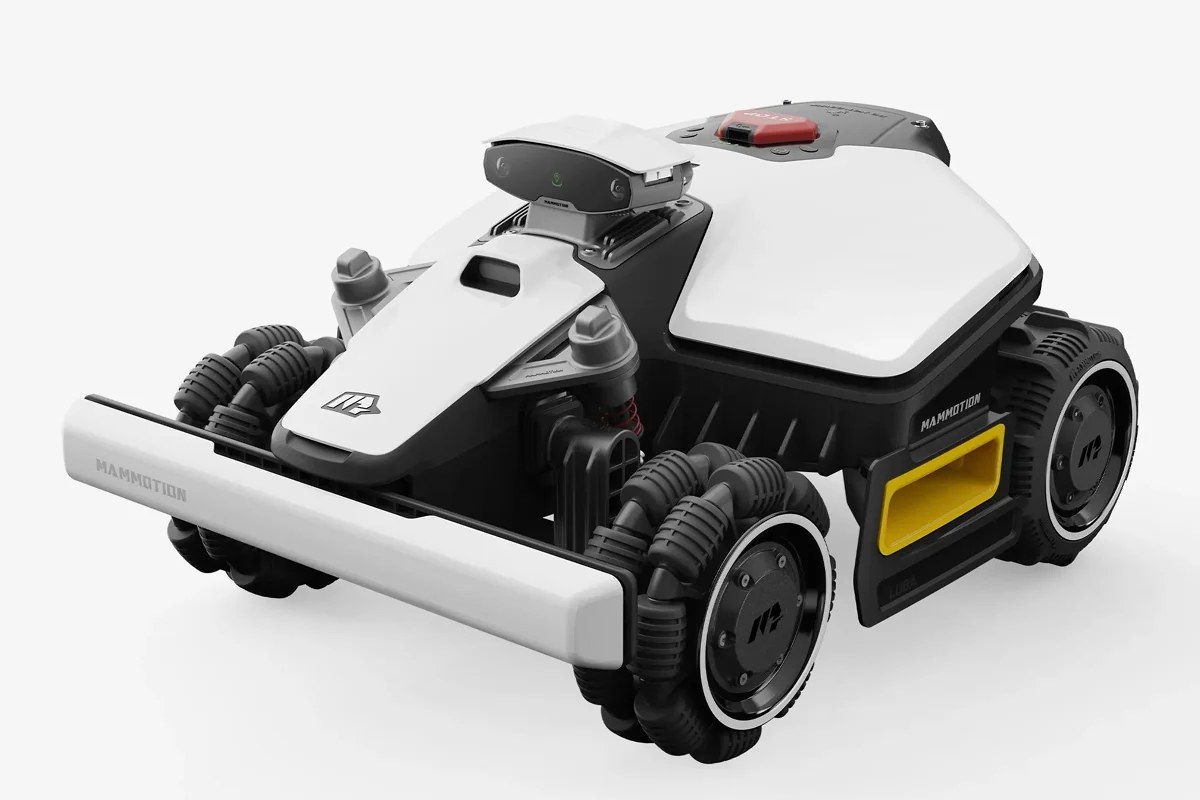
LUBA mini AWD takes Mammotion's traction-led design into a compact working-area class. The original model's page advertises all-wheel drive, adaptive suspension and an 80% slope capability, while listing an RTK reference station in the package. That combination defines its purpose: a smaller lawn with difficult ground, where satellite installation is feasible and extra drive capability is useful.
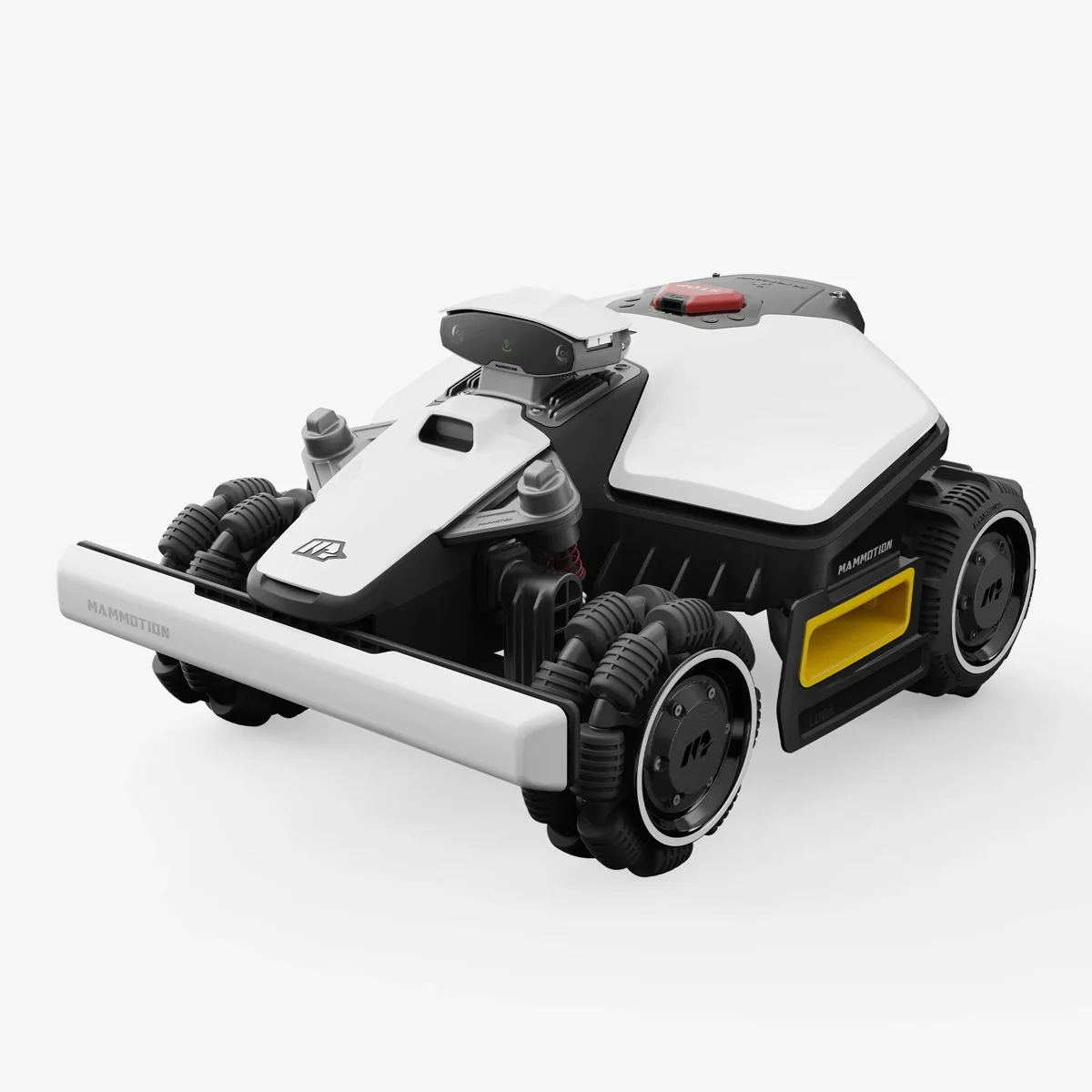
It should not be confused with LUBA mini AWD LiDAR or LUBA mini 2 AWD. Similar names do not mean identical sensing, edge hardware or replacement components. The reviewed page lists 800 and 1500 options with standard and H variants. Save the complete designation when comparing prices. A cheaper model with the wrong cutting-height range is not equivalent simply because the body looks similar in a photograph.
Traction must preserve the lawn it serves
The claimed ability to climb a steep gradient is only part of the story. A robot must turn at the top, cross a change in grade, and repeat the manoeuvre without making the turf worse. The omni-wheel arrangement and suspension are presented as ways to negotiate uneven ground, but we have not measured wheelspin or turf disturbance. Those should be tested on the actual troublesome area before a broad recommendation.
The manufacturer describes vision assistance during interruptions to satellite reception. Treat that as a capability to validate rather than permission to ignore a poor reference-station location. A narrow corridor beside a wall can challenge both the route and the available signals. We would watch the transition back to full positioning, not just the first few metres of travel under a tree, and record whether boundary margins remain consistent.
A practical alternative to the larger LUBA
For a property below the upper area option, the mini can avoid buying unused fleet-like capacity. Twenty advertised mowing areas give scope for detailed scheduling, but too much subdivision can make the app harder to manage without improving the lawn. Start with a few logical zones tied to grass growth and household use. Add complexity only when it resolves an observed problem.
The replaceable-battery claim is useful only if the correct replacement remains obtainable at a reasonable installed cost. Verify that part and the charging hardware locally. Theft features and optional tracker accommodation should be understood as layers, not guarantees of recovery. Against the mini 2, the original is most attractive when its installed cost is lower and the RTK setup is straightforward. Our unresolved questions are edge finish, performance across small depressions and the frequency of owner intervention after the initial map has settled.
A practical acceptance test before relying on it
The original LUBA mini AWD should be demonstrated on the particular ground that motivated an AWD purchase. A safe uneven transition and a controlled turn are more informative than a smooth bank alone. Inspect both the cut and the wheel marks afterward. Then compare behaviour through a brief shaded connection with the intended reference station in its permanent position. This separates traction capability from positioning continuity. Ask the seller to identify the battery replacement part and the height variant on the same invoice. Those small acts of specification discipline prevent an owner from discovering after delivery that the machine solves the hill problem but misses the required lawn finish.
Setup, maintenance and the ownership decision
The original LUBA mini AWD's suspension and driven wheels make mechanical inspection especially relevant. Clear trapped debris from wheel areas using the approved procedure and watch for repeated changes in how the mower crosses the same rough patch. A positioning fault, a traction problem and an obstruction beneath the chassis require different remedies. Record the exact location and conditions when asking support for help. This avoids treating every stop as an app defect or assuming that more drive torque will solve a mapping issue. The compact AWD design should make difficult ground easier to manage, not obscure diagnosis.
The supplied reference station needs a permanent, workable location. Vision assistance during satellite interruption should be treated as support for the installation rather than an excuse to put the antenna anywhere. Check the full route behind buildings and through shaded connections. A short successful excursion away from a good signal does not establish unlimited operation in a difficult area. Save the map and installation notes before changing station placement, and follow the guidance for any recalibration. On a small property, a single problematic route can account for most interventions even when the remaining lawn is straightforward.
Choose the height variant before choosing the area option. An 800H and a standard 1500 solve different combinations of cutting-height and coverage requirements. The delivered label should agree with the lawn finish and schedule in the purchase plan. Replacement battery availability is also worth confirming because the product promotes replaceability. Ask for the correct part number and local service procedure. A replaceable component is a useful design choice, but its practical value depends on obtaining it when needed. Do not confuse batteries or stations from mini 2 with the original generation merely because both products share the LUBA name.
The up-to-20-zone claim can support a divided lawn, yet too many areas can make the schedule needlessly complex. Use zones for meaningful differences in access, growth or household activity. Track which paths must remain open and who is responsible for gates. The machine's theft-related features, optional tracker accommodation and family access should be configured deliberately, with the first owner's account correctly transferred on resale. Review location and camera permissions. We have not tested security resilience, and an accessory tracker should never be presented as a guarantee that a stolen mower will be recovered.
For safe operation, focus on the geometry of the real bank rather than the advertised maximum gradient. Keep conservative margins at dangerous edges and practise recovery where the owner can stand and lift safely. Inspect repeated turning areas for turf disturbance. Cleaning, blade replacement and occasional ground repair should be included in the time calculation alongside mowing saved. The original mini's strongest case is a smaller property that really uses AWD and has a viable RTK installation. If the terrain is ordinary, a simpler rear-drive model may deliver the same finished lawn with less investment.
Seasonal storage and return to work
Winter storage provides an opportunity to inspect the original LUBA mini's suspension and wheel areas without rushing to restore a growing lawn. Use the model-specific battery instructions and document the RTK installation before removing anything. On restart, recheck shaded connections and rough transitions rather than assuming last season's map makes every route unchanged. Keep standard and H-version parts clearly identified. The compact AWD machine should return to service with both its positioning arrangement and mechanical condition understood, especially if another person handled storage.
Sources & further reading.
These are the sources behind this research review. Manufacturer claims are not independent performance measurements. Community accounts, when cited, describe individual experiences.
Documentation reviewed: 9 October 2026. Product software and regional bundles can change. Corrections and editorial disclosures.