Not tested. This is a research score for the documented features, compatibility and ownership trade-offs discussed in this review, not a performance measurement.
Features & capability 30%7.3
Open-ear audio, six-mic calls, voice Meta AI and live translation in light frames, but no camera or visual AI and a two-option action button that can't answer calls.
Compatibility & connectivity 20%7.8
Works with iPhone and Android through the Meta AI app, with Spotify, Apple Music, Amazon Music and Audible by voice; some AI features vary by country and Muse's Canadian timing is unconfirmed.
Ownership & upkeep 20%7.6
A claimed 12 hours plus 48 from the case should cut charging, but there's only a one-year parts warranty, Meta stores voice recordings and there's no long-term reliability data yet.
Setup & everyday use 15%8.5
Engadget and The Verge both praise the 43 to 47 g frames and standard nose pads, and people around The Verge's reviewer didn't notice the smart glasses.
Documentation & support clarity 15%7.4
Meta is clear on battery and styles, but weight figures differ between sources, the action button is oversold and region limits on AI features sit in fine print.
Compare scores within the same product category. Small decimal differences should not override your needs or the evidence limits.
How the Standpoint Score works
We score five aspects of the documented product on a 0–10 scale, then calculate a weighted total:
- Features & capability30% of the total
- Compatibility & connectivity20% of the total
- Ownership & upkeep20% of the total
- Setup & everyday use15% of the total
- Documentation & support clarity15% of the total
This product’s 7.7/10 is an editorial research assessment. It does not claim measured performance, tested reliability or a verified customer satisfaction rate. Compare it with products in the same category, and read each criterion’s reasoning above.
Read the full rubric and score bands ↗From a tech standpoint.
The Ray-Ban Meta Audio is the most wearable pair Meta has made: lighter, longer-lasting and free of the camera that makes people around you nervous. The early reviews back that up, with Engadget at 8.5 and The Verge at 7, and both praise the battery and comfort. The catch is Canadian pricing. From $429.99, and $519.99 with Transitions lenses, it sits too close to the camera-equipped Gen 2 and Gen 3. Buy it on prescription or with benefits money if you're sure you'd never take a photo; otherwise spend the extra $90 to $130 on a camera pair.
Reasons to consider it
- The longest battery claim of any Ray-Ban Meta pair (12 hours), and Engadget still had about half left after roughly five hours of streaming plus an hour-long call
- No camera means no recording light and no awkward questions at school pickup or work, a benefit The Verge and Tom's Guide both describe
- Light frames with ordinary-looking nose pads: Meta quotes 43 g, and Engadget and The Verge both call them comfortable for all-day wear
- Six microphones, and Engadget's callers said its reviewer sounded clearer than on second-generation AirPods Pro
Go in knowing
- A Transitions pair is $519.99 at Best Buy Canada, the same price as the camera-equipped Gen 2 Wayfarer
- The action button only launches Meta AI or plays music, and it can't answer or mute calls, per Engadget
- Meta still stores voice recordings; dropping the camera doesn't change Meta's data policies
- No visual AI, so it can't read a menu or sign, or tell you what you're looking at
Affiliate link. As an Amazon Associate, Tech Standpoint earns from qualifying purchases. It never changes our verdict or score. Disclosure
The specification sheet.
Published specifications from the linked sources. Configurations and availability can differ by country.
- Canadian price (Oct 13, 2026)
- From $429.99 at Best Buy Canada (clear Burbank or polarized G15 Clubmaster) and CA$429 at Meta Canada; polarized grey $469.99 at Best Buy, polarized Clubmaster $469 at Clearly; Transitions $519.99 at Best Buy and $519 at Ray-Ban Canada
- US price
- From $349 USD (Meta)
- Styles
- Clubmaster and Burbank, 23 frame and lens combinations, all prescription-ready (Meta)
- Weight
- From 43 g (Meta); Engadget lists its Clubmaster at 47 g
- Battery
- Up to 12 hours mixed use, up to 6 hours continuous audio; charging case adds up to 48 hours (Meta, via Engadget)
- Audio and mics
- Open-ear speakers; six-mic array, two on the front and four on the arms (Meta, Engadget)
- Camera
- None: no photos, video or visual Meta AI
- Controls
- Touchpad on the right arm; action button set to Meta AI or recommended music; inward-facing notification LED
- Compatibility
- iPhone and Android through the Meta AI app; Spotify, Apple Music, Amazon Music and Audible by voice (Meta Canada)
- Warranty
- 1 year manufacturer parts (Best Buy Canada listing)
Camera-free, yet priced like the camera pair
Walk into Best Buy Canada today and a Transitions pair of Ray-Ban Meta Audio glasses rings up at $519.99. That's exactly what a camera-equipped Ray-Ban Meta Gen 2 Wayfarer costs, and only $40 short of a clear-lens Gen 3 Wayfarer at $559.99. Meta's new glasses are cheaper on paper, but in Canada the gap shrinks fast once you pick the lenses you'd actually wear.
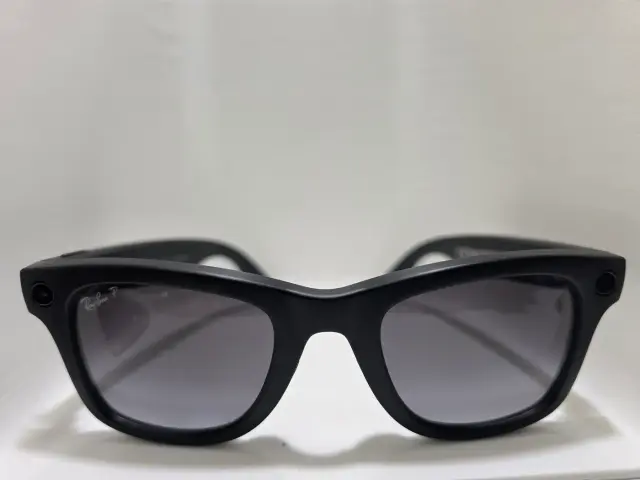
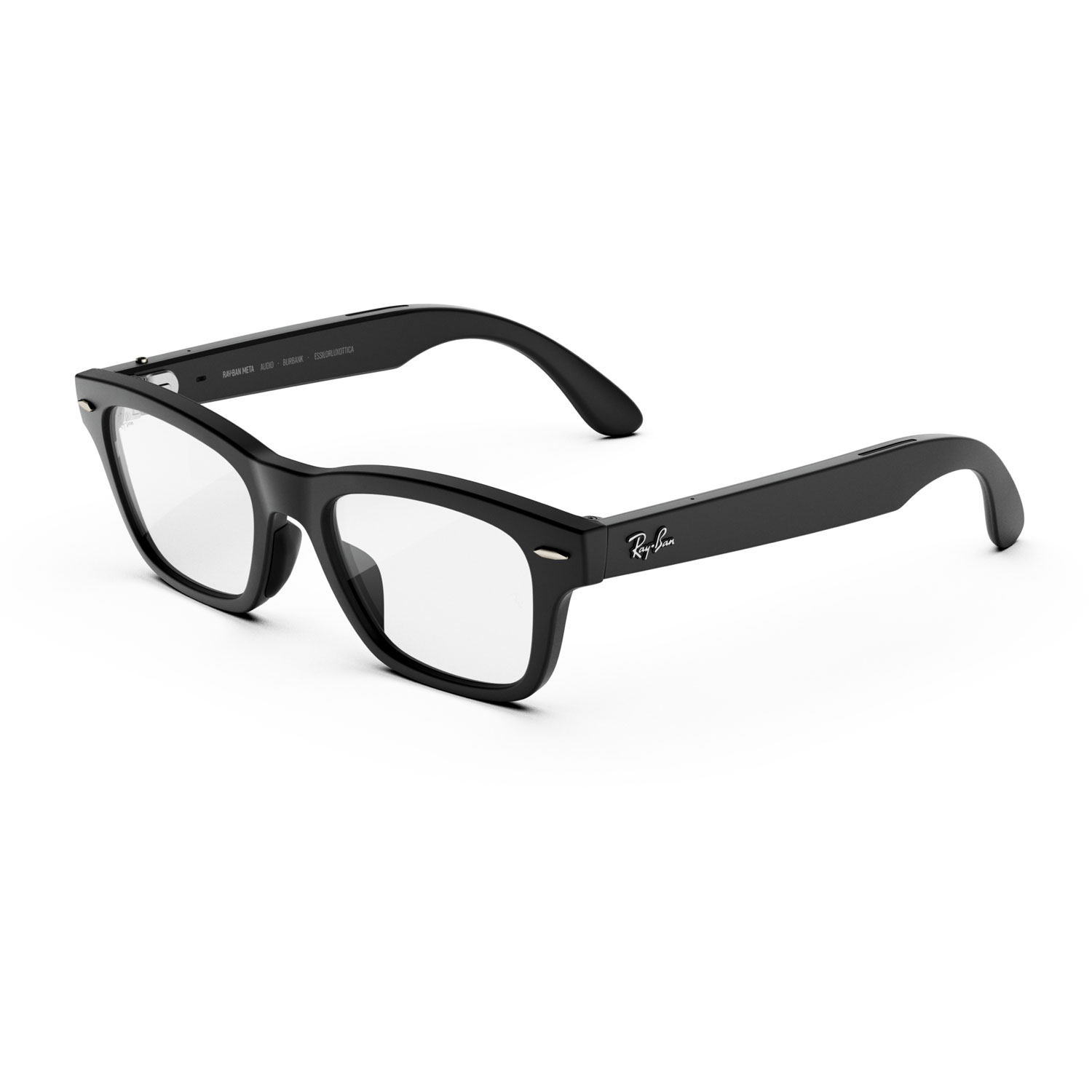
The Audio is Meta's first pair of smart glasses with no camera at all. You get open-ear speakers, six microphones, Meta AI by voice and a claimed 12 hours of battery, in two Ray-Ban frames: the retro Clubmaster and the Burbank, which looks like a slimmer Wayfarer. Meta Canada lists it from CA$429, and Best Buy Canada has clear Burbank and polarized Clubmaster pairs at $429.99. It went on sale October 13, 2026.
This is a research review. Nobody at Tech Standpoint has worn the Audio. It pulls together full reviews from The Verge (7 out of 10) and Engadget (8.5 out of 10), a 72-hour hands-on from Tom's Guide, Meta's own specs, Canadian retailer listings and early buyer threads on Reddit. Cameron does own the camera-equipped Gen 2 and reviewed it hands-on, so that review is the yardstick. The question here: is losing the camera worth it, or are you paying close to camera money for fancy headphones?
What Meta took out, and what that freed up
The big change is subtraction. Meta's head of wearables told The Verge that removing the cameras let the company pull a lot of electronics out of the front of the frame and redesign around audio, which Meta says was already the top use for its camera glasses. The result is lighter: Meta quotes 43 g, against roughly 50 g for the Gen 2 by The Verge's figure. Engadget lists its Clubmaster at 47 g, so the exact number depends on the style and lenses.
Battery is the other jump. Meta claims up to 12 hours of mixed use per charge, against 8 hours for the Gen 2 and 9 for the new Gen 3, with the case adding up to 48 hours. There are six microphones, which Engadget says sit two on the front and four along the arms. The front recording light is gone, since there's nothing to record with; a small LED on the inside of the frame handles notifications.
What you lose is everything that needs eyes: photos, video and the Meta AI features that look at what you're seeing, like identifying a plant or translating a menu. If you bought a Gen 2 for the camera, this isn't an upgrade, it's a different product. If you own a Gen 2 and mostly use it for music and calls, the gain is a few hours of battery and a few grams. That isn't worth $430 on its own.
Twelve hours on paper, half left after six in practice
Meta's 12-hour claim is for mixed use, meaning a blend of listening, calls, messages and assistant questions. The continuous audio figure is lower: up to 6 hours of nonstop playback, as Engadget reports it. That distinction matters if your day is a long commute with a podcast running the whole way, because streaming is what drains open-ear glasses fastest.
Nobody has published a full timed rundown yet. Engadget's reviewer reported close to 50% left after about five hours of streaming plus an hour-long phone call, which suggests the 12-hour claim is realistic for a mix of listening and talking. The Verge listed long battery life among the Audio's strengths. Neither ran a battery test to empty, so treat these as early signs rather than proof.
For context, Cameron's hands-on Gen 2 review found a typical four-hour outing left about 40% in the glasses, which works out to roughly six or seven hours of real use. If Engadget's early figure holds, the Audio should cover a full workday, say a GO train commute both ways with a few calls in between, without a midday trip back to the case. That's the strongest practical reason to choose it over the camera models.
Calls impress, the action button doesn't
Music quality, by the reviews so far, is level with the camera glasses rather than a leap past them. Engadget's reviewer said music, podcasts and calls sounded as good as on the Gen 2. The Verge rated the Audio good for open-ear listening, and that's the honest ceiling: speakers that sit near your ears instead of in them won't deliver sealed-earbud bass or block out a noisy subway car.
Calls are where it may beat what's already in your pocket. Engadget's reviewer said friends and family heard the reviewer more clearly than on second-generation AirPods Pro, and Meta claims the six-mic array blocks about 90% of street noise. That's one reviewer's callers, not a lab test. Still, it lines up with Cameron's Gen 2 experience, where callers said they could hear Cameron clearly.
The weak spot is the action button. Meta pitches one-press access to Meta AI or a favourite feature, but Engadget found only two choices: start Meta AI or play recommended music. You can't assign a specific request, and the button can't answer or mute a call, so call handling stays on the touchpad on the right arm. Engadget hopes a software update widens the options. Until then, expect to mostly ignore it.
One caveat applies to every open-ear Meta pair: sound leaks. Cameron's Gen 2 review noted that people nearby can hear your music or your caller in a quiet room or an elevator, and nothing about the Audio's design suggests that has changed.
Meta AI without eyes, and what works in Canada
Without a camera, Meta AI on these glasses is a voice assistant. You can ask questions, set reminders, check your calendar, send messages, get walking directions and run live translation, which Meta's Canadian product page says covers French, Spanish, Korean, Japanese and more. Meta also says its new Muse AI agent is coming to its glasses. What's gone is any feature that needs to see.
The reviewers aren't sold on the AI. The Verge's review opens with Meta AI insisting a Google Calendar wasn't connected when it was, and its list of negatives includes doubt that AI is the reason to own glasses like these. Tom's Guide's reviewer, after 72 hours, said the one thing they sometimes missed was asking the glasses to read a sign or menu in another language. If visual AI is the reason you want smart glasses, the Gen 3 is the pair to look at.
Canada is a supported market. Meta sells the Audio on its Canadian store, Ray-Ban Canada and Best Buy Canada list it, and Meta AI has worked on Ray-Ban Meta glasses here for a while: Engadget reported in April 2025 that US and Canadian owners got Live AI first. Meta's fine print still says some AI features are limited to select countries and languages, and nothing published confirms when Muse reaches Canada. French translation is covered; for anything newer, check the Meta AI app inside your return window.
No camera fixes the stares, not the microphones
Dropping the camera solves the problem other people have with smart glasses. The Verge's reviewer said dozens of people saw or spoke with them over several days without anyone noticing the glasses, and for once wearing smart glasses didn't feel creepy. Tom's Guide's reviewer wore a pair to a kid's soccer game and a trampoline park without worrying that other parents would assume their children were being filmed. That's a real gain if you'd wear these at work, at the gym or at school pickup.
It doesn't solve the problem you might have with Meta. The glasses still listen for the wake word, and Engadget notes that Meta stores voice recordings, that US owners can no longer opt out of that storage, and that trained reviewers may hear snippets. You can delete recordings by hand in the Meta AI app. The Verge's summary was blunt: the Audio makes decent open-ear headphones, but it doesn't settle the privacy questions around Meta's glasses.
There's a social catch too. In an r/SmartGlasses thread on camera-free glasses, commenters were split: some said they'd feel fine around someone wearing them, while others pointed out that strangers can't tell a camera-free pair from a camera pair at a glance. Engadget raises a related risk, that venue bans aimed at camera glasses could end up catching the Audio as well. Expect to explain them now and then.
Audio, Gen 2, Gen 3 or Oakley: the Canadian price ladder
Here's how the prices stack up in Canada as of October 13, 2026, mostly from Best Buy Canada's listings. The Audio starts at $429.99 with clear or polarized G15 lenses, $469.99 with polarized grey, and $519.99 with Transitions. Ray-Ban Canada has the Transitions Clubmaster at $519, and the optical chain Clearly lists a polarized Clubmaster at $469. Those are the numbers to hold the rivals against.
The camera-equipped Ray-Ban Meta Gen 2 Wayfarer is $519.99 at Best Buy and CA$519 at Meta. It's the pair Cameron wears every day with prescription lenses, and it scored 8.2 in that hands-on review: a 12 MP camera that takes photos worth keeping, clear calls and a claimed 8 hours of battery. If you'd take even a few photos a month, the Gen 2 at the same price as a Transitions Audio is the better buy.
The new Ray-Ban Meta Gen 3 Wayfarer starts at $559.99 at Best Buy, and Ray-Ban Canada lists a prescription-ready Wayfarer Optics at $559. With Transitions it's $649. Meta claims 9 hours of battery, six mics and 3K video. The sportier Oakley Meta HSTN, also with a camera, is $539.99 at Best Buy. Meta's cheaper Adventurer shows up at $409.99 at Best Buy with photo and video listed, but no full reviews of it were part of this research.
Classic audio glasses barely exist here. Bose.ca doesn't list Bose Frames in its current lineup, and Amazon's Echo Frames never officially launched in Canada, according to MobileSyrup. Reddit commenters often mention cheaper camera-free brands, but those weren't part of this review. In practice, the choice is the Audio or a camera-equipped Meta pair, and with matching lenses the camera costs $90 to $130 more.
Prescriptions, delivery waits and a one-year warranty
Prescription lenses are the big ownership question, and the Audio was clearly designed around them. Meta says all 23 frame and lens combinations work with prescription lenses, and its Canadian store flags the glasses as possibly eligible for a health care spending account. Ray-Ban Canada was advertising 40% off prescription lenses plus an extra 10% at checkout on launch day. If your workplace benefits cover glasses, as Cameron's did for the lenses on the Gen 2, the real cost can drop a lot.
Expect a wait for some styles. Meta Canada showed an estimated delivery of November 20 for a clear Clubmaster on launch day, while Best Buy Canada promised a clear Burbank as early as October 15. On r/RaybanMeta, several buyers posted delivery dates ranging from launch day to early November, with prescription orders landing later, and third-party lens labs were already taking orders for the new frames.
The warranty is one year on parts, per Best Buy Canada's listing, and Best Buy gives you 30 days to return or exchange. Its own protection plans add two years for $129.99 or three for $149.99, a big add-on to a $430 pair, so weigh it against how hard you are on glasses. Meta's Canadian store lists free returns.
Long-term reliability is a blank, because the Audio only shipped on October 13. The early Reddit pattern is about why people are buying: a few owners of first-generation camera pairs said they rarely used the camera and want the lighter frame and longer battery. Others questioned why audio-only frames cost nearly as much as camera pairs, which is the same price complaint The Verge made.
Who should buy the Audio, and who should spend $130 more
Buy the Audio if you wear glasses all day, you know you'd never use a camera, and battery life or being around kids, patients or coworkers is what decides it. A prescription or Transitions Burbank or Clubmaster paid for with benefits money is the best case: headphones, calls and a voice assistant in frames that look like nothing special, with a claimed 12 hours behind them.
Skip it if you'd ever want a photo, or if Meta AI's ability to see is the draw. At $519.99 with Transitions, the camera Gen 2 costs the same, and the Gen 3 is $130 more for a newer camera and 9 claimed hours. Skip it too if you already own decent sunglasses and earbuds, a point Tom's Guide made itself. The Audio is a good product priced like a camera product, which is why The Verge landed at 7 and Engadget at 8.5. Still torn? Check whether a Best Buy near you has try-on pairs before you order.
Questions before checkout.
Does Meta AI work on the Ray-Ban Meta Audio in Canada?
Yes. Meta sells the Audio on its Canadian store and Meta AI has worked on Ray-Ban Meta glasses in Canada for some time. Voice questions, reminders, messages and live translation, including French, are supported. Meta says some features are limited by country and language, and it hasn't confirmed when its Muse agent reaches Canada.
Is it worth upgrading from the Ray-Ban Meta Gen 2?
Usually not. You'd gain a few hours of claimed battery (12 versus 8) and a lighter frame, but you'd lose the camera and visual AI. If your Gen 2 works and you like the photos, keep it. The Audio makes more sense as a first pair or a prescription pair for someone who never wanted a camera.
Can I get Ray-Ban Meta Audio glasses with prescription lenses in Canada?
Yes. Meta says all 23 frame and lens combinations are prescription-ready, Ray-Ban Canada sells them with prescription lenses, and Meta's Canadian store says they may be eligible for a health care spending account. Prescription orders were showing later delivery dates than standard pairs at launch, so allow a few extra weeks.
How long does the Ray-Ban Meta Audio battery last?
Meta claims up to 12 hours of mixed use and up to 6 hours of continuous audio, with the case adding up to 48 hours. Engadget reported close to half the battery left after about five hours of streaming plus an hour-long call. No outlet has published a full timed rundown yet.
Ray-Ban Meta Audio or Gen 3: which should I buy in Canada?
Pick the Gen 3 if you'd ever take a photo or want Meta AI to see what you're looking at; it's $559.99 at Best Buy Canada with clear lenses. Pick the Audio, from $429.99, if you only want audio, calls and voice AI, and you value the lighter frame and longer battery over the camera.
Does the Ray-Ban Meta Audio work with iPhone and Android?
Yes. It pairs with both through the Meta AI app, and Meta says you can link Spotify, Apple Music, Amazon Music or Audible and play them by voice. Calls and messages work through your phone, and some messaging features need WhatsApp, Facebook, Instagram or your phone's own messaging app.
Sources & further reading.
These are the sources behind this research review. Manufacturer claims are not independent performance measurements. Community accounts, when cited, describe individual experiences.
- Meta: Introducing Ray-Ban Meta Audio and more AI glasses styles (Sept 23, 2026) ↗manufacturer
- Meta Canada: Ray-Ban Meta Audio Clubmaster (CA$429, features) ↗manufacturer
- Ray-Ban Canada: Ray-Ban Meta AI glasses lineup and prices ↗manufacturer
- The Verge: Ray-Ban Meta Audio review (Verge Score 7) ↗independent review
- Engadget: Ray-Ban Meta Audio glasses review (8.5/10) ↗independent review
- Tom's Guide: 72-hour hands-on with Ray-Ban Meta Audio ↗independent review
- The Verge: Meta ditches the camera on its newest smart glasses (hands-on, Sept 23, 2026) ↗independent review
- Engadget: Meta brings Live AI to US and Canadian owners (April 2025) ↗independent review
- MobileSyrup: Echo Frames have no Canadian availability (2023) ↗independent review
- Best Buy Canada: Ray-Ban Meta Burbank Audio ($429.99, warranty, returns) ↗retailer
- Best Buy Canada: Ray-Ban Meta Clubmaster Audio, polarized G15 ($429.99) ↗retailer
- Best Buy Canada: Ray-Ban Meta Wayfarer Gen 3 ($559.99) ↗retailer
- Clearly: Ray-Ban Meta AI glasses (Audio Clubmaster $469) ↗retailer
- r/RaybanMeta: Gen 3 or wait for the Burbank Audio? ↗Community discussion
- r/RaybanMeta: Anyone else expecting on Oct 13? (delivery dates) ↗Community discussion
- r/RaybanMeta: Audio frames pricing discussion ↗Community discussion
- r/SmartGlasses: Is the camera the biggest problem with smart glasses? ↗Community discussion
Product software and regional bundles can change. Corrections and editorial disclosures.
Affiliate link. As an Amazon Associate, Tech Standpoint earns from qualifying purchases. It never changes our verdict or score. Disclosure