An editorial assessment of documented capabilities and ownership trade-offs. This is not a hands-on test result or a measurement of reliability.
Task capability 30%7.0
A focused 1/8-acre role with a useful North American height range.
Navigation & control 20%7.7
Virtual boundaries and vision-assisted satellite positioning support flexible maps.
Ownership & upkeep 20%7.2
Compact system, with optional connectivity and exact regional parts to budget.
Setup & usability 15%7.5
Small-lawn setup is approachable when antenna placement is suitable.
Documentation & support clarity 15%7.8
Official support clearly distinguishes regional height and manual adjustment.
Compare scores within the same product category. Small decimal differences should not override your needs or the evidence limits.
How the Standpoint Score works
We score five aspects of the documented product on a 0–10 scale, then calculate a weighted total:
- Task capability30% of the total
- Navigation & control20% of the total
- Ownership & upkeep20% of the total
- Setup & usability15% of the total
- Documentation & support clarity15% of the total
This product’s 7.4/10 is a provisional research assessment. It does not claim measured performance, tested reliability or a verified customer satisfaction rate. Compare it with products in the same category, and read each criterion’s reasoning above.
Read the full rubric and score bands ↗The ownership case.
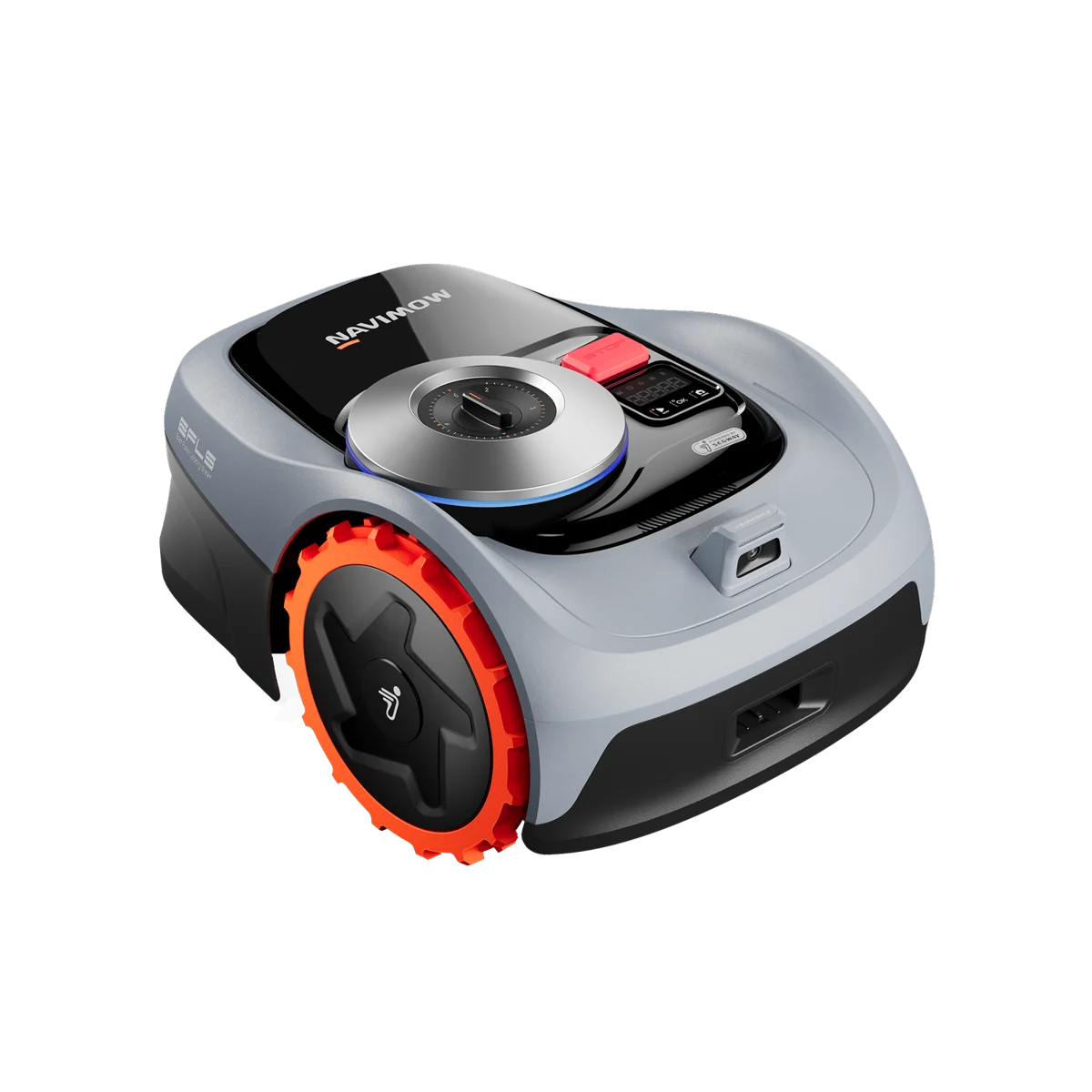
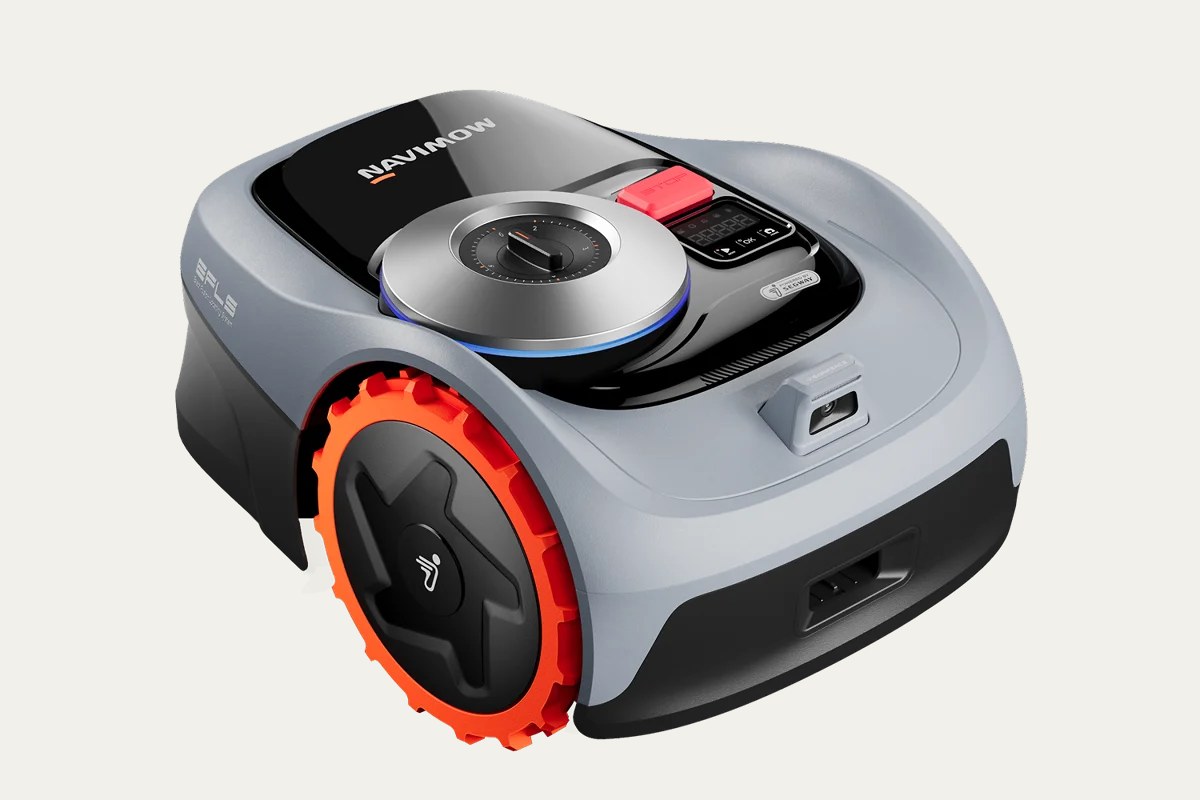
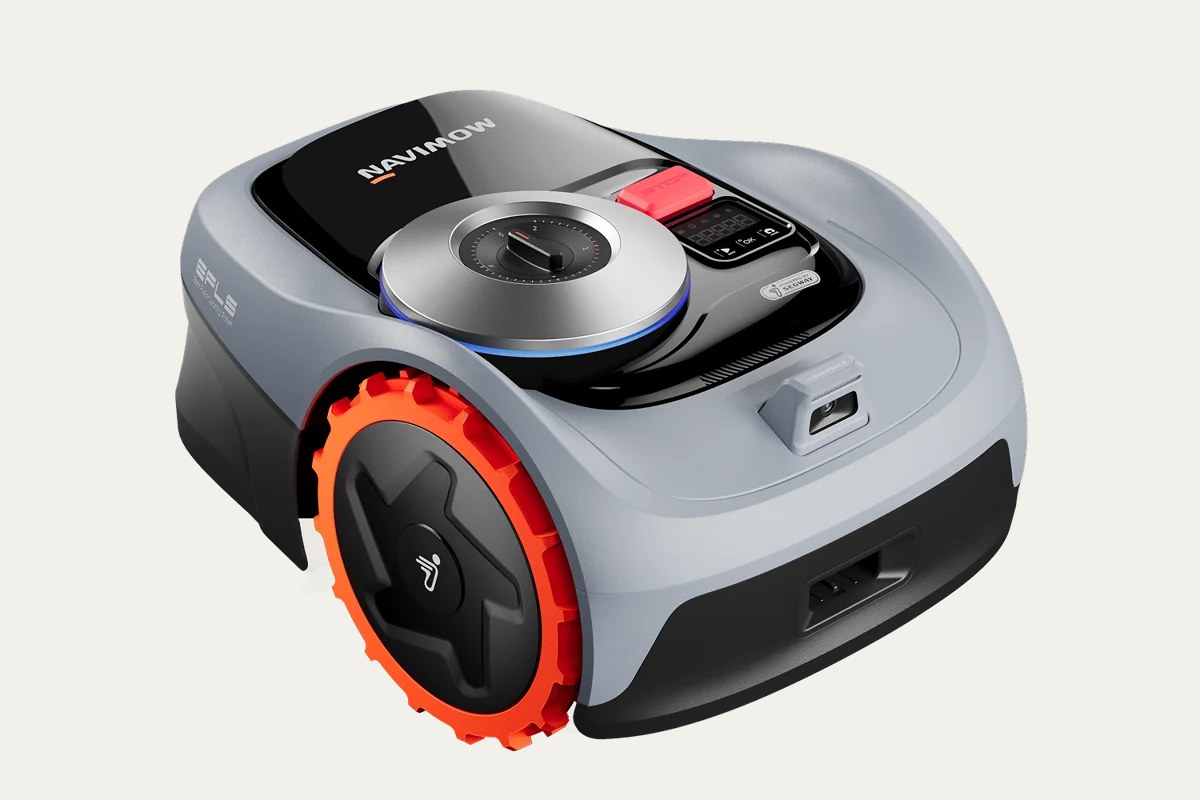
The i105N is a focused small-lawn option, especially when the required cutting height suits its North American range. Leave capacity margin and price the optional connectivity you actually need before comparing it with larger or newer Navimows.
Reasons to consider it
- Clear small-lawn role
- North American high-cut range
- Virtual boundary editing
Go in knowing
- Manual cutting-height adjustment
- Optional cellular hardware and service
- Capacity margin matters on fragmented lawns
The specification sheet.
Published specifications from the linked sources. Configurations and availability can differ by country.
- North American area rating
- 0.125 acre
- Cutting-height range
- 2.0–3.6 in
- Height adjustment
- Manual top knob
- Boundary system
- Virtual, with satellite and vision positioning
- Connectivity expansion
- Access+ cellular module is optional
A small-lawn mower should be judged on a small lawn
The i105N's 0.125-acre rating gives it a clear role: maintaining a modest amount of turf without paying for estate-scale capacity. The relevant measurement is mowable grass, not the lot size on a real-estate listing. A property containing a house, driveway and patio may require far less mowing than its parcel area suggests. Conversely, a small but fragmented lawn can demand substantial travel and turning time.
The North American height range is 2.0–3.6 inches, set with a knob on the mower. Official support distinguishes it from European i-series models with a lower metric range. This regional difference is important enough to check before importing or buying used. An app-controlled schedule does not mean the cutting height is electronically adjusted, and a review of an i105E should not silently supply the i105N's specifications.
Installation determines the daily workload
Navimow combines satellite positioning with vision assistance to maintain virtual boundaries. The attraction is straightforward: moving a flower-bed boundary can become a map edit instead of a wire repair. The trade is that antenna placement and the garden's signal conditions deserve real attention. We would test the narrow side of the house before celebrating success on an open front lawn.
The difference between a standard edge and a ride-on edge also deserves a practical demonstration. A level paved border may allow a cleaner finish than a raised fence or flower-bed wall. We would measure the leftover strip at each type of boundary and include trimming time in the review. A mower that saves the central cutting task can still leave meaningful weekly work around a heavily landscaped garden.
The costs hidden behind a compact purchase
The optional Access+ cellular module matters if location tracking and remote connectivity beyond Wi-Fi form part of the buying argument. Establish the hardware and service cost rather than assuming every security feature is included forever. Local operation, positioning and away-from-home monitoring are related but distinct functions. A buyer should know which one is affected by losing a particular connection.
Against the i110N, the i105N makes sense when there is comfortable capacity margin and ample scheduled time. Against a newer AWD mower, its appeal is avoiding capability the lawn does not need. Our hands-on programme would measure full-lawn completion across several charge cycles, missed strips around obstacles, and recovery after a gate closes. We would not extrapolate battery endurance or reliability from one successful afternoon. The meaningful outcome is a consistently finished small lawn with fewer demands on its owner.
A practical acceptance test before relying on it
A useful i105N acceptance task is a full mowing schedule on measured turf, with the start and finish times recorded for every charging cycle. Do not judge the machine solely by how much it cuts on its first battery run. We would then repeat the schedule with ordinary furniture in place and photograph any residual islands. The small-model purchase is justified if the task completes with enough free time for weather and household use. If it needs nearly all available hours, the i110N may provide a better ownership experience even below the nominal area limit. This comparison concerns usable time, not a claim that the smaller machine cuts less neatly.
Setup, maintenance and the ownership decision
The i105N's first installation should establish the small lawn's difficult boundary before refining the easy centre. Use the official antenna-placement process and verify the route beside the house. A short virtual perimeter is convenient to edit, but careless editing can move a work area toward a hazard just as easily as toward useful grass. Keep a record of the approved map and observe the mower after changes. If the lawn continues into an adjoining property, decide how the physical and mapped boundaries will remain clear. Small acreage does not eliminate the need for a deliberate operating limit.
Manual height adjustment is an important usability detail. Every owner who manages the lawn should know the top knob and the North American range, rather than search for a missing app slider. Confirm the setting before a comparison run and inspect the result on the actual grass. Because the mower is intended for frequent maintenance, the initial lawn should be prepared within the instructions instead of using a first run to reclaim severe overgrowth. The compact purchase makes most sense when the normal task is routine and the required finish lies comfortably within the available height range.
Navimow's optional Access+ module deserves a line in the budget only if its functions are wanted. Determine what remote alerts, location features and data service are available with the base package and after any included period. A Wi-Fi-equipped home does not automatically provide reliable coverage over every corner of the lawn. Conversely, a temporary phone connection problem does not prove mowing has stopped. During handover, establish how the app reports completed and interrupted tasks. Also review family access and the account-transfer procedure so that a used unit is not left connected to a previous owner's credentials.
The practical maintenance burden includes the cutting disc, blade screws, wheels, sensor surfaces and charging contacts. Use the instructions for the exact i-series generation when cleaning and replacing parts. A small blade can still cause injury, so isolate the machine before inspection and keep the active lawn separate from children and pets. We would watch repeated turns at the dock for concentrated wear and correct the approach if necessary. A compact mower should be easy to live with, but its low size and noise are not reasons to treat scheduled cutting as harmless background activity.
For a small property, transport and support can outweigh modest electricity costs. Ask where warranty work is performed and obtain prices for the correct battery and power supply. Compare the total with i110N only after measuring the turf and preferred mowing windows. If the i105N already leaves plenty of time, the larger model's rating may have little value. If it needs most of the available day, extra capacity could improve flexibility. We would choose based on complete weekly tasks and owner effort, with no assumption that published capacity alone establishes performance or battery ageing.
Seasonal storage and return to work
A seasonal record for i105N should include the manual height setting, antenna location and the actual mapped grass area. Follow its storage instructions and check the station approach after frost or gardening changes. When restarting, run the least convenient boundary first and confirm that app alerts still reach the intended phone. If Access+ was purchased, review its current service status separately. The small-lawn capacity works best when the installation remains tidy and the first spring task does not become an unplanned recovery of neglected growth.
Sources & further reading.
These are the sources behind this research review. Manufacturer claims are not independent performance measurements. Community accounts, when cited, describe individual experiences.
- Segway Navimow i105N — official manufacturer product information ↗manufacturer
- Navimow support — regional i-series cutting-height adjustment ↗support
Documentation reviewed: 9 October 2026. Product software and regional bundles can change. Corrections and editorial disclosures.