Not tested. This is a research score for the documented features, compatibility and ownership trade-offs discussed in this review, not a performance measurement.
Task capability 30%7.3
Quarter-acre capacity fits a defined residential role.
Navigation & control 20%8.0
LiDAR and vision directly address difficult satellite installations.
Ownership & upkeep 20%6.8
Sensor care and local parts support remain material questions.
Setup & usability 15%8.0
No separate RTK base can simplify a shaded-yard setup.
Documentation & support clarity 15%6.9
Core claims are clear, but broad avoidance promises lack independent verification.
Compare scores within the same product category. Small decimal differences should not override your needs or the evidence limits.
How the Standpoint Score works
We score five aspects of the documented product on a 0–10 scale, then calculate a weighted total:
- Task capability30% of the total
- Navigation & control20% of the total
- Ownership & upkeep20% of the total
- Setup & usability15% of the total
- Documentation & support clarity15% of the total
This product’s 7.4/10 is an editorial research assessment. It does not claim measured performance, tested reliability or a verified customer satisfaction rate. Compare it with products in the same category, and read each criterion’s reasoning above.
Read the full rubric and score bands ↗From a tech standpoint.
Buy the S4 if your lawn is quarter-acre-class or a bit smaller, shaded by mature trees or crowded by buildings that make an RTK antenna awkward, and gentle enough that a 42% slope claim covers it. Skip it if your real problem is steep or rough ground, where the AWD X7 makes more sense, if your yard is simple with crisp edges that suit the cheaper V3, or if you're counting on future software updates to deliver features it doesn't have today.
Reasons to consider it
- 3D LiDAR with AllSense vision navigates by its surroundings, not satellites
- No separate RTK base to site, power or mount
- A quarter-acre focus that suits typical suburban back gardens
Go in knowing
- A 42% slope claim that sets it apart from Sunseeker's AWD models
- Dynamic avoidance of moving objects hasn't been verified
- Over-the-air updates don't guarantee any future feature
Affiliate link. As an Amazon Associate, Tech Standpoint earns from qualifying purchases. It never changes our verdict or score. Disclosure
The specification sheet.
Published specifications from the linked sources. Configurations and availability can differ by country.
- Rated area
- 0.25 acre
- Navigation
- 3D LiDAR with AllSense vision
- Slope claim
- 42% / 22°
- Boundary setup
- Virtual, no RTK base required
- Software updates
- Over the air advertised
Made for lawns under a canopy
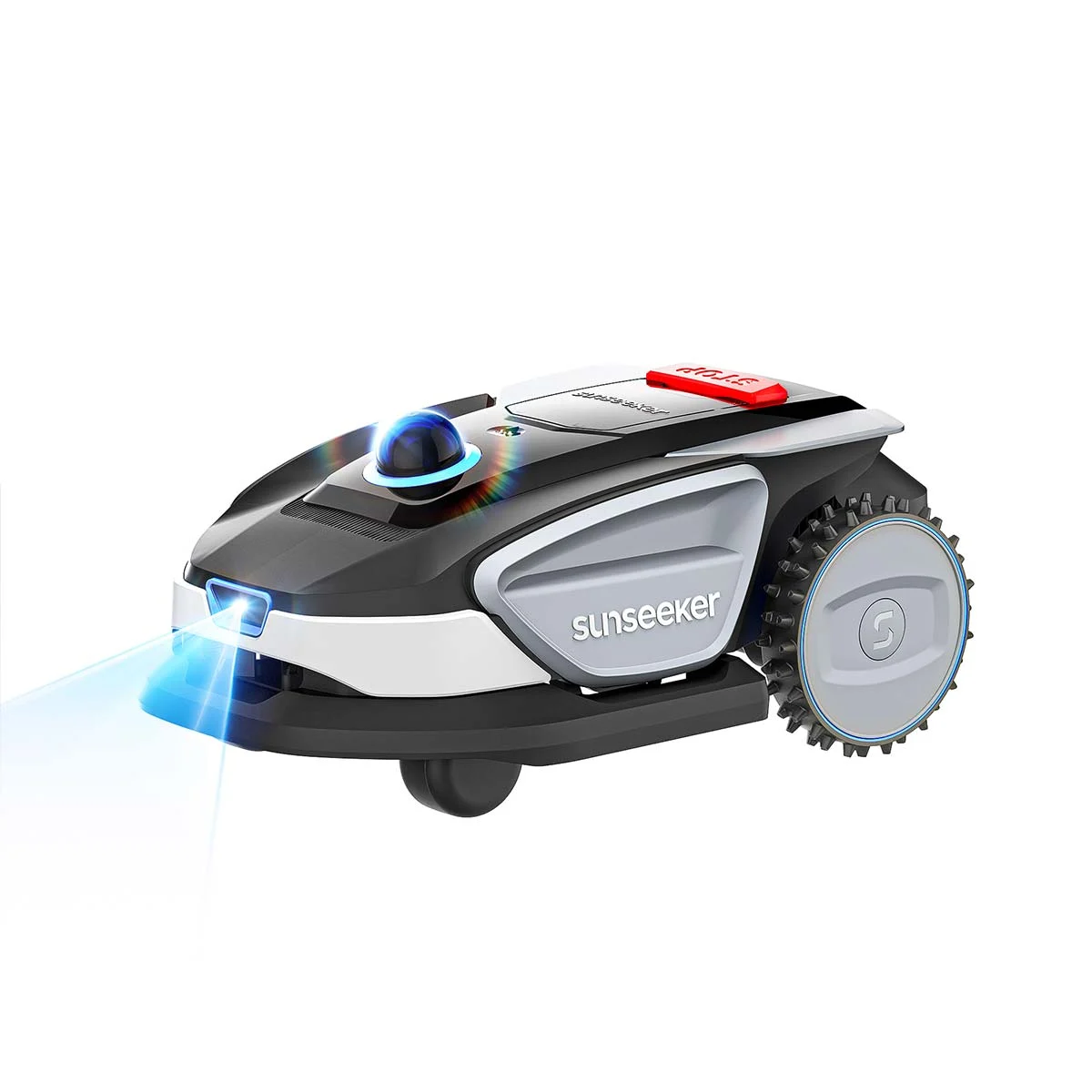
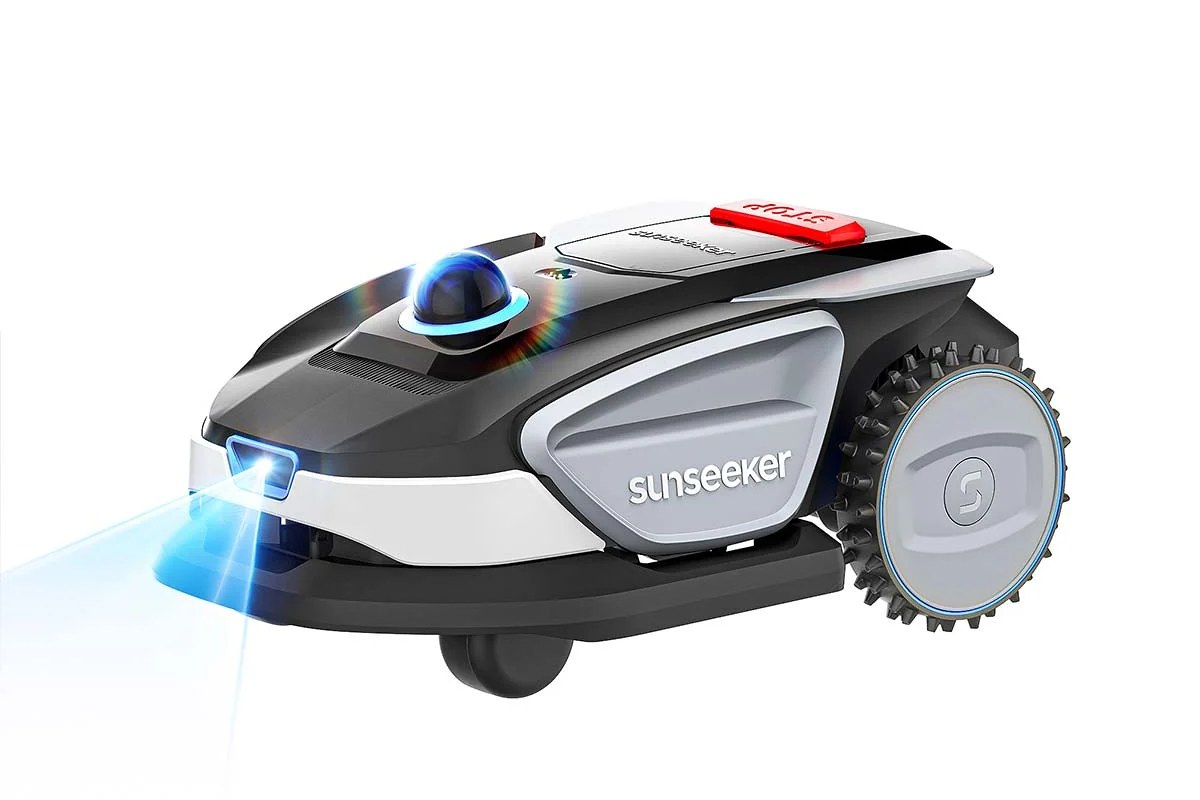
The S4 is Sunseeker's local-sensing option for a quarter-acre-class lawn. The company describes 3D LiDAR working with AllSense vision, with no separate RTK base required. That's especially appealing where a mature canopy or nearby buildings make a satellite installation awkward. Choose it because your property demands it, not because LiDAR automatically makes any mower better.
The published 42% slope figure also gives it a different terrain role from the AWD X7. A shady lawn isn't necessarily steep, and a steep lawn isn't necessarily hard for satellites. Keep those two problems apart when comparing models. Map where reception, visibility, traction and physical access are each likely to be tricky, then choose the system that handles the combination you actually have.
Quick to map, but how often to fix?
Sunseeker plays up quick mapping through the app. A fast setup is nice, but the more telling question is how much correcting you're doing after the first week. Check the boundary near beds, unpaved edges and narrow connectors, then see whether moving furniture or seasonal foliage introduces new errors. A local-sensing mower still needs surroundings stable enough to tell where it is.
The S4's obstacle claims include moving objects. Those claims haven't been verified here, and they're no licence to mow around pets or children. A sensible controlled check uses safe, inert objects and records avoidance clearance, missed grass and how the task resumes. Overly cautious avoidance leaves work behind; getting too close creates a different problem. A fair judgment has to weigh both sides of that trade.
A quarter acre with breathing room
A quarter-acre rating doesn't tell you how many hours the mower needs on a broken-up property. Leave room for interruptions and look at the whole schedule. A mower can technically cover a lawn while leaving no slack for a weekend barbecue or a wet spell. Completed area and how often you have to step in, tracked over several different days, show whether the S4 really has comfortable capacity.
Over-the-air updates are useful, but don't count future improvements as part of what you're paying for until they've actually arrived. Confirm the current app functions and the regional support route, particularly in Canada. Against the V3, the S4 offers a more structured mapping system for complex or shaded layouts. Against the X7, it's a simpler local-sensing installation when you don't need AWD. Its best argument will be dependable boundaries and docking in exactly the spots that trip up other mowers, not a processor spec.
Same route, different times of day
Set up a repeatable route under typical tree cover and along the most featureless edge of the lawn. Watch it at different normal daylight times, then make one ordinary furniture change and see whether it needs remapping. The point is to confirm the installation advantage the S4 is sold on. Separately, measure obstacle clearance and the grass left around a fixed, safe object. That stops obstacle detection getting automatic credit when it's really just pushing extra work onto your trimmer. Finally, confirm it can get back to the dock from the shady area, because confident outbound navigation on its own isn't a complete autonomous result.
Living with local sensing
The S4's local-sensing approach should shape the installation, not just the sales comparison. Put the dock where the approach is clear and the surroundings are fairly stable. A tall hedge that changes shape with pruning, or furniture that moves every weekend, can make a handy-looking spot less useful over time. Check returns from the deepest shade and the most featureless open stretch. With no RTK base, there are fewer external parts to place, but you still need to understand how the map is built, checked and corrected. Keep early boundaries conservative until several ordinary tasks have run.
Turn the quarter-acre rating into a schedule with spare time. Don't assume a small area is easy if it's full of narrow connectors or isolated pockets. Track completed tasks and the travel between them, then set working windows around family use. Keep the 42% slope claim separate from the mower's strength under trees, too. A canopy problem and a traction problem aren't the same thing. If your lawn combines serious slopes with shade, a demonstration has to show both; a LiDAR label can't settle the question of drive on its own.
Keeping the LiDAR and camera clean is part of keeping navigation working. Inspect and clean the sensing surfaces as directed before deciding an error means remapping. Keep the wheels and cutting assembly clear of build-up too. A processing spec like 10 TOPS tells you nothing about how easy these parts are to reach or how often grass packs in under the body. Time a routine cleaning and a blade change before committing. A cheap robot can still cost you a lot of attention if everyday maintenance is fiddly or replacement parts are hard to identify.
Sunseeker promotes dynamic obstacle avoidance, but there's no verification here of how it responds to moving people or animals. Keep them out of the work area, and use controlled inert objects when checking clearance and leftover grass. Review app permissions, user access and notifications before leaving the mower on a regular schedule. Software updates may improve its behaviour, but buy based on the functions delivered today. After a major update or map edit, watch the difficult sections again. That's a practical way to live with changing software without assuming every update is perfect or treating updates as a problem in themselves.
For a US purchase, ask the seller to explain local repair logistics and replacement battery availability. In Canada, start by establishing a supported purchasing route instead of assuming one from the cited US shop. Compare the S4 with the V3 on boundary clarity and map complexity, and with the X7 on your actual terrain. The best S4 case is a lawn where local sensing removes a genuine installation obstacle and the simpler drive is enough. A clear support agreement and a reliable charging route will do more for you than broad claims that the mower handles every environment.
Re-check the shade after the leaves come back
The S4's spring restart should revisit the shady spots that justified a LiDAR mower in the first place. Pruning, new growth and moved furniture can all change the surroundings the map was built from. Clean the sensing surfaces using the approved method, inspect the cutting parts and follow the correct battery-storage guidance. Watch a full return from the most featureless section before switching regular schedules back on. Local sensing means fewer external positioning parts, but its advantage should be reconfirmed after ordinary seasonal change, not assumed to last forever because the first map worked.
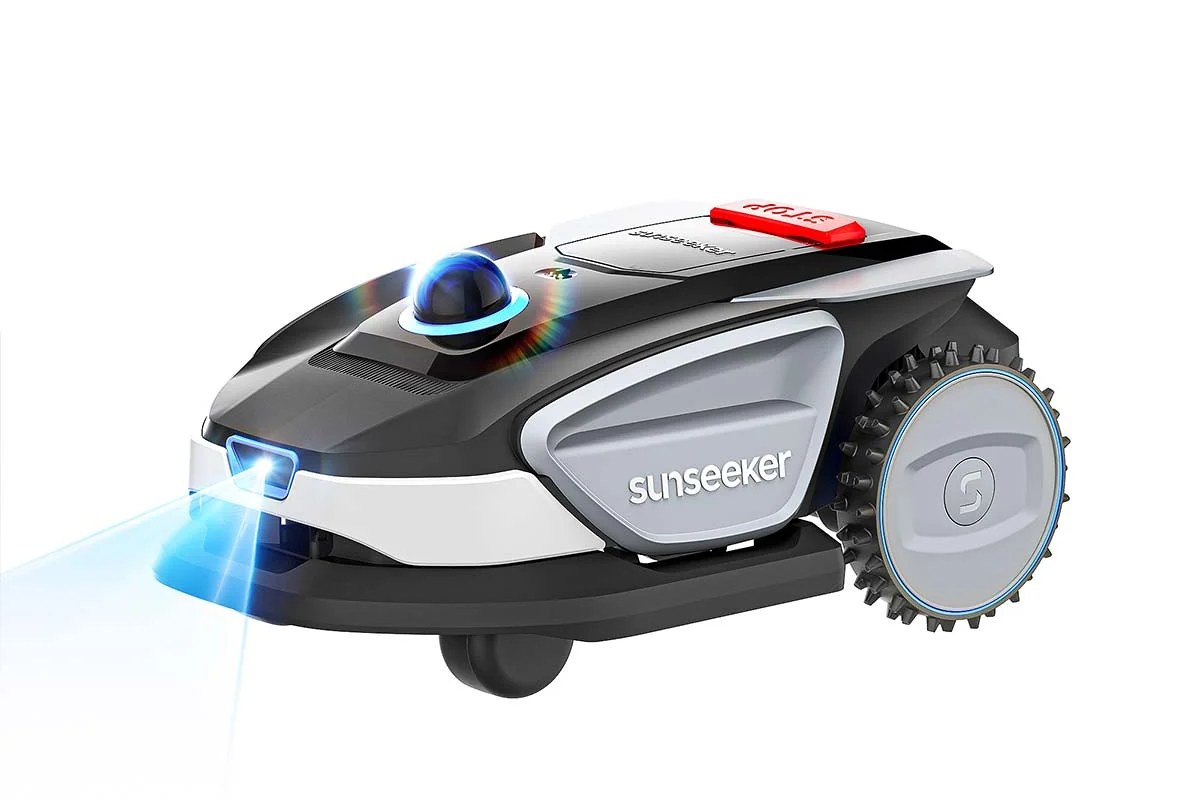
The closest alternatives.
| Product | Standpoint Score | Best for | Price |
|---|---|---|---|
| Sunseeker S4This review | 7.4Research | A small to medium shaded lawn where a local-sensing mower avoids an awkward antenna installation. | Amazon.ca ↗ |
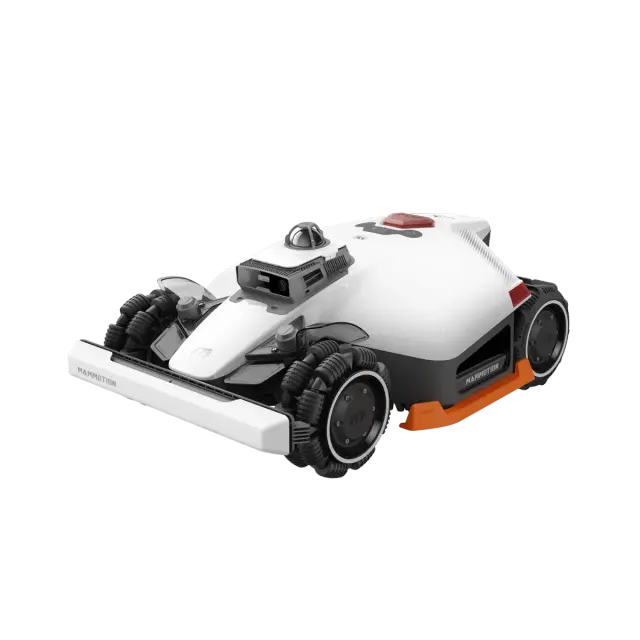
| Mammotion LUBA 3 AWD | 7.8Research | A complex lawn where AWD is useful and the buyer is prepared to verify the navigation and height specification of the… | Amazon.ca ↗ |
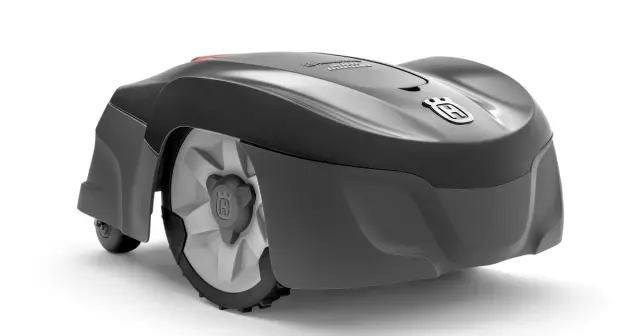
| Husqvarna Automower 115H Bluetooth | 6.1Research | A modest, settled lawn where a supported used mower costs substantially less than a new installation. | Amazon.ca ↗ |
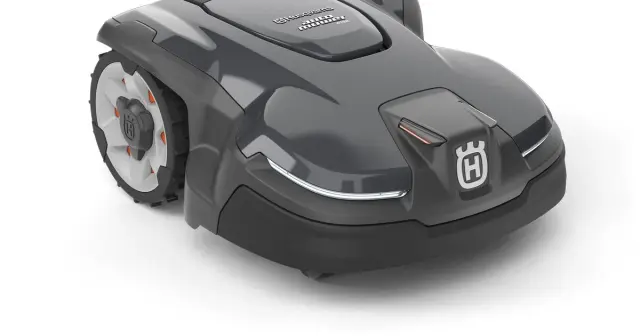
| Husqvarna Automower 415X | 6.6Research | Owners of a small or medium established wired lawn who want connected control and a documented support path. | Amazon.ca ↗ |
Compare scores within a category: Tested means our own use, Research means documentation and attributed outside testing. Price links are affiliate links. As an Amazon Associate, Tech Standpoint earns from qualifying purchases. Disclosure
Sources & further reading.
These are the sources behind this research review. Manufacturer claims are not independent performance measurements. Community accounts, when cited, describe individual experiences.
Product software and regional bundles can change. Corrections and editorial disclosures.
Affiliate link. As an Amazon Associate, Tech Standpoint earns from qualifying purchases. It never changes our verdict or score. Disclosure