An editorial assessment of documented capabilities and ownership trade-offs. This is not a hands-on test result or a measurement of reliability.
Task capability 30%7.1
Quarter-acre rating and eight-inch width create a useful middle-size option.
Navigation & control 20%6.5
Wired routing offers predictable boundaries but limited map flexibility.
Ownership & upkeep 20%7.1
4.0 Ah Power Share package has practical ecosystem appeal.
Setup & usability 15%6.0
Perimeter and narrow-passage planning remain meaningful work.
Documentation & support clarity 15%5.3
WR155 copy on WR147 material weakens purchase clarity.
Compare scores within the same product category. Small decimal differences should not override your needs or the evidence limits.
How the Standpoint Score works
We score five aspects of the documented product on a 0–10 scale, then calculate a weighted total:
- Task capability30% of the total
- Navigation & control20% of the total
- Ownership & upkeep20% of the total
- Setup & usability15% of the total
- Documentation & support clarity15% of the total
This product’s 6.5/10 is a provisional research assessment. It does not claim measured performance, tested reliability or a verified customer satisfaction rate. Compare it with products in the same category, and read each criterion’s reasoning above.
Read the full rubric and score bands ↗The ownership case.
WR147 sits in a practical middle ground, provided the buyer verifies its own package instead of accepting WR155 copy on the retail page. A careful wire installation and suitable lawn geometry are more important than the marketing description of intelligent navigation.
Reasons to consider it
- Balanced quarter-acre capacity
- Eight-inch cutting width
- 4.0 Ah Power Share battery listed
Go in knowing
- Perimeter wire remains required
- Cross-model sales copy needs checking
- Narrow passages need manual-based planning
The specification sheet.
Published specifications from the linked sources. Configurations and availability can differ by country.
- Rated area
- 1/4 acre
- Cutting width
- 8 in
- Battery in model table
- 4.0 Ah, Power Share
- Cutting-height range
- 1.5–3.5 in in model comparison
- Boundary type
- Physical wire
- Specification note
- Use exact WR147 manual and package
The sensible middle size, with a documentation catch
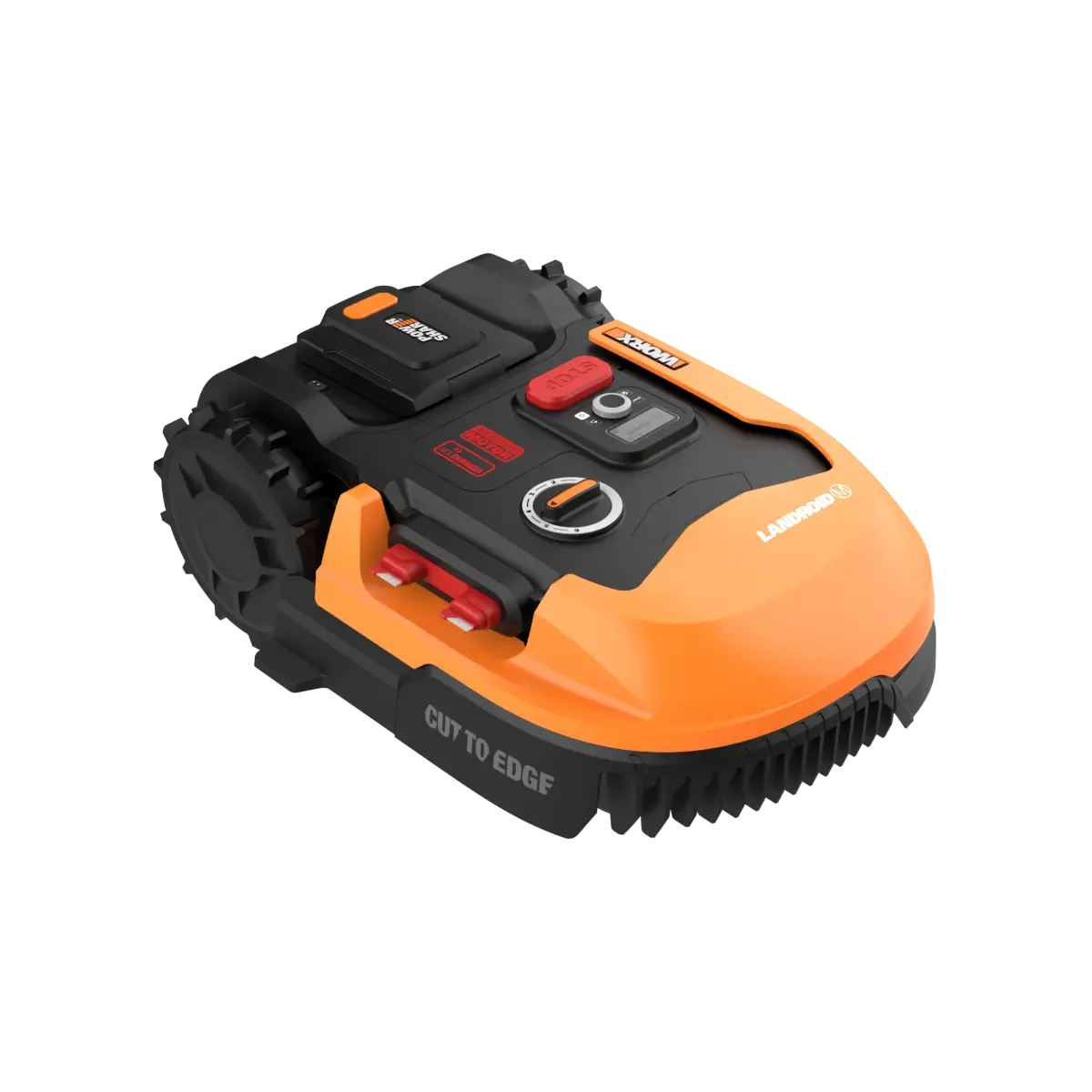
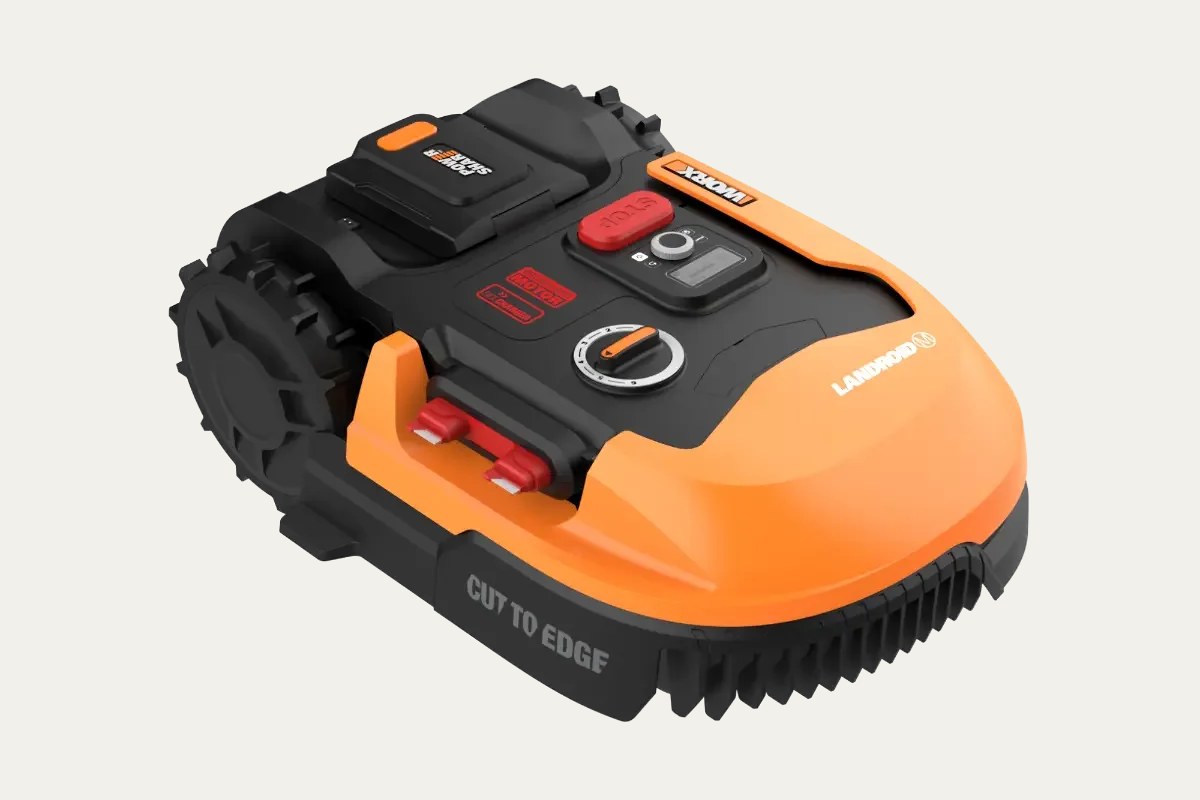
Worx's model comparison identifies WR147 as the quarter-acre Landroid M, with an eight-inch cutting width and a 4.0 Ah battery. These are useful distinctions from the smaller WR165 and larger WR155. The retail page, however, contains text referring to the L model. We therefore use the model comparison and owner manual for the core identity rather than presenting inconsistent sales copy as settled specification.
The middle-size format is appealing when a lawn is too large for the S model's comfortable schedule but does not justify the L's capacity. It can also leave operating margin on a smaller property. The right measurement is the actual turf and the number of routes between its sections. A quarter-acre rectangle and several disconnected patches present different workloads even if the area total is the same.
Navigation improvements do not remove the wire
Worx promotes AIA navigation and handling of narrow passages. The important distinction is that this remains a boundary-wire mower. A claim about needing no guide wire is not a claim that no perimeter wire is required. We would plan the loop and charging approach first, then assess whether the passage geometry matches the manual's requirements. A visually narrow opening can be unusable once the necessary boundary clearance is included.
The floating-disc design is intended to accommodate variations in ground height. It does not make ruts, roots or sudden changes in grade irrelevant. Watch the mower crossing those transitions and examine the grass for scalping or repeated wheel marks. The eight-inch deck suits regular maintenance; it should not be assumed to replace a conventional mower's ability to recover badly overgrown grass in a single pass.
Value depends on the complete installed system
The comparison table's 1.5–3.5-inch height range covers a useful residential span, but owners should confirm the delivered model and manual before planning seasonal settings. A good purchase includes the right charger and enough boundary materials, plus a clear answer about service. Optional obstacle-avoidance or connectivity modules should be priced only after identifying which problem they solve on the actual property.
Against WR155, the WR147 is attractive when the extra capacity would go unused. Against a wire-free competitor, its case is strongest in a settled garden with a clean installation and a favourable complete price. Our tests would focus on passage navigation, missed areas around obstacles, wet-grass accumulation and charging reliability. We have not measured these outcomes or inferred owner consensus from retailer ratings. The M deserves a place on a shortlist as a practical design, with the final recommendation tied to a properly specified package and real lawn results.
A practical acceptance test before relying on it
The WR147's most revealing test is a narrow connection that satisfies the manual's installation dimensions. Observe entry in both directions, return to charge and the grass left at each end. This checks the practical benefit of the routing system without confusing it with a wire-free design. We would also count boundary-related interventions separately from mower faults, because they have different remedies. A correctable loop problem should not automatically condemn the machine, while a consistently awkward chassis fit may justify a different model. Keep the comparison anchored to the documented 4.0 Ah M package so that a retailer's mixed copy does not distort expectations.
The quarter-acre decision is really a route decision
The WR147's middle position only helps if its usable schedule matches the layout. On a quarter-acre property, map the places where the mower must travel without doing much cutting: passages beside the house, routes between sections and the final approach to the station. Those transitions deserve attention during installation because an otherwise generous working window can be consumed by awkward movement. Ask the installer to evaluate them against the matching manual rather than relying on the general narrow-passage claim.
Make the boundary plan understandable to whoever maintains the property later. Mark crossings, connectors and areas likely to be dug for planting or irrigation. A wired system provides a physical reference that can be inspected and repaired, but the repair becomes more difficult when nobody remembers the original route. Keep the installation sketch with the WR147 documentation so the decision to move a bed or add a path includes the mower's boundary from the start.
Inspect the cut around transitions, not just the centre
The floating-disc design gives a clear question for a practical evaluation: does the mower maintain the chosen height across the uneven portions of this lawn? Photograph the same transitions during the first several cycles and look for a repeated pattern. If one location is consistently missed or marked, investigate its shape and condition before assuming a more aggressive schedule will help. The eight-inch deck does not remove the need for ground preparation or a realistic assessment of border trimming.
Service the cutting parts using the WR147 instructions and compatible replacements. Record the chosen height alongside the condition of the grass when assessing changes, because a different setting or an unusually long interval can alter the result. Also inspect wheel paths and the charging contacts as part of a regular routine. These checks are not glamorous, but they connect the model's documented mechanical features to the consistency an owner is actually buying.
The app should simplify a plan you already understand
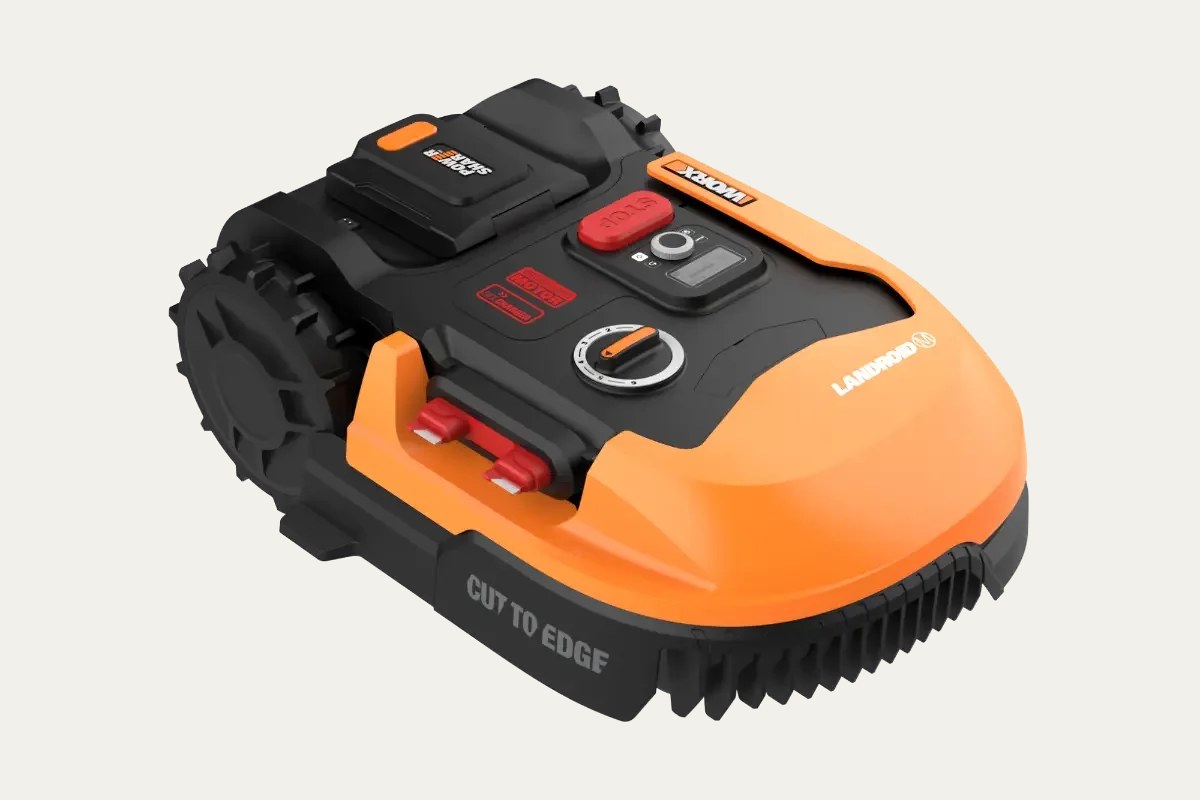
Start with a mowing schedule that leaves room for household use and the interruptions you can reasonably anticipate. Then evaluate what the Landroid app contributes to that plan. An automatic scheduling claim should not prevent you from noticing that a particular gate is normally shut or that one part of the garden is occupied at certain times. The WR147 still works inside a physical installation; the owner needs an intelligible relationship between that installation and the software settings.
Optional modules should be justified individually. Ask for the exact compatibility information, included functions and any continuing requirements before adding an accessory. If you are choosing the M over the L to avoid unnecessary expense, an elaborate accessory package may change that calculation. Keep account sharing deliberate and learn the local stopping procedure. Remote convenience should make an established routine easier to manage, while the mower remains operated according to the precautions in its manual.
A complete M-model offer is the meaningful comparison
The 4.0 Ah pack in the model comparison is a useful identifier, but a buying decision should use the components confirmed for the delivered package. Compare quotations line by line: mower, battery, charging equipment, boundary materials, installation and any optional modules. If sales copy refers to WR155, obtain a corrected written specification instead of accepting a verbal assurance that all Landroid models are effectively the same. The capacity difference is part of the purchase, not an incidental detail.
Check local access to the parts and service required by this exact generation. An owner already invested in Power Share should still verify mower compatibility rather than treating every battery or charger in the shed as interchangeable. For cross-border purchases, establish the return destination and regional warranty arrangements in advance. The WR147's case is strongest when the entire system is straightforward to install and support, with enough time left in its schedule to absorb ordinary interruptions.
Sources & further reading.
These are the sources behind this research review. Manufacturer claims are not independent performance measurements. Community accounts, when cited, describe individual experiences.
- Worx Landroid M WR147 — official manufacturer product information ↗manufacturer
- Worx WR165/WR147/WR155 owner manual ↗manual
Documentation reviewed: 9 October 2026. Product software and regional bundles can change. Corrections and editorial disclosures.