Not tested. This is a research score for the documented features, compatibility and ownership trade-offs discussed in this review, not a performance measurement.
Task capability 30%7.5
Larger battery and half-acre rating expand operating capacity.
Navigation & control 20%6.5
Conventional wired system needs a sound loop and charging route.
Ownership & upkeep 20%7.1
Power Share and documented consumables support a practical ownership case.
Setup & usability 15%5.9
A half-acre wire installation can be extensive.
Documentation & support clarity 15%6.4
The L specification is clearer, though package contents still need confirmation.
Compare scores within the same product category. Small decimal differences should not override your needs or the evidence limits.
How the Standpoint Score works
We score five aspects of the documented product on a 0–10 scale, then calculate a weighted total:
- Task capability30% of the total
- Navigation & control20% of the total
- Ownership & upkeep20% of the total
- Setup & usability15% of the total
- Documentation & support clarity15% of the total
This product’s 6.8/10 is an editorial research assessment. It does not claim measured performance, tested reliability or a verified customer satisfaction rate. Compare it with products in the same category, and read each criterion’s reasoning above.
Read the full rubric and score bands ↗From a tech standpoint.
Buy the WR155 if you have a big, uncomplicated lawn approaching half an acre, a garden that won't be redesigned any time soon, and a quote where wire, installation and service still come in well under a wire-free alternative. Skip it if the WR147 would keep up with your grass, if your lot is a maze of strips and gates, or if you're looking at old stock or a used unit whose battery and station nobody can show you working properly.
Reasons to consider it
- Half-acre published capacity, sized above the quarter-acre WR147
- A 6.0 Ah Power Share battery for longer working stints
- A physical boundary you can trace, inspect and repair
Go in knowing
- The eight-inch deck is no wider than the WR147's, so capacity comes from running time
- A half-acre perimeter means a lot of wire and installation labour
- Battery and station condition can make or break older stock
Affiliate link. As an Amazon Associate, Tech Standpoint earns from qualifying purchases. It never changes our verdict or score. Disclosure
The specification sheet.
Published specifications from the linked sources. Configurations and availability can differ by country.
- Rated area
- 1/2 acre
- Cutting width
- 8 in
- Battery in model table
- 6.0 Ah, Power Share
- Cutting-height range
- 1.5–3.5 in in model comparison
- Boundary type
- Physical wire
- Drive approach
- Conventional wired Landroid navigation
Same blade width, more fuel in the tank
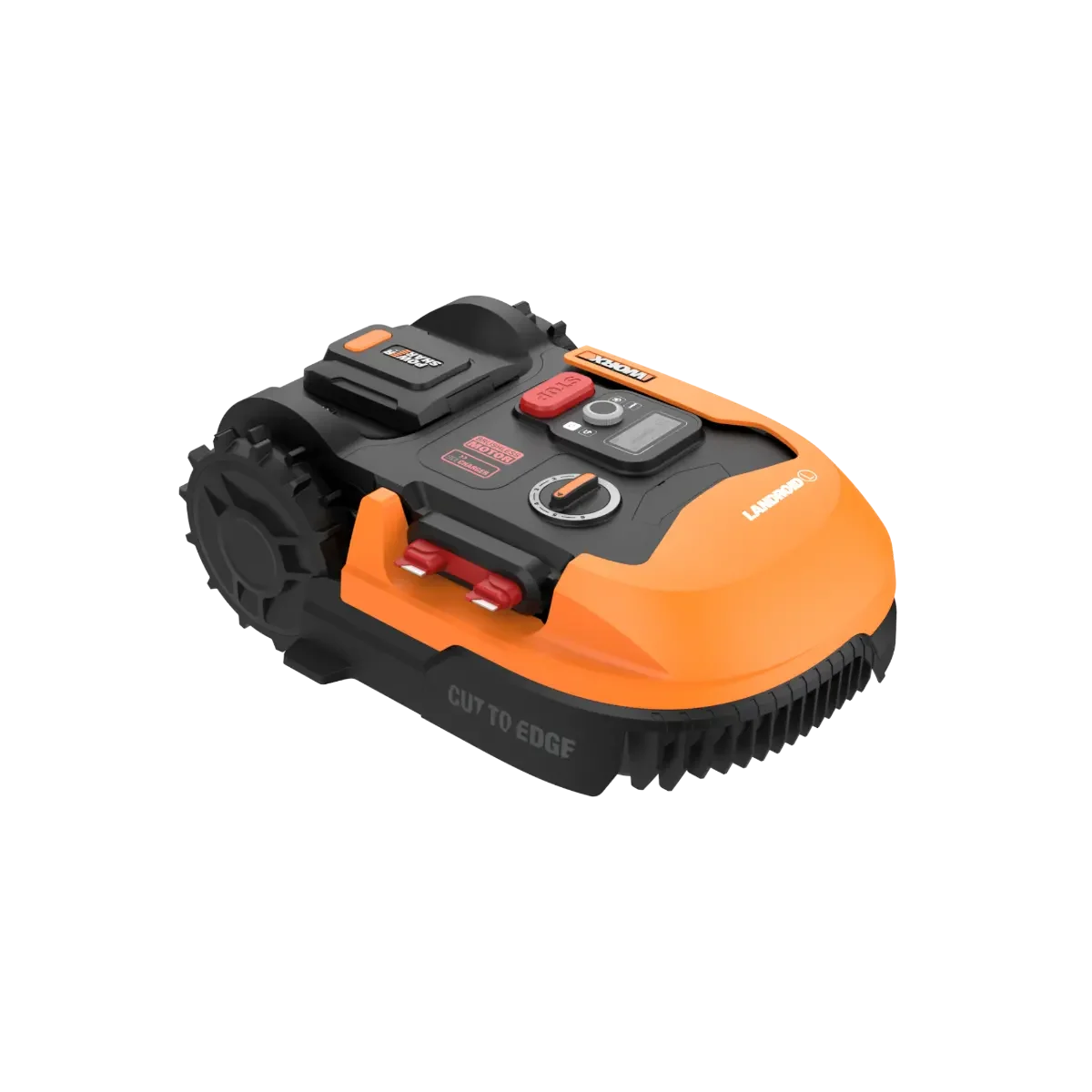
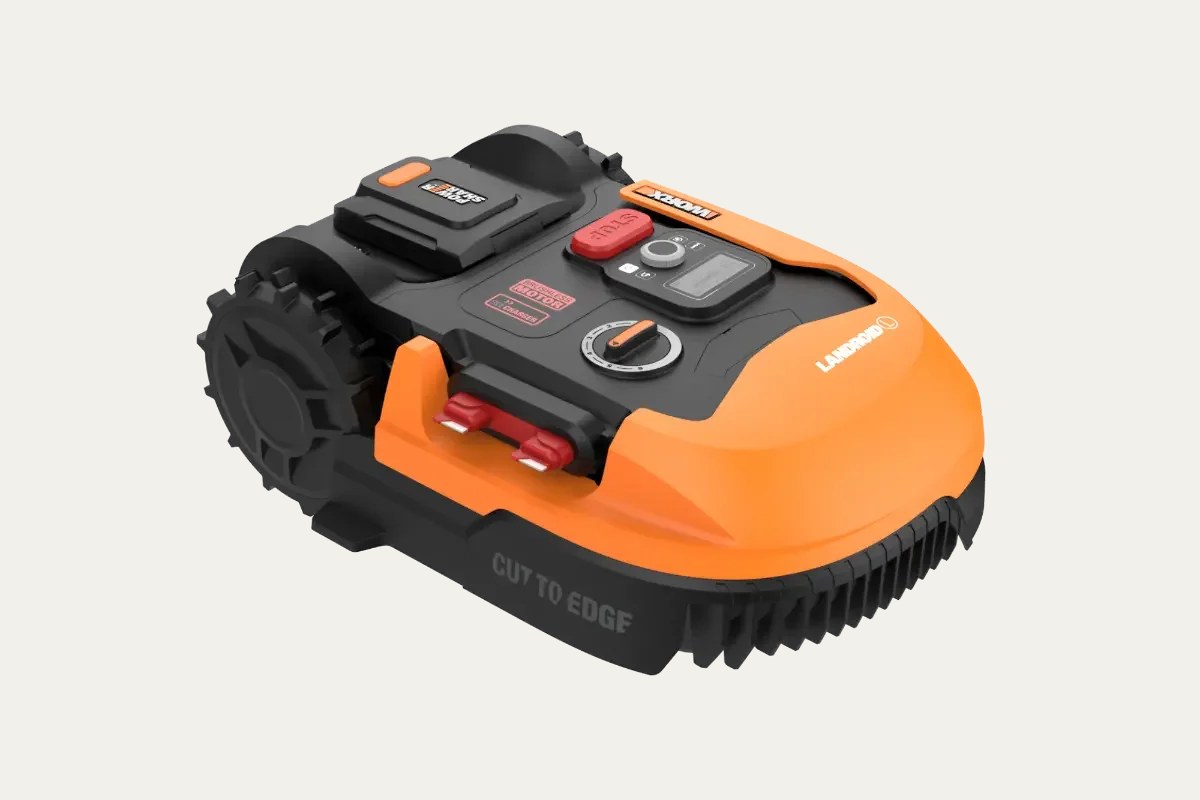
The WR155 is the half-acre Landroid L, listed with a 6.0 Ah Power Share battery and an eight-inch cutting width. That width matches the WR147, so don't picture a much bigger machine cutting every lane faster. What you're paying for is more sustained work inside the same Landroid system. That's genuinely useful when your lawn offers enough hours to use it, but do the schedule maths before assuming it.
For a mature garden that rarely changes, a physical boundary is a perfectly reasonable trade-off. You can see it, trace it and fix it, and plenty of lawns don't need virtual mapping at all. The bigger the property, though, the more it matters to record where the wire runs and keep it safe from future digging. On a lot this size, installation labour can be a serious slice of the total bill.
Half an acre is never just one lawn
A broad lawn with a few permanent obstacles suits this mower far better than a chain of narrow strips wrapped around landscaping. The advertised narrow-passage logic may help with routing, but every passage still has to meet the clearances in the manual. Before buying, trace the route home to the charger from the furthest corner. If that route only works once someone moves the car each day, the mower is only partly autonomous.
The published 1.5–3.5-inch height range covers normal residential mowing. The real questions are how the cut looks after the mower crosses uneven ground and after the grass has grown longer than usual, and those haven't been checked here. A floating disc doesn't guarantee that every raised root or dip gets handled neatly. What you want is an even surface over repeated cycles, with a note of any spots that still need a conventional mower.
Does the L earn its bigger installation?
The 6.0 Ah pack is a real plus, especially if you already know your way around Power Share. Just don't let borrowing the mower battery for other tools wreck its working schedule. Confirm replacement battery compatibility, the charging equipment and exactly what's in the retail kit. With old stock or a used machine, check battery health, contact condition and how the station behaves before you compare the price with a new product.
Against a modern wire-free mower, the WR155 is most persuasive when its installed cost is substantially lower and the garden doesn't need frequent boundary changes. Against the WR147, the extra capacity has to buy headroom you actually need. The evidence that matters is whether it finishes the lawn each day, how much wear builds up along the boundary, how often it needs rescuing and how much edging is left over. A long-running platform doesn't prove that any individual unit is reliable. A season's maintenance and rescue log, alongside photos of the finished lawn, would tell you far more.
Skip a day, then see if it catches up
A telling WR155 trial is to run its full half-acre-class schedule after a normal interruption, such as a day when the lawn is in use. Note how long it takes to get back to the usual finish without pushing the machine beyond its operating instructions. That shows whether the bigger battery and rating give you real flexibility. Look along the boundary-following route for concentrated wheel traffic, and check the return to the dock from the farthest point. On a long wired installation, small recurring problems add up to real owner time. The L has to justify itself across that whole routine, not just by running longer than the M on an open patch of grass.
A half-acre loop needs a map in a drawer
A half-acre installation can hide so much wire under soil and thatch that memory becomes useless for maintenance. Record the boundary route, connector positions, exclusions and the charging approach while you can still see them. Photograph the tricky transitions and update the plan whenever the landscaping changes. That's part of owning a WR155 system, because fence work, new planting or irrigation can cut through a route that's run quietly for months.
The far end of the lawn is the best place to judge the installation. Follow the trip home from there and spot any shared driveway, narrow access or movable obstacle that could block it. A bigger battery won't open a gate that closes across the only route home. The L earns its capacity advantage when the property gives it a workable, connected route and enough operating time, not just when the area printed in the ad matches your address.
The edging doesn't scale down with the rating
Since the WR155 and WR147 share an eight-inch published cutting width, judge the bigger model on finished maintenance across a realistic schedule. Walk the perimeter and mark the strips it can't effectively reach. Add those strips, seasonal preparation and any recovery from overgrowth to your own workload. A wide expanse of tidy grass can still leave a lot of edging on a property with plenty of borders, even when the middle looks great.
When you judge the finish, keep the height setting, the condition of the cutting parts and the mowing intervals in your log. Inspect the floating cutting assembly and the wheels as the manual describes, with the machine properly disabled. A patch of torn or missed grass that keeps coming back is a cue to look at the ground, the installation and the cutting parts. Simply adding hours without finding the cause just repeats the same fault over more cycles. Close-up evidence like this is worth more than a distant photo of a lawn that merely looks even.
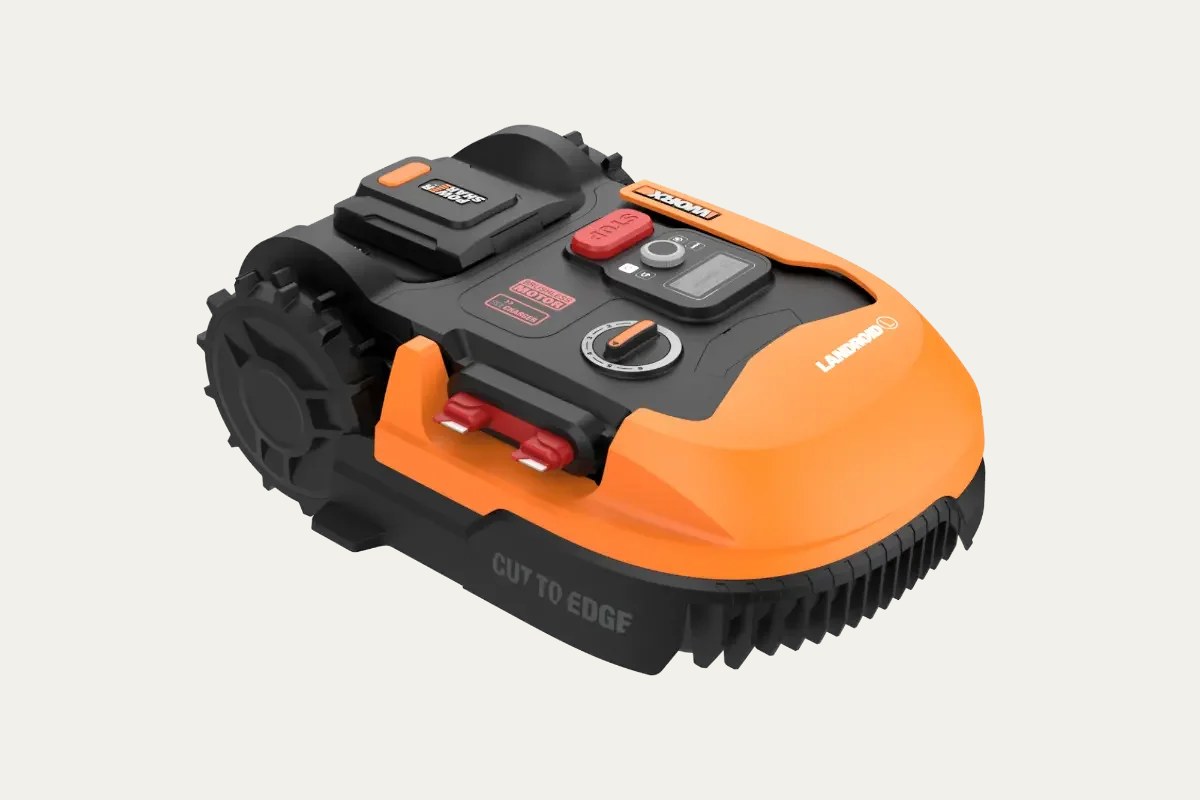
The 6.0 Ah pack is the mower's engine, so treat it that way
Power Share is convenient, but the mower needs a predictable relationship with its battery and station. If you regularly borrow the pack for another tool, build that gap into the mowing plan. Confirm which battery comes with your exact offer, because the WR155 retail material consulted and the model comparison don't fully agree. The right record is a written list of delivered components, then a check of their labels, not an assumption based on the family name.
With old stock or a used example, ask to see the full charging and operating sequence, following the manufacturer's instructions. A clean shell tells you nothing about battery condition, and a quick start-up doesn't prove the station works every time. Plan proper off-season storage for the robot and its equipment. The larger capacity only adds value while the battery, charging setup and mechanical parts keep working together.
Who fixes it, and how far away are they?
Learn the supported stopping and recovery steps before handing the lawn over to an app schedule. On half an acre, other people may be well out of sight of whoever set the mower up, so the operating plan has to make sense to someone standing next to it. Follow the model's precautions around people and pets, and confirm that every optional accessory in a quote is compatible with the WR155. Extra detection or connectivity hardware doesn't relieve you of the job of keeping the working area suitable.
Ask who diagnoses and repairs the mower in the country where you'll use it. Record the exact SKU, station and battery, and find out how replacement parts are ordered. For a Canadian buyer importing one, a big apparent discount has to be weighed against the real return route and warranty terms. The final judgment comes down to whether this installed system can keep your property maintained with manageable interventions over time. The Landroid platform's age is background, not proof that any particular WR155 has shown itself to be reliable.
The closest alternatives.
| Product | Standpoint Score | Best for | Price |
|---|---|---|---|
| Worx Landroid L WR155This review | 6.8Research | A larger, settled lawn where a wired installation and plenty of mowing time beat newer navigation systems on total cost. | Amazon.ca ↗ |
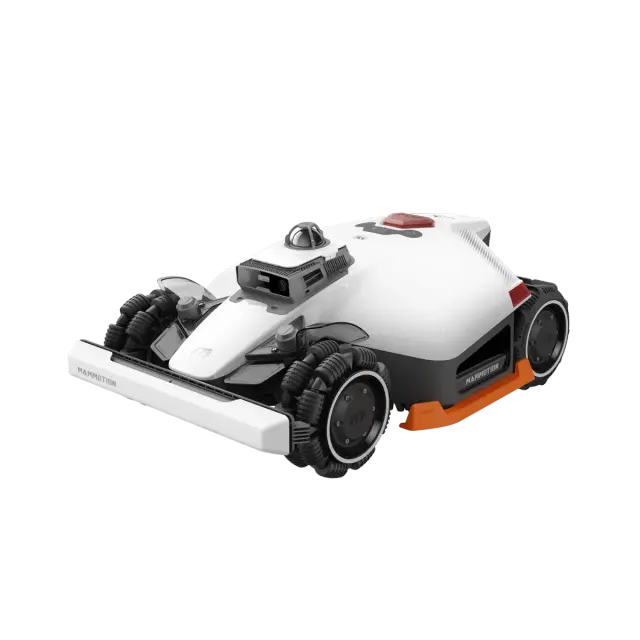
| Mammotion LUBA 3 AWD | 7.8Research | A complex lawn where AWD is useful and the buyer is prepared to verify the navigation and height specification of the… | Amazon.ca ↗ |
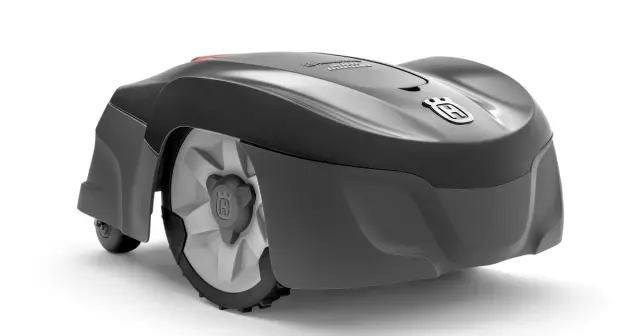
| Husqvarna Automower 115H Bluetooth | 6.1Research | A modest, settled lawn where a supported used mower costs substantially less than a new installation. | Amazon.ca ↗ |
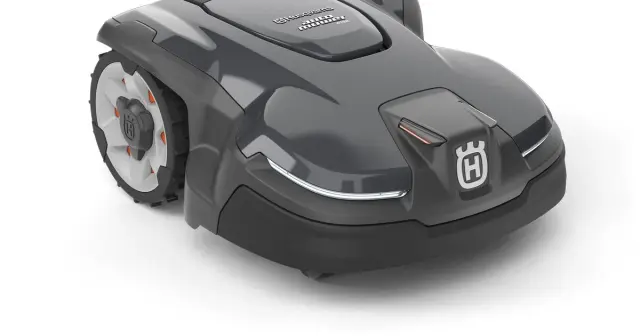
| Husqvarna Automower 415X | 6.6Research | Owners of a small or medium established wired lawn who want connected control and a documented support path. | Amazon.ca ↗ |
Compare scores within a category: Tested means our own use, Research means documentation and attributed outside testing. Price links are affiliate links. As an Amazon Associate, Tech Standpoint earns from qualifying purchases. Disclosure
Sources & further reading.
These are the sources behind this research review. Manufacturer claims are not independent performance measurements. Community accounts, when cited, describe individual experiences.
- Worx Landroid L WR155 — official manufacturer product information ↗manufacturer
- Worx WR165/WR147/WR155 owner manual ↗manual
Product software and regional bundles can change. Corrections and editorial disclosures.
Affiliate link. As an Amazon Associate, Tech Standpoint earns from qualifying purchases. It never changes our verdict or score. Disclosure