An editorial assessment of documented capabilities and ownership trade-offs. This is not a hands-on test result or a measurement of reliability.
Task capability 30%8.4
Dual motors, blade options and large-area claims form a substantial platform.
Navigation & control 20%7.5
RTK and sensors support a broad estate-management concept.
Ownership & upkeep 20%5.9
Tracks, modules and shared-core downtime create significant ownership demands.
Setup & usability 15%5.9
Storage, handling and large-property setup are unusually involved.
Documentation & support clarity 15%6.6
Core specifications are documented; peak and sustained power need careful separation.
Compare scores within the same product category. Small decimal differences should not override your needs or the evidence limits.
How the Standpoint Score works
We score five aspects of the documented product on a 0–10 scale, then calculate a weighted total:
- Task capability30% of the total
- Navigation & control20% of the total
- Ownership & upkeep20% of the total
- Setup & usability15% of the total
- Documentation & support clarity15% of the total
This product’s 7.1/10 is a provisional research assessment. It does not claim measured performance, tested reliability or a verified customer satisfaction rate. Compare it with products in the same category, and read each criterion’s reasoning above.
Read the full rubric and score bands ↗The ownership case.
Yarbo Lawn Mower Pro is a serious large-property concept whose value depends on the whole modular system. Its power and acreage claims deserve testing, while handling, turf effects and service downtime may matter more than the specification advantage.
Reasons to consider it
- Modular multi-season platform
- Dual-motor Pro cutting system
- Large-area and steep-terrain proposition
Go in knowing
- Peak power is not a sustained result
- Track effects and handling need testing
- Shared core downtime affects several tasks
The specification sheet.
Published specifications from the linked sources. Configurations and availability can differ by country.
- Configuration
- Y40 Core with Lawn Mower Pro Module
- Cutting motors
- Dual 300 W published
- Peak-power claim
- 2,500 W; not sustained rating
- Maximum area claim
- Up to 6 acres
- Slope claim
- 70% / 35°
- Blade options
- Standard discs or optional straight blades
A yard platform that happens to be mowing today
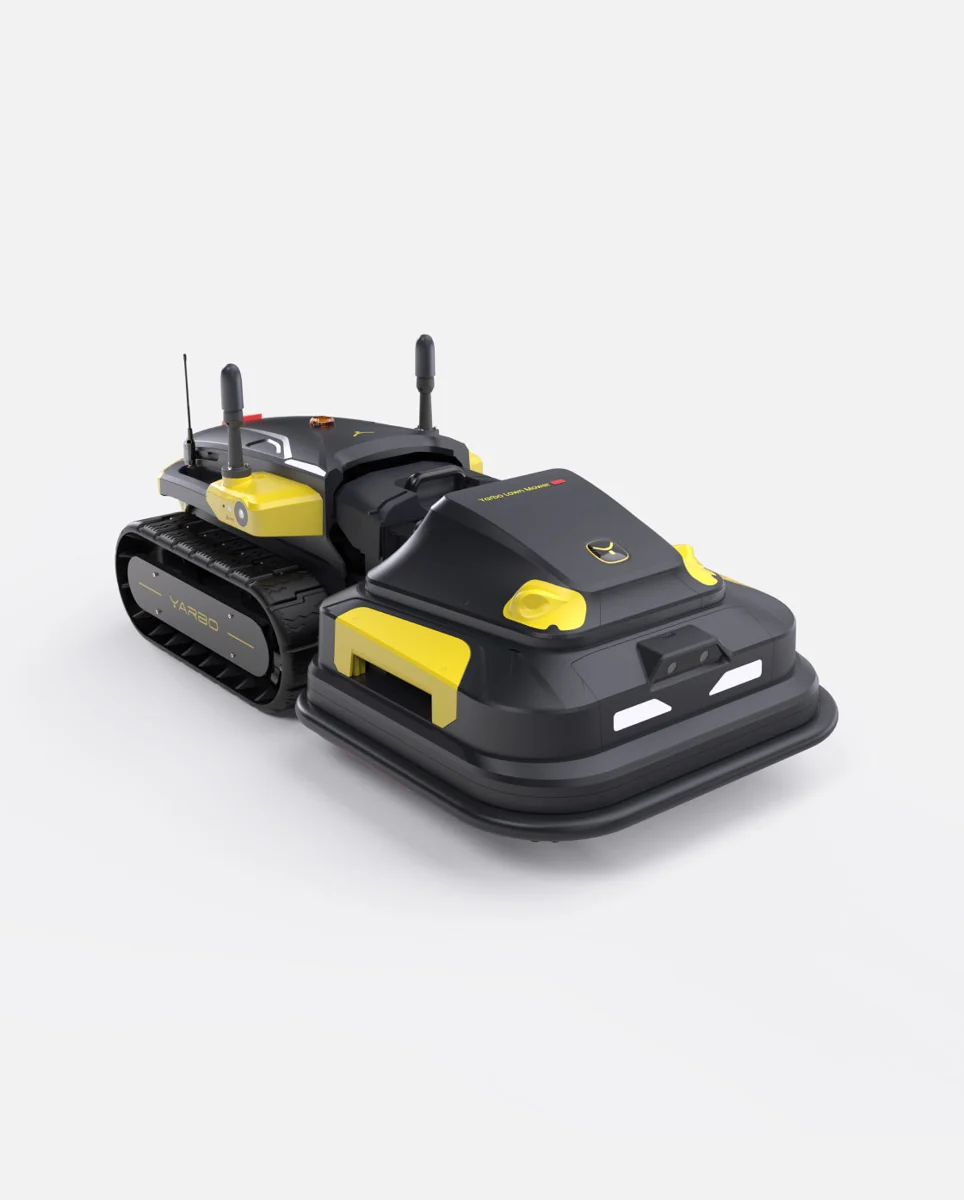
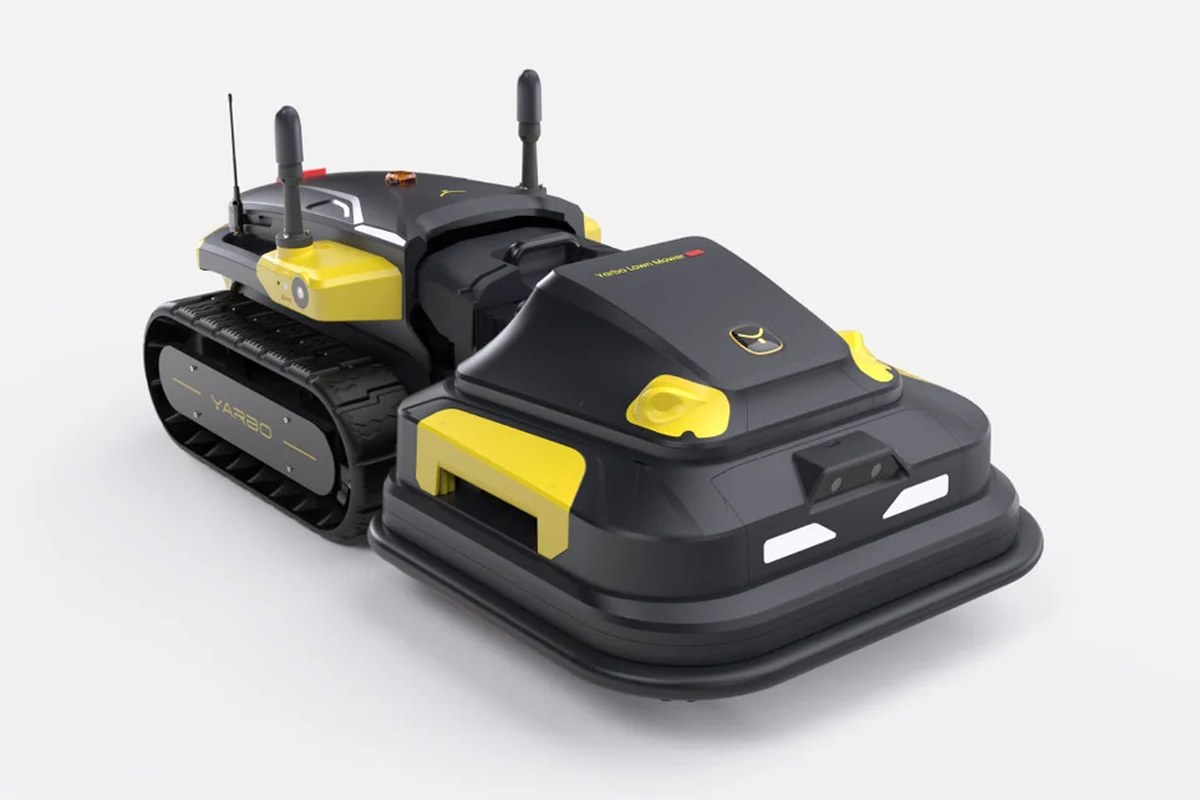
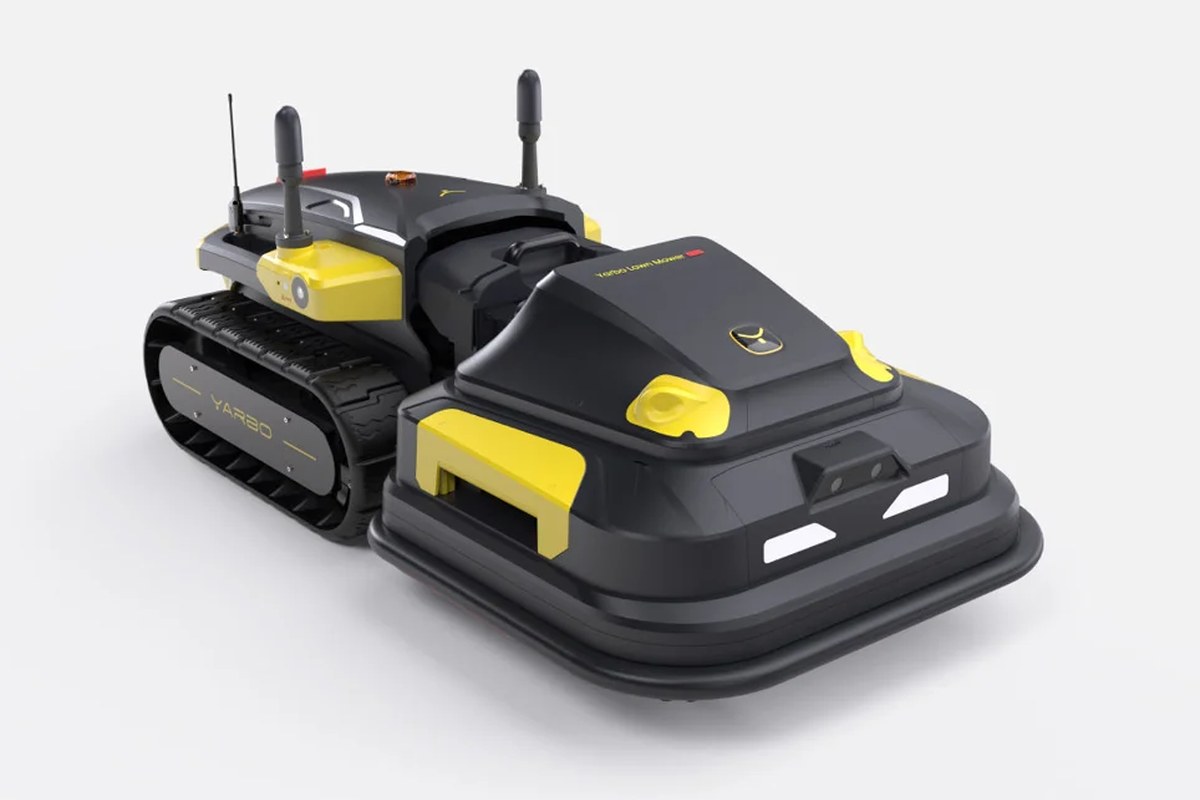
Yarbo Lawn Mower Pro is best understood as a task module attached to the Y40 tracked core. The owner is buying into a platform that can also take other seasonal equipment. That can be attractive when the property needs mowing, snow removal and debris work, but it changes the buying calculation. A dedicated mower only has to justify one job; a modular system must be assessed for how often its shared hardware actually earns its place.
The Pro module is not interchangeable in our review with every earlier Yarbo mower. The current Canadian product page specifies dual 300-watt motors and optional straight blades. We have not measured its cutting output or operated the core. This is an assessment of the documented design and the ownership questions it raises, not a report of an estate already maintained by our editorial team.
Motor power is not a finished-lawn result
The manufacturer advertises 2,500 watts of peak power alongside the dual 300-watt motor specification. Peak and sustained ratings describe different things, so neither should be casually presented as continuous cutting power. The useful test is whether the system maintains an acceptable finish and completes its work when grass is denser or growth is faster. That requires observations under known conditions.
Optional straight blades also deserve a distinct maintenance and safety discussion. A different blade arrangement can change cutting behaviour, inspection needs and the consequences of contacting debris. Buy only the configuration approved for the exact module, and follow its instructions for fitment and replacement. We would compare the available cutting options on finish, load interruptions and maintenance time rather than assuming the more substantial-looking blade is always preferable.
Six acres needs a schedule, not just a map
The page's maximum area claim is up to six acres. On a real estate, usable mowing time depends on travel routes, charging, obstacles and the desired frequency of cutting. A single open field presents a different workload from lawn spread around buildings and landscaped islands. Calculate turf area separately from the total land holding, then identify which areas genuinely need a maintained finish.
We would ask the seller to demonstrate a representative operating plan with comfortable spare capacity. If the robot must run nearly continuously to keep pace in favourable conditions, a week of rain or a service interruption can create a backlog. The owner also needs a means of addressing strips, steep edges or isolated areas the robot cannot reach. An acreage claim is not proof that all conventional mowing equipment can be removed from the property.
A practical acceptance test before relying on it
The most informative acceptance trial would use a representative part of the property before committing the entire six-acre claim to the robot. Measure actual grass area, establish the preferred height and record a full week of tasks with normal obstacles in place. Photograph the turning zones and charging approaches at the start and end. This will expose both cutting performance and the effect of repeated tracked traffic.
Then time an attachment change using the owner's real storage arrangement. Include moving the detached module, cleaning it and getting the next task ready. If another person is needed, count that assistance in the routine rather than treating tool-free assembly as effortless handling. Finally, obtain a quote for the consumables and likely service operations on the exact Pro configuration. The outcome should be a whole-platform assessment: acceptable turf, manageable intervention time, practical module changes and a credible repair route. Only that combination can support a confident claim that a modular robot is a better fit than several simpler tools.
Tracked traction has to be balanced against turf care
Yarbo publishes a 70% slope claim, approximately 35 degrees, for this platform. Tracks can be attractive on difficult ground, but successful climbing is not the only outcome that matters. We would examine repeated turns, crossings over soft soil and transitions onto hard surfaces. The same high-traffic routes may be used many times during a week, making small effects accumulate.
Ground conditions should guide the schedule. A mower may physically traverse a wet area while leaving an undesirable result. That is why an evaluation needs close photographs of the turf after repeated work, not only footage of the machine moving confidently. The site plan should include safe turning margins and boundaries around water, drops and vehicle areas, with no reliance on the slope figure as a general safety guarantee.
Navigation and control on a large property
The product describes RTK and multiple sensors for positioning and obstacle awareness. The appropriate installation route depends on the property's coverage and the available correction service. Verify which local hardware, network service and connectivity are included in the actual purchase. Large plots often contain a combination of open sky, dense trees and narrow passages, so the least favourable route should be assessed before the straightforward field.
An app can divide work into zones, but a blocked gateway remains blocked. Establish how the system reports interrupted tasks and how it resumes when access returns. We would test a controlled obstruction and a charging return from the farthest area. A useful interface should make it clear which grass was completed, which was skipped and why, without requiring an owner to infer the result from a general progress percentage.
Storage, servicing and the modular bargain
The core, mowing attachment, spare modules and packaging require substantial practical planning. Ask for a demonstration of attaching, detaching and moving the tools using the supplied equipment. A module that can be connected without tools may still be awkward to handle or store. Confirm door widths, ramps and the route to the intended winter storage area before delivery.
The core is also a shared point of failure. A battery, drive or navigation repair can interrupt multiple seasonal jobs, so the service agreement matters as much as the mower attachment. Obtain regional parts prices, transport arrangements and expected diagnostic procedures. Include consumable blades, battery replacement, optional services and manual finishing in the ownership estimate. Do not divide the initial price across four hypothetical tasks unless the property will actually use all four.
The buyer who can make the most of it
This system is most interesting for a large property with recurring work, adequate storage and an owner comfortable refining maps and schedules. A smaller flat lawn may be better served by a dedicated mower with less handling complexity. Even on a large site, a simple serviceable machine can be preferable if the modular features go unused or repair logistics are difficult.
Our field programme would measure finished turf, complete-task timing, charging reliability and interventions over a meaningful growth period. It would also compare the time required to switch tasks and maintain the attachments. Yarbo Lawn Mower Pro has enough mechanical ambition to deserve that scrutiny. Until those observations exist, our recommendation remains a conditional shortlist position grounded in its distinctive platform, with no invented reliability score or claim of six acres successfully maintained.
Sources & further reading.
These are the sources behind this research review. Manufacturer claims are not independent performance measurements. Community accounts, when cited, describe individual experiences.
Documentation reviewed: 9 October 2026. Product software and regional bundles can change. Corrections and editorial disclosures.