The short answer
If you print PLA and PETG from 1 kg spools that live in the AMS, no. The AMS 2 Pro on my P2S Combo dries at up to 65°C, holds four standard spools and, since a January firmware update, can dry while the printer runs. Bambu's own table has PLA at 45°C and PETG at 65°C for 12 hours each, which covers most home printing.
You still want a standalone dryer in four cases: TPU, which Bambu says the AMS 2 Pro may not fully dry and which bypasses the AMS on the P2S anyway; anything over 65°C, since ABS, ASA, nylon and PC are not compatible in Bambu's AMS 2 Pro column; spools that don't fit the AMS; and a damp basement where a second box keeps drying while the printer is busy. Prices are from Amazon.ca and the makers' Canadian stores, checked November 2026.
What the AMS 2 Pro dryer actually is
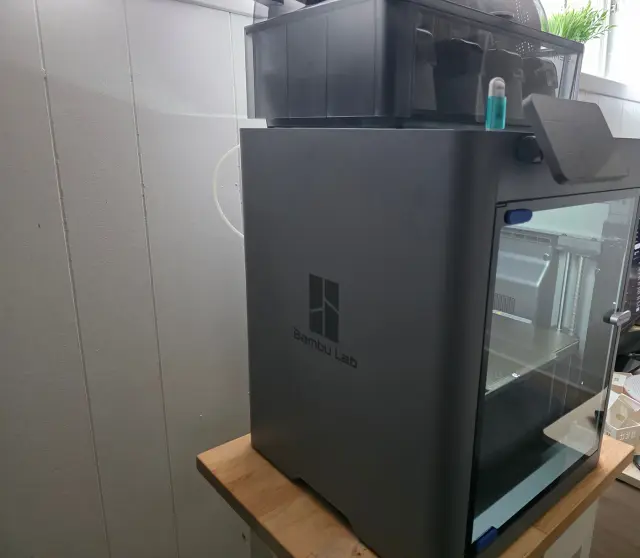
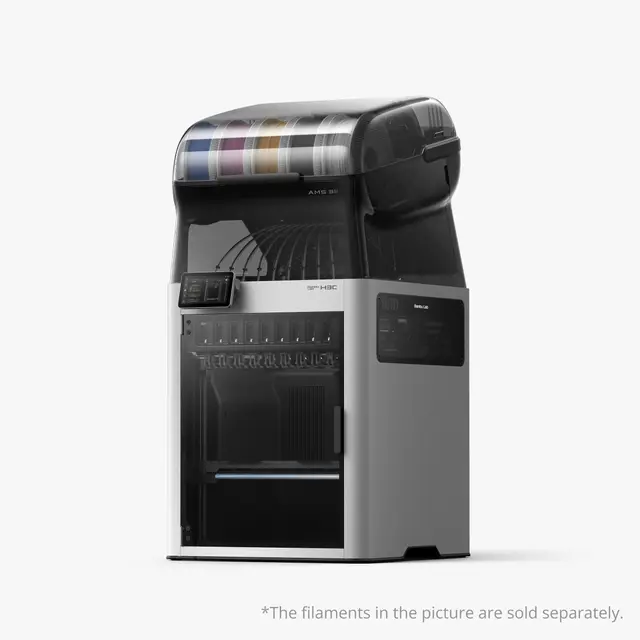
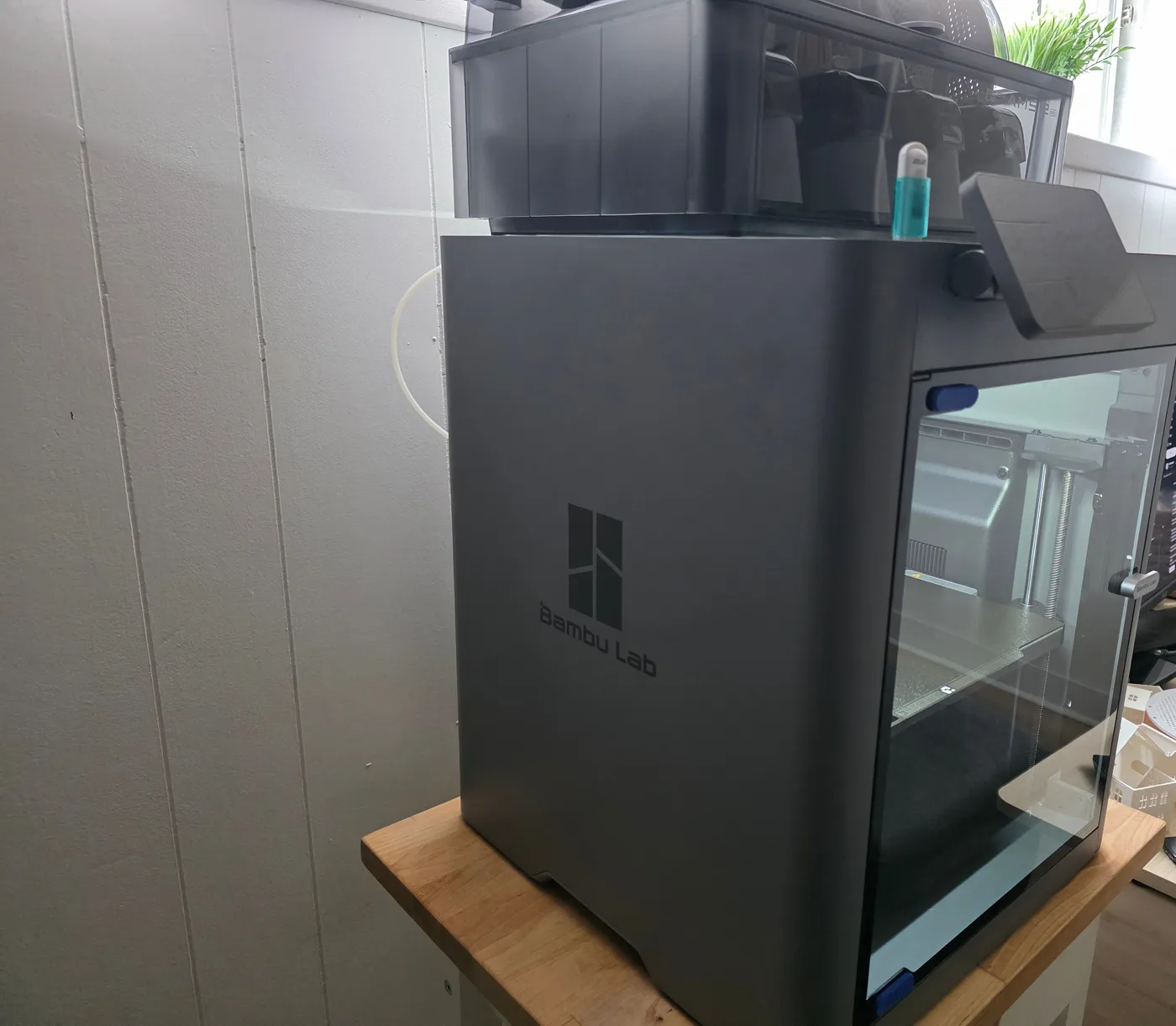
After a month and about 25 prints on my P2S Combo, I'd call the dryer the reason to buy the Combo. Bambu Canada had the Combo at $889 and the printer alone at $689 when I checked on November 3, and the AMS 2 Pro by itself is $349 this week, down from $449 for Black Friday. My hands-on review is at Bambu Lab P2S Combo (AMS 2 Pro) review.
Bambu's spec sheet puts the top drying temperature at 65°C, with heated air vented while the spools turn; Bambu claims that's about 30% faster than heating a sealed box. Spools 50 to 68 mm wide and 197 to 202 mm across fit, which means a normal 1 kg spool and nothing bigger. RFID-tagged Bambu spools set their own time and temperature.
One footnote on Bambu's store page matters in Canada: the dryer only reaches 65°C when the room is above 25°C. Below that, heat loss pulls the real temperature down, so a basement in February gets the coolest drying exactly when the air is dampest. My longer guide to the function is at bambu ams 2 pro drying.
Can it dry while printing?
Yes, with conditions. Bambu's AMS FAQ says drying and printing at the same time works on the P2S from firmware 01.02.00.00, and owners in r/BambuLab noticed the option arrive with Studio 2.5.0 in January.
The catch is power. The P2S can run one AMS 2 Pro heater from its own supply, but Bambu says that while it does, the printer can't heat or move, so a cycle started on printer power blocks printing until it ends. Doing both takes the AMS 2 Pro Switching Adapter, a 24 V 4 A brick that Bambu Canada sells inside the AMS 2 Pro Upgrade Compatibility Kit at $75.57, down from $125.95 (the adapter alone I didn't price).
Two more limits from Bambu's drying page: once a print starts, the drying temperature drops below the filament's softening point, so PETG falls from 65°C to 55°C, and the AMS won't dry a slot while it's feeding. It also can't dry on its own; the printer has to be on and in drying mode.
How long it takes and what it costs to run
Bambu's AMS 2 Pro column: PLA at 45°C for 12 hours, PETG at 65°C for 12 hours, and Bambu's TPU for AMS at 65°C for 12 hours with a may-not-fully-dry warning; ABS, ASA, PC, PVA and nylons are not compatible. A forced-air dryer in the same table does PLA at 50°C, PETG at 60 to 65°C and TPU at 70°C in 8 hours, so a hotter box finishes in about two thirds of the time.
Electricity is close to free either way. Bambu lists the AMS 2 Pro's input as 24 V at 4 A, 96 W at the very most. Watts times hours, divided by 1,000, times the Ontario Energy Board's November 1, 2026 rates: a 12-hour PETG cycle at full draw is 1.15 kWh, about 10 cents off-peak (9.1 cents per kWh), 13 cents tiered (11.2 cents) or 22 cents on-peak (18.9 cents), and the heater cycles, so real use is lower. A 320 W SUNLU S4 for eight hours is at most 2.56 kWh, 23 to 48 cents.
What owners complain about
The most repeated AMS 2 Pro complaint in r/BambuLab isn't the heater, it's the humidity reading. Two of the sub's most-upvoted AMS 2 Pro threads this year describe the box sitting near 20% and refusing to go lower, even after a drying cycle, until the stock desiccant is swapped for fresh silica gel pods or another desiccant. Bambu's setup guide says the unit relies on colour-changing silica gel, so that's the design, not a fault.
The other pattern is basements. Four separate r/3Dprinting posters with printers in basements report room humidity from 35 to 66 per cent and, in one case, prints that still looked rough after six hours at 65°C. Health Canada's moisture and mould guide says to keep a home between 30% and 50% relative humidity and to run a dehumidifier in a damp basement above 50%. If the house needs one, the filament does too, and the 25°C footnote means the AMS is fighting that room. My drying guide for PLA and PETG is at drying pla and petg.
My own evidence stops short: the PETG mask that strung on my P2S came off an undried spool and I haven't reprinted it dried, so I can't say the AMS fixed it.
When a standalone dryer still wins
TPU. Bambu marks every TPU grade as required drying and warns the AMS 2 Pro may not finish the job; generic TPU isn't supported in the AMS, and on my P2S flexible filament uses the external spool path. One of the most-upvoted dryer posts in r/3Dprinting this year is a TPU before-and-after after seven hours at 70°C.
Anything over 65°C. ABS, ASA, PC, PVA and nylons want 75 to 85°C in Bambu's dryer column. A $70 box that stops at 70°C won't do it either; you need an 85°C-plus dryer such as SUNLU's S4 Pro.
Spools outside the AMS. It dries only what's in its four slots, and only 1 kg spools. A shelf of filament or a 2 or 3 kg roll calls for a second box that dries and feeds at once. r/3Dprinting's most-upvoted dryer post this year is a new PETG spool printed straight from the box and again after five hours at 65°C; the dried one is clean.
Dryers sold in Canada: what to buy for the money
SUNLU FilaDryer S2, $69.99 on Amazon.ca from SUNLU's official listing: one spool, 35 to 70°C, feeds the printer while it dries. SUNLU is an affiliate partner of ours, so the honest version: it's the cheapest name-brand box that reaches 70°C, but it holds one spool and the listing says little beyond the temperature range.
Creality Space Pi, $75 at Creality Canada (regular $89) or $79.99 on Amazon.ca: one 1 kg spool, 45 to 70°C, a 110 W heater and a 48-hour timer, per Creality's listing. The two-spool Space Pi Plus is $103.55 on Amazon.ca or $109 at Creality Canada. Gaming Trend scored the Plus 80 out of 100, docking it for a PTFE tube that kept sliding into the box and binding the spool.
Polymaker PolyDryer, $89.99 on Amazon.ca: a heated dock plus a sealed box with its own hygrometer, so you dry, store and print from the same box; extra boxes are $144.99 for four. Good for five spools in a damp basement and occasional printing. The listing doesn't state a maximum temperature, so check Polymaker's page before relying on it beyond PLA and PETG.
SUNLU FilaDryer S4, $188.99 on Amazon.ca from SUNLU's official listing: four 1 kg spools, 35 to 70°C, a 0 to 99-hour timer and a 320 W rated heater. It's the pick if you want a second four-slot box that dries hotter than the AMS and keeps running while the printer prints. What it lacks: it's bread-maker sized, Clever Creations scored its noise 3 out of 5 for fan vibration through the metal feet, spools wider than about 77 mm don't fit, and 70°C is still too cool for nylon. SUNLU's own store shows the S4 sold out and the newer 85°C S4 Pro at US$139.99, with no Canadian price yet.
From a tech standpoint.
If your P2S Combo prints PLA and PETG from spools that live in the AMS, use the dryer you already own. Run Bambu's 12-hour presets, swap the desiccant when the reading sticks near 20%, and spend the $70 on filament.
Buy a standalone dryer the day you print TPU, the day a 2 kg spool arrives, or the week your basement hygrometer reads over 50%. For one spool the Creality Space Pi at $75 or the SUNLU S2 at $69.99 does the job; the S4 at $188.99 only makes sense if you'll fill four slots.
If you're still choosing between the P2S and the Combo, the dryer decides it. At $349 on its own the AMS 2 Pro costs more than the $200 Combo step-up, and no $100 box plugs into the printer's filament system the way it does.
Sources & further reading.
The documentation, outside testing and owner discussions behind this guide. Manufacturer specifications are claims, not measurements; community threads describe individual experiences.
- Bambu Lab Wiki: AMS 2 Pro and AMS HT, frequently asked questions (drying while printing, power adapter) ↗Manufacturer
- Bambu Lab Wiki: Filament drying recommendations (AMS 2 Pro temperature and time table) ↗Manufacturer
- Bambu Lab Wiki: Using the AMS 2 Pro for drying on X1/P1 series (65°C limit, desiccant) ↗Manufacturer
- Bambu Lab Canada: AMS 2 Pro, CAD price, specs and 25°C ambient footnote, checked November 6, 2026 ↗Manufacturer
- SUNLU: FilaDryer S4 specifications (320 W rated power, capacity) ↗Manufacturer
- SUNLU: FilaDryer S4 Pro (dual-zone, 85°C), US price checked November 6, 2026 ↗Manufacturer
- Creality Canada: Space Pi filament dryer, CAD price checked November 6, 2026 ↗Manufacturer
- Creality Canada: Space Pi filament dryer Plus, CAD price checked November 6, 2026 ↗Manufacturer
- Amazon.ca: SUNLU FilaDryer S4, price and listing specs checked November 6, 2026 ↗Retailer
- Amazon.ca: SUNLU Filament Dryer S2, price checked November 6, 2026 ↗Retailer
- Amazon.ca: Creality Space Pi filament dryer, price and listing specs checked November 6, 2026 ↗Retailer
- Amazon.ca: Creality Space Pi filament dryer Plus, price checked November 6, 2026 ↗Retailer
- Amazon.ca: Polymaker PolyDryer, price checked November 6, 2026 ↗Retailer
- Clever Creations: SUNLU FilaDryer S4 review (noise, power draw, spool width) ↗Independent testing
- Gaming Trend: Creality Space Pi Plus filament dryer review, January 2025 ↗Independent testing
- Health Canada: Guide to addressing moisture and mould indoors (30 to 50% relative humidity, basements) ↗Government
- Ontario Energy Board: Electricity rates effective November 1, 2026 ↗Government
- r/BambuLab: AMS 2 Pro silica gel pods (humidity stuck near 20%) ↗Community discussion
- r/BambuLab: Results with activated alumina desiccant in an AMS 2 Pro ↗Community discussion
- r/BambuLab: Bambu Studio 2.5.0 adds remote AMS drying and drying while printing ↗Community discussion
- r/3Dprinting: New filament, out of the box vs dried (PETG, 5 hours at 65°C) ↗Community discussion
- r/3Dprinting: Filament dryer arrived yesterday, TPU before and after (7 hours at 70°C) ↗Community discussion
- r/3Dprinting: Tried drying filament with my printer (basement at 66% humidity) ↗Community discussion
- r/3Dprinting: Stupid question about filament drying (SUNLU S2, basement at 45%) ↗Community discussion
- r/3Dprinting: Feathery stringing and poor adhesion in a cold basement at 35% humidity ↗Community discussion
- r/3Dprinting: Dryer for technical filaments that can dry during printing (P2S in a basement) ↗Community discussion
- r/3Dprinting: Creality Space Pi vs Polymaker PolyDryer for a humid basement ↗Community discussion